How To Tie In A Peep Sight?
To tie in a peep sight, start by loosening your bowstring slightly and choosing the right spot for your sight, usually aligned with your dominant eye. Use strong serving thread to wrap the peep tightly around the string 5-7 times, securing it with a knot to prevent slipping. Make sure the peep stays centered and vertical for accurate aiming. Once secure, test the alignment by drawing the bow and adjusting as needed. You can explore more tips to perfect your setup and maintenance.
Key Takeaways
- Use high-tensile serving thread to wrap the peep sight securely around the bowstring 5-7 times, maintaining consistent tension without over-tightening.
- Create a small loop with serving thread, thread the end through it after wrapping, then pull tight to lock the peep in place.
- Align the peep sight vertically and centered on the bowstring before tying to ensure proper sight picture and accuracy.
- Trim excess serving thread and optionally apply adhesive to prevent the knot from loosening during use.
- Double-check the knot’s security and the peep’s position by gently shaking the bow to confirm stability before shooting.
What’s a Peep Sight and Why Use It?
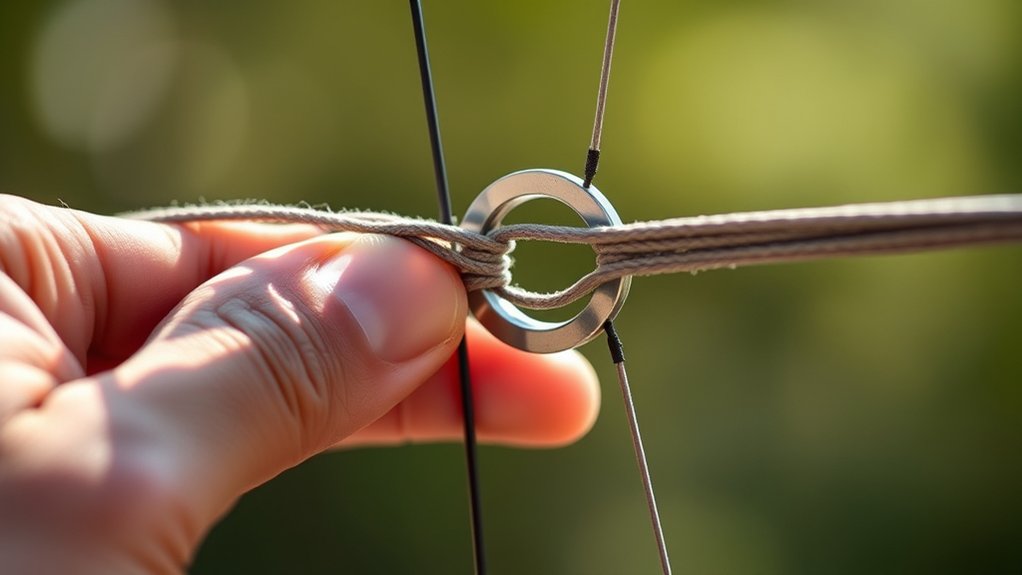
What exactly is a peep sight, and why should you consider using one? A peep sight is a small, circular aperture you attach to your bowstring.
When you look through it, it helps you align your shot more precisely by focusing your eye on the target and the front sight. Using a peep sight improves your accuracy because it reduces distractions and helps maintain consistent eye placement.
Looking through a peep sight sharpens your aim by focusing your eye and improving accuracy through consistent alignment.
You’ll find it especially useful if you want tighter groupings and better performance at longer distances.
Plus, it’s simple to use once properly installed.
Tools You’ll Need to Tie a Peep Sight
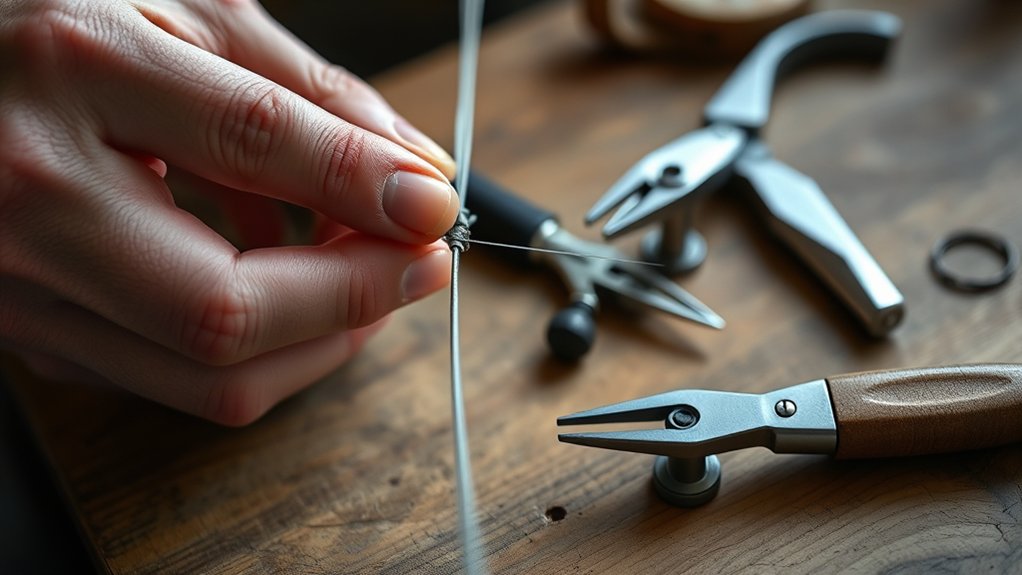
Improving your accuracy with a peep sight starts by installing it correctly on your bowstring. To do this, you’ll need a few essential tools that make the process easier and guarantee a secure fit. Having the right tools at hand saves you time and prevents frustration.
| Tool | Purpose |
|---|---|
| Peep Sight Ring | Holds the peep sight in place |
| Serving Thread | Wraps around the bowstring securely |
| Serving Needle | Helps thread the serving thread |
| Scissors or Knife | Cuts the serving thread neatly |
Gather these before you begin tying your peep sight, and you’ll set yourself up for a smooth, effective installation.
Choosing the Right Peep Sight for Your Bow
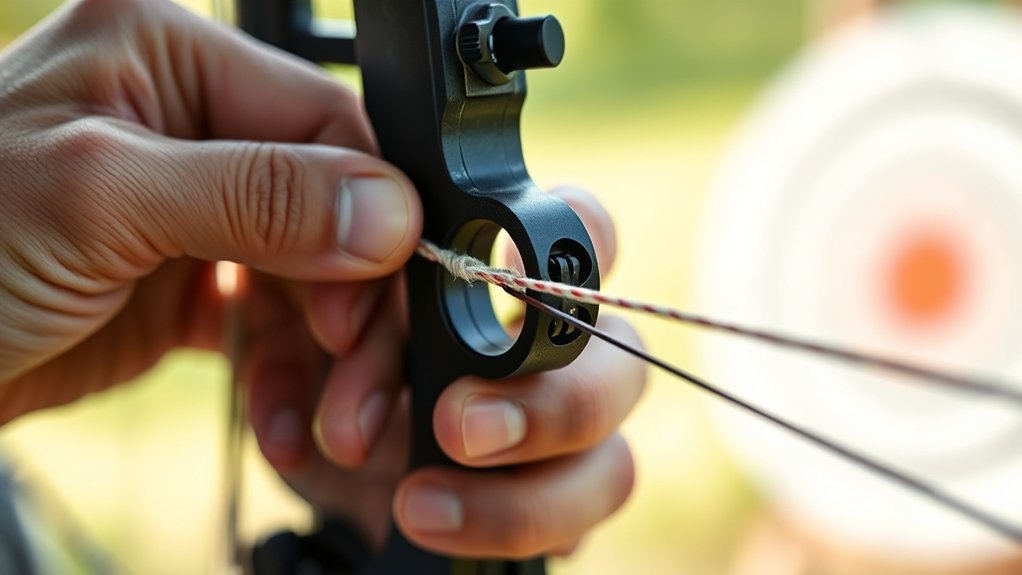
When selecting a peep sight for your bow, you’ll want to take into account factors like size, material, and ease of installation to guarantee it matches your shooting style and bow type. The right choice improves accuracy and comfort.
Consider these key points:
- Size of Aperture – Smaller apertures offer precision but require better eyesight; larger ones are easier to use in low light.
- Material – Durable materials like aluminum resist wear, while plastic options are lightweight and budget-friendly.
- Compatibility – Ascertain the sight fits your bowstring thickness and style for a secure attachment.
- Adjustability – Some peep sights allow fine-tuning for windage or elevation, enhancing your shooting consistency.
Choose wisely to get the most out of your shooting experience.
Preparing Your Bowstring for Installation
Before you install your peep sight, you’ll need to prepare your bowstring carefully to guarantee a secure fit and proper alignment. Start by inspecting the string for any frays or damage—replace it if necessary to avoid issues later.
Next, clean the string with a soft cloth to remove dirt and oils that might prevent the peep sight from sliding smoothly. Use bowstring wax sparingly to maintain flexibility without making the string slippery.
Then, identify the correct strand on which the peep sight will sit, usually the center serving or the main strand, depending on your bow type.
Finally, loosen the bowstring slightly if needed, so you can work comfortably without overstressing the fibers.
Once prepped, your bowstring will be ready for the next step.
Positioning Your Peep Sight on the String
With your bowstring properly prepared, you can now focus on positioning the peep sight for ideal performance. Correct placement ensures consistent sight alignment and accuracy.
Follow these steps:
- Find your dominant eye’s level: Position the peep sight where it aligns naturally with your dominant eye when you draw the bow.
- Consider your anchor point: The peep sight should sit at a height that matches your consistent anchor position for reliable aiming.
- Test multiple heights: Temporarily slide the peep sight up and down the string to find the spot that offers the clearest sight picture.
- Mark the location: Once you’ve found the ideal spot, mark it to maintain consistency before tying the peep sight in place.
Proper positioning sets the foundation for precise shooting every time.
How to Tie a Secure Peep Sight Knot
To tie a secure peep sight knot, you need strong bowstring material that won’t slip or fray under tension.
Follow specific step-by-step techniques to guarantee the knot stays tight and reliable during use.
Getting this right will keep your peep sight steady and improve your accuracy.
Choosing Strong Bowstring Material
Although selecting the right bowstring material might seem straightforward, it plays an essential role in securely tying your peep sight knot. The material affects knot strength, durability, and overall performance.
When choosing your bowstring material, consider these key factors:
- Tensile Strength – Pick fibers that withstand high tension without breaking.
- Abrasion Resistance – Ensure the material resists wear from friction caused by the knot.
- Flexibility – Choose a material that bends easily to form tight, secure knots.
- Moisture Resistance – Opt for materials that don’t weaken or stretch when wet.
Materials like Dacron and FastFlight are popular for their balance of these qualities. Selecting the right material ensures your peep sight stays firmly in place, improving accuracy and safety.
Step-by-Step Knot Techniques
Since securing your peep sight correctly is essential for consistent accuracy, you’ll want to master a reliable knot technique.
Start by sliding the peep sight onto your bowstring at the desired position.
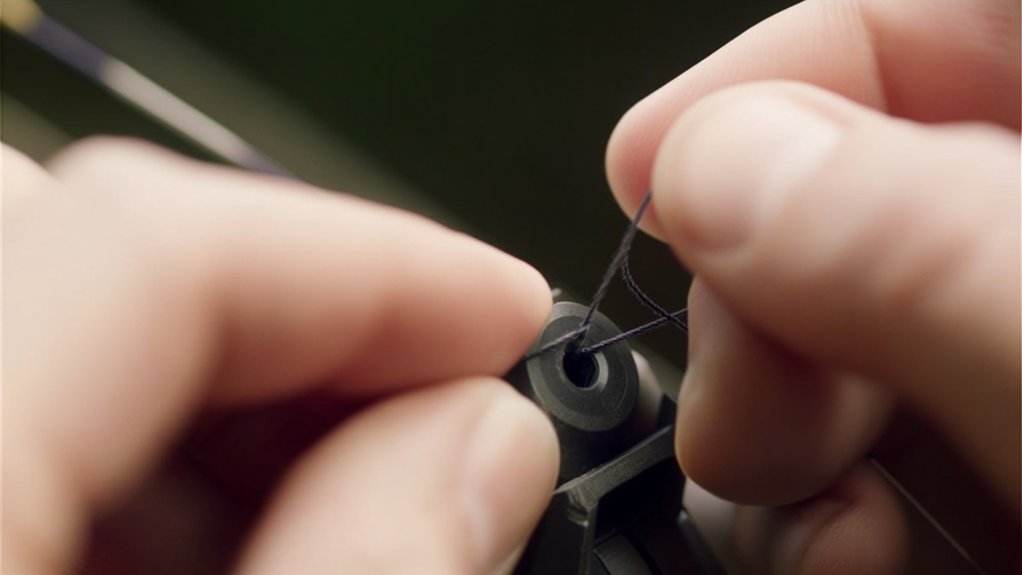
Next, create a small loop with the serving thread and wrap it tightly around the bowstring and peep sight multiple times—usually 5 to 7 wraps work best. Make sure each wrap lies flat and snug against the previous one.
Then, thread the end of the serving through the loop and pull it tight to lock the wraps in place.
Finally, trim any excess serving and apply a small drop of adhesive if needed for extra security.
Following these steps guarantees your peep sight stays firmly in place for consistent, accurate shooting.
How to Use Serving Thread to Keep It Tight
To keep your peep sight tight, you’ll need the right serving thread that’s strong and durable. You’ll also want to master wrapping techniques that maintain consistent tension without damaging the bowstring.
Let’s look at how to choose the best thread and wrap it properly for a secure hold.
Choosing Proper Serving Thread
When you choose the right serving thread for your peep sight, you guarantee a secure, long-lasting hold that won’t loosen over time. Selecting the proper thread ensures your peep stays tight, even through repeated use and weather changes. Here’s what you should consider:
- Material: Opt for synthetic fibers like nylon or polyester for durability and resistance to moisture.
- Thickness: Choose a thread thickness that fits snugly around your bowstring without adding bulk.
- Tensile Strength: Pick a thread with high tensile strength to withstand tension without breaking.
- Coating: Look for waxed or pre-coated threads to maintain grip and reduce slipping during tying.
Wrapping Techniques for Tension
Although securing your peep sight requires patience, wrapping the serving thread with proper tension is key to guaranteeing it stays tight and durable.
Start by anchoring the thread firmly, then pull it taut as you wrap around the bowstring. Maintain consistent tension by keeping the thread snug but not so tight that it cuts into the string fibers.
Use your fingers to guide the thread smoothly, avoiding overlaps or gaps. Wrap several tight, even layers to build a strong base.
Once you’ve reached the desired length, lock the thread in place with a final tight wrap and secure the end with a knot or glue.
Proper tension prevents loosening during use and ensures your peep sight remains stable and reliable.
Tips to Keep Your Peep Sight Tight and Aligned
Keeping your peep sight tight and aligned demands careful attention to detail, as even slight looseness can throw off your accuracy. To maintain a secure and straight peep sight, follow these tips:
- Use quality serving thread – Choose a strong, durable thread that resists stretching and slipping.
- Apply consistent tension while wrapping – Keep the thread tight but avoid over-tightening, which can damage the bowstring.
- Double-check alignment before knotting – Ensure the peep sight sits perfectly vertical and centered on the string.
- Lock the wraps with a finishing knot – Secure the thread with a reliable knot like a half-hitch to prevent loosening over time.
Common Mistakes to Avoid When Tying a Peep Sight
Even the smallest mistakes in tying your peep sight can compromise your accuracy and consistency. One common error isn’t securing the knot tightly enough, causing the peep sight to shift during use. Avoid using the wrong type of string—make sure it’s durable and suited for your bow.
Don’t tie the peep sight too high or too low on the bowstring; improper placement affects your sight picture. Also, avoid leaving excess string that can snag or interfere with your draw.
Skipping the step to check for twists or kinks in the bowstring can lead to uneven tension and poor performance. By steering clear of these mistakes, you’ll maintain a reliable, stable peep sight that helps you shoot with confidence.
How to Adjust Your Peep Sight for Proper Eye Alignment
Once you’ve securely tied your peep sight, you’ll need to adjust it to align perfectly with your eye. Proper alignment ensures a clear sight picture and accurate shooting. Follow these steps:
- Position your bow at full draw and look through the peep sight with both eyes open.
- Move the peep sight up or down on the bowstring until it centers in your dominant eye’s pupil.
- Check for a clear, unobstructed view of the front sight pin or arrow tip through the peep.
- Fine-tune the rotation by twisting the peep sight slightly until the front sight appears perfectly round, not oval.
Adjusting your peep sight this way helps you maintain consistent eye alignment for better accuracy.
How to Test Your Peep Sight Before Shooting
Before you start shooting, make sure your peep sight is properly aligned with your eye. Check your eye relief to guarantee you have a clear, consistent view through the sight.
Testing these factors now will help improve your accuracy on the range.
Aligning Sight Properly
How do you know if your peep sight is correctly aligned? Proper alignment is essential for accuracy. Here’s how to check it before shooting:
- Mount your bow on a stable rest and draw it back slowly.
- Look through the peep sight and center the front sight pin within the aperture.
- Adjust the peep sight until the front pin stays perfectly centered when you move your head slightly.
- Confirm the target alignment by aiming at a fixed point and ensuring the top of the front sight pin aligns with the bullseye.
Checking Eye Relief
Why does eye relief matter when setting up your peep sight? It makes sure you see a clear, full sight picture without strain or distortion. To check your eye relief, start by positioning your eye naturally behind the peep. Move your head slowly forward and backward until the sight ring appears sharp and centered. If the sight blurs or shadows appear, adjust your anchor point or peep placement.
Here’s a quick reference to test your eye relief:
| Step | Action | Result to Expect |
|---|---|---|
| 1 | Position eye behind peep | Clear, full sight ring |
| 2 | Move head slightly | No blurring or shadows |
| 3 | Adjust if needed | Comfortable, consistent view |
This method guarantees your peep sight is ready before shooting.
Troubleshooting Loose or Misaligned Peep Sights
If your peep sight feels loose or isn’t lining up properly, it can seriously affect your accuracy. You need to troubleshoot it quickly to maintain consistent shooting. Here’s what you should do:
- Tighten Screws: Check all mounting screws and tighten any that are loose using the appropriate tool.
- Inspect for Damage: Look for bent or worn parts that could cause misalignment and replace damaged components.
- Re-align the Sight: Adjust the sight’s position until the aperture centers perfectly with your eye and the front sight.
- Test Stability: After adjustments, gently shake the bow or rifle to ensure the sight stays firmly in place without shifting.
Following these steps helps you maintain a secure and properly aligned peep sight for better shooting performance.
Maintaining and Inspecting Your Peep Sight
Once you’ve secured and aligned your peep sight, keeping it in good condition guarantees consistent performance over time. Regularly inspect the sight for any signs of wear, cracks, or corrosion, especially around the mounting area.
Clean it gently using a soft cloth and mild solvent to remove dirt and debris without damaging the finish. Check that the sight remains tightly secured; even slight loosening can affect accuracy.
Pay attention to the aperture—ensure it’s free from scratches or obstructions that could distort your view. Periodically test your bow’s alignment with the peep sight to confirm it hasn’t shifted during use.
When to Replace Your Peep Sight and How to Remove It
You’ll want to replace your peep sight if you notice cracks, warping, or if it’s no longer holding steady.
When it’s time to remove it, make sure you follow safe steps to avoid damaging your bow.
Let’s go over the signs to watch for and the proper removal process.
Signs To Replace
How do you know when it’s time to replace your peep sight? You’ll want to check for a few clear signs that indicate it’s no longer reliable.
- Visible wear or damage – Cracks, bends, or deep scratches affect your sight picture.
- Loose fit – If the sight wobbles or doesn’t hold position, it won’t stay aligned.
- Corrosion or rust – This weakens the metal and can cause inaccurate aiming.
- Obstructed or unclear aperture – Dirt or deformation can block your view, reducing accuracy.
If you notice any of these, it’s best to replace your peep sight promptly to maintain precision and safety during use.
Safe Removal Steps
Although recognizing when to replace your peep sight is essential, safely removing it requires careful attention to avoid damaging your equipment.
Start by loosening the bowstring without fully detaching it, reducing tension on the peep sight. Use a pair of pliers or a specialized tool to gently twist and slide the sight off the string, taking care not to scratch or distort it.
Avoid forcing the sight, as this could harm both the sight and string. If the sight is stuck, slightly increase string slack and try again.
Once removed, inspect the bowstring for any wear or fraying before installing a new peep sight.
Following these steps ensures your gear stays in top condition and ready for accurate shooting.
Frequently Asked Questions
Can Peep Sights Improve Accuracy for Beginners?
Yes, peep sights can improve your accuracy as a beginner by providing a consistent reference point. They help you align your target better, making your shots more precise and boosting your confidence while you practice.
Are Peep Sights Compatible With All Types of Bows?
Picture your bowstring glowing—peep sights don’t fit every bow. You’ll find them perfect for compound bows but tricky on traditional or longbows, so always check compatibility before adding that precise aiming advantage to your setup.
How Does Weather Affect Peep Sight Performance?
Weather affects your peep sight’s performance by causing fog, moisture, or temperature changes that can blur or distort your view. Wind can also shift your string, so you’ll need to check and adjust your sight frequently in varying conditions.
What Materials Are Peep Sights Typically Made Of?
Peep sights are typically made of durable materials like aluminum, steel, or plastic. You’ll find aluminum for lightweight and strength, steel for toughness, and plastic for budget-friendly options. Each material suits different shooting needs and preferences.
Can I Use a Peep Sight for Crossbows?
Yes, you can use a peep sight for crossbows. It helps improve your aiming accuracy by aligning your eye with the front sight. Just make sure it’s properly installed and suited for your crossbow model.
Conclusion
Tying in a peep sight can improve your accuracy by up to 30%, making it a game-changer for archers. By carefully positioning and securing your peep sight, you’ll gain consistent aim and confidence. Remember to regularly inspect and maintain it to avoid any issues. With the right tools and a bit of patience, you’ll enjoy a smoother shooting experience. So, take your time and make every shot count!