How Long Do Tritium Sights Last?
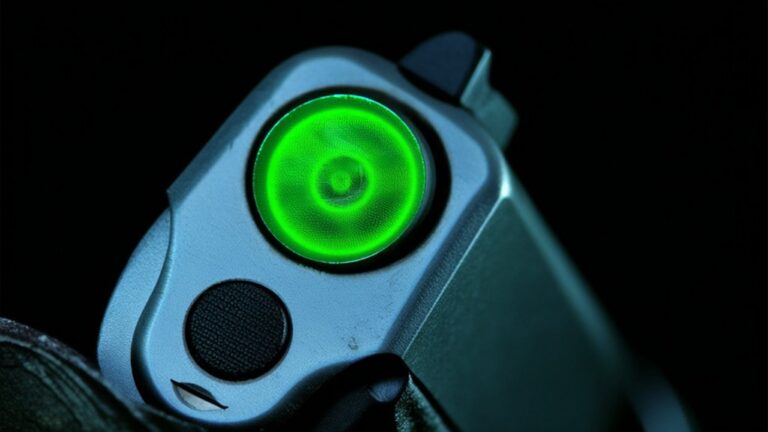
You can expect your tritium sights to last about 10 to 12 years before their glow starts to fade noticeably. They work by emitting beta particles that cause the phosphor to glow without needing batteries. Brightness dims gradually due to tritium’s 12.3-year half-life, with heat and sunlight speeding up decay. Proper care, storage, and maintenance can extend their life. Keep going to discover how to maximize your sights’ performance and when to replace them.
Key Takeaways
- Tritium sights typically last about 10 to 12 years before noticeable brightness dimming occurs due to radioactive decay.
- The half-life of tritium is approximately 12.3 years, causing gradual brightness reduction over time.
- Proper storage in cool, dark places and avoiding heat exposure can help extend sight lifespan.
- Signs of fading include diminished glow and difficulty aiming in low-light conditions, signaling replacement need.
- High-quality brands often provide more consistent brightness and durability throughout the sight’s lifespan.
What Are Tritium Sights and How Do They Work?
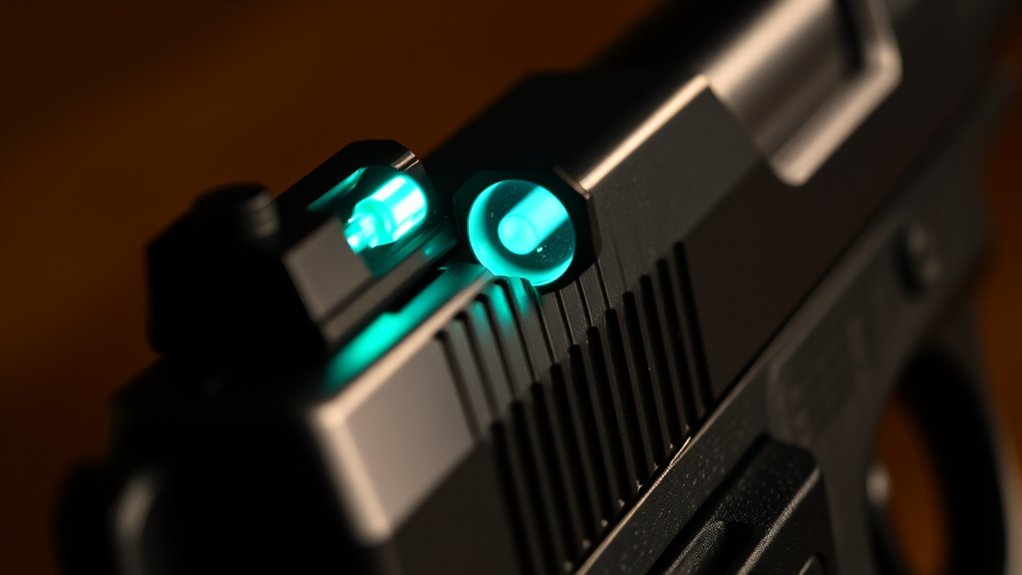
Although you mightn’t notice them at first, tritium sights play an essential role in low-light shooting conditions by providing a glowing aiming point.
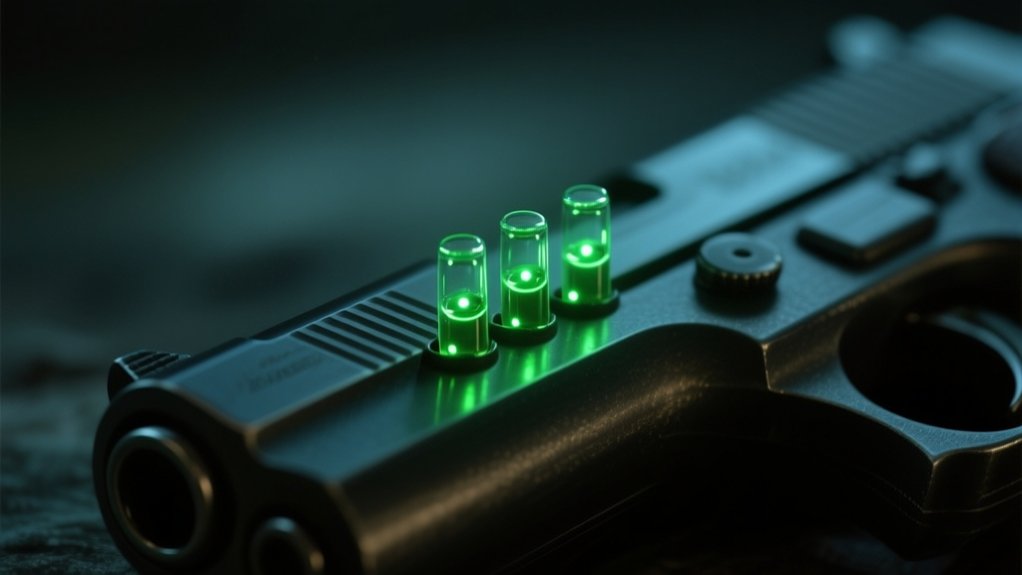
These sights use tiny vials filled with tritium gas, a radioactive isotope of hydrogen. When tritium decays, it releases electrons that interact with a phosphorescent material inside the vial, causing it to glow.
This glow is steady and doesn’t rely on external light sources, so you’ll always have a visible target in dim or dark environments.
You’ll find tritium sights commonly on firearms, helping you aim quickly and accurately in situations where traditional sights fail.
Their self-illuminating nature makes them reliable, especially when seconds count and lighting is poor.
Understanding this helps you appreciate their importance in shooting gear.
How Do Tritium Sights Glow Without Batteries?
You might wonder how tritium sights glow without needing batteries. It all starts with the radioactive decay of tritium.
This decay releases energy that excites a phosphor material inside the sight.
This energy emission creates the constant glow you see, even in complete darkness.
Radioactive Decay Process
Since tritium sights don’t rely on batteries, they glow through a natural radioactive decay process. Tritium, a radioactive isotope of hydrogen, emits low-energy beta particles as it decays. These particles interact with the phosphor material inside the sight, causing it to emit visible light continuously without external power. This process lasts until the tritium’s activity diminishes markedly over time.
| Component | Role | Characteristic |
|---|---|---|
| Tritium (³H) | Radioactive source | Emits beta particles |
| Beta Particles | Energy carriers | Low penetration power |
| Phosphor Material | Light emission | Converts energy to glow |
| Glass Tube | Containment | Sealed, durable |
| Decay Rate | Determines lifespan | Half-life ~12.3 years |
Understanding this decay helps you know why tritium sights glow reliably without batteries.
Phosphor Material Role
When beta particles emitted by tritium strike the phosphor material inside the sight, they excite its atoms, causing them to release visible light. This phosphor coating, often made from compounds like zinc sulfide, plays a vital role in turning the invisible radiation into a glowing dot you can see. Without this material, the energy from tritium wouldn’t produce any light, leaving the sight dark. The phosphor’s efficiency determines how bright and long-lasting the glow appears to you. Over time, this material can degrade, impacting the brightness. But as long as the phosphor remains intact and responsive, you’ll have a clear, consistent glow without needing batteries or external power sources to illuminate your sight in low-light conditions.
Energy Emission Mechanism
Although tritium sights don’t rely on batteries, they glow continuously thanks to a natural radioactive process.
Tritium, a radioactive isotope of hydrogen, emits low-energy beta particles as it decays. These particles collide with the phosphor coating inside the sight’s glass vial, exciting the phosphor atoms. When these atoms return to their normal state, they release visible light, causing the sight to glow. This process is called radioluminescence.
Because the beta particles are weak, they won’t harm you or the environment. The glow you see doesn’t depend on external power, so it works in complete darkness without recharging.
Understanding this mechanism helps you appreciate why tritium sights provide reliable, consistent illumination for years without maintenance or batteries.
The Average Lifespan of Tritium Sights
Understanding the average lifespan of tritium sights helps you plan for timely replacements and maintain ideal visibility. Typically, tritium sights last between 10 to 12 years before their brightness considerably diminishes.
This lifespan depends on how much tritium gas is sealed inside the vial and the quality of the manufacturing process. Over time, the glow will gradually fade, making the sights less effective in low-light conditions.
You’ll want to monitor your sights regularly and consider replacing them once you notice a drop in brightness or clarity.
Proper care, like avoiding extreme impacts or exposure to harsh chemicals, can help you get the most out of your tritium sights throughout their lifespan, ensuring your aim stays reliable when it matters most.
How Tritium’s Half-Life Affects Sight Brightness
Since tritium emits light by radioactive decay, its half-life directly impacts how bright your sights remain over time. Tritium’s half-life is about 12.3 years, meaning after that period, the brightness drops to roughly half its original intensity.
So, if your tritium sights started out very bright, expect them to noticeably dim after 12 years. After another half-life, they dim further, and so on. This gradual decline happens because the tritium atoms lose their radioactivity, producing less light.
You won’t see a sudden blackout; instead, your sights will slowly fade, which can affect your ability to quickly acquire targets in low-light conditions. Understanding this half-life helps you anticipate when you might need to replace your tritium sights to maintain ideal visibility.
Key Environmental and Usage Factors That Shorten Tritium Sight Life
When you rely on tritium sights, keep in mind that certain environmental conditions and how you use your firearm can shorten their effective lifespan. Exposure to extreme heat, for example, can accelerate the degradation of the tritium gas inside the vial.
Similarly, moisture or water intrusion may cause corrosion or damage to the sight’s casing, compromising its seal and brightness. Rough handling or frequent impacts can also crack the tritium vial, leading to a loss of illumination.
Additionally, prolonged exposure to direct sunlight can cause the phosphor coating inside the sight to fade faster than normal.
- Extreme temperatures, especially heat
- Moisture and water exposure
- Physical shocks and impacts
- Continuous direct sunlight exposure
Taking care in these areas helps preserve your tritium sights longer.
Signs You Need to Replace Tritium Sights
Even with careful maintenance, tritium sights don’t last forever. You’ll notice when the glow dims considerably or disappears altogether—these are clear signs it’s time to replace them. Also, if the sight’s glass is cracked or foggy, your accuracy can suffer. Physical damage or corrosion around the sight’s base is another red flag. Keep an eye out for these issues to ensure your sights remain reliable.
| Sign | What It Means | Action Needed |
|---|---|---|
| Dim or No Glow | Tritium decay | Replace immediately |
| Cracked/Foggy Lens | Compromised visibility | Inspect and replace |
| Corrosion/Damage | Potential malfunction risk | Clean or replace |
Don’t wait until you miss a shot—replace your tritium sights at the first sign of trouble.
When and How to Upgrade Your Tritium Sights
You’ll want to upgrade your tritium sights once you notice the glow fading or dimming considerably.
Timing your replacement right guarantees you maintain clear visibility when it counts. Focus on choosing high-quality options that fit your needs and provide lasting brightness.
Signs Tritium Is Fading
Although tritium sights are known for their long-lasting glow, they don’t shine forever. You’ll want to watch for signs that indicate your sights are fading to maintain accuracy and safety. Fading tritium can compromise your target acquisition, especially in low-light conditions.
Here are key signs you should look for:
- Diminished brightness: The glow appears noticeably weaker than before.
- Uneven illumination: Some dots glow dimmer or not at all.
- Difficulty seeing sights in darkness: You struggle to align sights at night.
- Inconsistent glow duration: The brightness fades quickly after initial exposure to light.
If you notice these, it’s time to evaluate upgrading your tritium sights for reliable performance.
Replacement Timing Guidelines
Noticing that your tritium sights are fading means it’s time to think about when and how to substitute them for peak performance. Typically, tritium sights last about 10 to 12 years before their glow dims noticeably.
Don’t wait for them to go completely dark; plan to replace them as soon as you see reduced brightness affecting your aim, especially in low-light conditions. When scheduling a replacement, consider your shooting frequency and environmental exposure, as these factors can accelerate wear.
To replace them, either visit a professional gunsmith or follow manufacturer instructions if you’re confident in DIY installation. Timely replacement ensures you maintain accuracy and safety without interruption.
Staying proactive with your sights keeps your firearm ready whenever you need it.
Choosing Quality Upgrade Options
When upgrading your tritium sights, choosing high-quality options is crucial to guarantee durability and peak brightness. You want sights that last longer and perform consistently under various conditions. Focus on proven brands known for quality tritium vials and robust housings.
Consider these factors when selecting upgrades:
- Brightness and visibility: Ensure the tritium glow remains strong in low light.
- Build materials: Look for corrosion-resistant metals like stainless steel or aluminum.
- Compatibility: Verify the sights fit your firearm model without modifications.
- Warranty and support: Choose manufacturers offering good customer service and replacement policies.
Upgrading thoughtfully means you’ll enjoy reliable, long-lasting sight performance without frequent replacements or surprises in the field.
Tritium Sight Lifespan: Brand Comparisons
Since tritium sight lifespan varies by manufacturer, choosing the right brand matters if you want reliable performance over time. Brands like Trijicon and Meprolight are known for producing tritium sights that last around 12 years before noticeable dimming occurs.
AmeriGlo and XS Sight Systems typically offer a similar lifespan but sometimes with slight variations depending on the specific model. You’ll find that premium brands invest more in quality control, guaranteeing consistent brightness and durability.
On the other hand, budget brands may have shorter effective lifespans or inconsistent performance. When comparing brands, check the warranty and user reviews to gauge long-term reliability.
Ultimately, selecting a reputable manufacturer helps assure your tritium sights stay bright and functional well past a decade.
Cost vs. Lifespan of Tritium Sights
You’ll want to weigh the initial purchase price against how often you’ll need to replace your tritium sights.
Frequent replacements can add up, affecting your overall cost.
Let’s look at how these factors impact the long-term value you get from your investment.
Initial Purchase Price
Choosing tritium sights means balancing upfront cost with their expected lifespan. You want to invest wisely, ensuring you get durability without overspending.
Tritium sights typically cost more than standard fiber optic or painted sights, but their self-illuminating feature justifies the price for many users.
When considering the initial purchase price, keep these factors in mind:
- Brand reputation affects cost and quality.
- Sight material influences durability and price.
- Tritium vial quality impacts brightness and longevity.
- Installation complexity can add to overall expenses.
Replacement Frequency Impact
Although tritium sights offer reliable illumination, they don’t last forever, so you’ll need to plan for periodic replacements. Typically, tritium sights have a lifespan of 8 to 12 years before their glow dims considerably. This means you’ll face recurring costs over time, not just a one-time purchase.
When balancing cost versus lifespan, consider how often you use your firearm and how critical consistent sight visibility is for you. Frequent replacements might seem costly upfront, but they ensure peak performance.
On the other hand, stretching replacements too long can compromise sight effectiveness. By understanding this replacement frequency impact, you can budget wisely and keep your sights functioning properly without unexpected expenses catching you off guard.
Long-Term Value Analysis
When evaluating tritium sights, balancing their upfront cost against their lifespan helps you determine their true long-term value.
While the initial price might seem high, you get consistent, low-light visibility without needing batteries or external power. Over time, this can save you money and hassle.
Consider these factors in your analysis:
- Initial cost: Higher than standard sights but includes self-illumination technology
- Lifespan: Typically 8-12 years before brightness diminishes notably
- Replacement frequency: Less frequent replacements mean lower ongoing costs
- Performance reliability: Consistent glow regardless of weather or conditions
How Environmental Conditions Affect Tritium Sight Durability
Since tritium sights rely on sealed radioactive gas to emit light, environmental factors like temperature, humidity, and exposure to harsh chemicals can directly impact their lifespan. You should know that extreme heat can weaken the seal, causing gas leakage and reduced brightness. High humidity may promote corrosion, while chemicals like solvents can damage the sight’s casing.
Here’s a quick overview of how conditions affect durability:
| Environmental Condition | Effect on Tritium Sights |
|---|---|
| High Temperature | Accelerates gas decay |
| High Humidity | Promotes corrosion |
| Chemical Exposure | Damages casing/seals |
| Physical Impact | Can crack or break the vial |
| Normal Indoor Use | Minimal effect, longest life |
Keep these factors in mind to maximize your tritium sight’s effective lifespan.
Best Alternatives to Tritium Sights for Low-Light Shooting
If you find tritium sights less reliable or want options that don’t rely on radioactive materials, several alternatives can enhance your low-light shooting experience. You’ve got choices that offer brightness and durability without the longevity concerns of tritium.
Consider these alternatives:
Explore these alternatives to tritium sights for enhanced low-light shooting performance.
- Fiber Optic Sights: Capture ambient light and glow brightly in daylight and low light.
- LED Sights: Battery-powered, providing consistent illumination with adjustable brightness.
- Photoluminescent (Glow-in-the-Dark) Paints: Charge under light and glow for hours without batteries.
- Night Vision-Compatible Sights: Designed for use with night vision devices, improving visibility in complete darkness.
Each option has unique benefits, so pick the one that fits your shooting style and environment best.
Tips to Extend the Life of Your Tritium Sights
Although tritium sights naturally lose brightness over time, you can take simple steps to maximize their lifespan and maintain ideal visibility. Avoid exposing your sights to extreme heat or direct sunlight for extended periods, as this accelerates decay. Store your firearm in a cool, dark place when not in use. Regularly clean your sights gently to prevent dirt buildup, which can obscure the glow. Handle your firearm carefully to avoid damaging the tritium capsules.
| Tip | Why It Helps |
|---|---|
| Avoid Heat & Sunlight | Slows tritium decay |
| Store in Cool, Dark Spot | Preserves glow longer |
| Clean Regularly | Maintains clear visibility |
Frequently Asked Questions
Are Tritium Sights Safe to Use on All Firearms?
Yes, you can safely use tritium sights on all firearms. They’re designed to be durable and secure, with no risk of radiation exposure during normal use, so you don’t have to worry about safety concerns.
Can Tritium Sights Be Used Underwater?
You dive deep, water pressure pressing in, yet your tritium sights glow steadily. Yes, you can use them underwater—they’re sealed and waterproof, designed to keep their luminous glow even in the darkest, wettest conditions.
How Do Tritium Sights Compare to Fiber Optic Sights?
Tritium sights glow in the dark without light, while fiber optic sights gather ambient light to shine bright. You’ll prefer tritium for low-light use and fiber optics for daylight visibility and faster target acquisition.
Do Tritium Sights Require Special Cleaning Methods?
You don’t need special cleaning methods for tritium sights. Just wipe them gently with a soft cloth to remove dirt and avoid harsh chemicals or abrasive materials that could damage the glow tubes or their protective coating.
Are Tritium Sights Legal for Hunting in All States?
You’ll find tritium sights legal for hunting in most states, but some have restrictions. Always check local regulations before hunting, so you don’t accidentally break any laws or face penalties for using them.
Conclusion
Tritium sights typically last about 10 to 12 years, thanks to tritium’s 12.3-year half-life. This means after a decade, your sights will still glow but at half their original brightness. Knowing this, you can plan replacements without surprises. To get the most out of your sights, avoid extreme heat or impacts. Remember, while they’re pricey, their reliable, battery-free glow makes them worth it for low-light shooting.