How To Shoot With A Red Dot Sight?
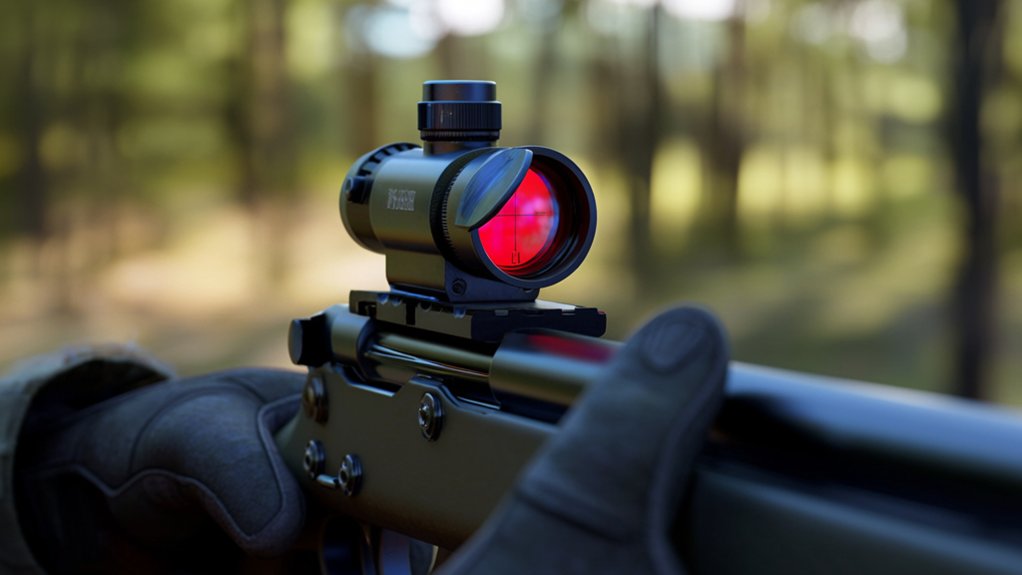
To shoot with a red dot sight, start by securely mounting and zeroing it for your firearm. Keep both eyes open, align your dominant eye behind the sight, and place the red dot directly on your target without over-focusing on the reticle. Use a firm grip and practice smooth presentation for quick target acquisition. Adjust brightness for your environment and practice drills to balance speed and accuracy. Keep your sight maintained, and you’ll improve quickly with the right techniques ahead.
Key Takeaways
- Mount and zero the red dot sight properly on a stable platform for accurate targeting at your preferred distance.
- Adjust brightness and reticle settings to ensure clear visibility in varying light conditions.
- Keep both eyes open and align your dominant eye directly behind the sight for quick target acquisition.
- Focus on placing the red dot on the target rather than perfect sight alignment to improve shooting speed and accuracy.
- Practice shooting drills regularly to build muscle memory, balance speed with precision, and maintain consistent performance.
How to Mount Your Red Dot Sight Correctly
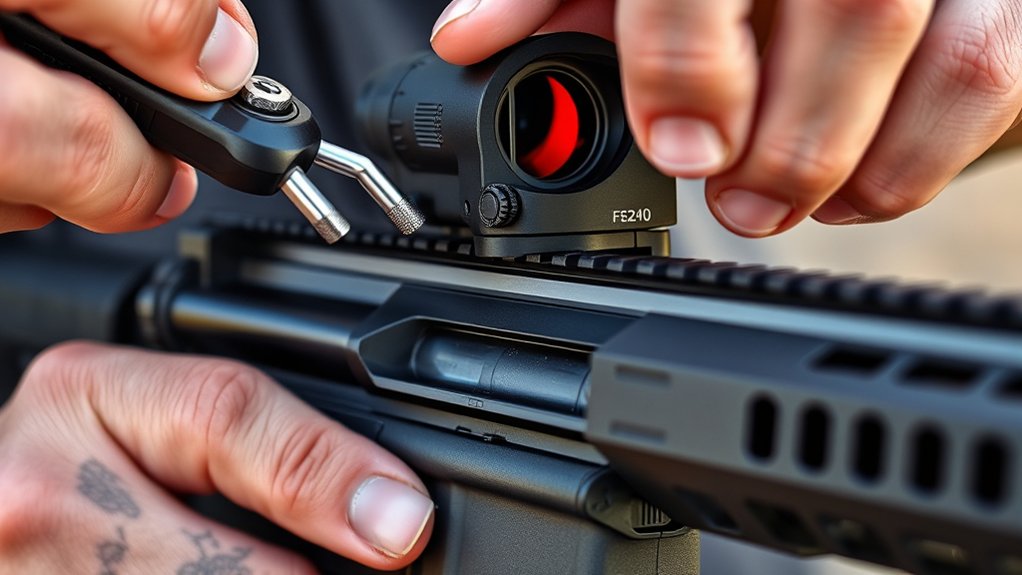
Before you start shooting with your red dot sight, you need to mount it properly to guarantee accuracy and reliability. First, verify your firearm is unloaded and safe.
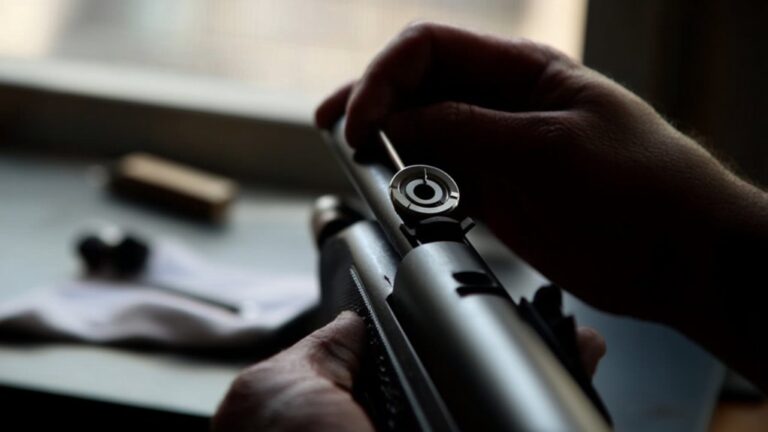
Choose the right mounting plate or rail system compatible with your red dot sight. Align the sight on the rail, making sure it sits flush without gaps.
Tighten the screws evenly but avoid over-tightening, as this can damage the sight or rail. Use a torque wrench if available to apply the manufacturer’s recommended pressure.
Double-check the sight’s position to verify it’s centered and aligned with your firearm’s barrel.
Once mounted securely, inspect for any movement or wobble. Proper mounting prevents shifting during recoil and is essential for consistent performance.
How to Zero Your Red Dot Sight for Accuracy
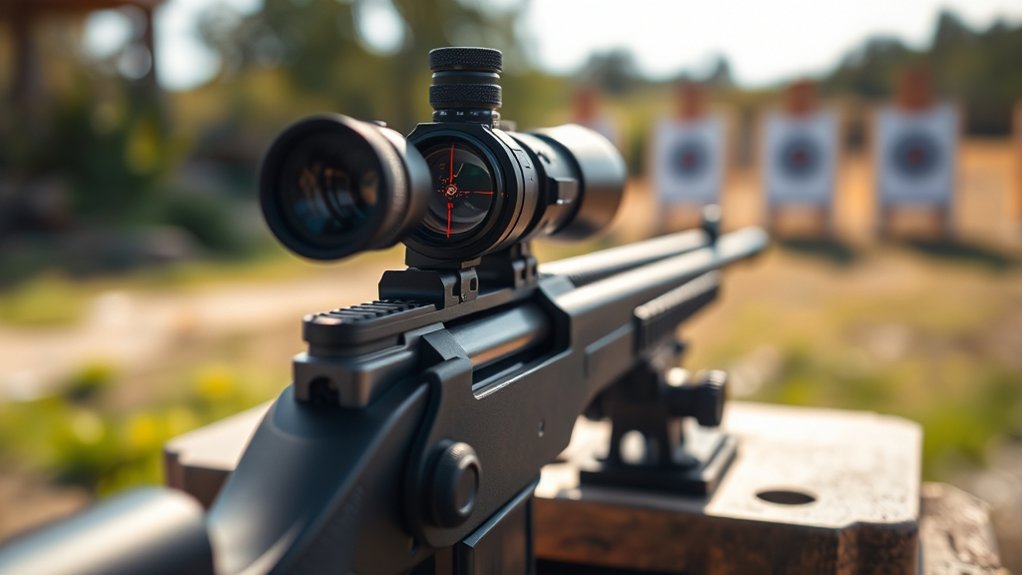
Once you’ve securely mounted your red dot sight, you need to zero it to make certain your shots hit the target accurately.
Start by setting up a target at a known distance, typically 25 yards for handguns or 50-100 yards for rifles.
Set your target at a precise distance—25 yards for handguns, 50 to 100 yards for rifles.
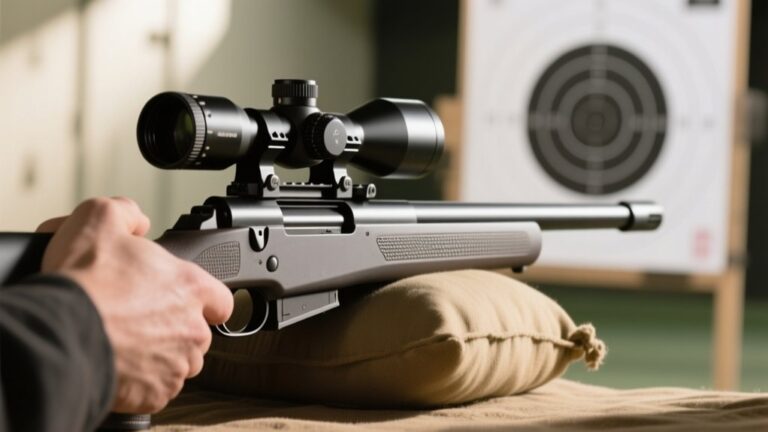
Rest your firearm on a stable surface or use a shooting rest to minimize movement.
Aim at the center of the target and fire a three-shot group.
Observe where the shots land relative to your red dot.
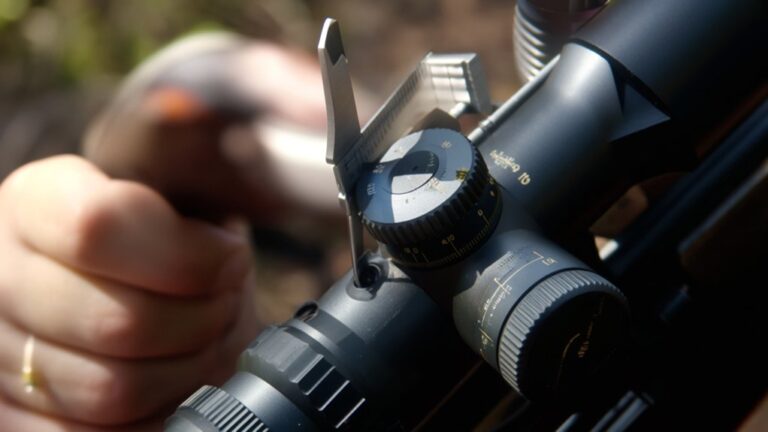
Use the windage and elevation adjustment turrets to move the dot toward the point of impact.
Repeat the process until your shots consistently hit the bullseye.
How to Adjust Brightness and Reticle Settings on Your Red Dot Sight
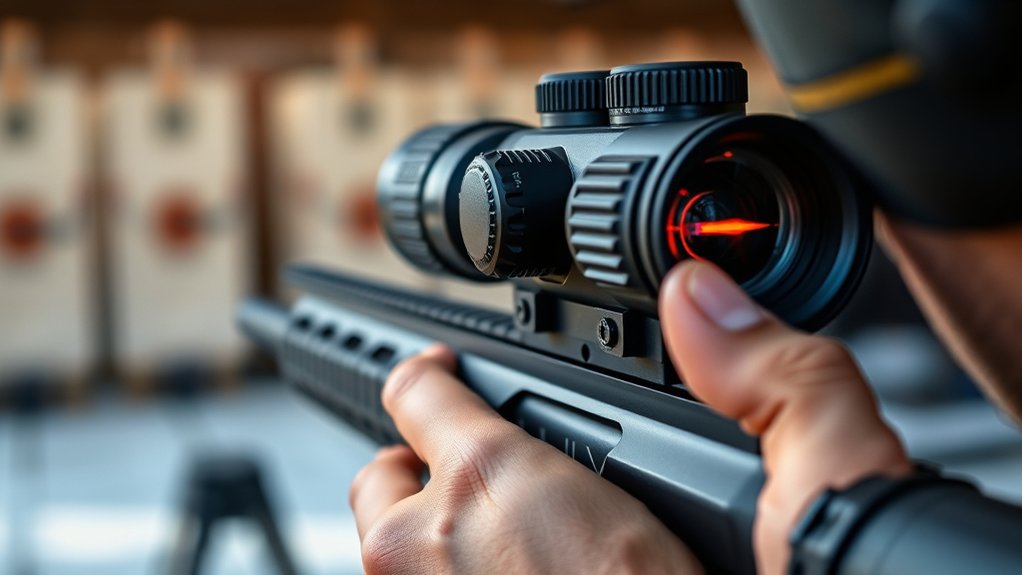
You’ll want to start by adjusting the brightness to match your lighting conditions for a clear sight picture.
Next, explore different reticle types to find one that suits your shooting style.
Don’t forget to customize reticle colors to improve contrast and visibility.
Adjusting Brightness Levels
Although red dot sights come with preset brightness levels, adjusting them to match your environment guarantees ideal visibility and accuracy. Start by turning on your sight and locating the brightness adjustment buttons or dial.
In bright daylight, increase the brightness so the dot stays visible against glare. In low light or indoors, lower the brightness to prevent the dot from overpowering your target.
Avoid setting it too dim, or you risk losing the reticle, and too bright can cause eye strain. Test different settings in various lighting conditions to find what works best for you.
Selecting Reticle Types
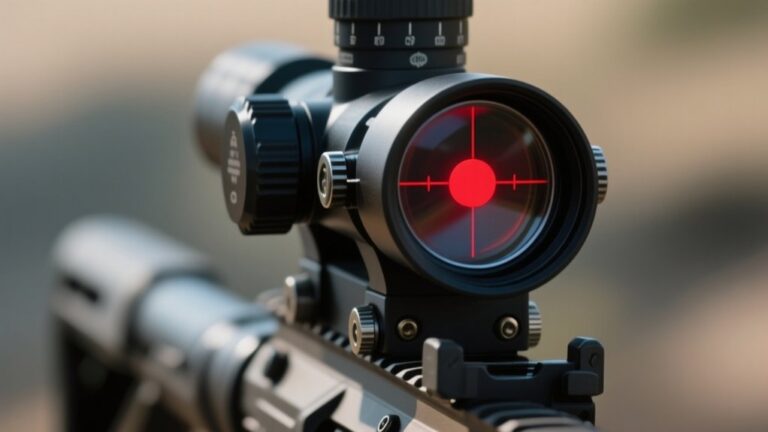
When customizing your red dot sight, selecting the right reticle type plays an essential role in enhancing your shooting accuracy. You’ll find various reticle styles, such as single dots, circle dots, or crosshairs.
Choose a reticle that matches your shooting needs—single dots are great for quick target acquisition, while circle dots can help with faster target shift. Crosshairs offer precise aiming but may slow you down in close-quarters.
Consider the size of the reticle; smaller dots offer precision, but larger ones are easier to see in low light. Test different reticle types on your sight to see which feels natural and improves your confidence.
Customizing Reticle Colors
Since lighting conditions can change rapidly, customizing the reticle color and brightness on your red dot sight guarantees you maintain clear visibility and precise aiming.
To adjust these settings effectively, follow these steps:
- Power on your red dot sight and locate the brightness adjustment buttons, usually marked with “+” and “-” symbols.
- Cycle through reticle color options (commonly red and green) to find the one that contrasts best with your environment.
- Adjust the brightness level so the reticle remains visible without overwhelming your vision or causing glare.
- Test your settings in various lighting conditions to confirm the reticle stays sharp and easy to track.
How to Hold Your Firearm for Optimal Red Dot Sight Use
To get the most from your red dot sight, you need to hold your firearm with a firm, steady grip.
Make sure your eye is properly aligned with the sight to see the reticle clearly without any distortion.
This setup helps you aim faster and more accurately every time.
Proper Grip Techniques
Although mastering your red dot sight is essential, your grip on the firearm plays an equally important role in accuracy and control. A solid grip reduces recoil and keeps your sight picture steady, helping you hit your target consistently.
Here’s how to guarantee your grip supports maximum red dot use:
- Firm but not tight: Grip the firearm firmly to control recoil, but avoid excessive tension that causes shaking.
- High hand placement: Position your support hand high on the grip to enhance stability.
- Thumbs forward: Point both thumbs forward along the frame for better control and quicker follow-up shots.
- Consistent pressure: Apply even pressure from both hands, preventing the gun from shifting during firing.
Master these techniques to complement your red dot sight’s precision.
Aligning Eye With Sight
How exactly should you align your eye with a red dot sight for the best accuracy? Keep your eye centered with the sight’s lens, so the red dot appears clear and undistorted. Unlike traditional sights, you don’t need perfect eye-to-sight alignment; the dot stays on target even if your eye shifts slightly. Hold your firearm steadily at a comfortable distance, keeping both eyes open to maintain situational awareness.
| Eye Position | Sight Clarity | Accuracy Impact |
|---|---|---|
| Centered | Clear, sharp | Highest |
| Slightly off | Slight blur | Moderate |
| Far off | Dot distorted | Low |
Focus on keeping your eye roughly centered to maximize your red dot’s precision.
How to Aim With Your Red Dot Sight for Fast Target Acquisition
When aiming with your red dot sight, where you focus matters most for quick target acquisition. Instead of zeroing in on the dot itself, keep your eyes fixed on the target, letting the red dot naturally align with it.
Follow these steps:
Follow these steps for faster aiming and better target focus with your red dot sight.
- Keep both eyes open to maintain peripheral vision and situational awareness.
- Place the red dot directly on the target without worrying about perfect alignment.
- Trust your brain to superimpose the dot onto the target quickly and accurately.
- Adjust your focus between the target and the sight as needed to maintain clarity.
How to Acquire Targets Quickly Using a Red Dot Sight
To acquire targets quickly with your red dot sight, you need to understand how the reticle works and how to align your eye properly.
Mastering eye alignment techniques helps you maintain speed without sacrificing accuracy.
Let’s explore how to balance fast target acquisition with precise shooting.
Understanding Red Dot Reticle
Although red dot sights might seem simple at first glance, understanding their reticles is key to acquiring targets quickly and accurately. The reticle—the illuminated aiming point—helps you zero in on your target with minimal effort. Here’s what you need to know:
- Dot Size: Smaller dots provide precision for distant targets; larger dots speed up close-range aiming.
- Dot Color: Red is most common for visibility, but some sights offer green for better contrast in bright environments.
- Brightness Levels: Adjust brightness to match ambient light, ensuring the reticle is clear but not overpowering.
- Reticle Shape: Most red dots use a simple dot, but some include circles or crosshairs for added reference points.
Mastering these aspects improves your speed and accuracy when engaging targets with a red dot sight.
Eye Alignment Techniques
Since quick target acquisition depends heavily on your eye alignment, developing a consistent method to position your eye relative to the red dot sight is essential.
Start by keeping both eyes open to maintain peripheral awareness and depth perception.
Align your dominant eye directly behind the sight, so the red dot naturally appears on your target without shifting your head or sight.
Avoid forcing your eye too close; instead, find a comfortable distance where the dot remains clear and sharp.
Practice bringing your firearm up to your line of sight smoothly, allowing your eye to find the dot quickly.
This consistency reduces the time needed to acquire targets, letting you react faster and shoot more accurately under pressure.
Speed Versus Accuracy Balance
When you want to acquire targets quickly with a red dot sight, you need to find the right balance between speed and accuracy. Rushing your shot can lead to misses, while being too slow wastes precious time. Here’s how to strike that balance:
- Practice target shifts to improve your ability to move the dot smoothly.
- Focus on the dot, not the target, letting your eyes relax rather than strain.
- Keep your sight properly zeroed to minimize adjustments mid-shot.
- Develop muscle memory through dry-fire drills to build confidence and speed.
Effective Shooting Drills to Improve Red Dot Sight Accuracy
To improve your accuracy with a red dot sight, you need to practice specific shooting drills that sharpen your focus and control.
Start with the dot drill: place five targets in a tight group and aim to hit each precisely using only the red dot. This helps you master dot placement and trigger control.
Next, try shifting between targets quickly without losing accuracy—this builds speed and target acquisition.
Incorporate the controlled pairs drill by firing two shots per target, reinforcing consistency.
Finally, practice shooting from different positions—standing, kneeling, and prone—to adapt your red dot use under varied conditions.
Consistent repetition of these drills will improve your muscle memory, allowing you to rely on your red dot sight confidently and shoot accurately every time.
How to Maintain and Clean Your Red Dot Sight
Although red dot sights are designed for durability, you still need to maintain and clean them regularly to guarantee peak performance. Neglecting this can lead to foggy lenses, dirt buildup, or battery issues that affect accuracy.
Regular maintenance is essential to prevent foggy lenses, dirt buildup, and battery issues that impair accuracy.
Here’s how to keep your red dot sight in top shape:
- Clean the lens gently with a microfiber cloth and lens cleaner to avoid scratches.
- Inspect and replace batteries periodically to prevent sudden failures.
- Check mounting screws and tighten them to ensure your sight stays firmly in place.
- Store your sight properly in a protective case when not in use to shield it from dust and damage.
Common Mistakes to Avoid With Red Dot Sights
Because red dot sights offer quick target acquisition, it’s easy to overlook proper handling and setup. One common mistake isn’t zeroing your sight correctly; always take the time to calibrate it at your preferred distance. Don’t rely solely on the red dot—practice aligning your sight with your target consistently.
Avoid using excessive brightness settings, which can cause the dot to bloom and obscure your target. Another error is neglecting to check battery life before heading out; a dead battery means no dot.
Also, don’t forget to maintain a proper cheek weld and posture to ensure accuracy. Finally, avoid touching the lens with your fingers to prevent smudges that impair visibility.
Paying attention to these details will enhance your shooting experience.
How to Troubleshoot Common Red Dot Sight Issues
When your red dot sight isn’t performing as expected, you’ll want to identify the issue quickly to get back on target. Start by checking these common problems:
- No dot visible – Replace or recharge the battery; also verify the battery is inserted correctly.
- Dot flickers or dims – Inspect for loose connections or dirty battery contacts. Clean if necessary.
- Dot appears blurry – Adjust the focus or clean the lens with a microfiber cloth to remove debris.
- Sight won’t zero – Confirm the sight is properly mounted and use the adjustment knobs to recalibrate.
Frequently Asked Questions
What Types of Firearms Are Compatible With Red Dot Sights?
You can use red dot sights on pistols, rifles, and shotguns. They work well on handguns for quick target acquisition and are popular on AR-style rifles and tactical shotguns for improved accuracy and faster shooting.
Are Red Dot Sights Suitable for Low-Light Conditions?
You’ll find red dot sights quite friendly when the lights dim, as they gently illuminate your target. They let you aim confidently in low-light, making those tricky moments feel a bit more manageable and under control.
How Long Does the Battery Typically Last in a Red Dot Sight?
You can expect a red dot sight’s battery to last anywhere from 1,000 to 50,000 hours, depending on the model and brightness settings. Always keep spare batteries handy to avoid surprises during use.
Can Red Dot Sights Be Used for Long-Range Shooting?
You can use red dot sights for long-range shooting, but they’re best for close to mid-range. For precision at longer distances, you’ll want a magnified optic or scope to improve accuracy and target identification.
What Are the Differences Between Reflex and Holographic Red Dot Sights?
Reflex sights project a simple LED dot on a lens, while holographic sights use a laser to create a hologram reticle. You’ll find holographic sights offer better clarity and target acquisition but cost more.
Conclusion
Using a red dot sight can boost your shooting speed by up to 30%, making target acquisition faster and more precise. By properly mounting, zeroing, and maintaining your sight, you’ll maximize its effectiveness. Remember to avoid common mistakes and practice regularly to build confidence. With these tips, you’ll not only improve your accuracy but also enjoy a more efficient and enjoyable shooting experience every time you pick up your firearm.