How To Shoot Open Sights?
To shoot open sights effectively, focus sharply on the front sight, keeping it centered in the rear notch and level with its edges. Stand with your feet shoulder-width apart, lean forward slightly, and maintain a firm but relaxed grip. Control your breathing by exhaling slowly before pulling the trigger with a smooth, steady squeeze. Make small sight adjustments based on shot placement to improve accuracy. Mastering these basics sets the foundation for refining your technique further.
Key Takeaways
- Align the front sight centered and level within the rear sight notch, focusing sharply on the front sight for accurate targeting.
- Adopt a stable stance with feet shoulder-width apart, knees slightly bent, and lean forward to manage recoil effectively.
- Grip the firearm firmly with both hands, keeping wrists straight and trigger pull slow and steady to maintain control.
- Adjust sight brightness and minimize glare based on lighting conditions, practicing dry firing to improve sight picture and trigger control.
- Avoid rushing shots by controlling breathing, maintaining consistent sight alignment, and making small sight adjustments based on shot groups.
How To Align Front And Rear Open Sights Correctly
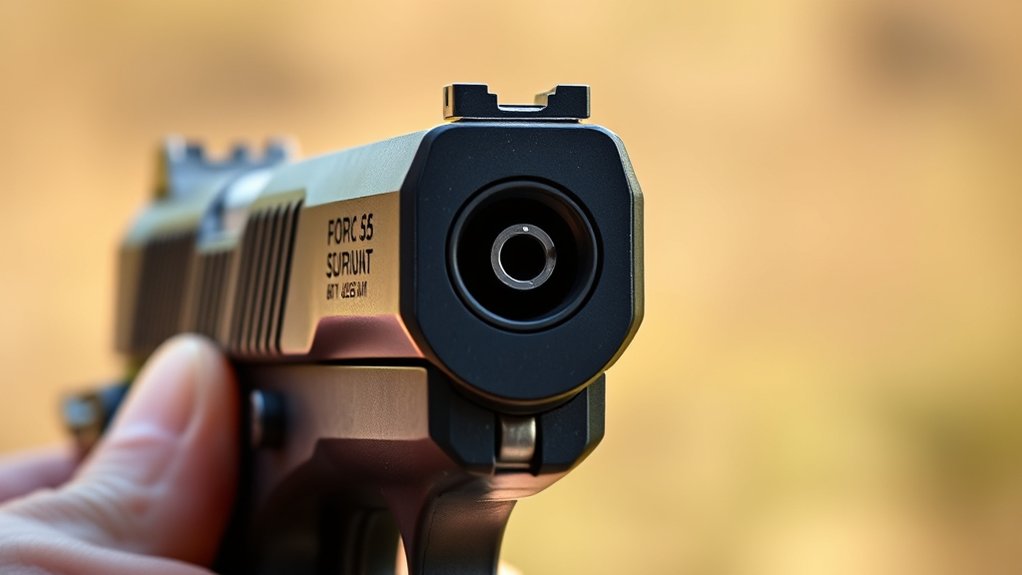
Before you take a shot, you need to align the front and rear open sights properly.
Focus on the front sight post, placing it precisely in the center of the rear sight notch. Make sure the top of the front sight is level with the top edges of the rear sight.
Center the front sight post in the rear notch and keep their tops perfectly aligned for accuracy.
If the front sight is too high or low, your shot will miss the target vertically. If it’s off to either side, the bullet will stray horizontally.
Keep both eyes open for a better field of view, but concentrate on the front sight.
This alignment is essential because your bullet travels where the front sight points, not the target.
With practice, aligning your sights will become second nature, improving your accuracy dramatically.
How To Choose The Right Focus Point For Open Sight Shooting
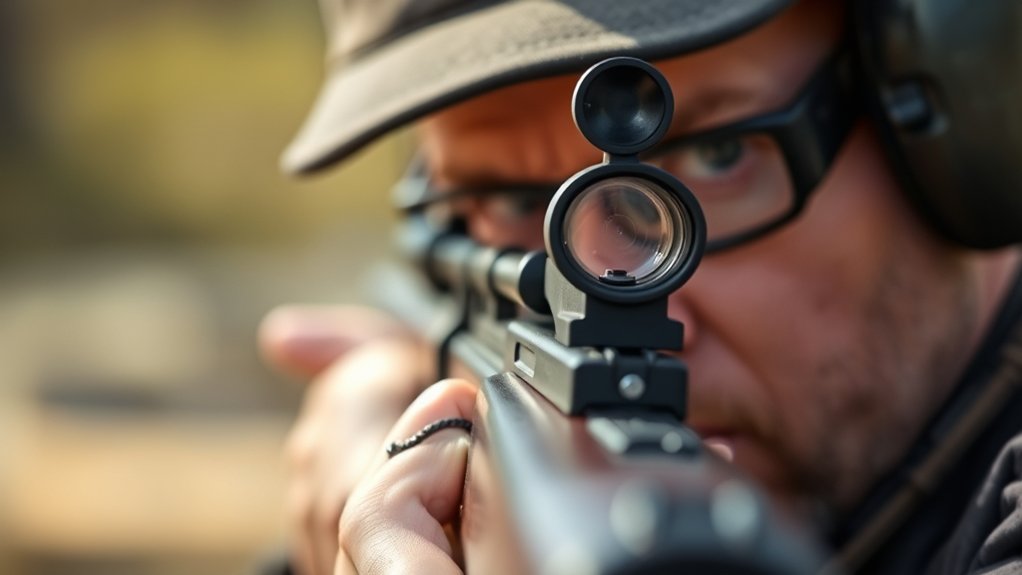
Once you’ve aligned the front and rear sights correctly, the next step is deciding where to concentrate your eyes for the best shot. Your focus should be sharp on the front sight, as it’s the key to accuracy. The rear sight and target will appear slightly blurred, but that’s normal. Focusing on the front sight ensures proper sight alignment and target placement.
| Focus Point | Effect on Shot Accuracy |
|---|---|
| Front Sight | Sharp, improves precision |
| Rear Sight | Blurred, avoid focusing here |
| Target | Slightly blurred, secondary |
| Between Sights | Causes misalignment |
Keep practicing focusing on the front sight to build muscle memory and improve your shooting consistency.
How To Get Comfortable With Your Shooting Stance
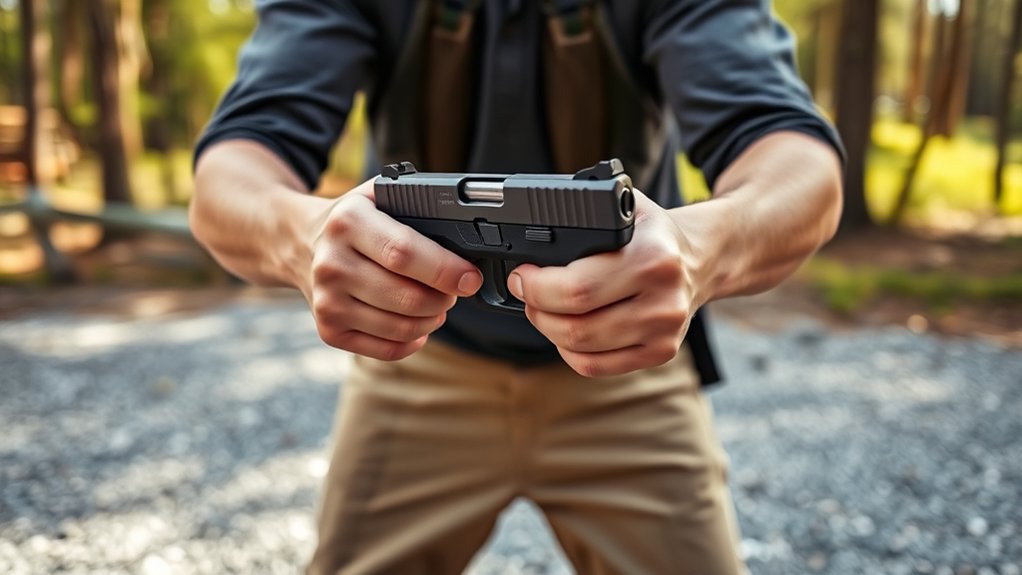
To get comfortable with your shooting stance, focus on proper foot placement to create a stable base.
Keep your body balanced so you can control recoil and maintain accuracy.
When you feel steady, your shots will improve noticeably.
Proper Foot Placement
Although many shooters focus on their grip and sight alignment, proper foot placement is just as essential for a stable shooting stance. Start by positioning your feet shoulder-width apart to give yourself a solid base.
Place your dominant foot slightly behind the other, angling it outward about 30 degrees. This stance helps you stay grounded and prepares you for recoil.
Keep your weight distributed evenly across both feet to avoid unnecessary tension. Avoid locking your knees; instead, keep them slightly bent for flexibility.
Your toes should point roughly in the direction you’re shooting, allowing you to naturally align your body.
Maintaining Body Balance
When you maintain proper body balance, you’ll feel more comfortable and in control while shooting. Stand with your feet shoulder-width apart and distribute your weight evenly between both legs. Keep your knees slightly bent to absorb recoil and maintain flexibility.
Lean forward just a bit from your hips, not your waist, to prevent stiffness and promote stability. Engage your core muscles to support your upper body and reduce swaying.
Avoid locking your elbows; instead, keep them relaxed but steady. As you bring the sights on target, focus on staying grounded and balanced, allowing your body to move naturally with each shot.
Practicing this stance consistently will help you build confidence and improve your accuracy with open sights.
How To Grip Your Firearm For Better Open Sight Accuracy
Since your grip directly affects your control and stability, mastering how to hold your firearm is essential for better open sight accuracy.
Start by placing your dominant hand high on the grip, ensuring your fingers wrap firmly but not too tightly. Your thumb should rest comfortably along the frame, providing support without restricting movement.
Use your support hand to wrap around the dominant hand, with fingers locking beneath the trigger guard. This two-handed grip reduces recoil and keeps the firearm steady.
Keep your wrists straight, avoiding any bend that could cause movement or misalignment.
A proper grip aligns your sights naturally with your line of sight, helping you maintain focus on the front sight and improving shot precision.
Practice your grip consistently to build muscle memory and enhance accuracy.
How To Control Your Breathing For Steady Open Sight Shots
Controlling your breathing plays a crucial role in keeping your shots steady when using open sights. Unsteady breathing can cause slight movements that throw off your aim. To maintain control, try these steps:
- Breathe deeply and slowly: Inhale through your nose and exhale through your mouth to calm your body.
- Time your shot: Shoot during the natural pause after you exhale, when your body is most still.
- Avoid holding your breath too long: Holding it can cause muscle tension and shaking.
- Practice rhythmic breathing: Develop a steady breathing pattern to improve focus and reduce anxiety.
How To Master Trigger Control For Consistent Hits
Breathing steady sets the stage, but your trigger finger ultimately determines your shot’s success.
To master trigger control, place the pad of your index finger on the trigger, not the joint, allowing for a smooth, controlled pull. Avoid jerking or slapping the trigger; instead, squeeze it slowly and steadily until the shot breaks.
Practice dry firing to build muscle memory and improve your feel for the trigger’s resistance.
Keep your hand relaxed to prevent flinching, which can throw off your aim.
Focus on a gradual, consistent trigger press that doesn’t disturb your sight alignment.
Over time, this disciplined approach will help you achieve consistent hits with open sights, turning your shots from lucky to reliable.
How To Manage Sight Picture In Different Lighting Conditions
You’ll need to adjust your sight brightness to keep your target clear in varying light.
Watch out for shadows and glare that can throw off your aim. Learning to manage these factors helps you maintain a steady sight picture every time.
Adjusting Sight Brightness
When lighting changes, adjusting your sight brightness becomes essential to maintain a clear sight picture. You want to guarantee your front sight is visible without overwhelming the target. Here’s how to manage sight brightness effectively:
- Assess ambient light: Quickly evaluate if you’re in bright sunlight, shade, or low light.
- Adjust sight settings: If your sights have brightness controls, increase brightness in low light and reduce it in bright conditions.
- Use sight inserts: Consider using colored or high-contrast inserts to improve visibility.
- Test your sight picture: Before shooting, practice aligning sights in various lighting to find the best brightness setting.
Handling Shadows and Glare
Although changing light can create challenging shadows and glare, you can still maintain a clear sight picture by adjusting your position and focus.
First, move slightly to alter the angle of sunlight hitting your sights—this often reduces glare. If shadows obscure your front sight, try tilting your head or adjusting your stance to let more light illuminate it.
Use your dominant eye to better distinguish contrasts, and keep your focus sharp on the front sight, not the target. In bright conditions, squinting slightly can help minimize glare without losing sight clarity.
How To Handle Recoil While Keeping Your Sights Aligned
Since recoil can easily throw off your aim, learning to manage it while keeping your sights aligned is essential for accurate shooting. To handle recoil effectively, focus on these key steps:
Managing recoil while maintaining sight alignment is crucial for precise and accurate shooting.
- Firm Grip: Hold your firearm firmly but not too tight; this helps control the gun’s movement without causing excessive tension.
- Proper Stance: Position your feet shoulder-width apart and lean slightly forward to absorb recoil more efficiently.
- Follow Through: Keep your eyes on the sights and maintain your sight picture even after the shot is fired, resisting the urge to drop the gun.
- Breath Control: Exhale slowly as you shoot to reduce body movement and help maintain steady aim.
Mastering these techniques lets you handle recoil while keeping your sights locked on target.
How To Adjust Your Open Sights For Better Accuracy
To improve your shooting accuracy, you’ll need to fine-tune your open sights for precise alignment. Start by firing a group of shots at your target to see where the rounds land. If your shots are consistently off-center, adjust the sights accordingly.
For windage (left-right), move the rear sight in the direction you want the bullet to shift. For elevation (up-down), adjust the front or rear sight up or down as needed.
Make small, deliberate adjustments—usually one click at a time—then fire another group to check your progress. Repeat this process until your shots cluster tightly around the bullseye.
Common Mistakes To Avoid When Shooting With Open Sights
Adjusting your sights accurately is a key step, but even with well-tuned open sights, certain mistakes can still throw off your aim. To shoot effectively, steer clear of these common errors:
Proper sight adjustment is crucial, but avoiding common errors ensures your aim stays true and effective.
- Ignoring Sight Alignment: Don’t focus only on the front sight; make sure the front and rear sights line up perfectly.
- Improper Grip: Avoid a loose or uneven grip, as it can cause inconsistent shot placement.
- Rushing the Trigger: Jerking or slapping the trigger disrupts your sight picture; squeeze it smoothly.
- Neglecting Breathing Control: Hold your breath briefly before the shot to minimize movement.
How To Practice Dry Firing To Improve Sight Alignment
To practice dry firing effectively, you’ll want to set up a safe, distraction-free space where you can focus.
Concentrate on aligning your sights perfectly and maintaining a clear sight picture.
Remember to keep your trigger control smooth and consistent every time.
Setting Up Your Space
Although you won’t be firing live rounds, setting up a safe and distraction-free space is essential for effective dry firing practice. This guarantees you can focus on improving your sight alignment without interruptions or hazards.
Here’s how to get your space ready:
- Choose a quiet area free from foot traffic and distractions.
- Use a solid, stable surface to simulate your shooting stance.
- Place a safe backstop behind your target area to catch any accidental discharges.
- Ensure good lighting so you can clearly see the sights and target.
Focus On Sight Picture
When you focus on your sight picture during dry firing, you train your eyes and brain to recognize perfect alignment between the front and rear sights.
Start by holding your firearm or training aid in a stable, consistent position. Look through the rear sight and center the front sight post precisely within it.
Concentrate on keeping the top of the front sight level with the rear sight’s notch, ensuring equal light on both sides. Practice this repeatedly without pulling the trigger, so your muscle memory develops around sight alignment rather than trigger action.
Use a well-lit area and maintain a relaxed, natural posture. Over time, this focused repetition sharpens your ability to quickly and accurately establish the correct sight picture during live firing.
Consistent Trigger Control
Mastering consistent trigger control is essential for maintaining your sight alignment throughout the shot. Dry firing is a perfect way to practice without live ammo, helping you build muscle memory and smooth trigger pulls.
Here’s how to improve your trigger control with dry firing:
- Set up a safe environment – Guarantee your firearm is unloaded and pointed in a safe direction.
- Focus on a steady sight picture – Align your front and rear sights perfectly before each trigger pull.
- Press the trigger slowly and evenly – Avoid jerking or flinching to maintain sight alignment.
- Follow through after the shot – Keep your sights on target until the trigger resets.
Regular dry firing will improve your trigger control, leading to more accurate shots with open sights.
Drills That Build Confidence And Accuracy With Open Sights
Building confidence and accuracy with open sights requires purposeful practice through targeted drills. Start with slow-fire exercises focusing on sight alignment and sight picture. Take your time to guarantee the front sight is perfectly centered and level with the rear sights before squeezing the trigger.
Next, try the dot drill: place a small dot on a target and aim precisely at it, improving your front sight focus.
Incorporate dry-fire practice regularly to build muscle memory without wasting ammo.
Another effective drill is the “flash sight picture,” where you acquire the sight picture quickly and fire, simulating real shooting conditions.
Track your progress by noting groupings and adjusting your technique accordingly. These drills sharpen your skills and boost your confidence with open sights.
Frequently Asked Questions
What Types of Firearms Commonly Use Open Sights?
You’ll commonly find open sights on rifles, shotguns, and handguns, especially in hunting or basic target shooting. They’re simple, durable, and don’t require batteries, making them ideal for beginners and traditional shooters alike.
How Do Weather Conditions Affect Open Sight Shooting?
Weather conditions like rain, fog, and bright sunlight can blur or obscure your open sights, making it harder to aim. Wind can also affect your bullet’s path, so you’ll need to adjust your aim accordingly.
Are Open Sights Suitable for Long-Distance Shooting?
You can’t hit a home run with open sights at long distances; they’re best for close to mid-range shooting. For far-off targets, you’ll want scopes or optics that offer better precision and magnification.
What Maintenance Is Required for Open Sights?
You’ll need to regularly clean your open sights to remove dirt and debris, check for rust, and guarantee screws are tight. Lightly oil metal parts to prevent corrosion, but avoid excess oil that can attract dust.
Can Open Sights Be Used Effectively in Low-Light Situations?
Like trying to read a clock in a dim room, open sights struggle in low light. You can use them, but your accuracy drops. Consider investing in night sights or a flashlight for better results.
Conclusion
Mastering open sights can boost your shooting accuracy considerably—did you know that shooters who practice proper sight alignment improve their hit rate by up to 40%? By focusing on correct alignment, a steady grip, and controlled breathing, you’ll see noticeable progress quickly. Keep practicing those dry-fire drills and stay consistent with your stance. Avoid common mistakes, and you’ll build confidence and precision with every shot. Remember, practice makes perfect!