How To Sight A Muzzleloader?
To sight a muzzleloader, focus sharply on aligning the front post centered and level within the rear sight notch or aperture, keeping your head steady. Start zeroing at 25 yards, firing groups and adjusting windage and elevation with small, precise moves until your point of impact matches your aim. Remember, black powder trajectories drop more and react to wind differently. Master these basics, and you’ll build consistent accuracy—explore further nuances to sharpen your shooting skills.
Key Takeaways
- Align the front sight post centered and level within the rear sight notch or aperture for accurate sight picture and consistent aiming.
- Begin zeroing at 25 yards, then adjust sights at 50 or 75 yards by firing grouped shots and making small windage and elevation corrections.
- Use a stable shooting position with consistent cheek weld and head placement to maintain proper sight alignment and improve accuracy.
- Select sight types (open, aperture, fiber optic) based on shooting conditions, experience, and desired precision.
- Regularly clean and maintain sights and barrel, record adjustments, and practice to develop muscle memory and confidence in shooting.
Muzzleloader Sight Basics
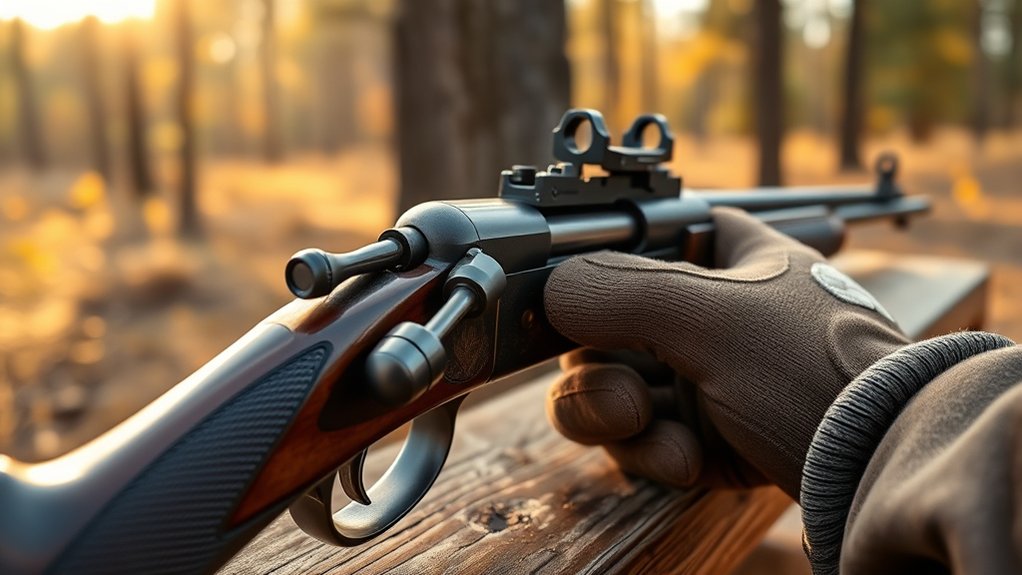
Although muzzleloaders may look simple, their sights require careful attention to guarantee accurate shooting. You’ll find that most muzzleloaders use iron sights, typically a front post and a rear notch or aperture. These sights are designed to align your aim precisely with the target.
It’s essential to understand how to adjust them properly since even a slight misalignment can throw off your shot. You’ll want to focus on keeping the front sight centered in the rear sight and level with the top edge.
Consistent sight picture and proper eye relief play a big role in accuracy. Remember, these basic sights don’t magnify your target, so your concentration on alignment and steadiness is key to hitting your mark.
Choose the Right Sights for Your Muzzleloader
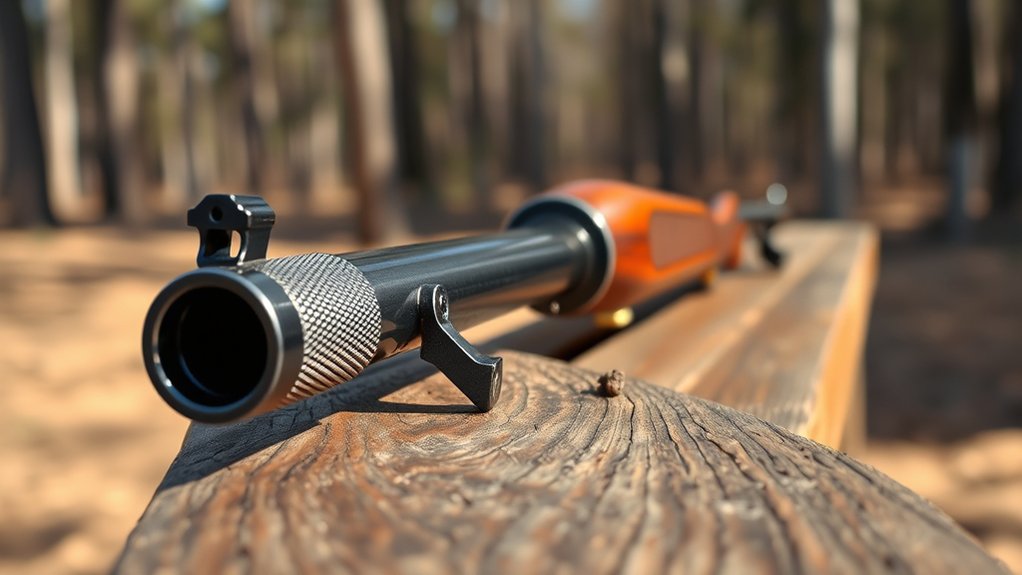
You’ll want to pick sights that match how you plan to use your muzzleloader. Different types of sights offer various benefits depending on your shooting style and conditions.
Let’s explore which sights fit your needs best.
Types Of Muzzleloader Sights
When choosing sights for your muzzleloader, understanding the different types available will help you make the best decision for accuracy and ease of use. The most common sights are open sights, which include a front blade and a rear notch. They’re simple, durable, and ideal for quick target acquisition.
Aperture or peep sights feature a small hole in the rear sight, allowing you to focus better on the front sight and your target, improving precision.
Some shooters prefer globe sights with interchangeable inserts for varying lighting and target conditions.
Additionally, fiber optic sights enhance visibility in low light by gathering ambient light.
Each sight type suits different shooting styles and environments, so knowing their features guarantees you pick the right one for your muzzleloader.
Matching Sights To Use
Since every hunting or shooting scenario demands different levels of precision and speed, choosing the right sights for your muzzleloader can make a significant difference in your performance.
If you’re hunting fast-moving game, opt for open or fiber optic sights that allow quick target acquisition.
For long-range shooting or precision hunting, consider aperture or peep sights that offer better accuracy.
Take into account lighting conditions, too—fiber optic sights work well in low light, while traditional iron sights perform better in bright daylight.
Also, think about your experience level; beginners might find adjustable sights easier to zero in.
Ultimately, match your sights to the conditions and your shooting style to improve accuracy and confidence every time you take a shot.
Set Up Your Shooting Station for Precise Sight-In
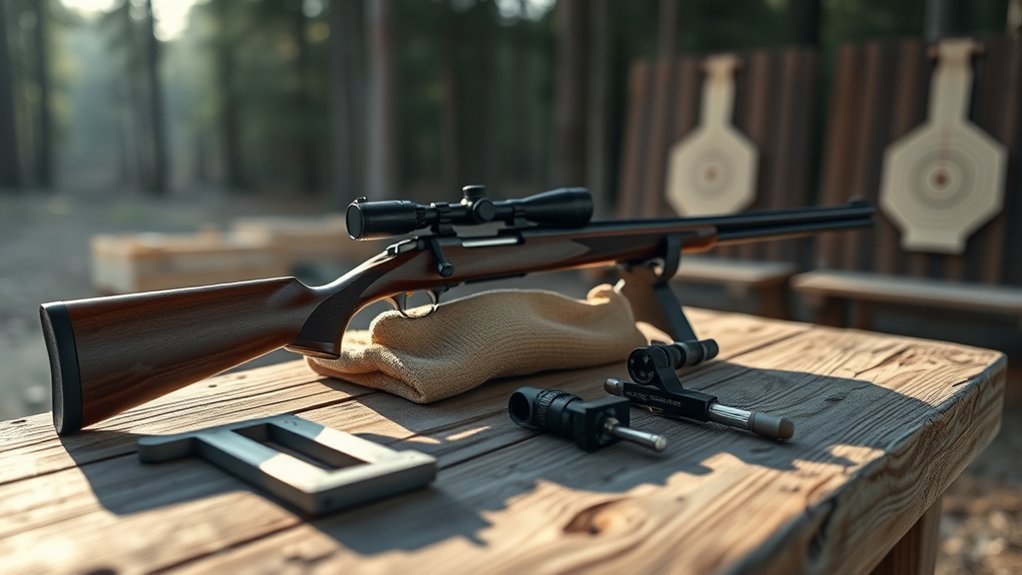
To sight your muzzleloader accurately, start by choosing a stable shooting bench that keeps your firearm steady.
Set your target at the proper distance to match your typical shooting range.
Make sure you have good lighting to clearly see your sights and target during the process.
Choose Stable Shooting Bench
Although sighting in your muzzleloader demands careful attention, choosing a stable shooting bench lays the foundation for accurate adjustments. A solid bench minimizes movement, letting you focus on precise shot placement and consistent sighting. When picking your bench, consider its surface, height, and durability to match your shooting style and environment.
| Factor | Why It Matters |
|---|---|
| Stability | Prevents wobbling |
| Height | Ensures comfortable posture |
| Surface Material | Reduces rifle slippage |
| Durability | Withstands weather and use |
| Size | Provides enough space |
Make sure your bench supports your muzzleloader securely. A stable setup reduces variables, helping you sight in faster and more accurately.
Use Proper Target Distance
When you set up your shooting station, choosing the right target distance plays a crucial role in sighting your muzzleloader accurately. Start with a shorter distance, typically 25 yards, to establish a basic zero. This helps you identify any major adjustments needed without wasting ammunition.
Once you’ve dialed in your sights at this range, move back to 50 or 75 yards for fine-tuning. Remember, muzzleloaders have a unique ballistic trajectory, so zeroing at multiple distances ensures consistent accuracy in the field.
Always measure the distance precisely using a reliable rangefinder or tape measure. Avoid guessing or estimating, as even small errors can affect your point of impact.
Using proper target distance saves time and makes your sight-in process more efficient and effective.
Ensure Good Lighting Conditions
Since clear visibility directly impacts your ability to align sights accurately, you should always set up your shooting station in good lighting conditions. Choose a time of day when natural light is bright but not glaring, such as mid-morning or late afternoon. Avoid harsh shadows or direct sunlight that can obscure your sight picture.
If you’re indoors or shooting during low light, use consistent artificial lighting that evenly illuminates your target and sights without causing reflections or glare. Position your light sources carefully to prevent eye strain and maintain a clear view of the front and rear sights.
Good lighting helps you detect subtle misalignments, ensuring your muzzleloader is sighted precisely and improving your shooting accuracy overall.
Zero Your Muzzleloader at the Range
Before you head out to the field, you’ll want to zero your muzzleloader at the range to make certain your shots hit where you aim. Start by setting up a target at a known distance, typically 50 yards. Fire a group of three shots, then adjust your sights based on where the group lands. Repeat until your point of impact matches your point of aim.
| Distance (yards) | Adjust Windage (clicks) | Adjust Elevation (clicks) |
|---|---|---|
| 25 | 2 | 3 |
| 50 | 0 | 0 |
| 75 | 3 | 4 |
Record your adjustments for future reference and guarantee consistent shooting results.
Align the Front and Rear Sights Correctly
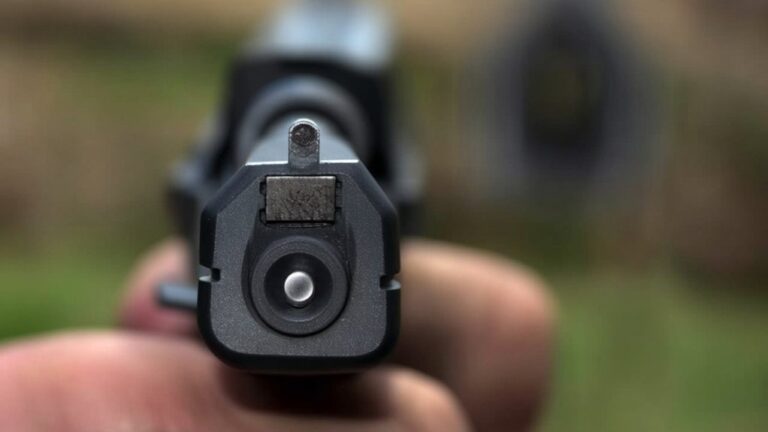
You’ll want to focus sharply on the front sight while keeping the rear sight aligned properly.
This alignment creates the correct sight picture you need for accurate shooting.
Mastering this step is key to hitting your target consistently.
Front Sight Focus
How exactly do you guarantee your muzzleloader’s sights are perfectly aligned? Start by focusing sharply on the front sight. Your eyes should lock onto this small post or bead, making it as clear and crisp as possible. Don’t let your gaze wander to the target or rear sight just yet—that will blur your front sight and ruin accuracy.
Keep the front sight centered in the rear sight notch, but remember: the key is clarity. A blurry front sight means inconsistent shots.
Practice by looking down the barrel in a safe setup to train your eyes to prioritize the front sight. Once you master this focus, aligning the sights becomes more natural, improving your shot precision every time you pull the trigger.
Rear Sight Alignment
Once your eyes lock onto the front sight with clarity, the next step is to align it properly within the rear sight. Focus on centering the front sight post or bead exactly in the middle of the rear sight notch or aperture.
Make sure the top of the front sight is level with the top edges of the rear sight. This alignment is essential because any misplacement will cause your shot to stray left, right, high, or low.
Keep your head steady and look straight through the rear sight, avoiding tilting or canting the barrel. Consistent rear sight alignment helps you develop muscle memory for accurate shooting.
Practice this alignment regularly to build confidence before moving on to mastering your overall sight picture.
Proper Sight Picture
Although aligning the front and rear sights correctly takes practice, it’s essential for achieving accuracy with your muzzleloader. Your sight picture depends on how well you line up these sights with the target.
Focus on centering the front sight within the rear sight notch, keeping it level, and aiming at your target’s critical area. Remember, consistency is key.
When you master the proper sight picture, you’ll experience:
- Increased confidence in every shot
- Sharper focus under pressure
- Greater control over your muzzleloader
- A stronger connection to your target
- The satisfaction of hitting your mark
Practice patiently, and soon, aligning your sights will become second nature, boosting your accuracy and enjoyment in the field.
How to Adjust Windage and Elevation
Before you can make accurate shots with your muzzleloader, you need to properly adjust windage and elevation. Start by firing a group of shots at your target from a stable position.
To achieve precise shots with your muzzleloader, begin by adjusting windage and elevation after firing a test group.
If your shots land left or right of the bullseye, adjust the windage—usually by turning the rear sight knob or sliding the sight horizontally. Move the sight in the direction you want your bullet to go.
For elevation, if your shots are hitting high or low, adjust the sight vertically. Lower the sight to bring your point of impact down, and raise it to move the impact up.
Make small, deliberate adjustments, then fire another group to confirm. Repeat this process until your shots cluster consistently on the target’s center.
Accounting for Black Powder Trajectory Differences
Because black powder generates a different velocity and pressure compared to modern smokeless powder, you’ll notice that your muzzleloader’s bullet follows a unique trajectory. This means you can’t treat it like a typical rifle round. You need to anticipate how gravity and air resistance will affect your shot differently.
Keep in mind these key points to better account for black powder trajectory differences:
- Bullets generally travel slower, so expect more drop over distance.
- Velocity variation from each load may impact consistency.
- Wind affects your shot more noticeably due to lower speeds.
- Elevation adjustments need to be more precise and frequent.
- Always test your load and powder to understand your specific firearm’s behavior.
Mastering these will help you connect your sighting to the real-world path of your bullet.
Field Tips for Accurate Muzzleloader Sighting
When you take your muzzleloader into the field, adapting your sighting approach to real conditions makes all the difference. Start by zeroing your sights at a practical distance where you expect most shots—usually 50 to 100 yards.
Use natural light to your advantage; shadows and glare can shift your sight picture, so adjust accordingly. Always confirm your chosen sight setting with a few test shots before hunting.
Carry a small notebook to jot down sight adjustments for different distances or weather conditions. Remember to maintain a consistent shooting position and cheek weld to guarantee repeatable accuracy.
Finally, regularly clean your sights and barrel to prevent fouling, which can affect your point of impact. These simple habits will boost your confidence and precision in the field.
Common Sighting Mistakes and How to Avoid Them
Although sighting a muzzleloader can seem straightforward, many hunters make avoidable mistakes that compromise accuracy. You might overlook small details that lead to frustrating misses.
To help you avoid these common errors, keep an eye out for:
- Rushing the sighting process, which causes inconsistent shots
- Ignoring proper rest and stability during aiming
- Failing to double-check your sight alignment before shooting
- Using inappropriate or damaged ammunition that affects trajectory
- Neglecting to adjust sights for different shooting distances
Keep Your Muzzleloader Sights Working Perfectly
To keep your muzzleloader sights working perfectly, you need to perform regular maintenance and inspections. Check your sights for dirt, rust, or damage before every shooting session.
Clean them gently with a soft brush and appropriate solvent to avoid buildup that can affect accuracy.
Tighten screws and mounts regularly to confirm your sights stay firmly in place.
If you notice any bent or misaligned parts, fix or replace them immediately.
Also, apply a light coat of oil to metal surfaces to prevent rust.
Store your muzzleloader in a dry, secure place to avoid environmental damage.
Frequently Asked Questions
Can I Use Regular Rifle Scopes on a Muzzleloader?
Yes, you can use regular rifle scopes on a muzzleloader, but make sure the scope is sturdy enough to handle the heavier recoil. Choose one with good eye relief and adjust it specifically for your muzzleloader’s ballistics.
How Does Weather Affect Muzzleloader Sighting Accuracy?
Oh sure, because your muzzleloader loves a good weather tantrum! Wind, humidity, and temperature mess with your bullet’s path. You’ll need to adjust sights constantly, or just blame Mother Nature when you miss.
What Is the Best Distance for Hunting With a Muzzleloader?
You’ll find the best hunting distance with a muzzleloader is typically between 50 and 100 yards. This range balances accuracy and power, letting you make effective, ethical shots without overestimating your firearm’s capabilities.
Are There Legal Restrictions on Muzzleloader Sight Modifications?
Yes, you usually can’t modify muzzleloader sights beyond specific limits set by local laws. You’ll need to check your state’s regulations to avoid illegal alterations, as rules vary and some restrict adding scopes or certain sight types.
How Often Should I Clean My Muzzleloader Sights?
You should clean your muzzleloader sights after every shooting session to maintain accuracy and prevent buildup. Regular cleaning guarantees clear sight pictures and reliable performance, especially in harsh weather or dusty conditions. Don’t skip this step!
Conclusion
Sighting a muzzleloader might seem tricky at first, but with the right setup and careful zeroing, you’ll hit your mark every time. While black powder’s unique trajectory demands extra attention, mastering your sights transforms uncertainty into precision. Don’t let common mistakes throw you off; instead, keep your sights clean and aligned. What starts as a challenge becomes a rewarding skill, turning your muzzleloader from a guessing game into a reliable tool for success.