How To Sight A Pellet Gun?
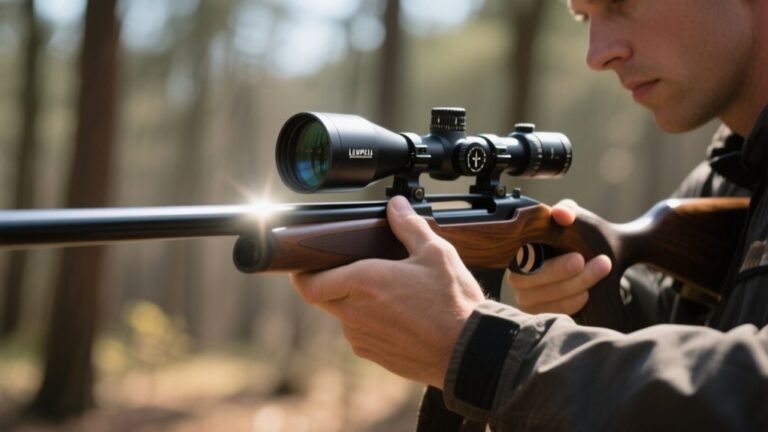
To sight your pellet gun, start by securely mounting your chosen sight—iron sights, red dot, or scope—making sure it’s level and tight. Zero your gun at a close range like 10 yards, then test and fine-tune the sight at increasing distances, adjusting windage and elevation as needed. Use consistent pellets and shoot in a safe, stable setup for best results. Keep in mind, mastering adjustments and understanding pellet behavior will help boost your accuracy further.
Key Takeaways
- Securely mount the sights and ensure they are level and properly aligned with the barrel.
- Start zeroing at a close range (around 10-20 yards) and adjust windage and elevation based on shot grouping.
- Use a high-contrast target and consistent pellet type for clear impact visibility during sighting.
- Make small, incremental adjustments and confirm zero at multiple distances for reliable accuracy.
- Maintain a safe environment with a stable rest, backstop, eye protection, and ensure mounts remain tight.
Why Proper Pellet Gun Sighting Matters
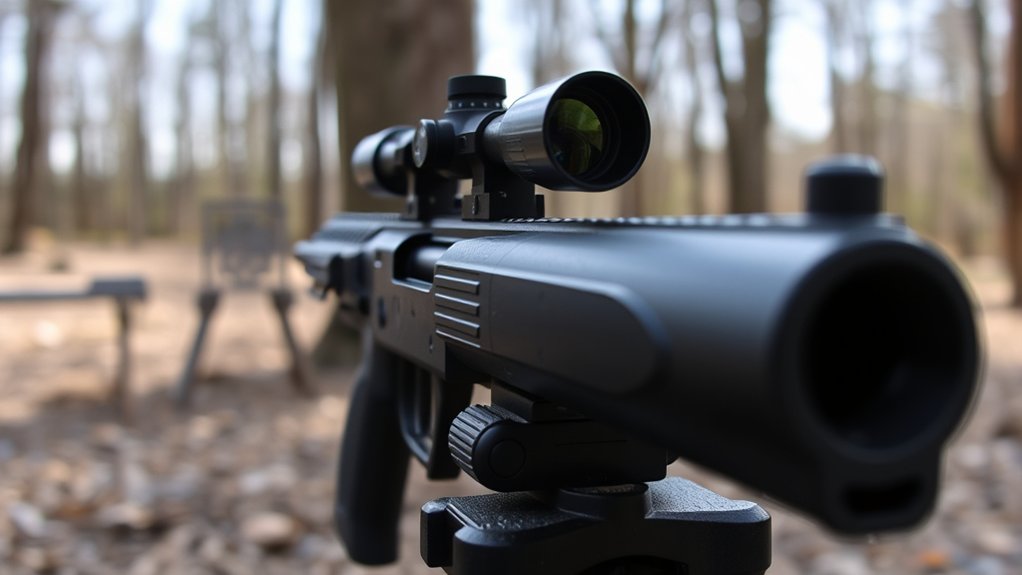
Because accurate sighting directly affects your shooting performance, you need to guarantee your pellet gun is properly sighted. When your sights are off, your shots will miss the target, wasting pellets and frustrating you.
Proper sighting helps you hit your intended point of impact consistently, improving your accuracy and confidence. Whether you’re plinking in the backyard or hunting small game, a well-sighted pellet gun ensures your shots are both ethical and effective.
Without it, you risk injuring animals or damaging property unintentionally. Plus, accurate sighting makes practicing and improving your shooting skills more rewarding.
What You Need Before Sighting Your Pellet Gun
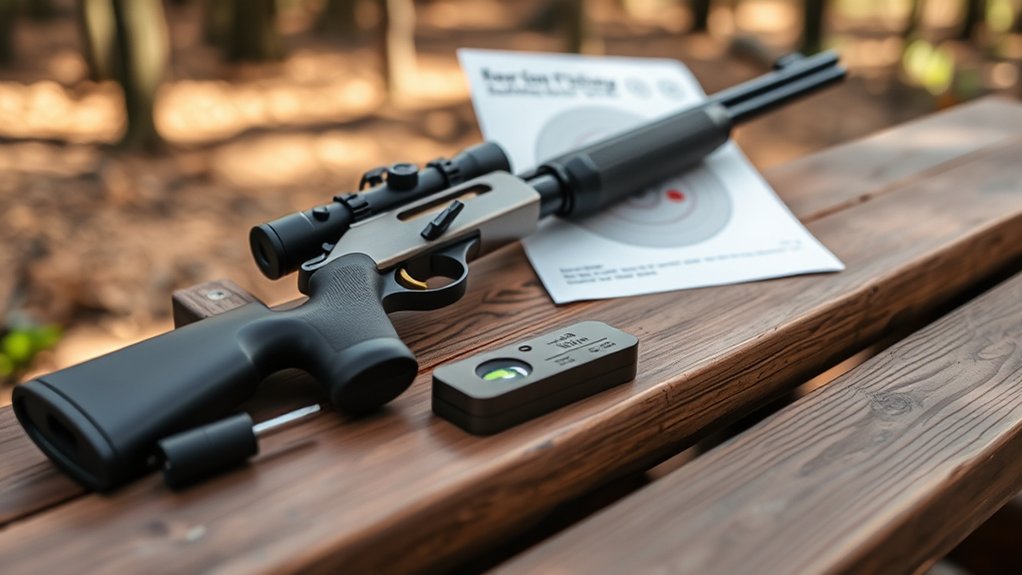
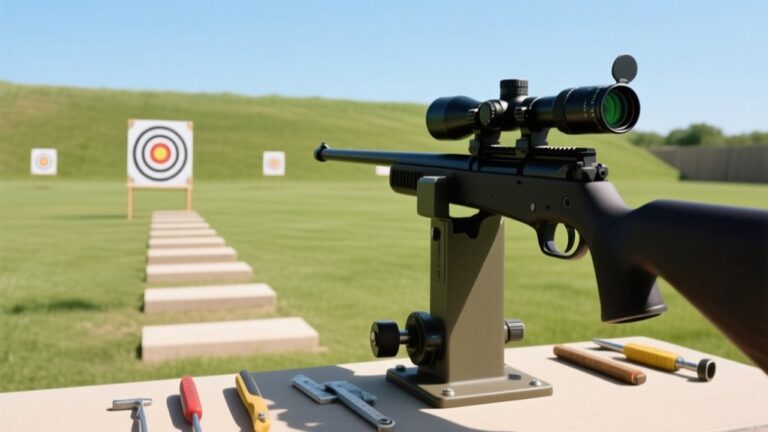
Before you start sighting your pellet gun, gather all the necessary tools and materials to make the process smooth and effective. You’ll need a stable rest or shooting bench to keep your gun steady.
Prepare all your tools and a steady rest before sighting your pellet gun for best results.
A quality pellet gun scope or iron sights suited to your model are essential for accurate adjustments. Don’t forget your pellets—use the same type you’ll typically shoot to guarantee consistency.
A target with clear markings helps you track shot placement easily. Bring a screwdriver or Allen wrench for sight adjustments, and have a notebook or device ready to record your settings.
Ultimately, confirm you have proper eye protection. Having these items on hand before you begin will save you time and frustration during the sighting process.
Set Up a Safe Shooting Environment
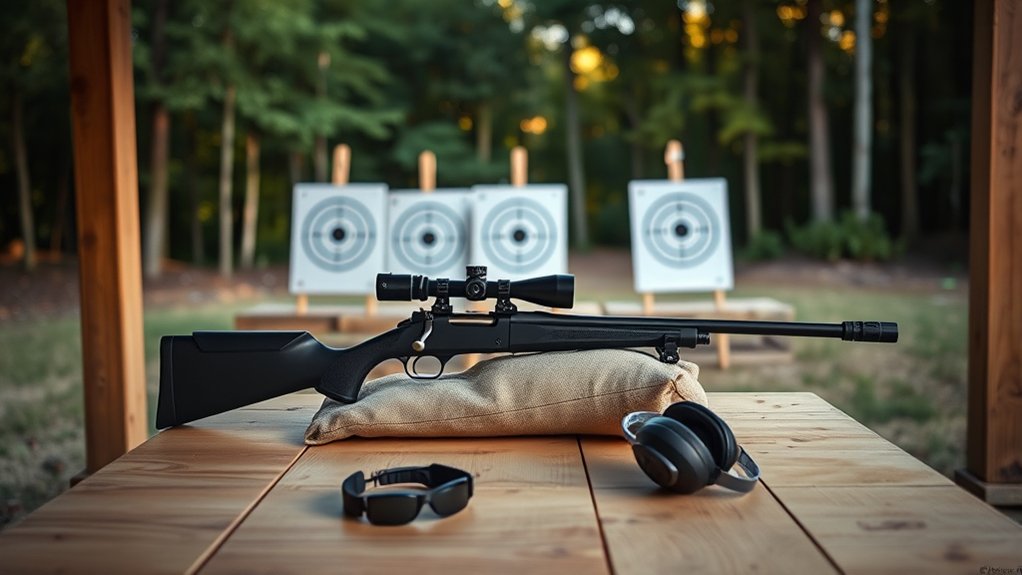
Although sighting your pellet gun is important, setting up a safe shooting environment comes first to protect yourself and others. Find a clear, open area free of people, pets, and fragile objects.
Use a sturdy backstop like a thick wooden board or a commercial pellet trap to catch your shots safely. Make sure the target is placed at an appropriate distance and height to avoid ricochets.
Always wear eye protection to guard against stray pellets. Keep bystanders well behind your shooting line and communicate your intentions clearly.
Check the surroundings for any potential hazards or distractions. By establishing these safety measures, you create the right conditions to focus on sighting your pellet gun accurately without risking accidents or damage.
Safety always comes before precision.
Choose the Best Pellet Gun Sights for Accuracy
To hit your target consistently, you need to pick the right sights for your pellet gun. Different types of sights offer unique benefits that can boost your accuracy.
Let’s explore the key features that’ll help you make the best choice.
Types Of Pellet Gun Sights
When choosing pellet gun sights, you’ll want to take into account how each type affects your accuracy and shooting style. Different sights suit different needs, so understanding their characteristics helps you pick the best fit.
- Iron Sights – Simple and reliable, these are great for beginners. They require good eye alignment but don’t add weight or complexity.
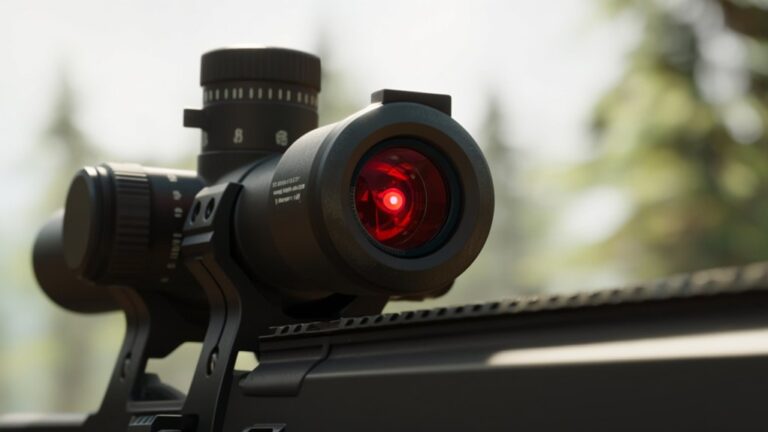
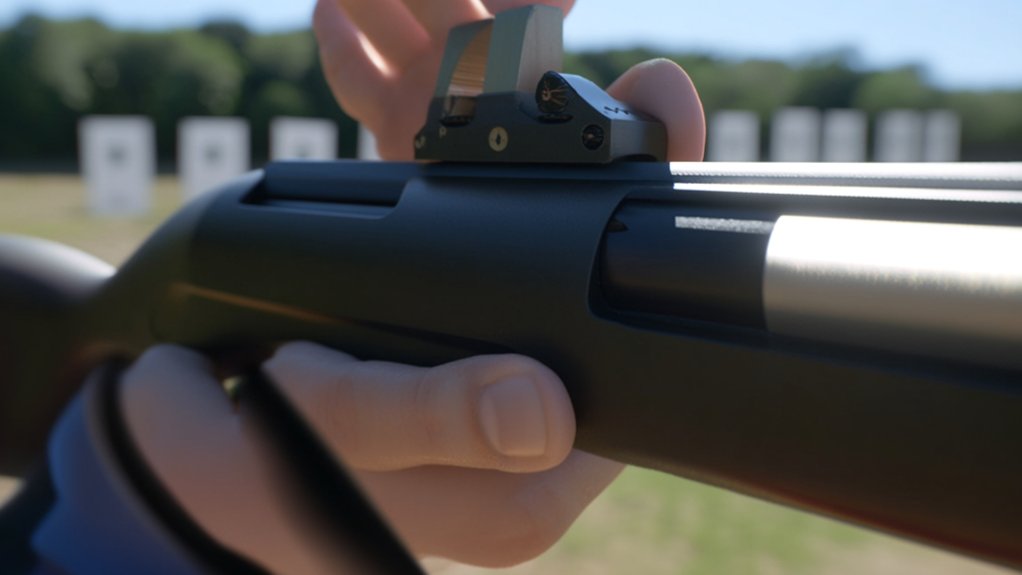
- Red Dot Sights – These offer quick target acquisition with an illuminated reticle, perfect for fast shooting and low-light conditions.
- Scopes – Ideal for precision shooting at longer distances, scopes magnify your target and provide adjustable crosshairs for fine-tuning your aim.
Choosing the right sight depends on your shooting environment and skill level, so weigh these options carefully to maximize your accuracy.
Features Enhancing Shooting Accuracy
Since accuracy hinges on how well you see and align your target, choosing pellet gun sights with key features can make all the difference. Look for sights that offer clear visibility, easy adjustment, and durability. Clear visibility ensures you can quickly acquire your target, while easy adjustments help you zero in precisely. Durability means your sight won’t lose accuracy after repeated use.
| Feature | Benefit | What to Look For |
|---|---|---|
| Clear Visibility | Quick target acquisition | Bright, high-contrast reticles |
| Easy Adjustment | Precise zeroing | Windage & elevation knobs |
| Durability | Maintains accuracy | Shockproof, weather-resistant |
Focus on these features to enhance your shooting accuracy and confidence.
Mount and Align Your Pellet Gun Sights Correctly
Although mounting your pellet gun sights might seem straightforward, proper alignment is essential for accuracy. First, securely attach the sights to your gun’s mounting points to prevent any movement during shooting.
Next, verify the sights are level; use a small bubble level or visually confirm they’re perfectly horizontal.
Finally, check the alignment by sighting through the sights without firing—your front and rear sights should line up perfectly with your eye and the target.
Here’s a quick checklist:
- Firmly mount the sights to avoid shifts.
- Level the sights for consistent aiming.
- Align the sights so the front post centers in the rear aperture.
Following these steps sets the stage for precise shooting and makes zeroing easier later.
Zero Your Pellet Gun Using a Target
To zero your pellet gun, start by picking the right target that clearly shows your shots.
Next, adjust the windage and elevation to align your point of impact with your aim.
Finally, confirm your zero by shooting at a set distance to guarantee accuracy.
Choosing The Right Target
When you’re zeroing your pellet gun, picking the right target is essential to getting accurate results. You want a target that clearly shows where your pellets hit, making adjustments easier. Here’s what to look for:
- Visibility: Choose a target with high-contrast colors like black and white or bright orange to easily spot pellet holes.
- Material: Use paper or cardboard targets because they show pellet impacts clearly without damage that’s hard to see.
- Size: Pick a target size that matches your shooting distance—larger targets for longer ranges help you track groupings better.
Adjusting Windage And Elevation
Selecting the right target makes it easier to see exactly where your pellets land, which helps you fine-tune your gun’s aim. Once you’ve fired a few shots, check the groupings on the target.
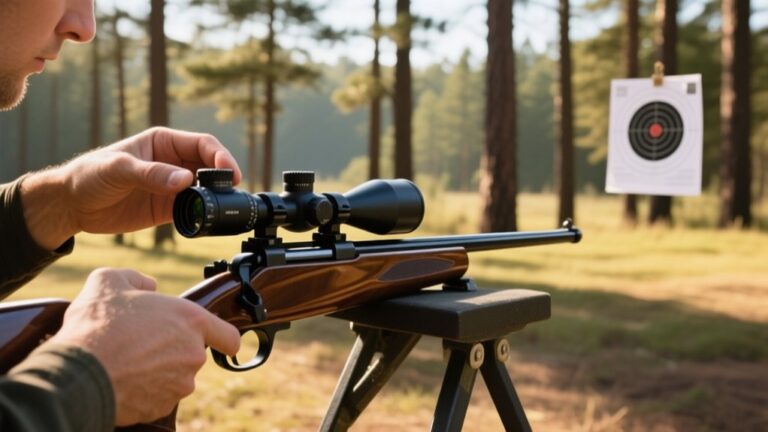
If your pellets consistently hit left or right of the bullseye, adjust the windage knob on your scope or the side screws on your sights. Turn it slightly toward the side where your shots are landing to shift the point of impact.
Next, focus on elevation. If pellets hit too high or low, adjust the elevation knob or the vertical screws accordingly. Small, incremental turns work best—make adjustments, then fire again to see the result.
Repeat this process until your pellets cluster tightly around the bullseye, ensuring your pellet gun is properly zeroed.
Confirming Zero At Distance
How far should you stand to verify your pellet gun’s zero? Typically, 20 yards is a good starting point. At this distance, you can clearly see your target and evaluate your accuracy without environmental factors overly affecting the pellet’s trajectory.
To confirm your zero:
- Set up a target at your chosen distance, preferably with a clear bullseye.
- Fire a group of 3-5 shots, aiming consistently at the bullseye.
- Analyze the shot group’s placement—if it’s centered, your zero is confirmed; if not, make fine adjustments to windage and elevation.
Repeating this process at different distances ensures your pellet gun remains accurate across ranges you intend to shoot.
Adjust Windage and Elevation on Your Pellet Gun
Although zeroing in your pellet gun can seem challenging at first, adjusting windage and elevation is straightforward once you understand the basics.
Start by identifying the windage adjustment, which moves your point of impact left or right. Turn the knob or dial in the direction you want the pellet to shift.
Next, find the elevation adjustment to move the point of impact up or down. Adjust it similarly by turning the dial in the appropriate direction.
Make small, incremental changes and fire a few test shots after each adjustment to see the effect.
Keep adjusting until your pellets consistently hit your desired target point.
Confirm Pellet Gun Sight Zero at Multiple Distances
Now that you’ve adjusted windage and elevation, it’s time to confirm your pellet gun’s zero at multiple distances.
Start by establishing a baseline zero at a close range.
Then test your shots at varied distances to see how the trajectory changes.
Use these results to make any necessary adjustments for accurate shooting across your preferred ranges.
Establish Baseline Zero
Before you fine-tune your pellet gun sights, you’ll want to establish a reliable baseline zero by confirming the sight alignment at multiple distances. This baseline zero guarantees your shots will be accurate across varying ranges.
To do this effectively:
- Start close: Begin at 10 yards to confirm your pellet hits the bullseye without major adjustments.
- Move mid-range: Test at 20 yards to check if the pellet drop or drift requires sight tweaks.
- Verify farther: Shoot at 30 yards to validate consistency and fine-tune elevation and windage.
Test At Varied Ranges
Once you’ve set a baseline zero for your pellet gun sights, it’s important to test them at varied ranges. Start by shooting at close distances, like 10 or 15 yards, then gradually increase to 25, 30, or even 40 yards.
This helps you confirm whether your sights remain accurate across different distances. Pay close attention to where your pellets hit relative to your point of aim at each range. If you notice consistent deviation, note it carefully—it’s vital information for fine-tuning later.
Testing at multiple distances ensures you understand your pellet gun’s performance envelope, so you’re not surprised during actual use. This step builds confidence in your shots and prepares you for real-world scenarios where targets won’t always be the same distance away.
Adjust For Trajectory
Although you’ve established a baseline zero for your pellet gun sights, you’ll need to adjust for trajectory to maintain accuracy at different distances. Pellets drop as they travel, so confirming your sight zero at multiple ranges is essential. Here’s how to do it:
- Start Close: Begin at 10 yards to confirm your initial zero and note any impact deviations.
- Increase Distance: Move to 20 and then 30 yards, observing how the pellet’s point of impact shifts downward relative to your aim.
- Fine-Tune Sights: Adjust your elevation and windage settings based on these observations to compensate for drop and drift.
Troubleshoot Common Pellet Gun Sighting Problems
If your pellet gun isn’t hitting the target as expected, you’ll need to identify the common issues that affect sighting accuracy. Checking alignment, scope clarity, and pellet consistency can save you time. Sometimes, loose mounts or incorrect zeroing cause off-target shots. Use the table below to quickly spot and fix common problems:
| Problem | Cause | Solution |
|---|---|---|
| Shots off to side | Loose scope mounts | Tighten screws, re-zero sight |
| Shots too high/low | Improper elevation setting | Adjust elevation knob |
| Blurry sight | Dirty lenses or sights | Clean lenses and sights |
| Inconsistent hits | Varying pellet velocity | Use consistent pellets |
| Scope shifts | Recoil or handling impact | Secure scope mounts properly |
How Pellet Types Influence Your Sight Accuracy
Since different pellet types vary in weight, shape, and material, they directly affect your pellet gun’s accuracy and how you need to adjust your sights. You’ll notice that switching pellets means you might’ve to re-zero your gun for the best shot placement.
Here’s how pellet types influence your sight accuracy:
- Weight: Heavier pellets drop more over distance, so you’ll need to adjust your sights higher.
- Shape: Pointed pellets fly straighter, while wadcutters tend to slow down faster and drop sooner.
- Material: Lead pellets may behave differently than alloy ones, affecting velocity and trajectory.
Environmental Factors That Affect Pellet Gun Sighting
Changing pellet types can require you to adjust your sights, but the environment you shoot in also plays a big role in your accuracy. Wind can push pellets off course, so you’ll need to compensate by aiming slightly into the breeze.
Temperature affects air density; colder air is denser and slows pellets down, which changes your point of impact. Humidity can also influence pellet trajectory, though its effect is less noticeable than wind or temperature.
Lighting conditions matter too—glare or low light can make sight alignment tricky, so consider using lens covers or adjusting your shooting position.
Always assess these factors before each session, as they fluctuate and directly impact how your pellet gun performs. By factoring in the environment, you’ll sight your pellet gun more precisely every time.
Maintain Your Pellet Gun Sights for Long-Term Precision
To keep your pellet gun sights accurate over time, you need to perform regular maintenance and inspections. Neglecting this can lead to misalignment and poor shooting performance.
Here’s how you can maintain your sights effectively:
- Clean the lenses and sight body regularly with a soft cloth to remove dirt and moisture that can obscure your view or cause corrosion.
- Check and tighten screws on mounts and sight adjustments to prevent shifting during use or transport.
- Protect your sights by storing your pellet gun in a dry, secure case to avoid damage from impacts or environmental exposure.
Frequently Asked Questions
Can Pellet Guns Be Used for Hunting Small Game Legally?
Yes, you can hunt small game with pellet guns legally, but you’ll need to check your local laws and regulations carefully. Make sure your pellet gun meets power and caliber requirements to stay within legal limits.
What Is the Average Lifespan of a Pellet Gun Sight?
Your pellet gun sight usually lasts about 3 to 5 years, like a steady flame flickering through time. With regular care and proper handling, you can keep it sharp and reliable much longer, ensuring precision every shot.
How Do Pellet Gun Sights Compare to Traditional Firearm Sights?
You’ll find pellet gun sights less robust and sometimes less precise than traditional firearm sights, but they’re lighter and designed for lower recoil. They’re perfect for close-range shooting but might not perform as well at long distances.
Are There Specific Pellet Guns Recommended for Beginners?
You’ll want a beginner pellet gun that’s as easy to handle as a bike with training wheels. Models like the Gamo Whisper or Crosman Optimus offer great accuracy, low recoil, and user-friendly features perfect for getting started.
Can Pellet Gun Sights Be Used in Low-Light Conditions?
You can use pellet gun sights in low-light conditions, but traditional iron sights might be hard to see. Consider upgrading to fiber optic or illuminated sights, which help you aim accurately when lighting is poor.
Conclusion
Sighting your pellet gun is like tuning a finely crafted instrument—each adjustment brings harmony between you and your target. By setting up safely, choosing the right sights, and understanding your pellets, you create a clear path for precision. Remember, just as a lighthouse guides ships through fog, your careful maintenance and awareness of conditions will keep your aim true. With patience and care, you’ll hit the mark every time, turning practice into mastery.