How to Use a Rifle Scope in 7 Easy Steps
To use a rifle scope in 7 easy steps, start by securely mounting it with the right rings or bases. Align the scope so the reticle is level and your eye relief is clear. Zero your scope by firing at a target and adjusting windage and elevation turrets. Use magnification wisely to balance detail and stability. Clean and inspect regularly to keep it reliable. Follow these basics, and you’ll build solid skills for precise shooting.
What Is a Rifle Scope and Why Use One?
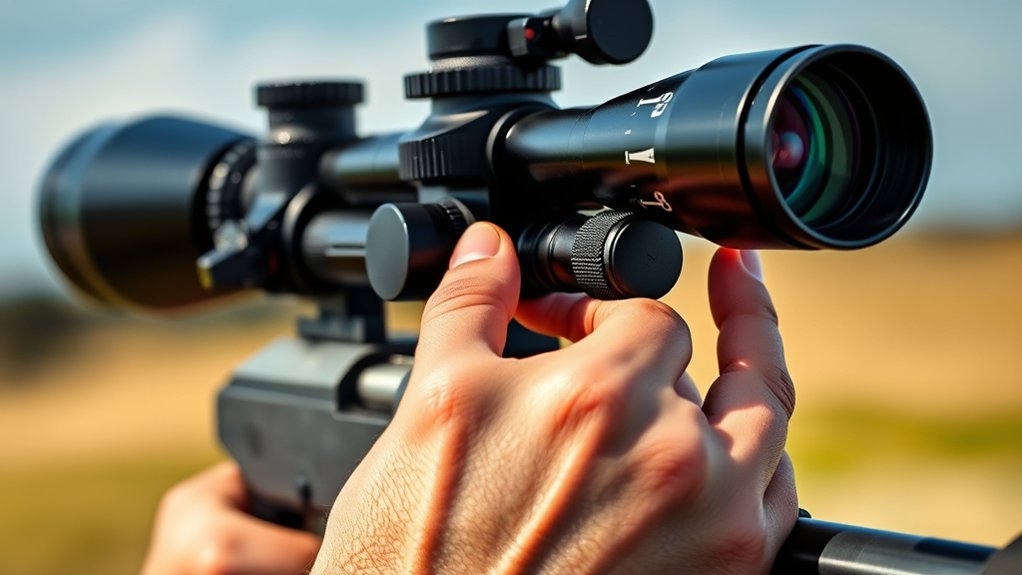
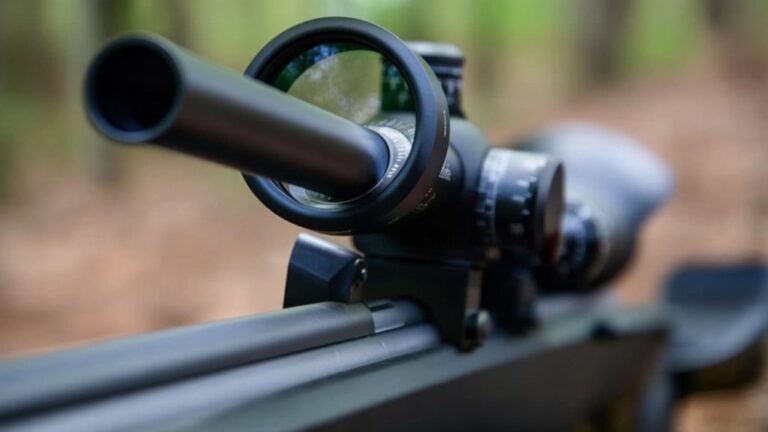
What exactly is a rifle scope, and why should you consider using one? A rifle scope is an optical device mounted on your rifle that helps you see distant targets more clearly. It uses lenses and magnification to bring your target into sharper focus, making it easier to aim accurately.
When you use a scope, you reduce the guesswork involved in lining up your shot, especially at longer ranges. This means you’ll improve your precision and increase your chances of hitting your target.
Plus, a good scope can enhance your shooting experience by providing better visibility in various lighting conditions. Whether you’re hunting or target shooting, a rifle scope is a valuable tool that boosts your confidence and performance.
How to Mount Your Rifle Scope Securely
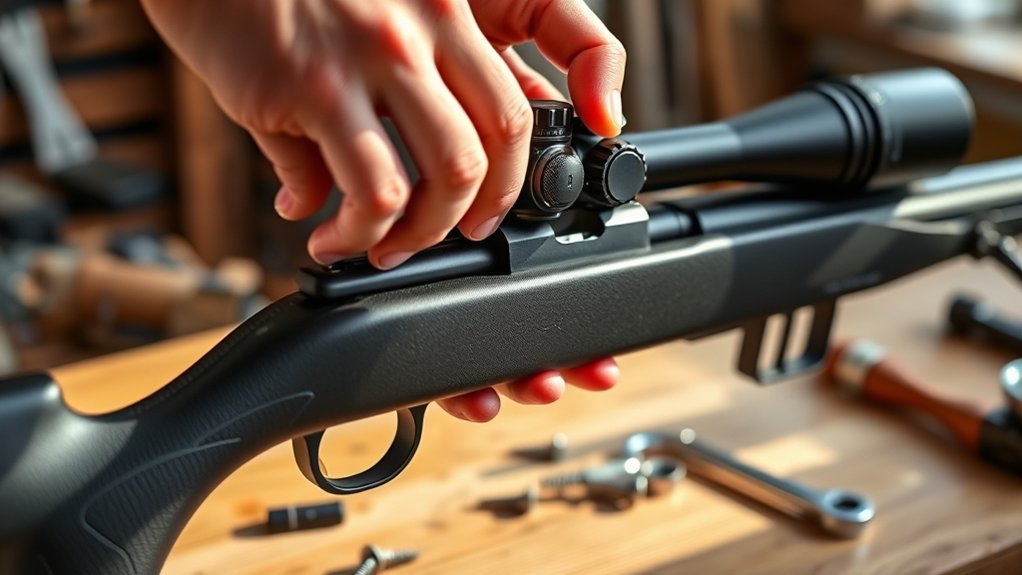
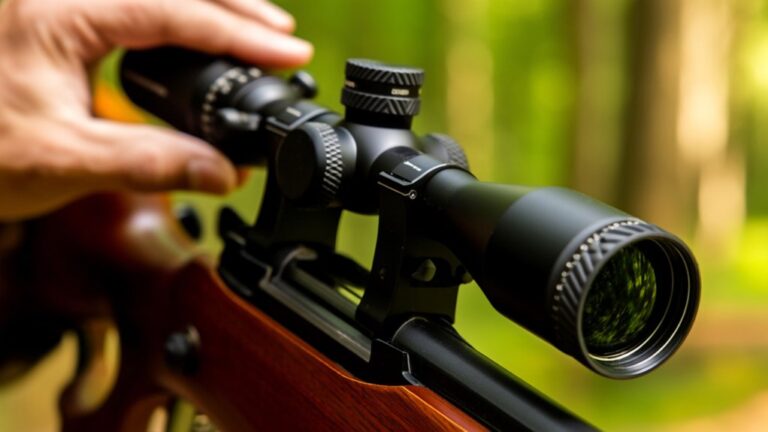
Now that you understand the basics of rifle scopes, it’s time to mount yours securely. You’ll need to choose the right mount, align the scope properly, and tighten the rings just enough to hold it steady.
Getting these steps right guarantees accuracy and prevents damage during use.
Choosing The Right Mount
How do you guarantee your rifle scope stays firmly in place during use? Choosing the right mount is essential. It ensures stability, accuracy, and durability under recoil. Here’s what you should consider:
- Compatibility: Match the mount to your rifle and scope model.
- Material: Opt for durable materials like aluminum or steel for strength.
- Mount Type: Decide between rings, bases, or one-piece mounts based on your setup.
- Height: Select a mount height that provides proper eye relief and clearance.
- Attachment Method: Make sure the mount uses secure screws, quick-detach levers, or locking systems to prevent movement.
Aligning Scope Properly
Where should you start when mounting your rifle scope to guarantee accuracy and reliability? Begin by ensuring your rifle is clean and securely positioned in a stable rest or vise.
Place the scope on the mount and loosely attach the rings just enough to hold it. Next, focus on aligning the reticle perfectly vertical and horizontal. Look through the scope at a flat, distant surface or a level, adjusting the scope’s rotation until the crosshairs are true.
Also, check eye relief by moving the scope forward or backward until you get a full, clear sight picture without strain. Once the scope sits correctly and feels comfortable, you’re ready to proceed to the next step of securing the rings tightly.
Proper alignment now saves you time and improves shooting precision.
Securing Rings Tight
Although you’ve aligned your scope carefully, you still need to secure the rings tightly to keep it stable during recoil and handling. Loose rings can shift your zero and damage the scope.
Start by tightening screws gradually and evenly. Don’t overtighten, as this can crush the scope tube. Use a torque wrench if possible to apply consistent pressure. Check manufacturer specs for recommended torque settings.
After initial tightening, recheck and adjust as needed to maintain proper alignment.
- Tighten screws evenly in a crisscross pattern
- Use a torque wrench for precise pressure
- Avoid overtightening to prevent damage
- Follow manufacturer torque recommendations
- Recheck tightness after initial mounting
This guarantees your scope stays secure and accurate under all conditions.
How to Align Your Scope for a Clear Sight Picture
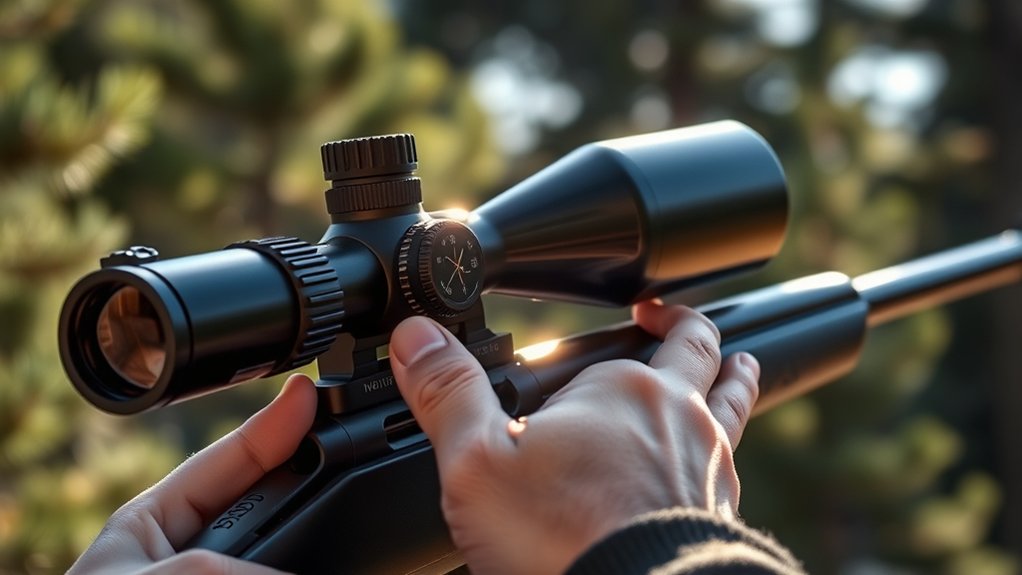
Before you start shooting, you’ll want to guarantee your scope is perfectly aligned to get a clear sight picture. Begin by looking through the scope at a distant object in good light. Adjust the eye relief by moving the scope forward or backward until the full field of view is clear and free of dark rings.
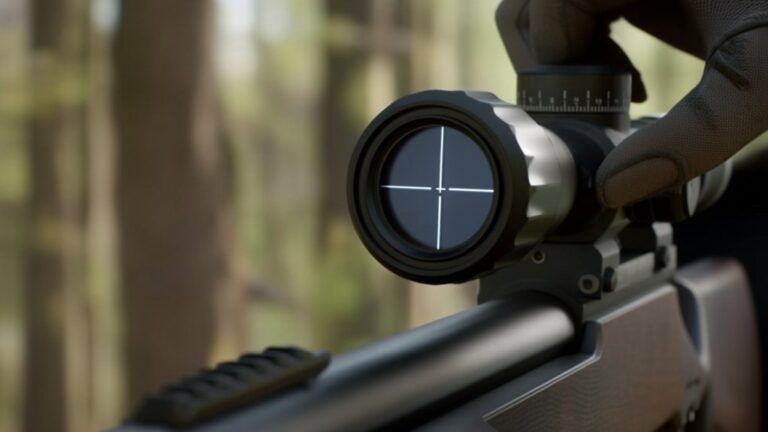
Next, make sure the reticle is level. Use a bubble level or a flat surface to ensure the crosshairs aren’t tilted. Aligning the scope horizontally and vertically keeps your shots on target and reduces eye strain.
Finally, tighten the mounting rings securely without over-tightening to avoid shifting alignment. With these steps, you’ll see a crisp, clear image that helps you aim confidently and accurately.
How to Zero Your Rifle Scope for Accurate Shooting
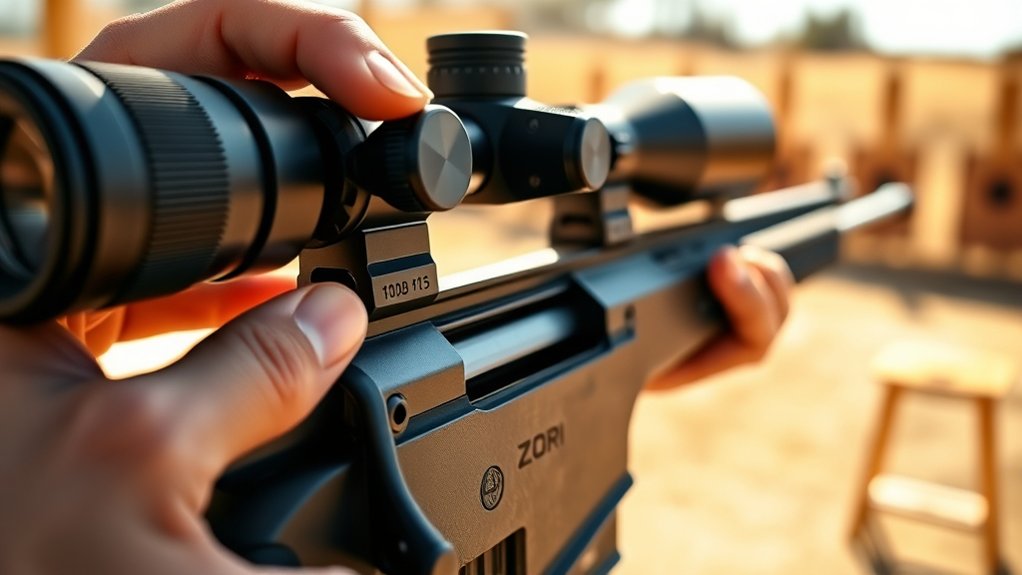
Now that your scope is aligned, it’s time to zero it by adjusting windage and elevation to match your point of impact.
You’ll make small adjustments while shooting at a target to guarantee your shots hit exactly where you aim.
Once you’ve dialed it in, confirm your zero at the distance you plan to shoot for consistent accuracy.
Adjusting Windage And Elevation
To zero your rifle scope, you’ll need to adjust both windage and elevation to align the crosshairs with your point of impact. Windage controls the horizontal movement of the reticle, while elevation adjusts the vertical.
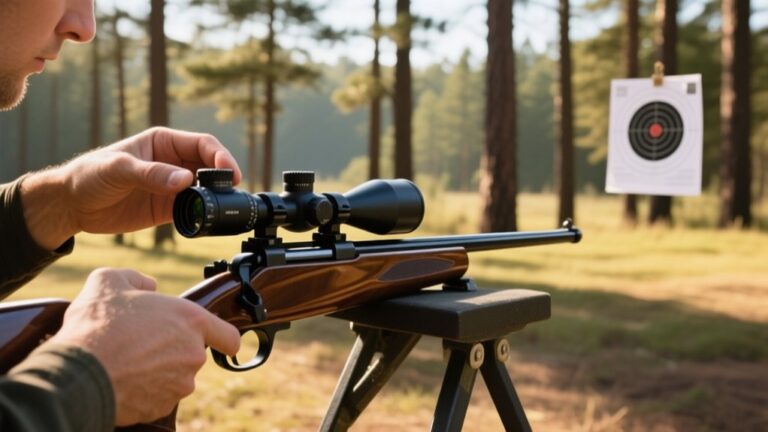
Start by firing a group of shots at a target from a stable position. Then, note where the shots land relative to the center of the crosshairs.
Use the following steps to make precise adjustments:
- Turn the windage turret to move the point of impact left or right
- Adjust the elevation turret to raise or lower the point of impact
- Make small, incremental changes to avoid overcorrection
- Keep track of the number of clicks; each click typically equals ¼ MOA or ¼ inch at 100 yards
- Repeat shooting groups and adjusting until the impact matches your aim point perfectly
Confirming Zero At Distance
How far should you shoot to confirm your rifle scope’s zero? Typically, you’ll want to test at the distance you plan to hunt or target shoot—often 100 yards. Set up a target at this range and fire a group of shots. Check where your bullets hit relative to the bullseye.
If the group isn’t centered, adjust your windage and elevation knobs accordingly. After each adjustment, shoot another group to verify your zero.
Remember, confirming zero at distance ensures your scope’s point of impact aligns with your point of aim, improving accuracy. Don’t forget to take into account environmental factors like wind and light, as they can affect your shot.
Once zeroed, you’ll have confidence in your rifle’s precision every time you shoot.
How to Use Rifle Scope Turrets to Adjust for Distance and Wind
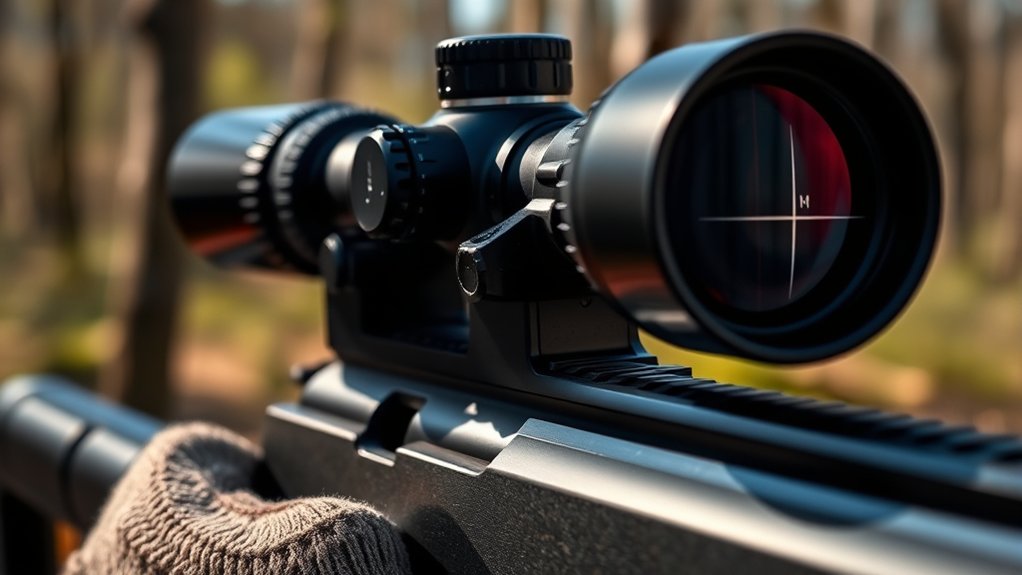
Although adjusting for distance and wind might seem complex at first, mastering your rifle scope turrets is essential for accurate shooting. The turrets let you compensate for bullet drop and wind drift by tweaking elevation and windage settings.
Start by knowing your bullet’s trajectory and the wind conditions. Then, use the turrets to dial in the adjustments precisely.
Here’s how to use your turrets effectively:
- Turn the elevation turret to correct for bullet drop at different distances
- Adjust the windage turret to compensate for wind pushing your shot left or right
- Make small, incremental changes based on your target’s range and wind speed
- Reset turrets to zero after each shot or session to maintain accuracy
- Practice regularly to build confidence using turret adjustments in real scenarios
Using Rifle Scope Magnification Settings Effectively
When you adjust your rifle scope’s magnification, you control how much detail you see on your target, which directly impacts your shot precision. Start with a lower magnification to quickly acquire your target and maintain situational awareness.
As you get closer and steady your position, increase the magnification to see finer details, helping you align your shot more accurately. Keep in mind that higher magnification narrows your field of view and may amplify movement, so use it when stability and lighting conditions are favorable.
Practice switching between settings to find the balance between visibility and comfort. By effectively managing magnification, you’ll improve your ability to make precise shots at varying distances without losing track of your target.
How to Maintain and Care for Your Rifle Scope
To keep your rifle scope performing at its best, you need to clean and inspect it regularly. Dirt, moisture, and dust can affect clarity and accuracy, so take care of your scope after every use. Always use a soft brush or lens cloth to clean the lenses gently. Avoid harsh chemicals that might damage coatings.
Here’s how to maintain and care for your rifle scope effectively:
- Clean lenses with a microfiber cloth and lens cleaner.
- Check and tighten mounting screws regularly.
- Store your rifle and scope in a dry, padded case.
- Protect the scope from extreme temperatures and moisture.
- Inspect for any damage or loose parts before each use.
Consistent care ensures your scope stays reliable and extends its lifespan.
Frequently Asked Questions
Can I Use a Rifle Scope for Air Rifles or Only Firearms?
Yes, you can use a rifle scope for air rifles. Just make sure the scope is designed to handle the recoil and vibration of your air rifle, and adjust the settings for the shorter range and pellet trajectory.
What Type of Reticle Is Best for Hunting Versus Target Shooting?
You’ll want a simple duplex reticle for hunting since it’s quick and clear, while a mil-dot or BDC reticle suits target shooting better because they help with range estimation and precise holdovers.
How Does Weather Affect the Performance of a Rifle Scope?
Weather affects your scope’s clarity and accuracy; fog, rain, and humidity can blur your view, while extreme cold might cause fogging inside. Always check your scope’s weatherproof rating to guarantee reliable performance in varying conditions.
Are There Legal Restrictions on Rifle Scopes in Certain Areas?
Yes, you’ll find legal restrictions on rifle scopes vary by location. Some areas ban certain magnifications or night vision scopes. Always check local laws before buying or using one to stay compliant and avoid trouble.
Can I Attach Accessories Like Night Vision to My Rifle Scope?
You can dress your scope in moonlight’s cloak—yes, you can attach night vision and other accessories. Just guarantee your rifle’s rail system supports them, and you’ll turn darkness into your trusty companion on every hunt.
Conclusion
Now that you’ve learned the essentials of mounting, aligning, zeroing, and adjusting your rifle scope, you’re just steps away from mastering your aim. But remember, the real challenge isn’t just in the setup—it’s in how you adapt when conditions change. Stay sharp, keep practicing, and you’ll gain access to precision you never thought possible. Are you ready to see the difference your scope can make when it truly counts?