5 Holsters Police Use Most Often
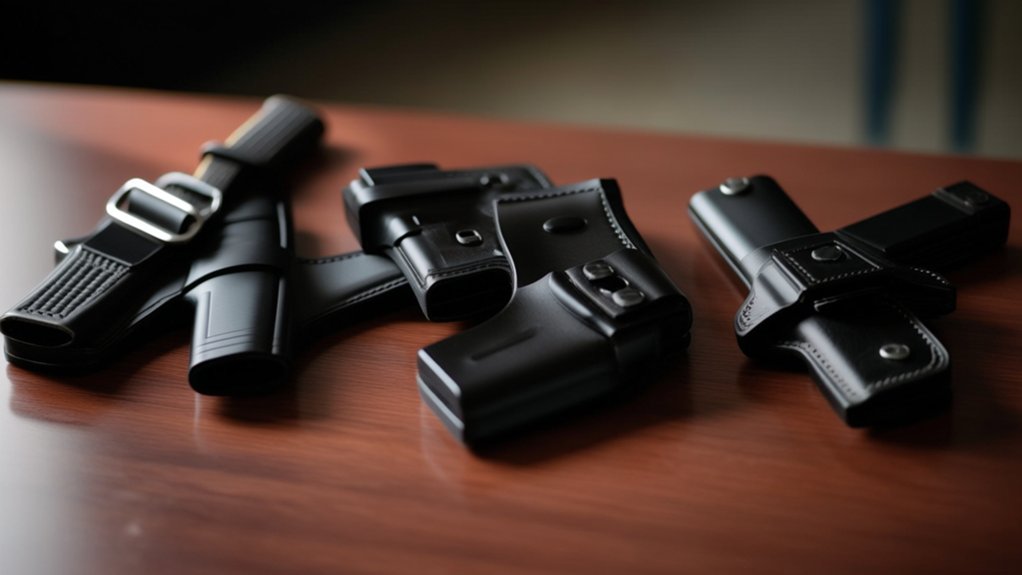
You’ll find police officers using five main holsters: duty belt, shoulder, inside-the-waistband (IWB), drop leg, and paddle holsters. Duty belt holsters keep gear accessible and stable during patrols. Shoulder holsters offer comfort and easy access, especially when seated. IWB holsters are perfect for undercover concealment. Drop leg holsters suit high-action situations, and paddle holsters provide fast, tool-free removal. If you want to understand how each holster fits different needs, there’s more to explore.
Duty Belt Holsters: The Everyday Essential for Police Patrol
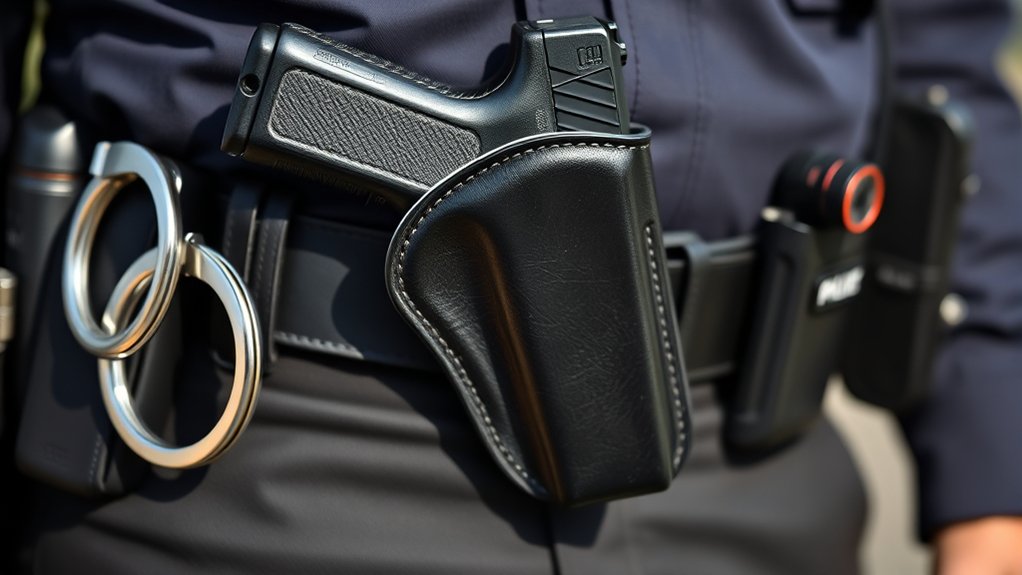
Duty belt holsters are the most common choice for police officers on patrol because they keep essential gear within easy reach. When you wear one, your firearm, handcuffs, radio, and other tools stay securely attached to your waist, letting you respond quickly without fumbling.
These holsters are designed for stability and accessibility, ensuring your weapon won’t shift or get tangled during movement. You’ll appreciate the modular setup, which lets you customize the belt to carry what you need.
Plus, the durable materials withstand daily wear and harsh conditions, so you won’t have to worry about your gear failing when it matters most. Overall, duty belt holsters provide a reliable, practical solution that keeps you prepared and efficient on every patrol.
Shoulder Holsters: Comfortable, Easy Access for Officers
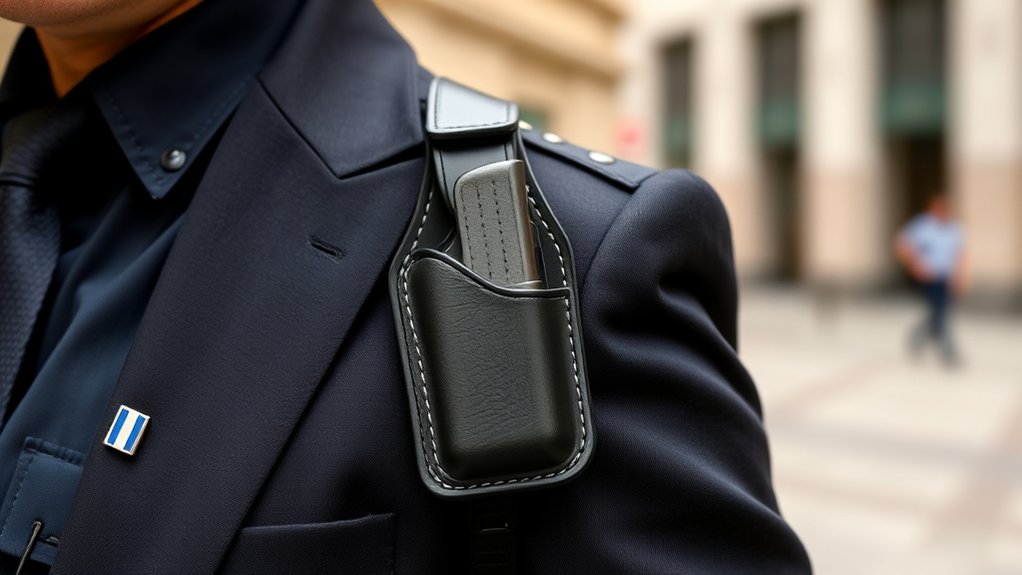
While belt holsters keep your gear close at hand, shoulder holsters offer a different kind of comfort and accessibility. If you want to reduce pressure on your hips and waist during long shifts, a shoulder holster can be a game-changer. It distributes the weight across your shoulders, making it easier to carry your firearm without discomfort.
Plus, you get quick, natural access to your weapon, especially when seated or wearing body armor.
Here’s why shoulder holsters might work well for you:
- Comfort: They relieve strain on your lower body by shifting weight to your shoulders.
- Accessibility: You can draw your firearm smoothly from under your arm.
- Concealment: They allow discreet carry under jackets or vests without bulk at the waist.
Shoulder holsters balance ease and comfort for many officers.
Inside-the-Waistband (IWB) Holsters: Ideal for Undercover Concealment
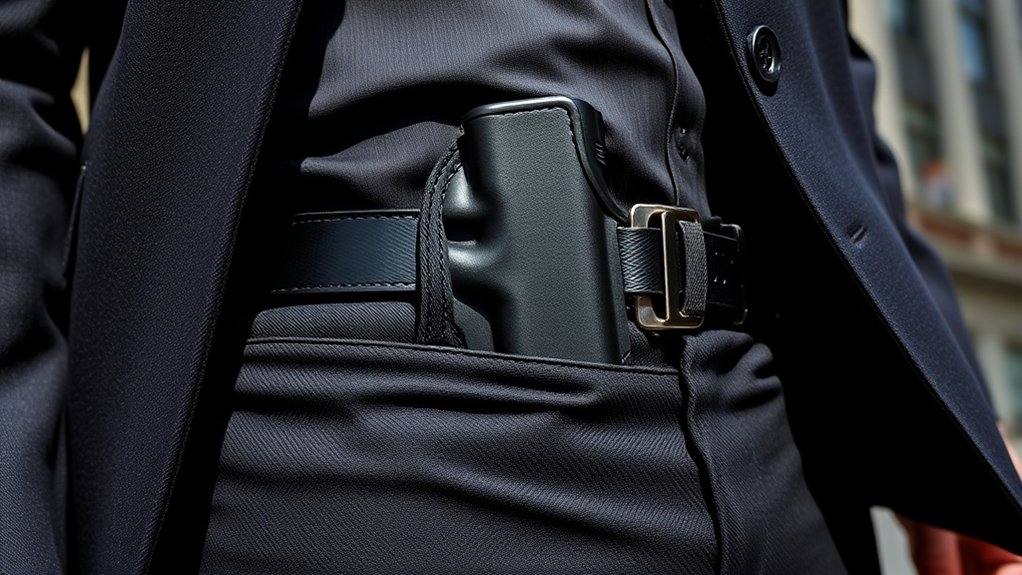
If you need to stay discreet during your shift, inside-the-waistband (IWB) holsters offer an excellent solution. These holsters tuck your firearm securely inside your waistband, making it easy to conceal under everyday clothing.
You’ll appreciate how IWB holsters keep your weapon close to your body, reducing printing and minimizing movement. They provide quick access while maintaining a low profile, which is essential for undercover operations.
You can adjust the cant and ride height for comfort and ideal draw speed. Plus, many models incorporate sweat guards to protect your firearm and enhance comfort during long wear.
If blending in without compromising readiness is your priority, an IWB holster is a practical, reliable choice to keep you both safe and discreet.
Drop Leg Holsters: Tactical Gear for High-Action Scenarios
When you need quick access to your firearm during intense situations, drop leg holsters offer unmatched convenience and mobility. These holsters strap to your thigh, keeping your weapon within easy reach while allowing freedom of movement. You’ll appreciate how they stay secure and don’t interfere with other gear.
Here’s why drop leg holsters are tactical favorites:
- Accessibility: Your sidearm is right where you expect it—no fumbling around your waist.
- Comfort: The thigh strap distributes weight, reducing hip strain during long shifts.
- Versatility: You can easily draw your weapon while crouching or running, perfect for high-action scenarios.
If you’re gearing up for dynamic environments, a drop leg holster gives you the edge you need to stay prepared and efficient.
Paddle Holsters: Quick-Release Holsters for Versatile Duty
Because you need to switch gear quickly during your shift, paddle holsters offer a smart balance of security and ease. You’ll appreciate how they slide on and off your belt without removing it, saving precious time.
Their quick-release design means you can detach your firearm swiftly if needed, enhancing versatility on duty. Paddle holsters also provide solid retention, keeping your sidearm secure during movement yet accessible when required.
They suit a variety of uniform types and body shapes, adapting comfortably to your preferences. Plus, many models let you adjust cant and ride height for personalized draw angles.
If you want dependable, flexible gear that keeps pace with your dynamic work, paddle holsters are a reliable choice you can count on every day.
Frequently Asked Questions
How Do Holsters Impact Firearm Safety During Police Duty?
Holsters keep your firearm secure and accessible, preventing accidental discharges. They guarantee you draw safely and quickly during duty, protecting both you and others by minimizing risks and maintaining control in high-pressure situations.
What Materials Are Police Holsters Typically Made From?
Police holsters are typically made from leather, nylon, or Kydex. You’ll find leather offers durability and comfort, nylon provides lightweight flexibility, and Kydex guarantees a secure, rigid fit for quick, safe firearm access during duty.
Can Officers Customize Their Holsters for Personal Preference?
Yes, you can customize your holster to fit your personal preferences. Officers often adjust retention levels, choose specific materials, or add features like adjustable cant or padding to improve comfort, accessibility, and security during duty.
How Often Should Police Holsters Be Replaced or Maintained?
Like a trusty steed, your police holster needs regular care. You should inspect it monthly and replace it every 1-2 years or sooner if it shows wear, ensuring safety and reliability on every duty call.
Are There Specific Holsters Designed for Different Firearm Models?
Yes, you’ll find holsters specifically designed for different firearm models. These guarantee a secure fit and proper retention, enhancing safety and quick access. Always pick a holster made for your exact firearm type.
Conclusion
You rely on your holster like a knight depended on his trusty sword—crucial and unwavering. Whether you choose the everyday duty belt, the comfort of shoulder holsters, the stealth of inside-the-waistband, the tactical drop leg, or the quick-release paddle, each serves a indispensable role in keeping you ready and protected. Remember, your holster isn’t just gear; it’s your partner in every call, every challenge, every moment on duty. Stay sharp and stay safe.