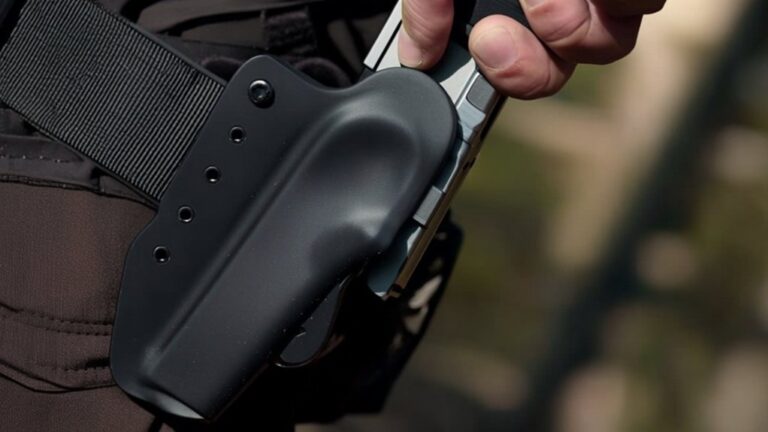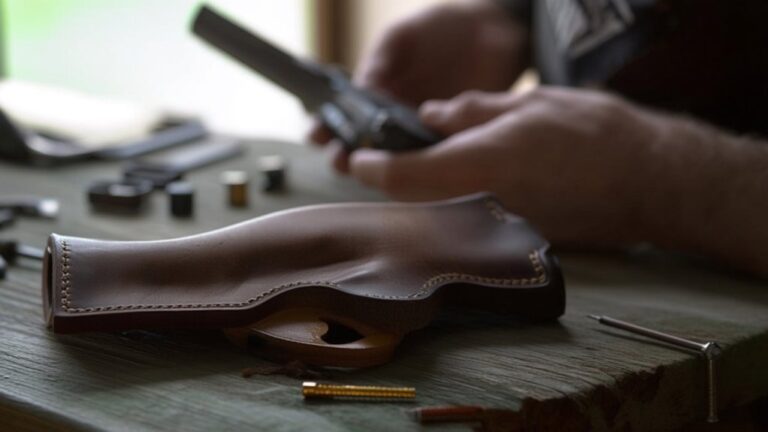
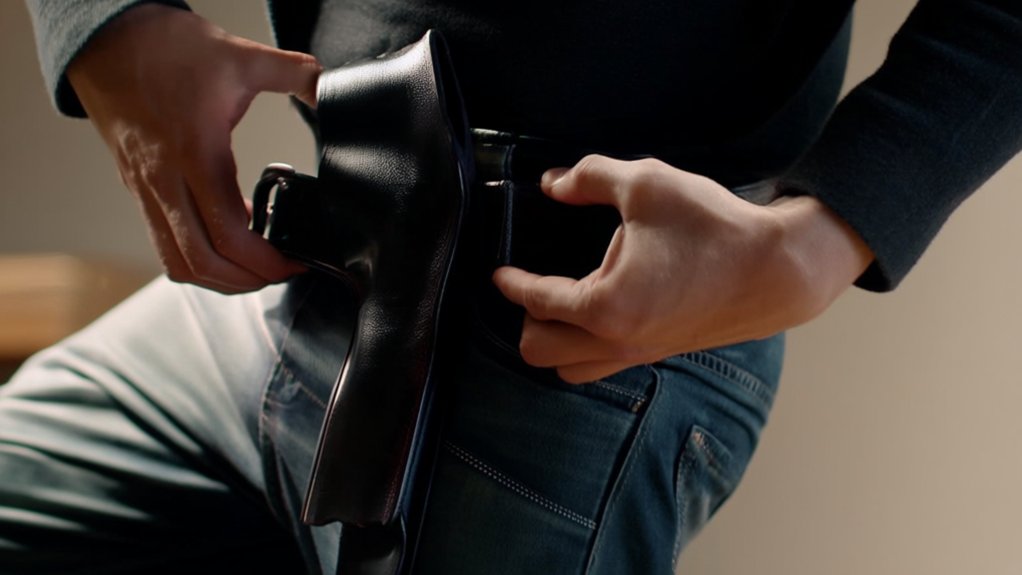
How to Put on a Gun Holster in 7 Easy Steps
To put on a gun holster in seven easy steps, first pick a holster that fits your carry style and firearm size. Prepare a sturdy belt and suitable clothes to support and conceal the holster comfortably. Secure the holster firmly to your belt, then position it for quick access and comfort. Insert your firearm carefully, ensuring proper fit and retention. Finally, practice drawing and reholstering smoothly to build confidence. Keep going to discover tips that enhance safety and ease.
Choose the Right Gun Holster for Your Carry Style
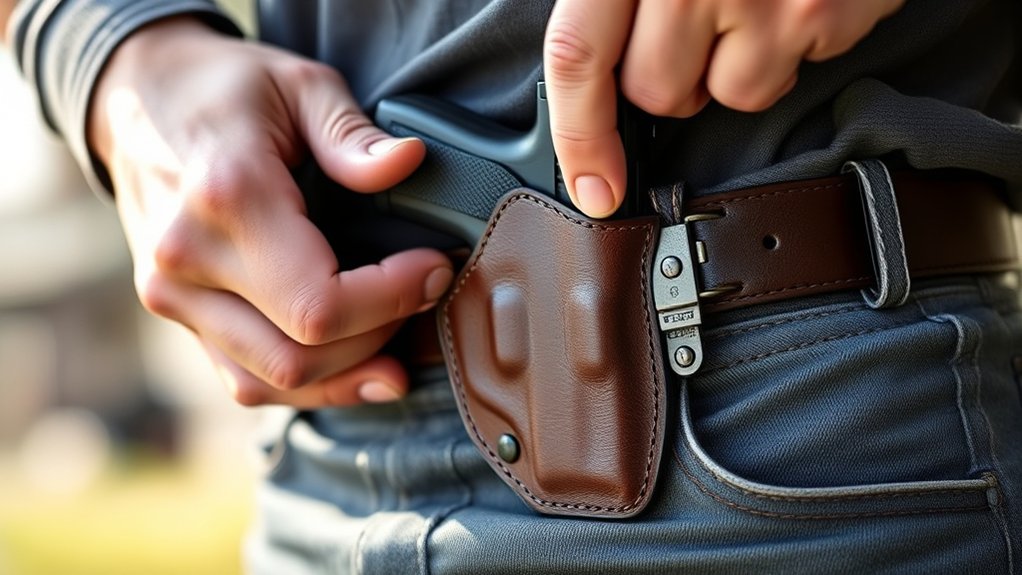
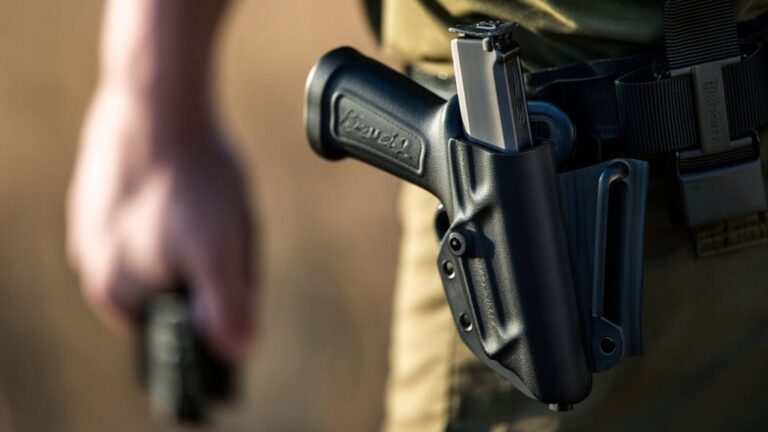
Choosing the right gun holster is essential for comfort, safety, and accessibility. You need to match your holster to how you plan to carry your firearm—whether it’s inside the waistband (IWB), outside the waistband (OWB), appendix carry, or shoulder holster.
Each style offers different benefits and challenges. For example, IWB holsters keep your gun concealed and close but require a slim design. OWB holsters are easier to access but might be less discreet.
Consider the firearm’s size, your body type, and daily activities. Don’t forget retention features for security and materials that feel comfortable against your skin.
Taking time to select the right holster ensures you’ll carry confidently and draw quickly when needed.
Prepare Your Belt and Clothes for Holster
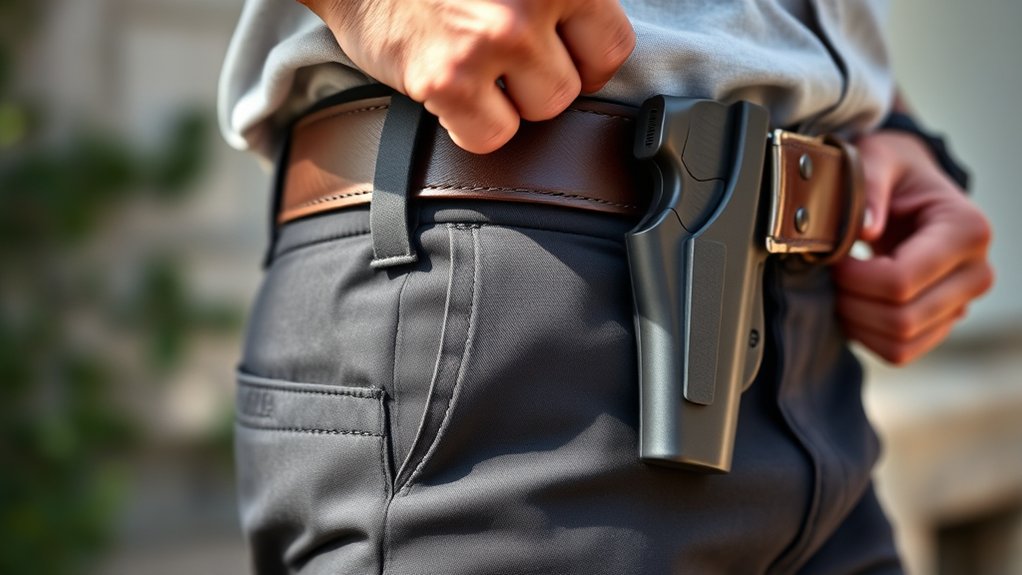
Before you attach your holster, make sure your belt is sturdy enough to support the weight of your firearm without sagging or twisting. A quality gun belt is essential to keep your holster stable and your firearm secure.
Next, consider your clothing choices to guarantee comfort and concealment. Here’s how to prepare:
- Choose pants with belt loops wide enough for your gun belt
- Opt for breathable fabrics to avoid discomfort during extended wear
- Pick a shirt that easily covers your holster without printing
- Avoid bulky layers that can shift your holster’s position
- Ensure your belt sits at a comfortable height for quick access
Taking these steps sets the stage for proper holster placement and a secure carry experience.
Secure Your Gun Holster to Your Belt
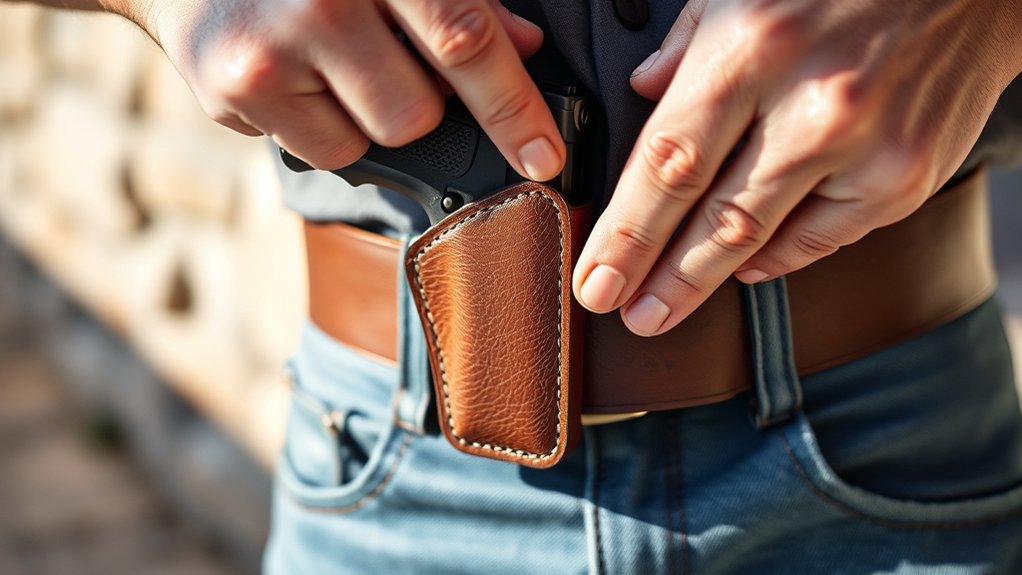
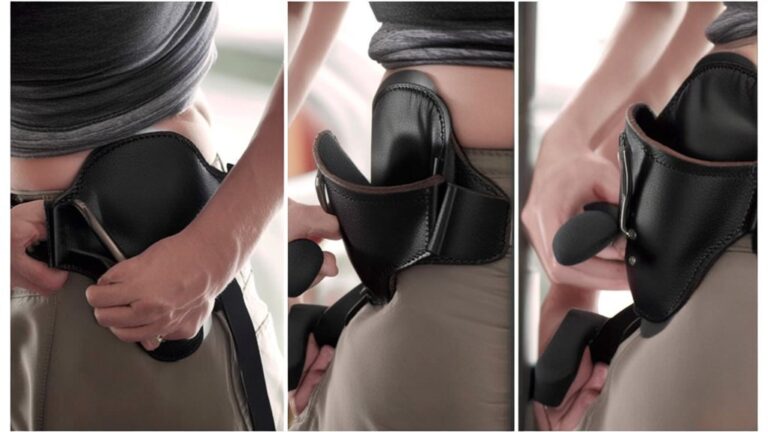
Once your belt and clothes are ready, it’s time to attach your holster securely. Slide the holster’s belt loop or clip over your belt, ensuring it fits snugly without excessive movement.
If your holster has a clip, press firmly so it locks onto the belt’s edge. For loop-style holsters, thread the belt through fully to prevent shifting.
Double-check that the holster sits flush against your waist. Tighten your belt to hold everything in place firmly but comfortably.
Avoid loose attachments, as they can cause the holster to wobble or shift during movement. Secure attachment is essential for safety and accessibility, so take your time ensuring the holster won’t slip or rotate once fastened.
Now your holster is anchored and ready for the next step.
Position Your Gun Holster for Comfort and Quick Access
Where you place your gun holster can make all the difference in comfort and accessibility. To position it right, consider your daily movements and how quickly you’ll need to draw.
Here’s how to guarantee your holster is both comfortable and ready for action:
- Choose a spot on your belt that feels natural, typically between the 3 and 5 o’clock positions for right-handed users.
- Avoid placing it too far back, which can cause discomfort when sitting.
- Keep it close enough to your body to prevent it from shifting during activity.
- Make sure it doesn’t interfere with your dominant hand’s range of motion.
- Adjust the angle (cant) for a smooth, quick draw without awkward wrist movement.
Following these tips, you’ll maintain comfort while staying prepared for quick access.
Insert Your Firearm Safely Into the Holster
Although it might seem straightforward, inserting your firearm into the holster requires careful attention to safety and proper technique.
First, verify your finger stays off the trigger and outside the trigger guard at all times. Hold the firearm firmly but calmly, aligning the muzzle with the holster’s opening.
Slowly slide the firearm straight down into the holster, avoiding any twisting or forcing motions that could damage the gun or holster. Listen for the click or feel the secure fit indicating the firearm is properly seated.
Never rush this step; maintaining control is key to preventing accidents. Once inserted, keep your finger indexed along the frame until you’re ready to draw again.
Safety and smoothness here set the foundation for confident carry.
Adjust Holster Fit and Retention
How tightly should your holster hold your firearm? It needs to be snug enough to keep the gun secure but not so tight that drawing becomes difficult. Adjusting fit and retention is vital for safety and accessibility. Here’s how to get it right:
- Check retention screws or straps and tighten or loosen them gradually.
- Ensure the firearm doesn’t wobble or move excessively in the holster.
- Confirm the trigger guard is fully covered for safety.
- Test the holster’s grip by gently shaking it while holstered.
- Adjust the cant or angle for comfort and accessibility without compromising retention.
Practice Drawing and Reholstering Smoothly
Once your holster fits securely and comfortably, it’s time to focus on drawing and reholstering your firearm smoothly. Start by practicing in a safe, controlled environment without live ammo.
Grip your firearm naturally, then draw it slowly to build muscle memory. Pay attention to how your hand and fingers interact with the holster.
Next, practice reholstering by guiding the firearm back into place without forcing it. Keep your finger off the trigger throughout.
Repeat these motions until you can perform them fluidly and confidently. This practice enhances your speed and safety, preventing fumbling or accidental drops.
Regular drills will make drawing and reholstering second nature, ensuring you’re prepared whenever you need quick access to your firearm.
Frequently Asked Questions
Can I Wear a Gun Holster While Jogging or Exercising?
You can wear a gun holster while jogging or exercising, but you’ll want a secure, comfortable design that won’t bounce or irritate you. Always prioritize safety and check local laws before doing so.
How Do I Clean and Maintain My Gun Holster?
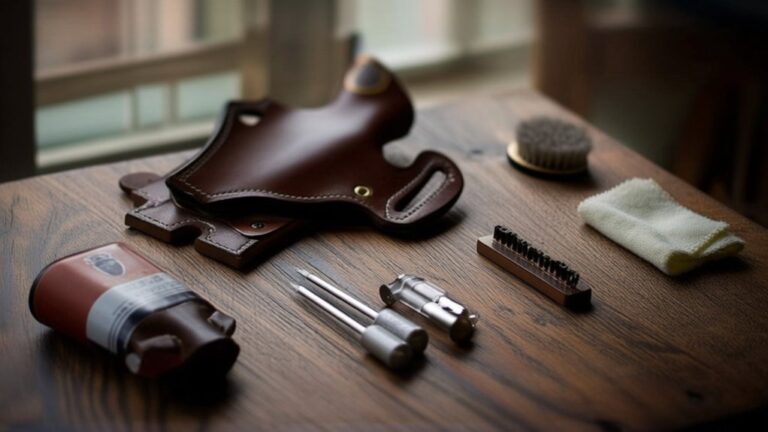
You clean your gun holster by wiping it with a damp cloth and mild soap. Let it air dry completely. Regularly check for wear, apply leather conditioner if needed, and store it in a cool, dry place.
Are There Legal Restrictions on Carrying a Holstered Firearm?
Yes, you’ll face legal restrictions on carrying a holstered firearm. Laws vary by state and country, including permits, where you can carry, and how it must be secured. Always check local regulations before carrying.
What Should I Do if My Holster Causes Skin Irritation?
If your holster causes skin irritation, stop wearing it temporarily. Clean the area, apply soothing lotion, and consider switching to a holster with softer materials or better ventilation. You might also try wearing a protective layer underneath.
Can I Use the Same Holster for Different Gun Models?
You usually can’t use the same holster for different gun models because holsters are designed for specific shapes and sizes. You’ll need a holster that fits your gun securely to guarantee safety and comfort.
Conclusion
So, you’ve mastered the art of holstering your gun in seven easy steps—because carrying a firearm should be as simple as tying your shoes, right? Just remember, while it might feel like a quick fix, proper practice and attention to detail are anything but effortless. After all, a holster isn’t just about convenience—it’s about safety, responsibility, and being prepared. So don’t rush it; your peace of mind depends on it.