7 Tips to Choose a Holster
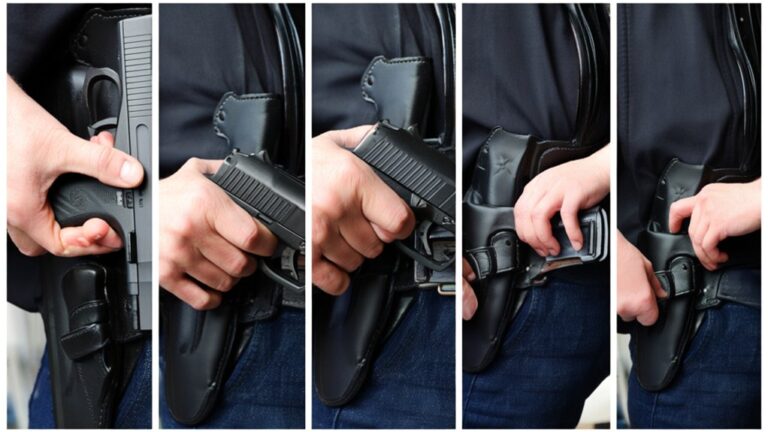
When choosing a holster, first decide if you want IWB for concealment or OWB for comfort and quick access. Make certain it fits your firearm model exactly to guarantee security and smooth draw. Pick a material like leather, Kydex, or nylon based on comfort and durability. Prioritize safety features like full trigger coverage and adjustable retention. Find a holster that offers natural access and all-day comfort. Consider how your daily activities affect your choice to carry confidently. Explore these tips further to make the best pick.
Choose Your Carry Style and Holster Type (IWB vs. OWB)
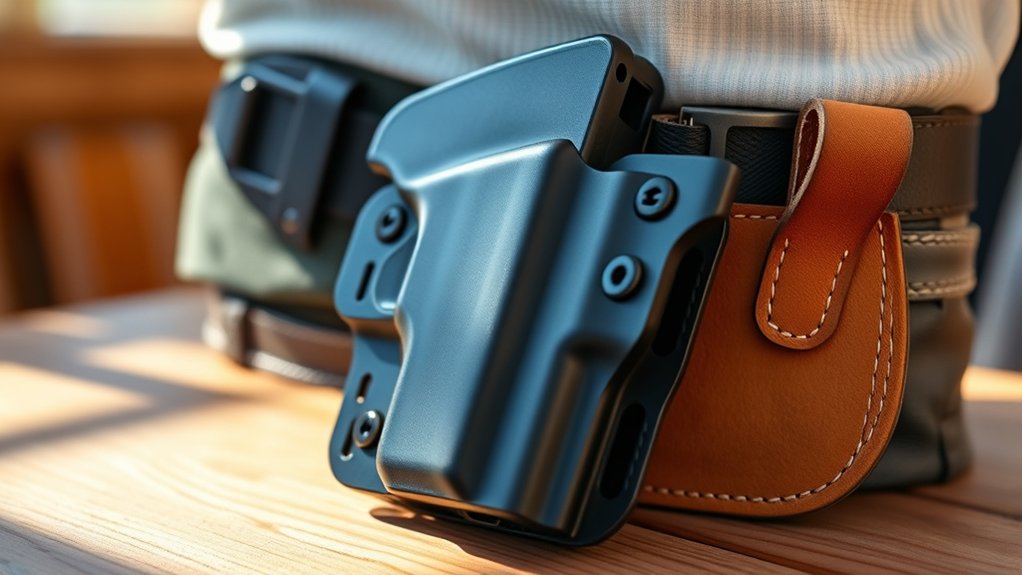
Before you pick a holster, decide how you want to carry your firearm. Your carry style affects comfort, concealment, and accessibility.
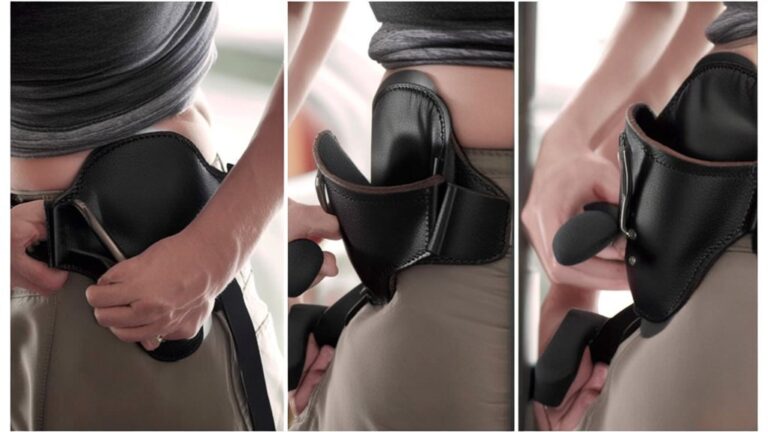
If you prefer inside-the-waistband (IWB) carry, you’ll tuck the holster inside your pants, offering better concealment but potentially less comfort during extended wear.
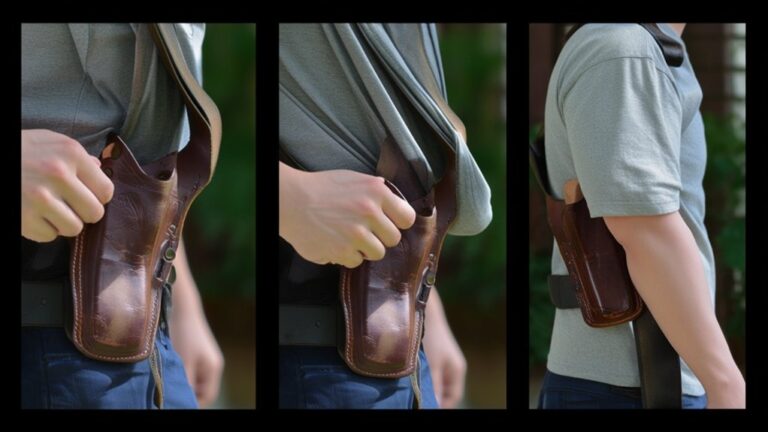
On the other hand, outside-the-waistband (OWB) holsters sit on your belt, making draw speed quicker and comfort higher but are harder to conceal.
Consider your daily activities, clothing choices, and how discreet you want to be. If you plan to carry all day, comfort might take priority.
If concealment is your goal, IWB could be best.
Knowing your carry style helps you choose a holster that fits your lifestyle and keeps your firearm accessible when you need it most.
Find a Holster That Fits Your Firearm Model Perfectly
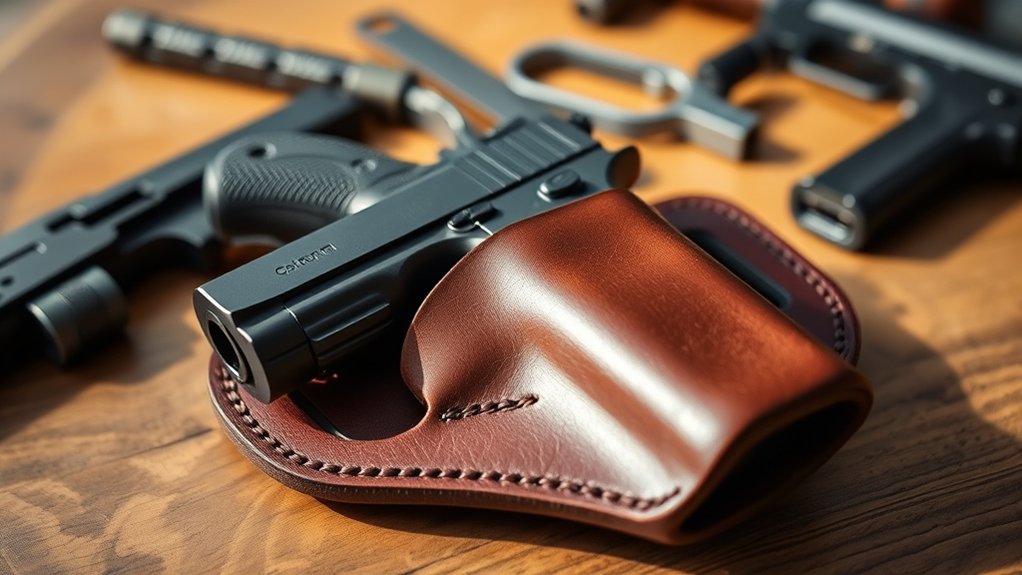
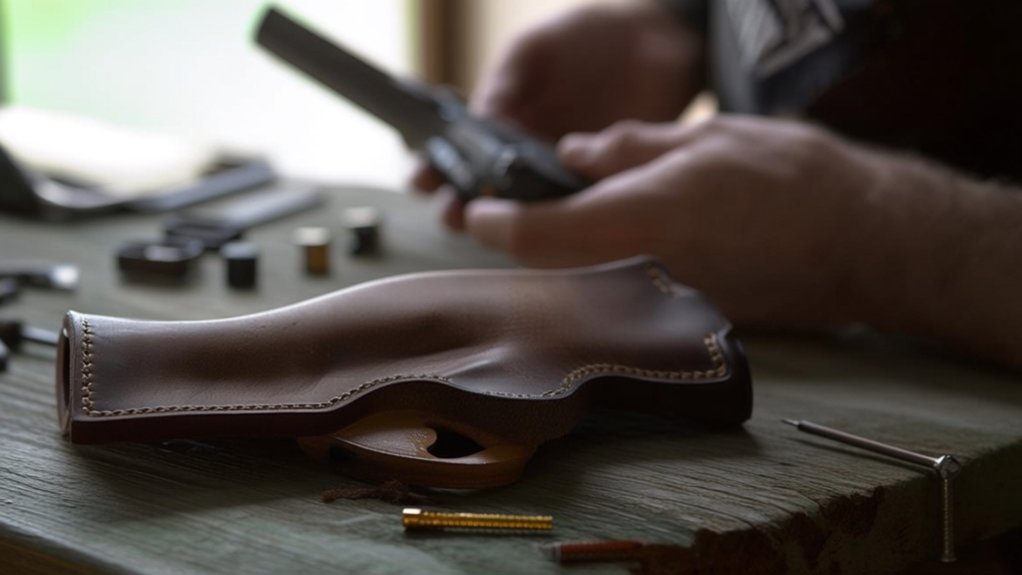
One crucial step in choosing a holster is guaranteeing it fits your firearm model exactly. A perfect fit keeps your gun secure, prevents unnecessary movement, and allows for a smooth draw. Check the holster’s specifications to confirm it’s designed for your exact make and model.
Generic or ill-fitting holsters can cause reliability issues or damage your firearm. If you carry different firearms, consider holsters made specifically for each model rather than one-size-fits-all options.
Also, verify that the holster accommodates any attachments like lights or lasers if you use them. Taking time to match your holster to your firearm ensures safety and efficiency every time you carry, improving your overall shooting experience.
Pick Holster Materials for Comfort and Durability
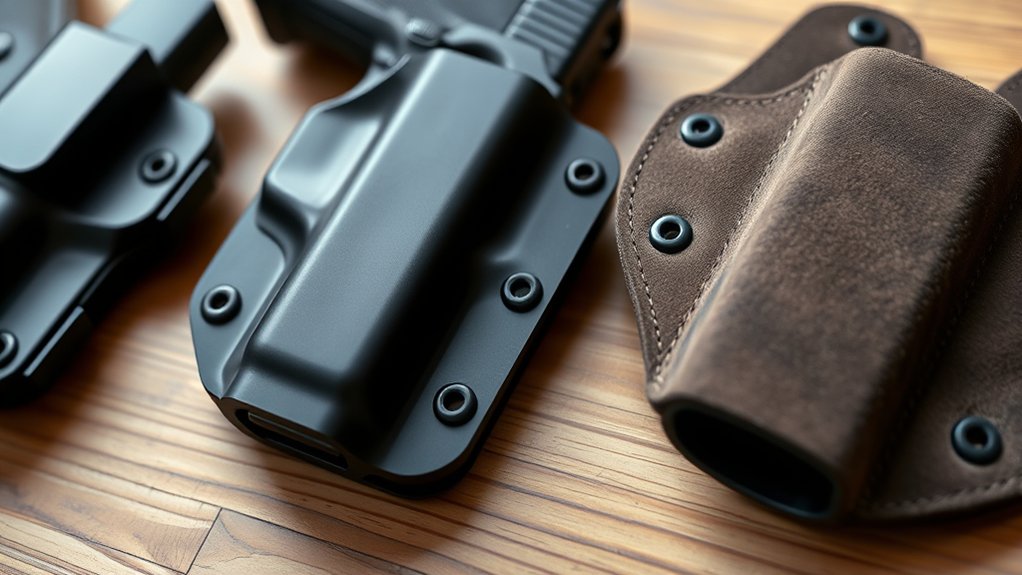
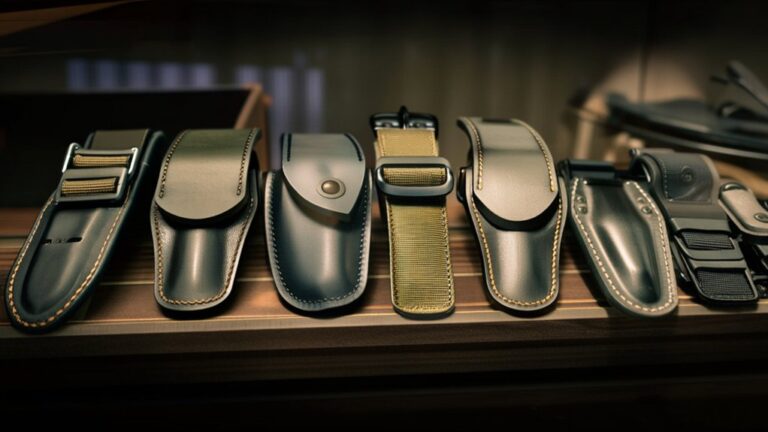
Although choosing a holster that fits your firearm is essential, selecting the right material is just as important for comfort and durability. The material affects how the holster feels against your body and how long it lasts under daily use.
Here are three common materials to think about:
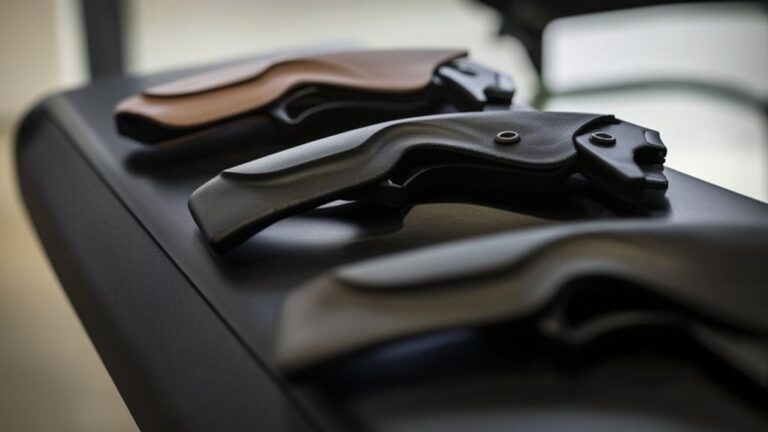
- Leather – Offers a classic look, molds to your firearm over time, and provides excellent comfort. However, it requires maintenance to stay durable.
- Kydex – A rigid, synthetic material that’s highly durable, resistant to moisture, and provides a secure fit. Though it might feel less comfortable against the skin.
- Nylon – Lightweight and affordable, nylon holsters are breathable and flexible. But they may wear out faster compared to leather or Kydex.
Choose a material that fits your lifestyle and comfort preferences for the best experience.
Prioritize Holster Safety Features to Prevent Accidents
Selecting the right material sets the foundation for a comfortable holster, but you also need to focus on safety features that protect you and those around you.
Look for a holster with a secure retention system that prevents accidental discharges by keeping your firearm firmly in place. Features like adjustable retention screws or locking mechanisms add an extra layer of security.
Make certain the trigger guard is fully covered to avoid unintentional trigger pulls. Also, check that the holster fits your firearm model precisely; a loose fit can lead to dangerous slippage.
Consider holsters that position the firearm away from sensitive areas, minimizing injury risks during movement.
Make Sure Your Holster Offers Quick, Easy Access
How quickly can you draw your firearm when every second counts? Your holster needs to offer quick, easy access without fumbling or delays. Choose a design that lets you draw smoothly and naturally.
Consider these key factors:
- Positioning: Place the holster where your hand naturally rests for an instinctive draw.
- Retention Mechanism: Select a balance between secure retention and swift release—avoid overly complicated locks.
- Material and Design: Opt for low-friction materials and a shape that guides your hand directly to the grip.
Test Holster Fit and Adjustability for All-Day Comfort
Because you’ll likely wear your holster for hours at a time, ensuring it fits well and adjusts to your body is essential for comfort.
Start by wearing the holster with your everyday clothing and move around—sit, bend, and walk to see if it stays secure without digging into your skin. Check for pressure points or areas that feel tight.
Adjust the cant, ride height, and retention settings until it feels natural and unobtrusive. Make sure the holster’s material is flexible enough to conform to your body shape without losing its grip.
If you notice discomfort or excessive movement, try different adjustments or holster styles. Prioritizing fit and adjustability helps you carry confidently without distractions throughout your day.
Match Your Holster Choice to Your Daily Activities
Your daily routine plays a huge role in determining the best holster for you. If you’re active or on the move a lot, comfort and secure retention are key. If you spend most of your time in an office or casual setting, concealment might be your top priority.
Consider these factors to match your holster choice to your daily activities:
- Movement: Choose a holster that stays put and won’t shift during physical activities like running or bending.
- Clothing: Pick a holster style that works well with what you wear daily, ensuring easy access and concealment.
- Accessibility: Make sure your holster allows quick draws when needed but keeps the firearm safe during routine tasks.
Match your holster to your lifestyle for both safety and convenience.
Frequently Asked Questions
How Do I Clean and Maintain My Holster?
You clean your holster by wiping it with a damp cloth and mild soap if needed. Let it air dry completely. Regularly check for wear, tighten screws, and apply leather conditioner if it’s leather to keep it flexible.
Can a Holster Affect My Firearm’s Accuracy?
A holster doesn’t affect your firearm’s accuracy directly, but if it shifts or stresses your gun’s barrel or sights, it could. So, you should choose one that fits snugly and keeps your firearm stable.
Are There Legal Restrictions on Holster Types in My State?
Yes, you’ll find legal restrictions on holster types depending on your state. Check your local laws carefully, since some states regulate concealment options, retention features, or require specific designs to comply with carry permits.
How Long Does a Typical Holster Last?
You know what they say: “You get what you pay for.” A typical holster lasts 3 to 5 years with regular use, but quality materials and proper care can extend its life considerably. Keep it clean and dry.
Can I Use a Holster Designed for One Firearm With Another Model?
You usually can’t use a holster designed for one firearm with another model because each holster fits specific shapes and sizes. Using the wrong one risks poor retention and safety issues, so always match holsters carefully.
Conclusion
Choosing the right holster isn’t just about convenience—it’s about embracing a subtle confidence that keeps you prepared without drawing unnecessary attention. By considering your carry style, comfort, safety, and daily activities, you’re not just picking gear; you’re selecting a trusted companion that quietly supports your peace of mind. Remember, a well-chosen holster gently balances readiness with discretion, ensuring you move through your day with both ease and assurance.