How to Wear a Paddle Holster in 3 Easy Steps
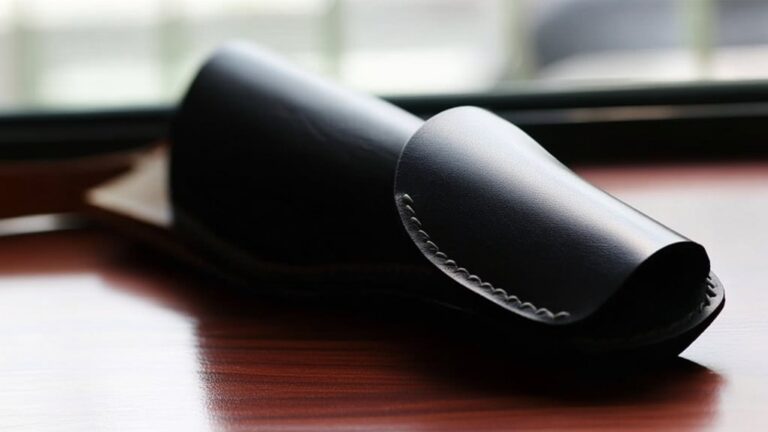
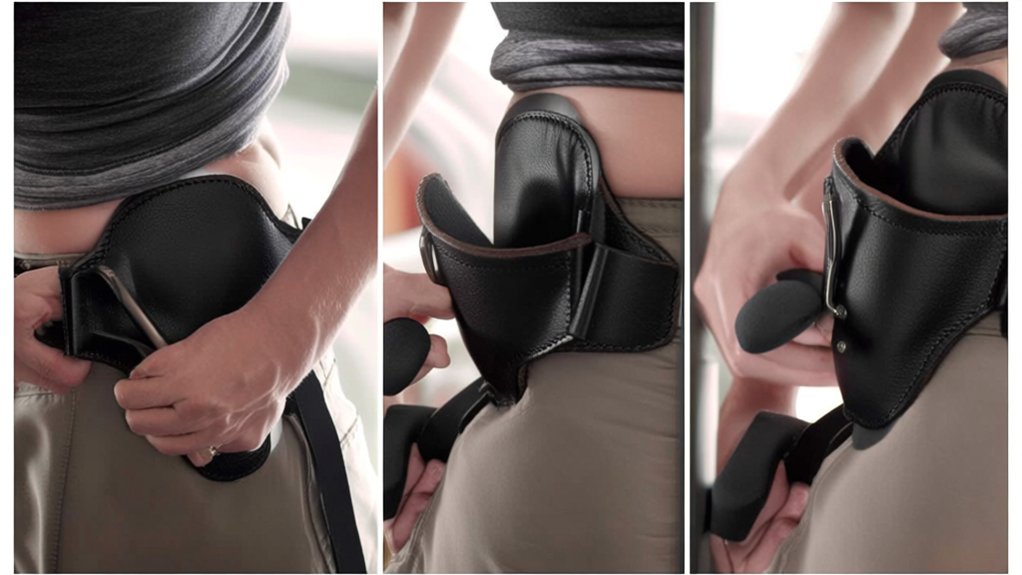
To wear a paddle holster in three easy steps, start by securely sliding the paddle between your waistband and body, ensuring it grips firmly and won’t slip. Next, find a comfortable spot on your hip that doesn’t restrict movement or cause discomfort. Finally, adjust the holster’s angle and retention for quick, smooth access, testing your draw while standing and sitting. Keep these basics in mind, and you’ll be set to explore more tips for a perfect fit and reliable daily carry.
Attach Your Paddle Holster Securely to Your Belt or Waistband
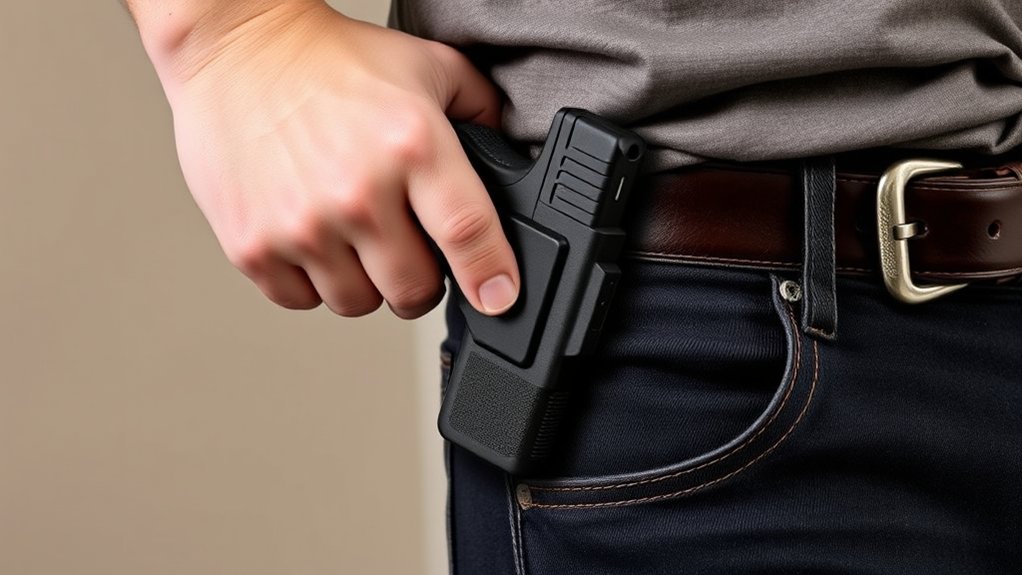
Before you begin, make sure your belt or waistband is sturdy enough to support the paddle holster. You want to avoid any slipping or sagging once it’s attached.
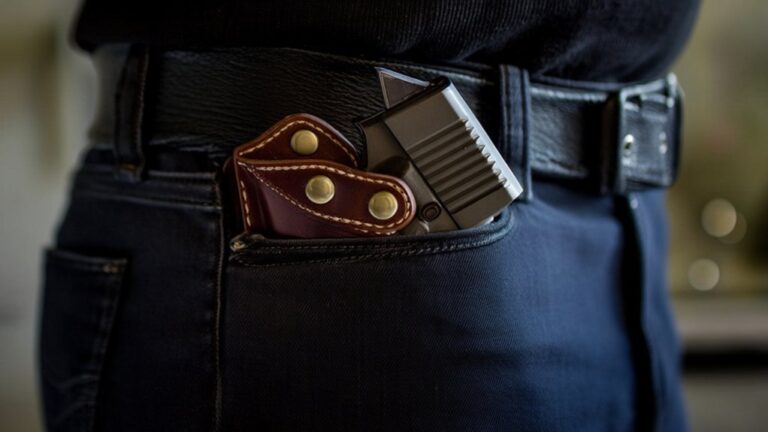
Slide the paddle securely between your body and the belt or waistband, ensuring it fits snugly without causing discomfort.
Check that the holster’s paddle grips firmly against your clothing to prevent movement.
If your holster has adjustable features, tighten them to lock it in place.
Once attached, give the holster a gentle tug to test its stability.
Remember, a loose holster can interfere with your draw and cause inconvenience.
Find the Most Comfortable Spot for Your Paddle Holster
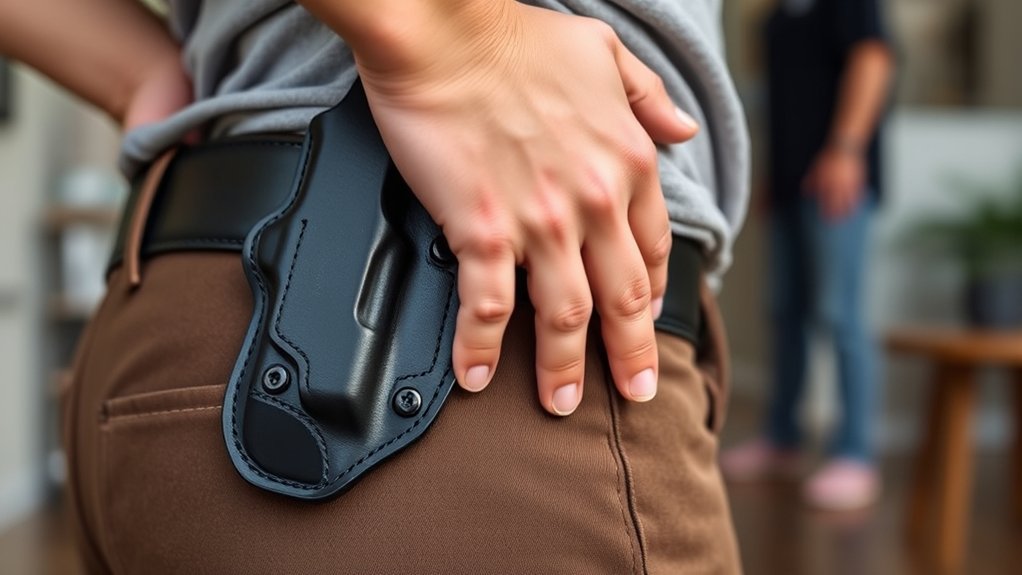
Once your paddle holster is securely attached, the next step is finding the spot that feels most comfortable for you. Start by standing naturally and placing the holster at different positions along your waistband—commonly at the hips or just behind your hip bone.
Make sure it doesn’t dig into your side or restrict movement when you sit, walk, or bend. Pay attention to how the weight distributes and whether the holster stays stable without shifting.
Your comfort also depends on your daily activities and clothing style, so consider what works best for your routine. Take your time experimenting with placement until you find a spot that balances ease of wear and comfort, setting the foundation for effective and reliable carry throughout the day.
Adjust Your Paddle Holster and Test for Easy Access
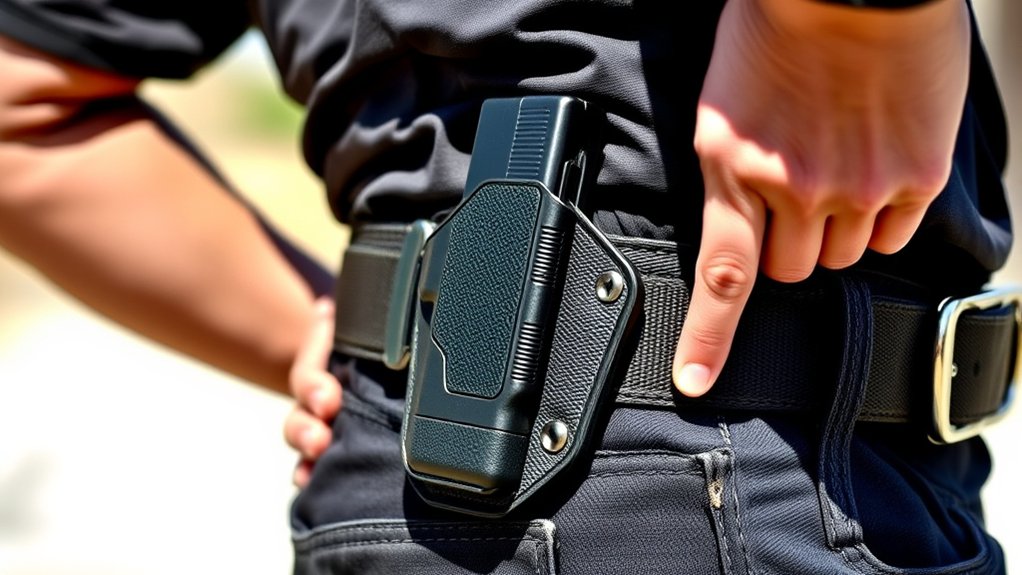
Although you’ve found a comfortable position for your paddle holster, you still need to fine-tune its angle and retention to guarantee quick, effortless access. Start by adjusting the cant—the tilt of the holster—to suit your draw style. A slight forward or backward angle can make a huge difference.
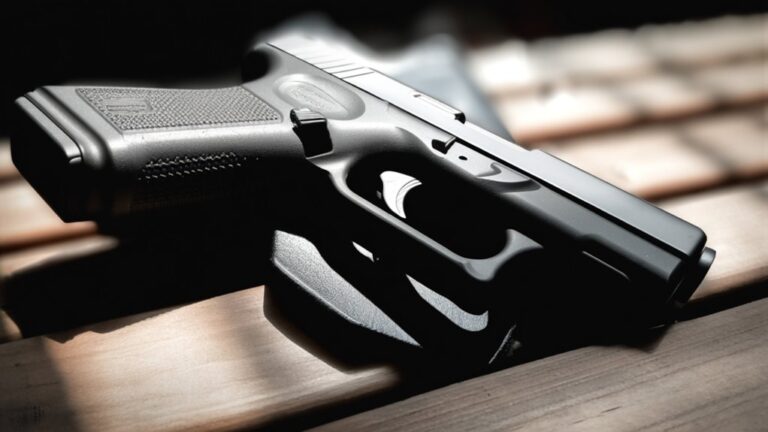
Next, check the retention screws or mechanisms, making sure your firearm is secure but can be drawn smoothly. Test your draw several times, both standing and sitting, to confirm the holster doesn’t shift and the firearm releases easily.
If you encounter resistance or awkward angles, tweak the adjustments until your hand naturally finds the grip without hesitation. Proper fine-tuning ensures your paddle holster stays secure and your draw is fast and reliable when it counts.
Frequently Asked Questions
Can a Paddle Holster Be Worn Inside the Waistband?
No, you can’t wear a paddle holster inside the waistband because it’s designed to clip onto the outside of your belt or waistband. For inside-the-waistband carry, you’d need a holster specifically made for that style.
What Types of Firearms Fit Most Paddle Holsters?
Wondering which guns fit most paddle holsters? You’ll find them compatible with many compact to full-size pistols, especially popular models like Glock, Sig Sauer, and Smith & Wesson. They’re designed to secure your firearm comfortably and quickly.
How Do Paddle Holsters Compare to Belt Holsters?
Paddle holsters offer quicker on-and-off convenience compared to belt holsters, which provide a more secure, stable fit. You’ll find paddle holsters easier for casual wear, while belt holsters suit longer, active use better.
Are Paddle Holsters Suitable for Concealed Carry?
Paddle holsters aren’t exactly ninjas—they’re bulkier and might print more easily, so they’re less ideal for deep concealment. If you want quick access with moderate concealment, they’ll work, but tight clothes help hide the outline better.
Can I Wear a Paddle Holster While Sitting for Long Periods?
You can wear a paddle holster while sitting for long periods, but it might feel uncomfortable or shift position. Adjust it carefully and choose a holster with good retention to keep your firearm secure and accessible.
Conclusion
Now that you know how to wear your paddle holster properly, you’ll enjoy both comfort and quick access. Remember, practice makes perfect—so take the time to adjust and test your holster until it feels just right. A well-fitted paddle holster not only keeps your gear secure but also guarantees you’re ready when it counts. Keep these steps in mind, and you’ll be prepared for anything, with confidence and ease.