How to Calibrate a Rifle Scope in 3 Easy Steps
To calibrate your rifle scope in three easy steps, first securely mount your rifle and scope, making sure everything’s tight and clean for stability. Next, take your rifle to the range, fire a few shot groups, and adjust the windage and elevation turrets to align your shots with the bullseye. Finally, confirm your zero by fine-tuning with additional shots until you consistently hit your target. Keep following these basics to sharpen your accuracy even further.
Get Your Rifle and Scope Ready for Calibration
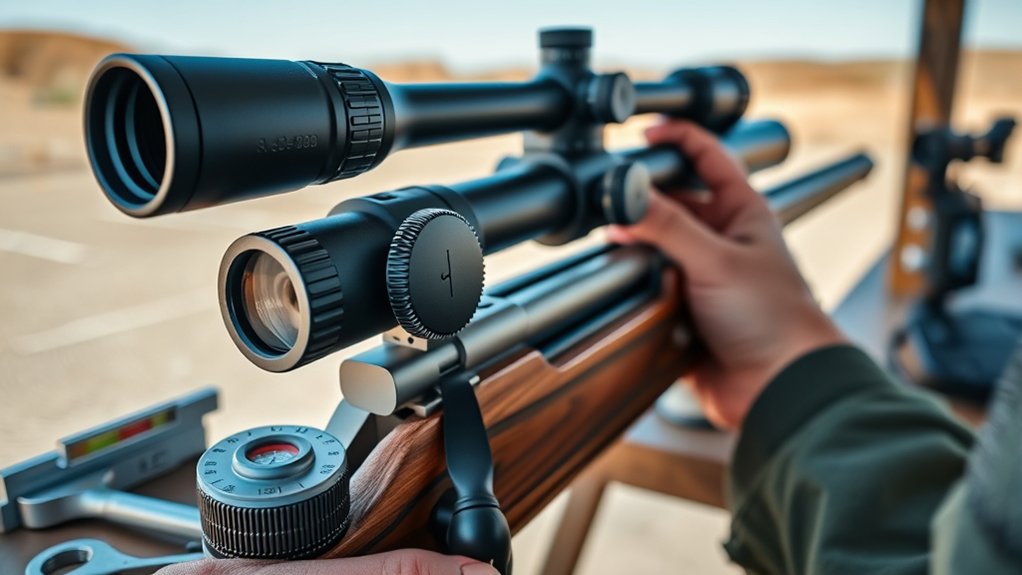
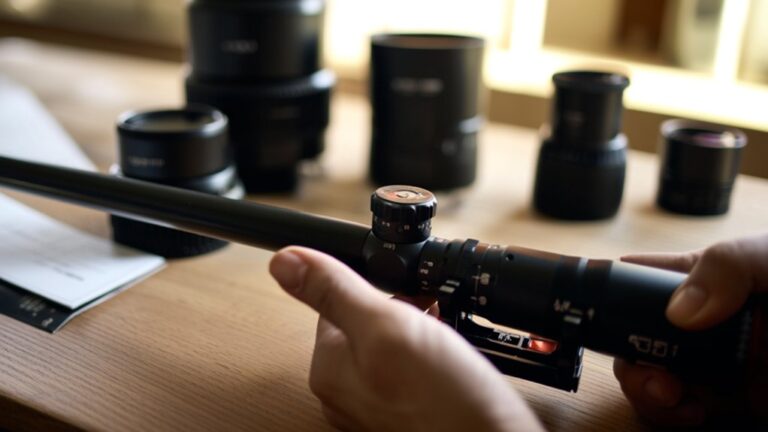
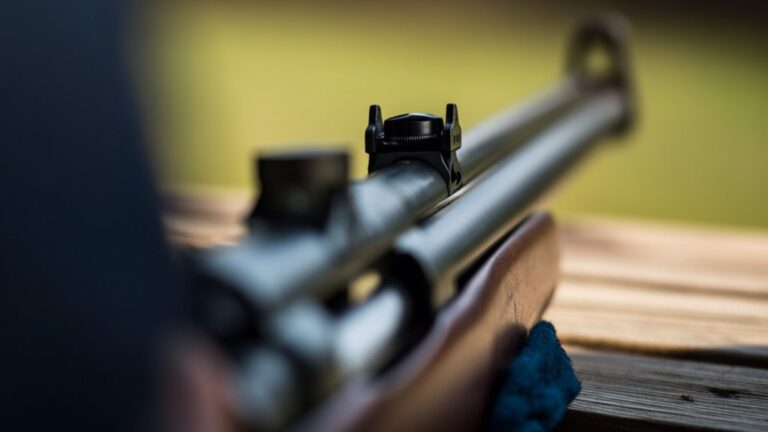
Before you begin calibrating your rifle scope, make certain both your rifle and scope are securely mounted and clean. Check that the scope rings are tightly fastened to avoid any movement during shooting. Clean the lenses with a proper lens cloth to ensure a clear view.
Also, inspect the rifle’s barrel and action for dirt or debris that might affect accuracy. You’ll want your rifle resting on a stable surface or shooting rest to minimize movement.
Make sure your scope’s reticle is properly aligned and that the scope is set to its optical center. Taking these steps ensures a solid foundation before you move on to adjusting windage and elevation at the range.
Preparation here sets you up for precise and reliable calibration results.
Adjust Rifle Scope Windage and Elevation at the Range
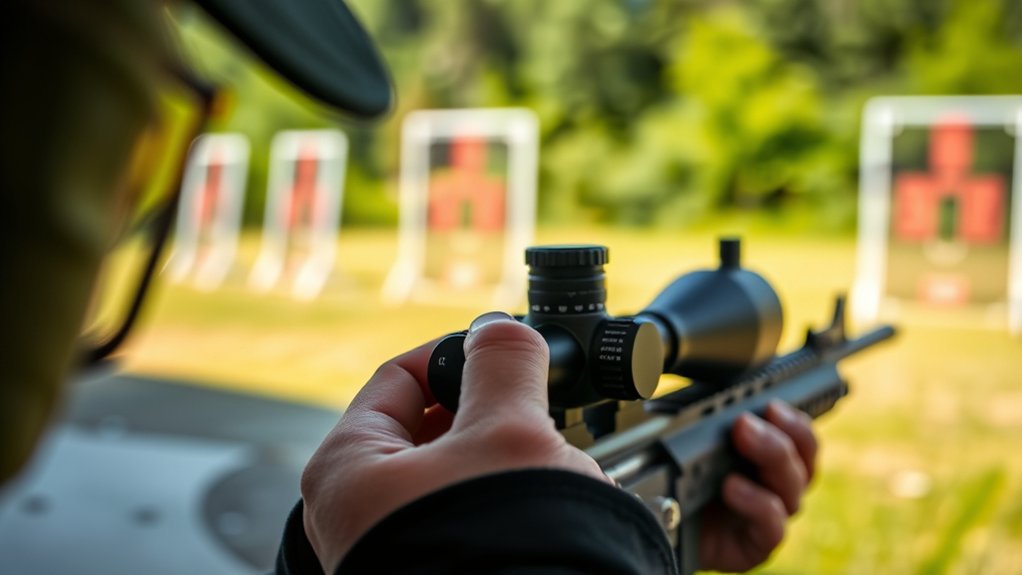
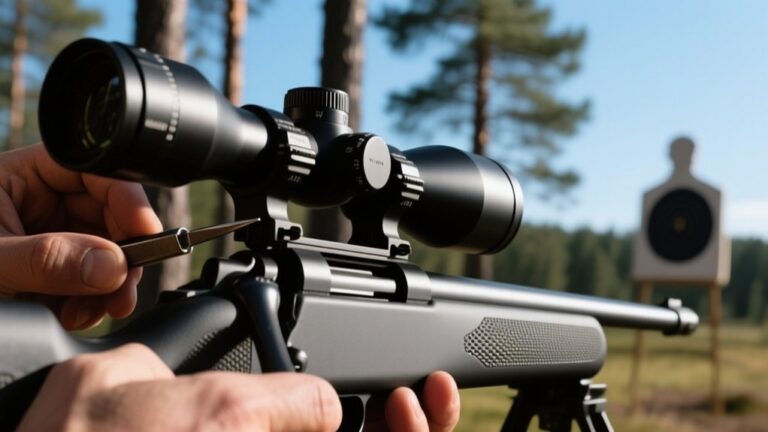
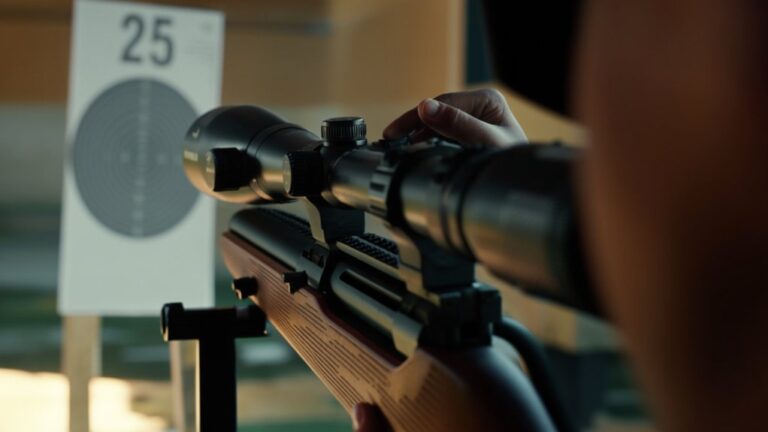
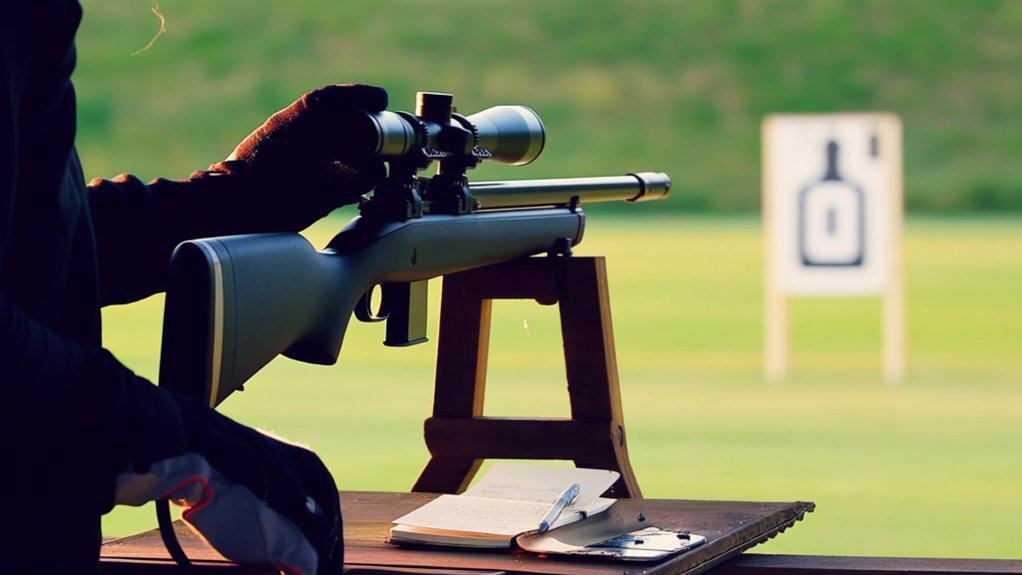
Once your rifle and scope are securely set up and clean, you’re ready to modify the windage and elevation at the range. Begin by firing a group of three to five shots at your target from a stable position.
Then:
- Check the shot placement: Note where the group lands relative to the bullseye.
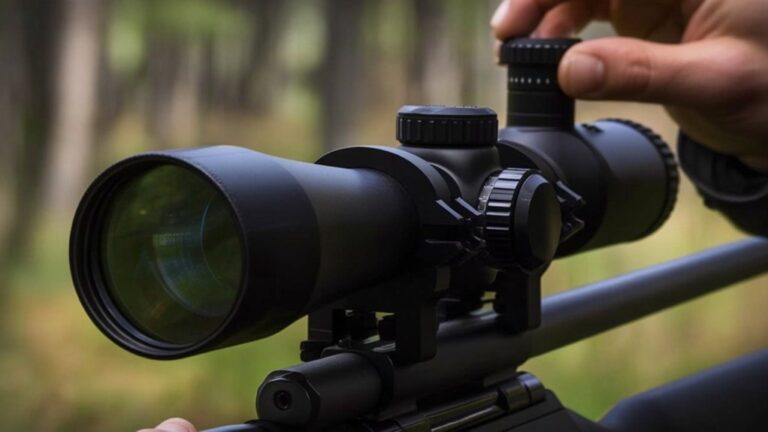
- Adjust windage: Turn the windage turret left or right to move the point of impact horizontally toward the bullseye.
- Adjust elevation: Turn the elevation turret up or down to shift the point of impact vertically.
Make small, incremental adjustments and fire another group to confirm changes.
This process ensures your scope compensates accurately for bullet drop and wind drift, setting the foundation for precise shooting.
Confirm Zero and Fine-Tune Your Rifle Scope for Accuracy
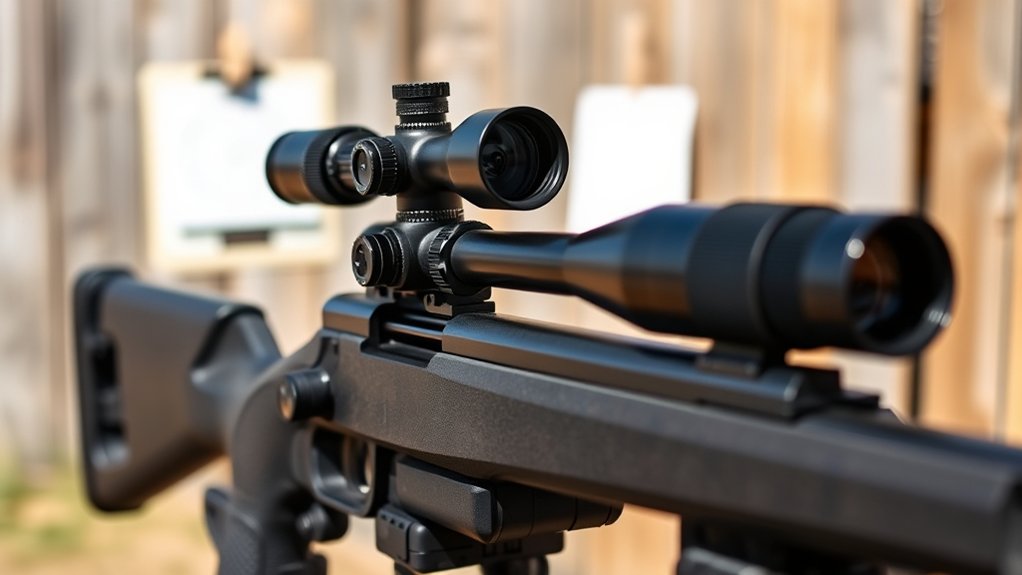
Although you’ve made initial adjustments, confirming your zero is essential to guarantee your rifle scope is truly accurate. Start by shooting a group at your desired distance and observe the shot placement. If your shots aren’t consistently hitting the bullseye, fine-tune your windage and elevation knobs in small increments. Repeat this process until your group tightens around the target.
Use the table below to track your adjustments and results:
| Adjustment Type | Effect on Point of Impact |
|---|---|
| Elevation Up | Shots move higher |
| Elevation Down | Shots move lower |
| Windage Right | Shots move right |
| Windage Left | Shots move left |
| No Adjustment | Maintains current zero |
Keep confirming zero regularly to maintain precision in varied conditions.
Frequently Asked Questions
What Is the Best Type of Rifle Scope for Beginners?
You’ll want a beginner-friendly rifle scope with a simple reticle, clear optics, and easy adjustments. Look for variable magnification around 3-9x and durable construction. Brands like Nikon or Vortex offer great affordable options for starters.
How Often Should I Recalibrate My Rifle Scope?
You should recalibrate your rifle scope whenever you notice a shift in accuracy or after significant changes like moving to a new location or extreme weather. Don’t wait—regular checks keep your shots precise every time you shoot.
Can Environmental Factors Affect Scope Calibration?
Yes, environmental factors like temperature, humidity, and wind can affect your scope’s calibration. You’ll want to adjust your settings accordingly to maintain accuracy, especially when shooting in different weather conditions or altitudes.
What Tools Do I Need Besides the Rifle and Scope?
Oh, you definitely don’t need a stable rest—just kidding! You’ll want a sturdy shooting rest, targets, a wind meter, and maybe a screwdriver. These tools help you zero in accurately without guessing every shot.
How Do Different Bullet Types Impact Scope Adjustments?
Different bullet types affect your scope adjustments because they vary in weight, velocity, and trajectory. You’ll need to tweak elevation and windage to match each bullet’s drop and drift, ensuring accurate shots every time you switch ammo.
Conclusion
Congrats, sharpshooter—you’ve just mastered the ancient art of “point and shoot” with a calibrated scope! No more guessing where your bullet will land or blaming the wind gods for your misses. By getting your gear ready, adjusting windage and elevation, and confirming your zero, you’re now officially a precision wizard. So go ahead, impress your friends, scare a few squirrels, and remember: it’s not luck, it’s science (and a bit of elbow grease). Happy shooting!