How to Choose a Rifle Scope Step by Step
To choose the right rifle scope, start by evaluating your shooting distance, environment, and lighting conditions to match magnification and lens size. Pick a reticle type that suits your shooting style and consider features like waterproofing and parallax control for accuracy. Check scope tube diameter for mounting compatibility, then set a budget balancing features and durability. Test clarity and adjustments before finalizing. Explore these steps closely, and you’ll find the perfect scope tailored to your needs.
Define Your Shooting Needs And Environment
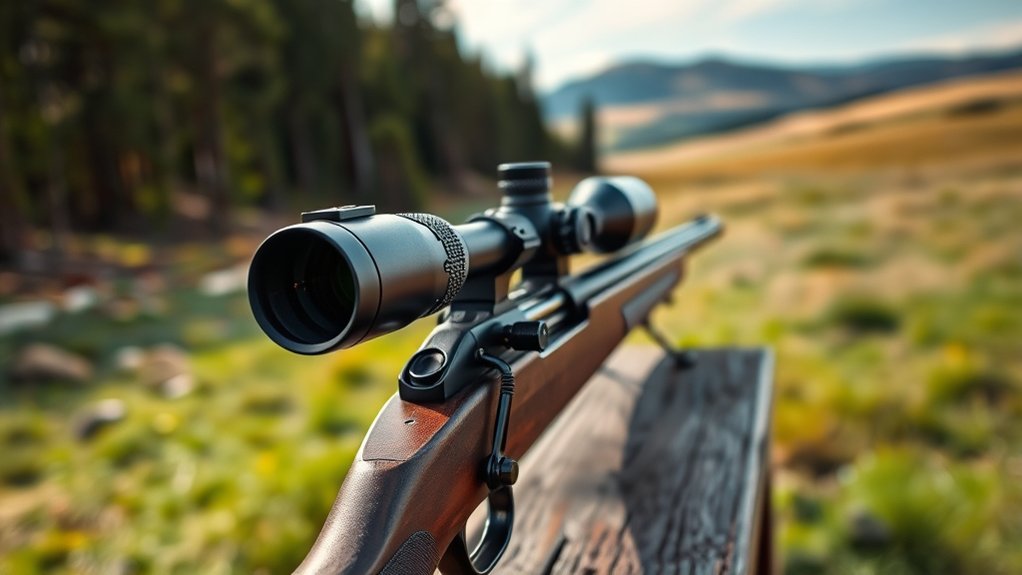
Before choosing a rifle scope, you need to clearly understand your shooting needs and environment. Are you hunting in dense woods or open fields? Will you be shooting at short or long distances? Knowing this helps you select a scope that suits your conditions.
If you often hunt in low light, look for scopes with good light-gathering ability. For fast-moving targets, a scope with a wider field of view is essential.
Also, consider the weather and terrain—waterproof and shockproof scopes perform better in harsh conditions. Think about how often you’ll use your rifle and the type of game or targets you’ll engage.
Defining these factors upfront guarantees you pick a scope that enhances both accuracy and your overall shooting experience.
Choose The Right Rifle Scope Magnification
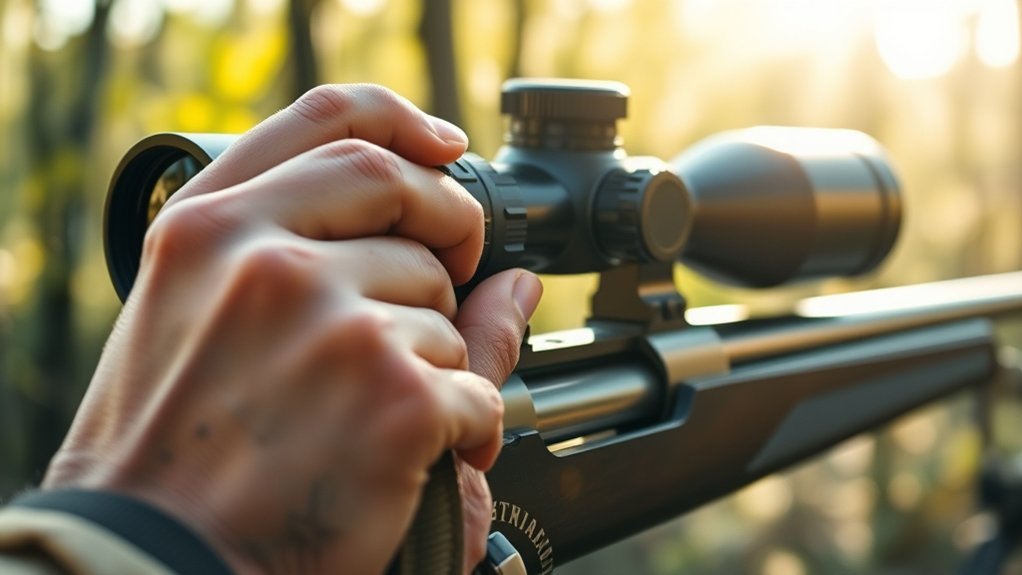
When you pick a rifle scope, choosing the right magnification is essential because it directly affects how clearly and precisely you can see your target.
If you mostly hunt or shoot at close to medium distances, a lower magnification—like 3x to 9x—works well, offering a wider field of view and easier target acquisition.
For long-range shooting, higher magnification scopes, such as 10x and above, help you spot details at greater distances.
Variable magnification scopes give you flexibility to adjust based on the situation, which is handy if your shooting environment changes.
Keep in mind, though, that very high magnification can make the image shakier and narrow your view, so balance magnification with your shooting style and typical range for the best results.
Pick The Best Rifle Scope Reticle For Your Purpose
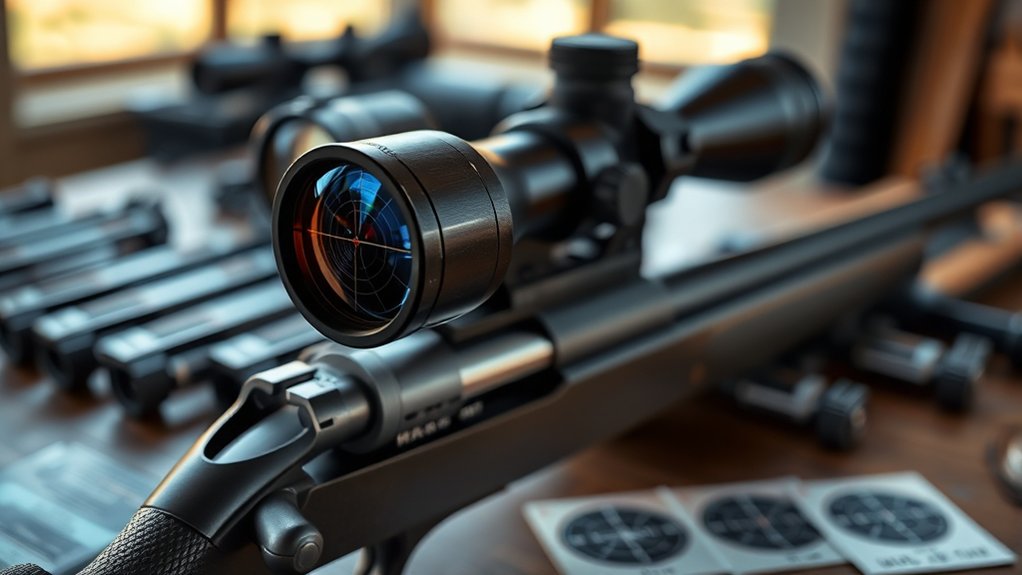
How do you choose the right reticle for your rifle scope? It depends on your shooting style and environment. Simple duplex reticles work great for general hunting, offering a clear aiming point. If long-range precision matters, consider mil-dot or BDC reticles—they help estimate distance and bullet drop. For tactical shooting, illuminated reticles improve visibility in low light.
| Reticle Type | Best For | Key Feature |
|---|---|---|
| Duplex | General Hunting | Bold outer, fine center |
| Mil-Dot | Long-Range | Distance estimation |
| BDC | Tactical/Shooting | Bullet drop compensation |
Pick a reticle that matches your shooting needs to improve accuracy and confidence in the field.
Consider Rifle Scope Objective Lens Size And Light Transmission
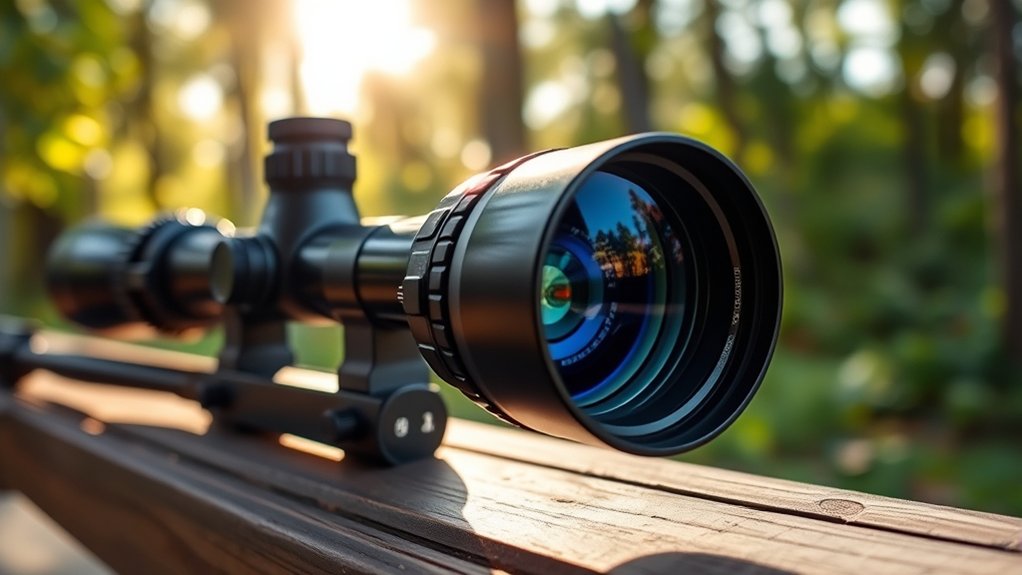
Though the reticle guides your aim, the objective lens size plays a crucial role in gathering light and delivering a bright, clear image.
Larger objective lenses let in more light, which improves visibility in low-light conditions, like dawn or dusk. However, bigger lenses add weight and can affect your rifle’s balance.
You’ll want to find a size that suits your shooting environment without making your setup unwieldy.
Light transmission depends not just on lens size but also on lens coatings and quality.
High-quality coatings reduce glare and enhance clarity, giving you a sharper view.
When choosing your scope, consider how much natural light you’ll typically have and select an objective lens size and coating that ensures clear, bright images under those conditions.
Understand Why Scope Tube Diameter Matters
Because the scope tube diameter affects both durability and compatibility, it’s important to choose the right size for your rifle. Most scopes come in 1-inch or 30mm tubes, with some models offering larger diameters.
A larger tube usually means better light transmission and more room for internal adjustments, which can improve your accuracy. However, you must verify your mounts and rings match the tube diameter exactly to avoid fitting issues.
Picking the correct diameter also impacts how sturdy your scope feels; bigger tubes often handle recoil better. By understanding these factors, you’ll avoid compatibility problems and get a scope that holds zero reliably, enhancing your shooting experience.
Don’t overlook this detail—it’s essential for a proper, secure setup.
Check For Durable Construction And Weather Resistance
When selecting a rifle scope, you’ll want to prioritize durable construction and weather resistance to guarantee reliable performance in harsh conditions. Look for scopes made from aircraft-grade aluminum or similarly sturdy materials, as they offer strength without adding unnecessary weight.
Check that the scope is shockproof to withstand recoil and accidental bumps. Weather resistance is essential—ensure the scope is fully waterproof and fog proof, often achieved through nitrogen or argon purging and sealed O-rings. This keeps moisture and dust out, maintaining clear optics and preventing internal damage.
A scope built to handle rain, snow, and humidity will serve you well in any environment. By choosing a rugged, weather-resistant scope, you’ll have confidence that it performs consistently whenever you need it most.
Decide On Eye Relief And Field Of View Requirements
After ensuring your scope can handle tough conditions, you’ll need to focus on how it fits your shooting style, starting with eye relief and field of view.
Eye relief is the distance between your eye and the scope’s eyepiece where you still see a full image. If you shoot a high-recoil rifle, choose longer eye relief (3-4 inches) to avoid injury. For lower-recoil rifles, shorter eye relief works fine and can offer a clearer sight picture.
Field of view (FOV) is how wide an area you see through the scope at a given distance. A wider FOV helps you track moving targets and scan terrain quickly. Decide based on your typical shooting scenarios—long-range precision demands less FOV, while hunting moving game benefits from more.
When Parallax Adjustment Matters For Your Rifle Scope
You need to understand parallax error to know when adjusting your scope matters. Parallax adjustment helps keep your target and reticle perfectly aligned at different distances.
Knowing when to use this feature can improve your accuracy and shot confidence.
Understanding Parallax Error
Why does your target sometimes appear blurry or shift when you move your head behind the scope? That’s parallax error—an optical illusion caused when the reticle and target image aren’t on the same focal plane. When this happens, your point of aim can change, even if your rifle stays still. Understanding parallax error helps you recognize when you need to make adjustments or choose a scope with parallax correction.
| Parallax Term | Description | Effect on Shooting |
|---|---|---|
| Parallax Error | Image shifts with eye movement | Aim point changes |
| Focal Plane | Where reticle and image align | Critical for clarity |
| Parallax Adjustment | Mechanism to correct error | Stabilizes point of aim |
| Fixed Parallax | Set at one distance | Limits flexibility |
| Variable Parallax | Adjustable for different ranges | Versatile for varied targets |
When To Adjust Parallax
Several situations call for adjusting your scope’s parallax to maintain accuracy. When you’re shooting at varying distances, especially beyond 100 yards, parallax adjustment becomes essential to ensure the reticle stays on target.
If you notice the reticle shifts relative to the target when you move your head, it’s time to tweak the parallax. Hunting or target shooting at different ranges demands you reset parallax for each distance to avoid aiming errors.
Also, in precision shooting, where every fraction of an inch counts, adjusting parallax helps you hit your mark consistently. Keep in mind, indoor or close-range shooting often requires little to no parallax adjustment.
Knowing when to adjust parallax helps you make precise shots and improves overall shooting confidence.
Benefits Of Parallax Control
Although parallax adjustment might seem like a minor detail, it plays an essential role in enhancing your shooting accuracy and confidence. When you control parallax, you eliminate the slight image shifts that occur when your eye moves off-center behind the scope. This means your point of aim stays consistent, especially at longer distances.
Parallax control helps reduce aiming errors caused by subtle head movements, letting you focus on your target without second-guessing your shot placement. It’s particularly beneficial in precision shooting, hunting, and competitive scenarios where every millimeter counts.
Choose Mounting Options And Ensure Compatibility
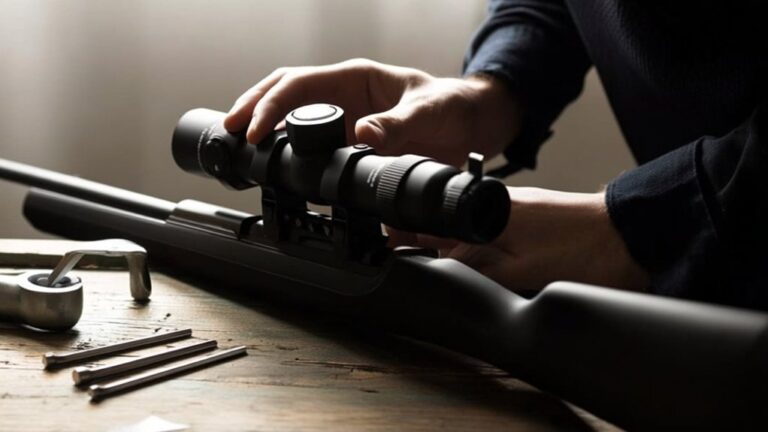
Before you mount your rifle scope, you’ll want to carefully select the right mounting options to guarantee a secure fit and proper alignment. Choosing mounts that match your rifle’s make and model is essential for stability and accuracy.
Don’t overlook the tube diameter of your scope; it must fit the rings perfectly. Also, consider the mounting height to ensure a comfortable shooting position and proper eye relief.
Finally, check the material and durability of the mounts to withstand recoil and harsh conditions.
Here’s what to focus on:
- Compatibility with your rifle’s rail system (Picatinny, Weaver, etc.)
- Correct ring size for your scope tube diameter
- Appropriate mounting height for your shooting style
- Durable material like steel or aluminum for strength and longevity
Set A Realistic Budget For Your Rifle Scope
How much should you really spend on a rifle scope? Setting a realistic budget helps you focus on options that offer the best value without overspending. Remember, the most expensive scope isn’t always the best fit for your needs.
Consider how often you’ll use the scope, the typical shooting conditions, and the level of precision you require. Entry-level scopes can perform well for casual shooting, while mid-range models often balance quality and price for most hunters and sport shooters.
High-end scopes offer advanced features but might be overkill if you don’t need them. Decide what features matter most—like durability, clarity, or reticle type—and allocate your budget accordingly.
This approach guarantees you get a reliable scope without breaking the bank.
How To Test Your Rifle Scope Before Buying
Since a rifle scope is a critical part of your shooting setup, you’ll want to test it thoroughly before making a purchase. Testing helps guarantee the scope meets your needs and performs well in real conditions. Here’s how to do it:
- Check Optical Clarity – Look through the scope at various distances and lighting to confirm sharpness and brightness.
- Test Reticle Visibility – Make sure the reticle is clear and easy to see against different backgrounds.
- Verify Adjustment Accuracy – Adjust windage and elevation knobs, then confirm the point of impact shifts accordingly.
- Assess Build Quality – Inspect the scope for solid construction, waterproofing, and fog resistance to guarantee durability.
Maintain And Care For Your Rifle Scope Properly
Although a quality rifle scope can enhance your shooting experience, it requires proper maintenance to stay reliable and accurate.
Always keep your lenses clean using a soft brush or microfiber cloth to avoid scratches. Avoid harsh chemicals; instead, use lens-specific cleaners.
Store your scope in a dry, padded case to protect it from moisture and impacts. Check the mounting regularly to verify it stays secure and aligned.
If you notice any fogging inside the scope, it may need professional servicing, as internal seals might be compromised.
After each use, especially in wet or dusty conditions, wipe down the exterior and inspect for damage.
Frequently Asked Questions
Can I Use a Rifle Scope for Airsoft Guns?
Yes, you can use a rifle scope for airsoft guns, but make sure it’s lightweight and durable. Choose one with appropriate magnification and reticle for airsoft distances to improve your accuracy without adding unnecessary bulk.
How Do Temperature Changes Affect Rifle Scope Performance?
They say, “forewarned is forearmed.” Temperature changes can cause your rifle scope’s lenses to fog or contract, affecting clarity and zeroing. You’ll want scopes with fog-proof, temperature-resistant features to keep your aim true.
Are Illuminated Reticles Better for Hunting at Night?
Yes, illuminated reticles enhance your night hunting by improving target visibility in low light. They help you acquire targets faster, but make sure brightness levels are adjustable to avoid glare and maintain stealth.
What Is the Difference Between First and Second Focal Plane Scopes?
First focal plane scopes keep the reticle size proportional to zoom, so it adjusts with magnification. Second focal plane scopes keep the reticle size fixed, meaning it doesn’t change as you zoom in or out.
Can I Adjust My Rifle Scope Myself or Need Professional Help?
You can definitely adjust your rifle scope yourself with some practice and patience. Start with basic windage and elevation adjustments, but if you want precise tuning or mounting, seeking professional help is a smart choice to guarantee accuracy.
Conclusion
Choosing the right rifle scope is like finding the perfect lens to bring a distant mountain into sharp focus. By knowing your shooting needs, magnification, reticle, and budget, you’re crafting a tool that turns the blur of uncertainty into precision. Remember to test and care for your scope like a trusted companion on every adventure. With the right choice, you’ll see your target—and your success—clear as a crisp sunrise on the horizon.