What Is a Level 3 Holster and How to Use It
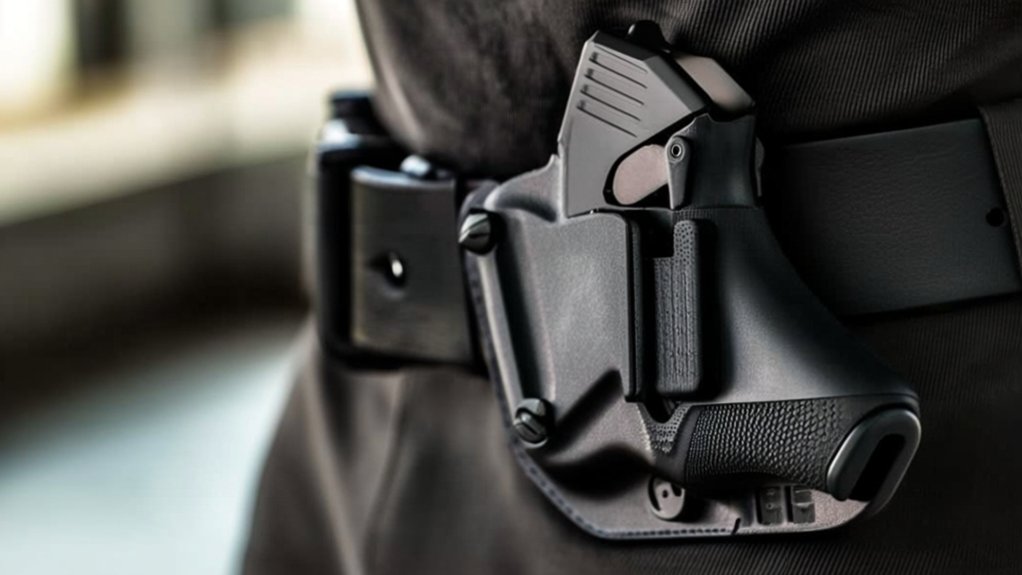
A Level 3 holster secures your firearm with three locking mechanisms like thumb breaks, hood locks, and tension screws, offering the highest retention for safety during vigorous movement. You wear it on your strong side, practice deliberate releases for quick access, and regularly maintain it to keep locks smooth and secure. This holster is ideal when security is critical without sacrificing accessibility. Keep exploring to understand how to optimize use, care, and selection for your needs.
What Is a Level 3 Holster and Why It Matters
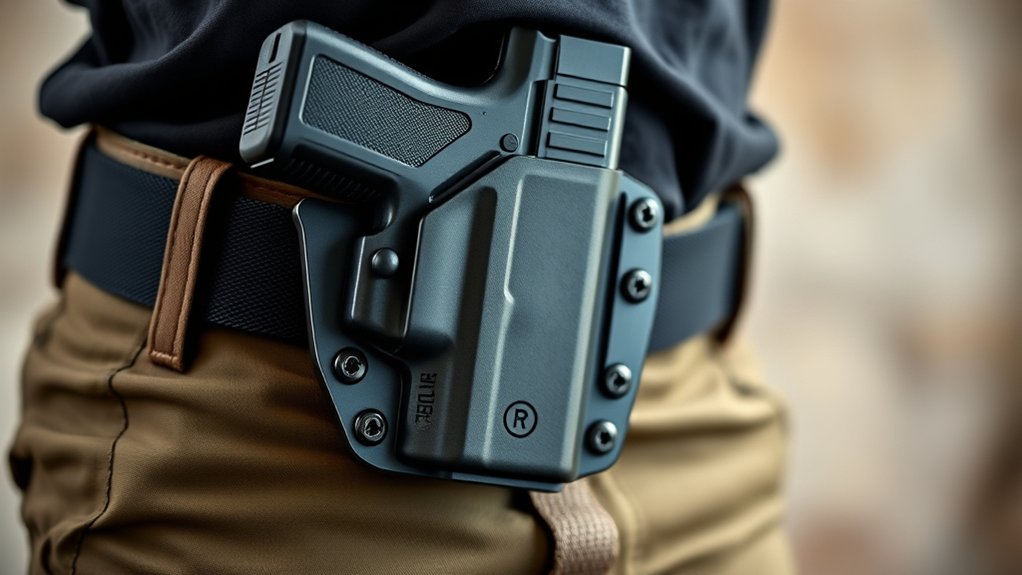
Although many holsters offer basic retention, a Level 3 holster provides the highest security by combining multiple retention mechanisms.
When you use one, you’re getting a holster designed with three distinct locking systems, such as thumb breaks, hood locks, and tension screws. This means your firearm stays firmly in place, even during vigorous activity or unexpected movement.
You’ll appreciate the confidence a Level 3 holster gives you, especially in high-risk situations where accidental drops or unauthorized access aren’t an option.
These holsters are often favored by law enforcement and tactical professionals because they guarantee your weapon won’t be lost or grabbed easily.
Understanding why this level of retention matters helps you choose gear that prioritizes both security and quick access.
Comparing Level 3 Holsters to Levels 1 and 2
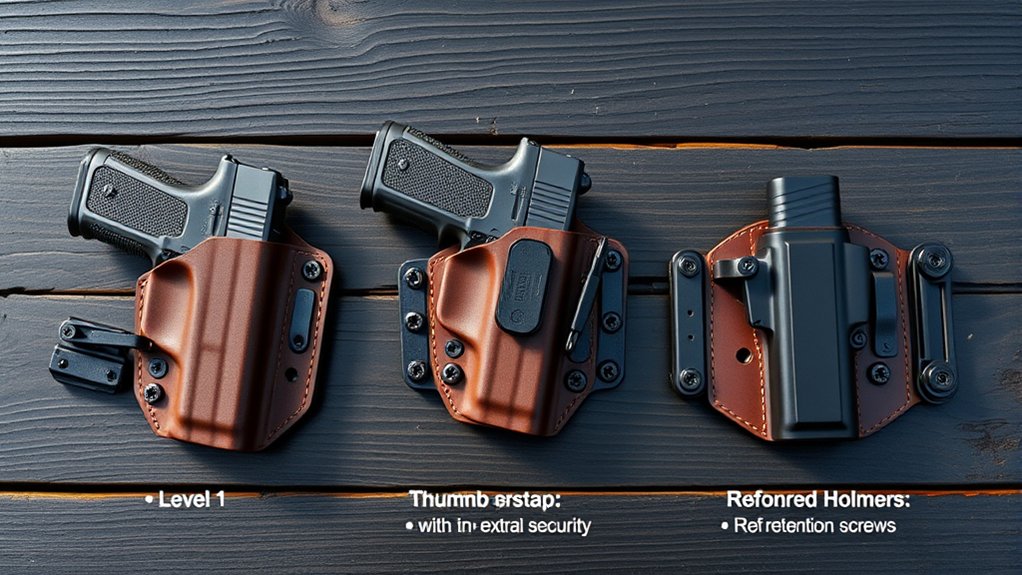
When choosing a holster, understanding how Level 3 holsters differ from Levels 1 and 2 can help you find the right balance between security and accessibility.
Level 1 holsters offer basic retention, usually relying on friction or a simple strap. They’re quick to draw from but provide minimal protection against unauthorized access.
Level 2 holsters add a retention device, like a thumb break or trigger guard lock, which requires an extra step to release. This enhances security without drastically slowing your draw.
Level 3 holsters take it further by incorporating multiple retention mechanisms—often three—making it considerably harder for someone else to grab your firearm. While this increases safety, it also demands more deliberate actions on your part to draw quickly.
Knowing these distinctions helps you pick a holster suited to your needs and environment.
When to Choose a Level 3 Holster for Carrying
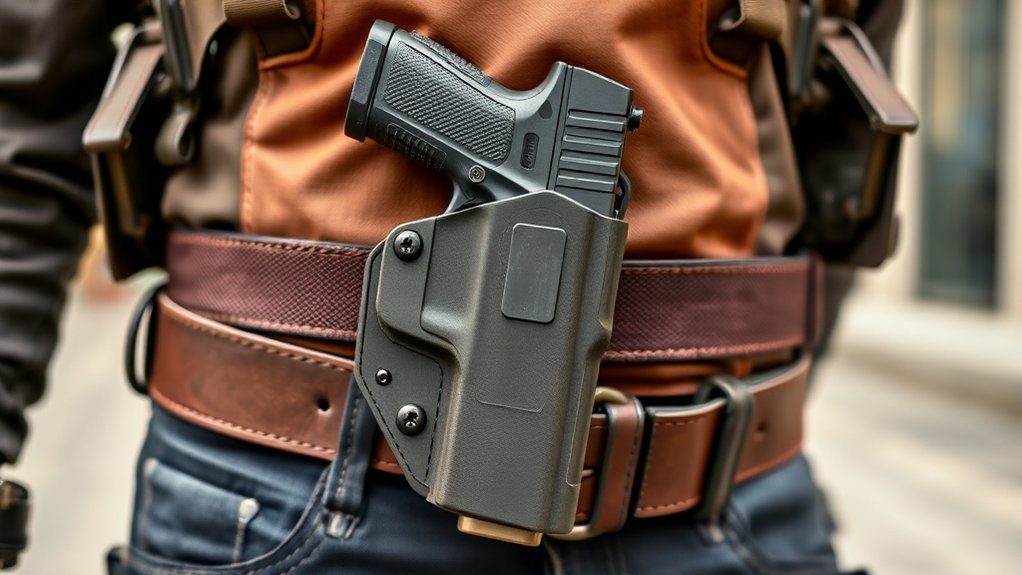
Why opt for a Level 3 holster over simpler options? You should choose one when maximum security and retention are essential.
If you carry in crowded or high-risk environments, a Level 3 holster prevents unauthorized access and accidental drops better than Levels 1 or 2. It’s ideal for law enforcement, security personnel, or anyone facing intense physical activity or close-quarters situations.
You want a holster that won’t let go of your firearm under stress or struggle. However, if you prioritize quick draw with minimal obstructions, a Level 3 might slow you down.
Core Retention Mechanisms in Level 3 Holsters
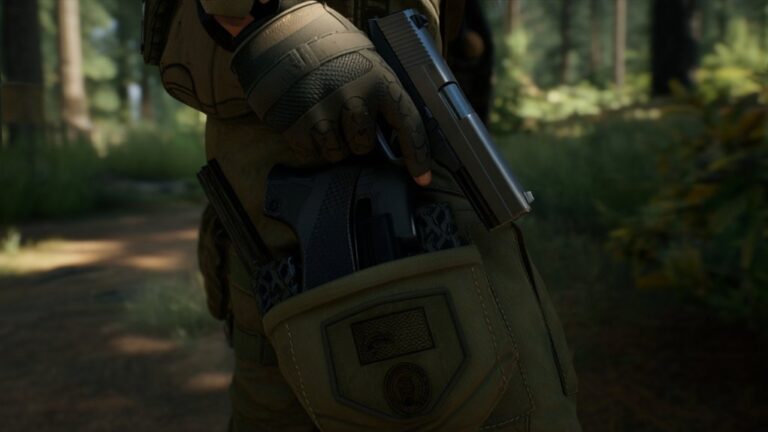
Since Level 3 holsters are designed for maximum retention, they rely on multiple locking mechanisms to secure your firearm firmly in place. You’ll find that these holsters often combine passive retention, like molded shapes that grip your gun, with active retention features requiring deliberate actions to release.
Common core mechanisms include thumb breaks, hood locks, and trigger guard locks. Each adds a layer of security, ensuring your firearm won’t accidentally fall out or be snatched by someone else.
These retention systems work together, giving you confidence that your weapon stays put during rigorous movement or physical confrontations. Understanding these core mechanisms helps you handle your holster smoothly and maintain quick access when it matters most.
How Level 3 Holsters Lock In Your Gun
The multiple locking mechanisms in Level 3 holsters don’t just sit idle—they work together to grip your firearm securely. When you holster your gun, these locks engage automatically, ensuring it won’t fall out or shift during movement. You’ll find that Level 3 holsters combine several retention features to give you peace of mind.
Here’s how they lock in your gun:
- Trigger guard lock: Secures around the trigger guard to prevent accidental draws.
- Thumb release: Requires deliberate pressure to release the firearm.
- Strap or hood: Covers the back or top of the gun for extra retention.
- Passive friction: Holds the weapon firmly through pressure points.
- Adjustable retention screws: Let you customize the tightness to your preference.
Together, these systems keep your firearm locked until you decide otherwise.
Proper Wear and Positioning of Level 3 Holsters
Although Level 3 holsters provide superior retention, wearing and positioning them correctly is essential for comfort, accessibility, and safety.
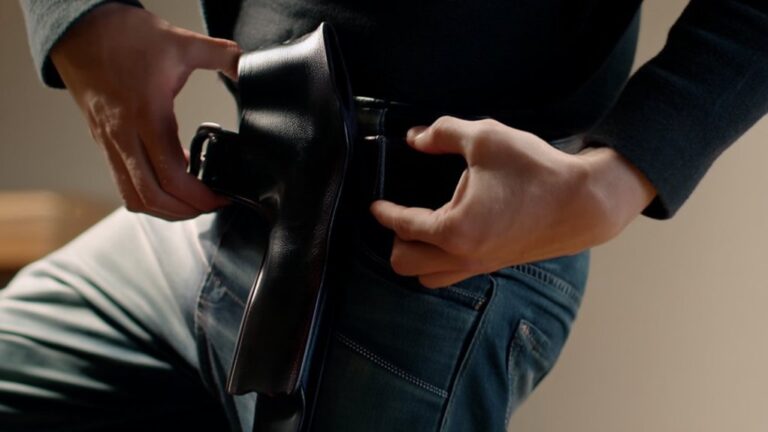
You want to place the holster where it feels natural, usually along your strong side’s hip or slightly behind the hip for quick access. Adjust the belt loops or clips so the holster sits securely without shifting while you move. Make sure the holster doesn’t dig into your body or restrict your movement.
Check that your firearm is fully covered and that the retention mechanisms are easily reachable without awkward motions. Proper positioning also prevents printing and helps maintain a low profile.
Take time to practice wearing your Level 3 holster in different positions to find what works best for your body type and daily activities.
Safe Drawing and Unlocking Techniques
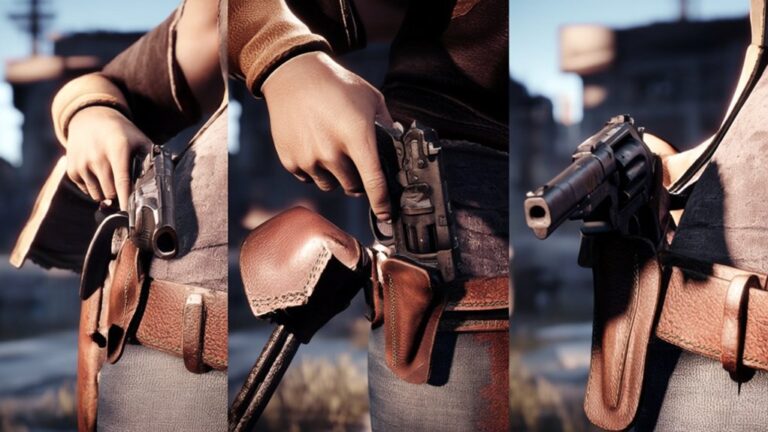
When you draw from a Level 3 holster, you’ll need to master both releasing the retention mechanisms and smoothly removing your firearm. Level 3 holsters often have multiple locks or snaps designed to prevent accidental draws, so you must coordinate your movements carefully.
Here are key tips to keep your draw safe and efficient:
- Identify and disengage each retention device in the correct order.
- Use your strong hand to control the firearm while your support hand releases locks.
- Maintain a firm grip to avoid fumbling during the draw.
- Keep your finger off the trigger until the firearm is fully clear.
- Practice smooth, deliberate movements to prevent snagging or hesitation.
Following these steps helps ensure you draw safely and confidently from your Level 3 holster.
Training Tips for Level 3 Holster Use
Since mastering a Level 3 holster requires precise coordination, you should incorporate regular, focused training sessions into your routine.
Start by practicing your draw and re-holstering motions slowly, making certain you engage the retention mechanisms smoothly. Gradually increase your speed while maintaining control.
Use dry-fire drills to build muscle memory without distractions.
Incorporate situational drills that simulate real-world scenarios, helping you react instinctively under pressure.
Don’t forget to train in different positions—standing, seated, or moving—to build versatility.
Regularly inspect your holster and firearm to confirm everything functions correctly during training.
Finally, seek feedback from experienced users or instructors to refine your technique and keep your skills sharp and reliable.
Consistency is key to confidently and safely using your Level 3 holster.
Common Mistakes to Avoid With Level 3 Holsters
Because Level 3 holsters offer enhanced security with multiple retention features, you need to handle them carefully to avoid common errors that can compromise safety and efficiency.
Here are mistakes you should steer clear of:
- Rushing your draw, which can cause fumbling with retention devices
- Neglecting regular practice to maintain smooth, instinctive use
- Overlooking proper fit, leading to difficulty securing or drawing your firearm
- Ignoring the holster’s adjustment options, resulting in discomfort or improper retention
- Failing to check for debris or damage that can interfere with retention or draw
Maintaining and Caring for Your Level 3 Holster
Avoiding mistakes with your Level 3 holster means more than just proper handling—it also requires consistent maintenance. Regularly inspect your holster for any signs of wear, loose screws, or damage to the retention mechanisms.
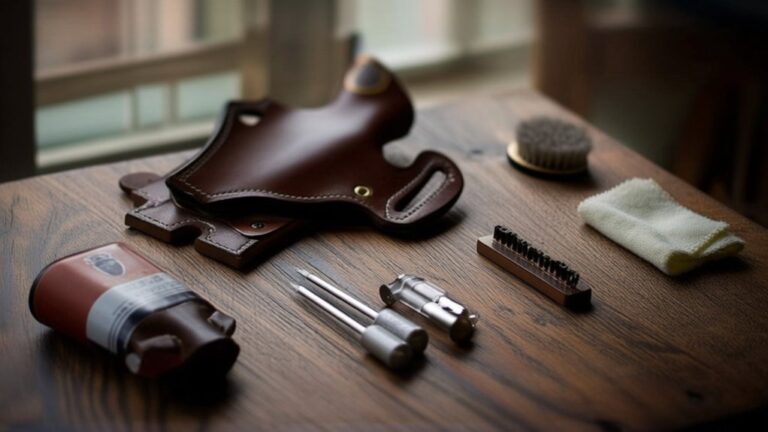
Clean it with a soft cloth and mild soap if needed, bypassing harsh chemicals that could degrade materials. Lubricate moving parts lightly to ensure smooth operation without attracting dirt.
Store your holster in a cool, dry place to prevent moisture damage or warping. If your holster uses leather components, apply a leather conditioner occasionally to keep it supple.
Taking these steps helps maintain reliability and prolongs your holster’s lifespan, guaranteeing it functions exactly as intended whenever you need it. Proper care is key to keeping your Level 3 holster safe and effective for everyday use.
Popular Types and Brands of Level 3 Holsters
When choosing a Level 3 holster, understanding the popular types and trusted brands can help you find one that fits your needs perfectly. You’ll find various designs tailored for security and accessibility.
Some standout options include:
- Retention holsters with multiple locking mechanisms for ultimate safety.
- Duty holsters commonly used by law enforcement for secure, on-duty carry.
- Tactical holsters designed for quick access during high-stress situations.
- Competition holsters optimized for speed and retention in shooting sports.
- Inside-the-waistband (IWB) Level 3 holsters that balance concealment with security.
Leading brands like Safariland, Blackhawk, and Blade-Tech consistently deliver reliable Level 3 holsters.
Choosing the right one depends on your daily needs and comfort, so consider your lifestyle carefully before deciding.
Integrating a Level 3 Holster Into Your Everyday Carry Setup
Although Level 3 holsters offer exceptional security, integrating one into your everyday carry setup requires careful consideration of comfort, accessibility, and your daily activities. Start by evaluating where you usually carry your firearm—waist, ankle, or shoulder—and choose a holster design that fits comfortably without restricting movement.
Balance the trade-off between maximum security and quick access; practice drawing your weapon to guarantee you can do so smoothly under stress. Consider your clothing choices too, as bulkier holsters mightn’t work well with lighter attire.
Finally, regularly train with your Level 3 holster to build muscle memory and confidence. By thoughtfully integrating it, you’ll maintain security without sacrificing the convenience you need for daily carry.
Frequently Asked Questions
Can Level 3 Holsters Be Used for Non-Firearm Tools?
Yes, you can use Level 3 holsters for non-firearm tools if they fit securely. Just make sure the retention features properly hold your tool, so it won’t accidentally fall out during movement or activity.
Are Level 3 Holsters Compatible With All Firearm Models?
Not every firearm fits a Level 3 holster; it’s like trying to wear shoes two sizes too small—you just won’t be comfortable or secure. You’ll need to check compatibility before relying on one for your specific model.
How Do Environmental Conditions Affect Level 3 Holster Durability?
Environmental conditions can wear down your level 3 holster faster. Moisture, extreme heat, and dirt can degrade materials, so you’ll want to clean and maintain it regularly to keep it durable and reliable over time.
Can Level 3 Holsters Be Customized or Modified?
Like a tailor shaping a suit, you can customize Level 3 holsters to fit your needs. You’ll find options for adjustable retention, cant, and ride height, making your holster both comfortable and secure in any situation.
What Legal Restrictions Apply to Carrying Level 3 Holsters?
You must follow state and local laws when carrying a Level 3 holster, including permit requirements and restrictions on concealed carry. Make sure you’re aware of where and how you can legally carry it to avoid trouble.
Conclusion
Choosing a Level 3 holster is like securing your most trusted shield—it locks your firearm with steadfast protection, ready for when you need it most. By understanding its layers of retention and care, you’re not just carrying a tool; you’re embracing confidence and safety. Treat your holster well, and it’ll be your reliable guardian, blending seamlessly into your daily routine while standing firm against any challenge. Your peace of mind starts here.