How Does a Rifle Scope Work Step by Step
A rifle scope works by gathering light through the objective lens to create a bright image, which the eyepiece lens then magnifies and sharpens for your eye. You align the reticle on your target while adjusting windage and elevation turrets to compensate for distance and wind. Parallax adjustments make certain the reticle stays fixed even if your eye moves. Using zoom controls, you can focus closer or farther, improving clarity and accuracy. Explore further to understand features that enhance your shooting precision.
What Is a Rifle Scope and Why Use One?
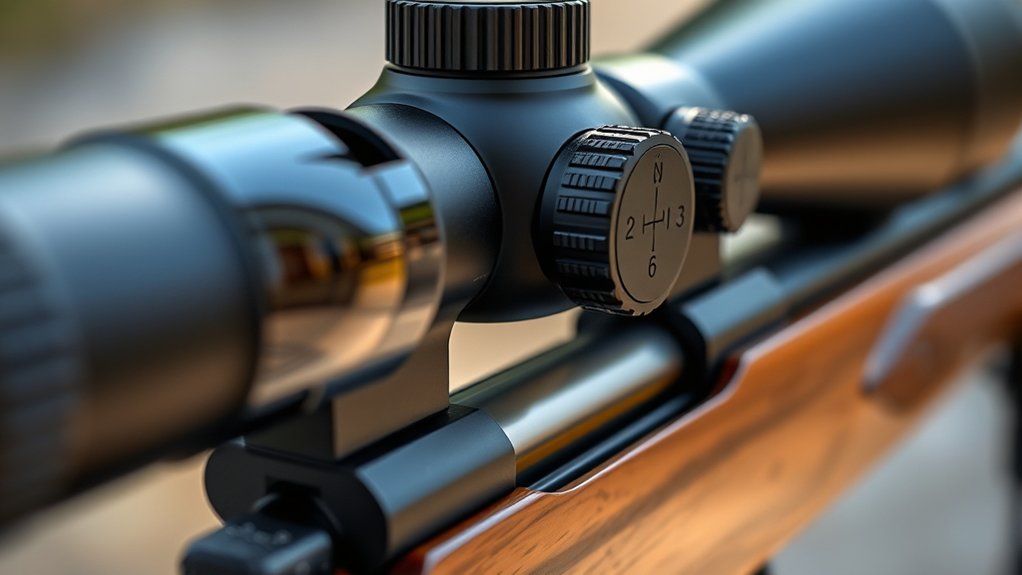
What exactly is a rifle scope, and why should you consider using one? A rifle scope is an optical device mounted on your rifle that helps you aim more accurately by providing a clear, magnified view of your target.
When you use one, you reduce guesswork and improve precision, especially at longer distances. It’s not just about magnification; a scope also offers features like crosshairs or reticles to help you align your shot perfectly.
Whether you’re hunting, target shooting, or in tactical situations, a scope enhances your ability to hit the mark consistently. By giving you a clearer picture of your target, it boosts your confidence and effectiveness every time you pull the trigger.
How a Rifle Scope’s Lenses Magnify Your Target
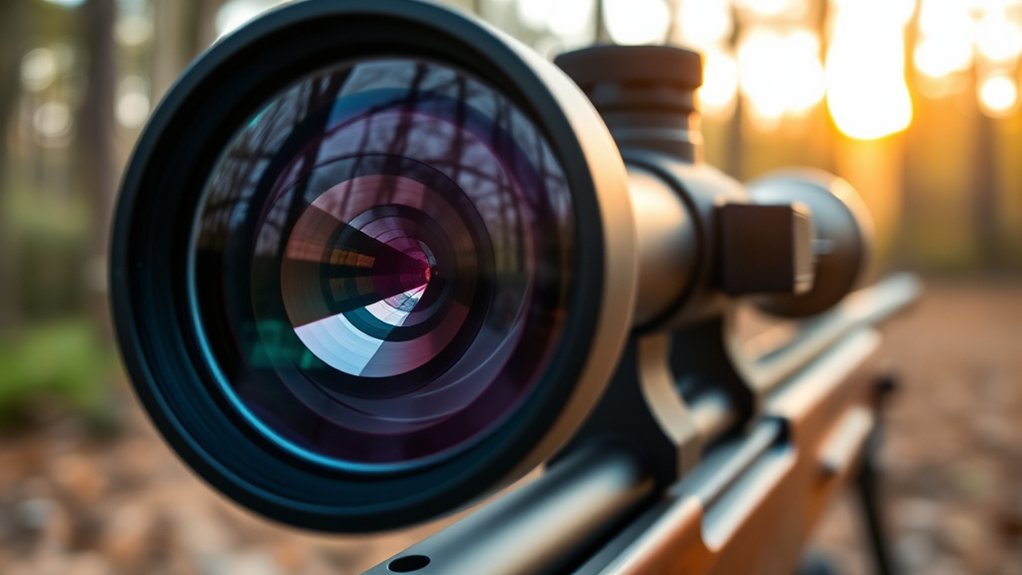
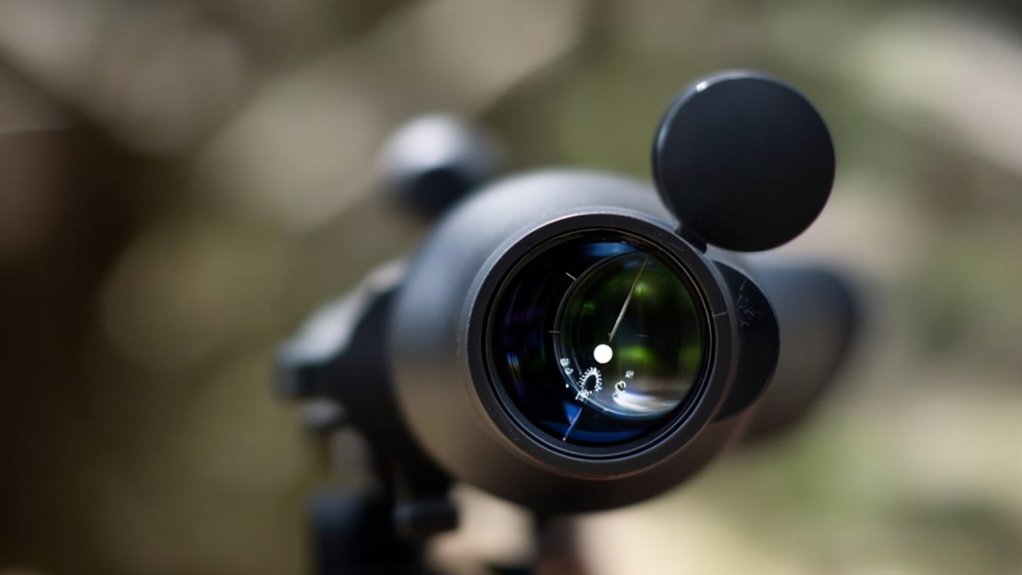
When you look through a rifle scope, the objective lens first gathers light from your target to create a clear image.
Then, the magnification process enlarges that image so you can see details more closely.
Finally, the eyepiece lens sharpens the view, making your target easier to hit.
Objective Lens Function
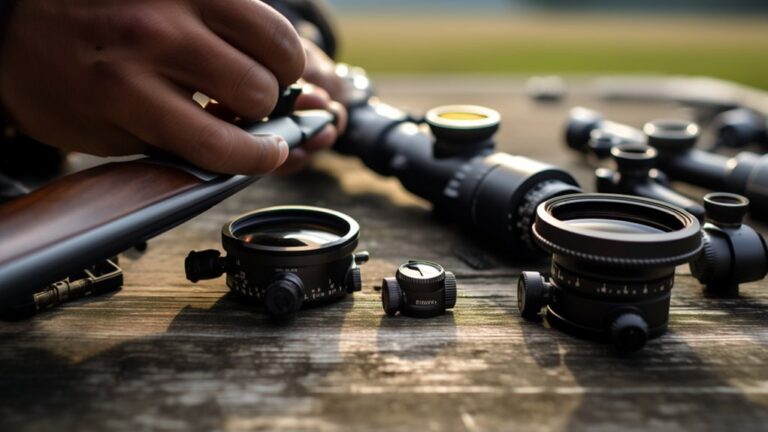
How exactly does the objective lens shape what you see through a rifle scope? This lens, located closest to the target, gathers light and focuses it into the scope.
The bigger the objective lens, the more light it collects, making your view brighter and clearer—especially in low-light conditions. It forms the initial image of your target inside the scope by bending incoming light rays to converge at a focal point.
This image is then transmitted through the scope’s internal lenses for further processing. Keep in mind, the objective lens doesn’t magnify the target on its own; instead, it provides a sharp, bright image that the rest of the scope can work with to enhance your sight picture.
Magnification Process Explained
Although the objective lens gathers and focuses light, the magnification process is what actually enlarges your target image. Inside the scope, a series of lenses work together to zoom in on distant objects, making them appear closer and clearer.
As you adjust the magnification ring, these lenses shift, changing the focal length and enlarging the image. This process enhances your ability to spot fine details, helping you aim with precision.
Imagine:
- Distant trees growing larger, revealing individual leaves
- A deer’s eye becoming sharp and distinct
- Faint outlines turning into clear shapes
- Tiny movements becoming noticeable
- The target filling more of your view
This magnification guarantees you see your target clearly, improving accuracy.
Eyepiece Lens Role
Because the eyepiece lens sits closest to your eye, it plays a crucial role in sharpening and magnifying the image formed by the internal lenses. This lens adjusts the focus, allowing you to see a clear, detailed target regardless of distance. It works by gathering the light from inside the scope and enlarging the image to a comfortable viewing size.
Here’s how the eyepiece lens enhances your shooting experience:
| Function | Description |
|---|---|
| Image Correction | Sharpens blurred edges |
| Magnification | Enlarges the target image |
| Focus Adjustment | Allows personalized clarity |
| Eye Relief | Maintains comfortable viewing distance |
How Objective and Eyepiece Lenses Work
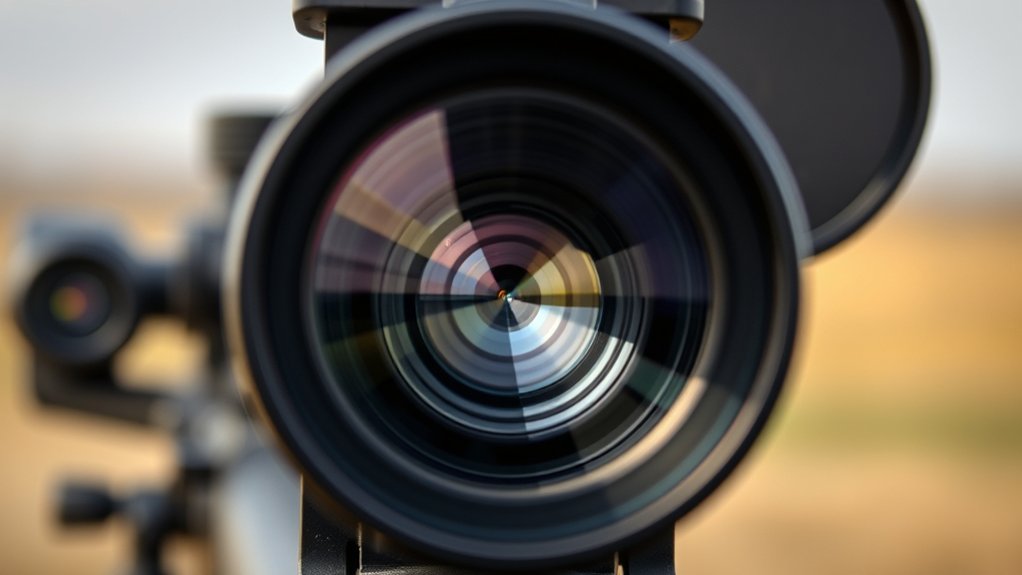
You rely on the objective lens to gather light and create a clear image of your target.
Then, the eyepiece lens magnifies that image so you can see it up close.
Understanding how these lenses work together helps you get the most from your rifle scope.
Objective Lens Light Gathering
How does the objective lens in a rifle scope gather light to create a clear image? It collects light from your target and focuses it into the scope’s internal optics. The larger the objective lens, the more light it captures, which helps you see brighter, sharper images, especially in low-light conditions.
Inside, the lens elements bend and direct the light toward the eyepiece, ensuring clarity and detail.
Imagine the process like:
- Morning sunlight streaming through a wide window
- Light rays converging through a magnifying glass
- Dew drops catching and focusing tiny beams of light
- A camera lens pulling in ambient light at dusk
- A flashlight beam narrowing to brighten a specific spot
This careful light gathering makes your view crisp and visible.
Eyepiece Lens Image Magnification
Where does the image you see through a rifle scope actually get magnified? It’s the eyepiece lens that does this essential job. After the objective lens gathers light and forms a clear, inverted image inside the scope, the eyepiece lens magnifies this image so you can see distant targets in detail.
When you look through the eyepiece, its multiple lens elements work together to enlarge the image, making small objects appear closer and clearer. The eyepiece also adjusts the focus to match your eyesight, ensuring sharpness.
Without this magnification step, the image would remain tiny and hard to discern. So, the eyepiece lens transforms the gathered light and initial image into something practical for aiming and shooting accurately.
How the Reticle Helps You Aim Precisely
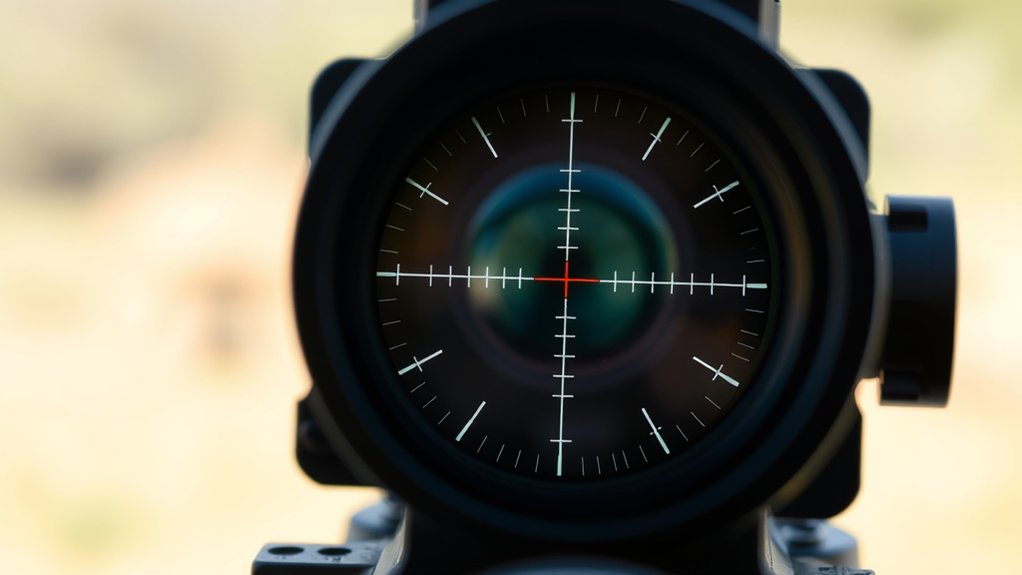
Although a rifle scope’s lenses magnify your target, the reticle is what guides your precise shot placement. It acts like a visual anchor, helping you align your shot exactly where you want it.
When you look through the scope, the reticle appears as a pattern of lines or dots that stays fixed on your target, even if you slightly move the rifle. This steady focal point makes aiming easier and more accurate.
When using the reticle, you’ll:
- Center the crosshairs on the target’s crucial area
- Use hash marks to estimate distance or holdover
- Adjust for bullet drop without guessing
- Maintain focus on the target during movement
- Quickly reacquire targets with consistent aim points
The reticle turns magnification into precise, confident shooting.
Adjusting Windage and Elevation on a Rifle Scope
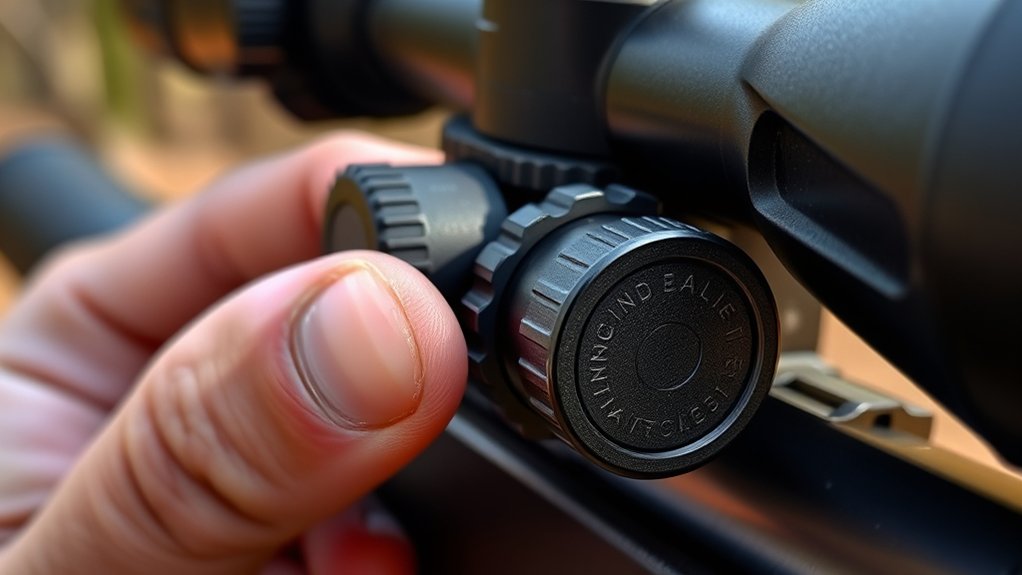
Because external factors like wind and distance can affect your shot, you’ll need to modify the windage and elevation on your rifle scope to maintain accuracy.
Windage controls the horizontal alignment, letting you compensate for crosswinds pushing your bullet left or right. Elevation adjusts the vertical alignment, helping you account for bullet drop over distance.
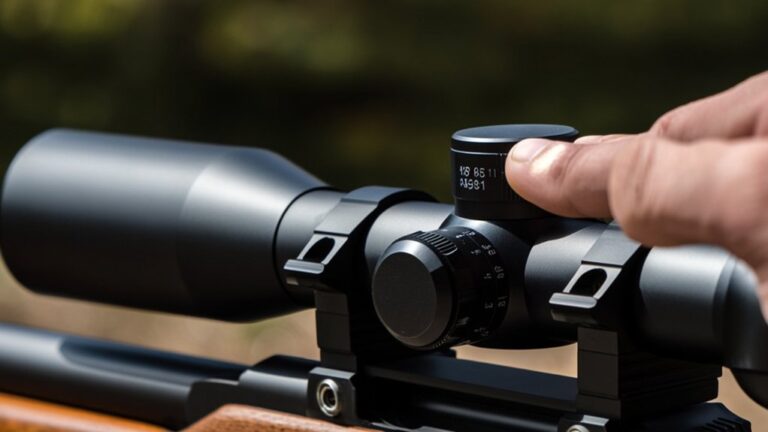
To make adjustments, use the turrets located on the scope—usually, the right turret changes elevation, and the left or top turret controls windage. Turn the dials in small increments, observing how each click shifts your point of impact.
How to Align and Zero Your Rifle Scope Correctly
To zero your rifle scope correctly, start by mounting and leveling it securely on your rifle.
Then, use the windage and elevation adjustments to align your reticle with the point of impact.
This process guarantees your shots hit exactly where you aim.
Mounting and Leveling Scope
When you mount and level your rifle scope properly, you set the foundation for accurate shooting. Begin by attaching the scope rings to your rifle’s base, ensuring they’re snug but not overtightened.
Place the scope in the rings, allowing for eye relief adjustments. Next, level the scope horizontally by using a bubble level on top of the turret to avoid canting.
Check that the reticle is perfectly vertical and horizontal. Finally, tighten the ring screws evenly to secure the scope without shifting it.
Visualize this process:
- Rifle resting securely on a bench rest
- Scope rings aligned and ready
- Bubble level placed on turret
- Reticle perfectly vertical inside scope
- Evenly tightened screws locking scope in place
Adjusting Windage and Elevation
Once you’ve securely mounted and leveled your scope, it’s time to adjust the windage and elevation to calibrate your rifle accurately.
Start by setting up a target at a known distance, typically 100 yards. Fire a group of shots and observe where the bullets hit relative to the target’s center.
Use the elevation turret to move the point of impact up or down, and the windage turret to shift it left or right.
Each click usually corresponds to a specific adjustment, like ¼ minute of angle (MOA), so consult your scope’s manual.
Repeat this process—shoot, observe, adjust—until your shots consistently land on target.
Properly zeroing your scope ensures accuracy and confidence in your shooting.
How Parallax Affects Your Shot and How to Fix It
How does parallax impact your shot accuracy? Parallax occurs when the reticle and target image aren’t on the same focal plane, causing the reticle to shift when you move your eye. This misalignment can throw off your aim, especially at longer distances, leading to missed shots.
To fix parallax, you can:
- Use the parallax adjustment knob or side focus ring on your scope
- Align your eye perfectly with the scope’s optical axis
- Adjust the focus until the target and reticle overlap sharply
- Be mindful of your head position during shooting
- Practice consistent cheek weld to maintain eye alignment
Understanding Magnification Levels and Zoom Mechanisms
Correcting parallax guarantees your reticle stays steady on target, but understanding magnification levels will further enhance your shooting precision.
Magnification refers to how much closer your target appears through the scope compared to the naked eye. For example, a 4x magnification means the target looks four times closer.
Variable zoom scopes let you adjust magnification, offering flexibility for different shooting distances. You control zoom by turning the magnification ring, which shifts internal lenses to change the focal length.
Higher magnification narrows your field of view, so you’ll want to balance zoom to maintain situational awareness. Mastering these zoom mechanisms ensures you can adapt quickly, improving your accuracy whether you’re aiming at close or distant targets.
How Light Transmission and Lens Coatings Improve Clarity
Because clear vision is essential for accurate shooting, light transmission and lens coatings play a key role in enhancing what you see through your rifle scope. Light transmission refers to how much light passes through the lenses, directly affecting brightness and clarity.
Lens coatings reduce glare and reflections, allowing maximum light to reach your eye. These coatings also protect the lenses from scratches and dirt. When you use a scope with high-quality coatings, you’ll notice sharper images and better contrast, especially in low-light conditions.
Here’s what improved light transmission and lens coatings help you experience:
- Bright, vivid images at dawn or dusk
- Reduced glare on sunny days
- Enhanced contrast between target and background
- Clearer details on distant objects
- Less eye strain during extended use
Key Scope Features That Boost Shooting Accuracy and Ease
Improved light transmission and lens coatings set the stage, but several key features directly enhance your shooting accuracy and ease.
First, adjustable magnification lets you zoom in on distant targets for precise shots.
Second, a clear, illuminated reticle ensures you can quickly acquire your target, even in low light.
Third, parallax adjustment helps eliminate aiming errors by aligning the reticle with the target at different distances.
Fourth, easy-to-use turret adjustments allow you to fine-tune windage and elevation on the fly, keeping your shots accurate.
Finally, a wide field of view keeps you aware of your surroundings.
These features work together, so you can confidently take accurate shots while maintaining situational awareness and comfort.
Frequently Asked Questions
How Do Different Reticle Types Affect Hunting Versus Target Shooting?
Different reticles affect your shooting by offering various aiming aids. Hunting reticles help with quick target acquisition and estimating range, while target shooting reticles provide precise holdovers and windage adjustments for accuracy over long distances.
What Maintenance Is Required to Keep a Rifle Scope in Good Condition?
Like a trusty steed, your rifle scope needs regular care. You’ll clean lenses with a soft cloth, check mounts for tightness, store it dry, and avoid harsh chemicals to keep it sharp and reliable every time you hunt or shoot.
Can a Rifle Scope Be Used Effectively at Night or in Low Light?
Yes, you can use a rifle scope effectively at night or in low light if it has illuminated reticles or night vision features. Otherwise, your visibility and accuracy might be limited without extra lighting or specialized equipment.
How Do Temperature Changes Impact a Rifle Scope’s Performance?
Like a sailor adjusting for shifting tides, you’ll find temperature changes cause your rifle scope’s materials to expand or contract, potentially affecting zero and clarity. You’ll need to recalibrate to maintain accuracy in varying conditions.
What Are the Best Brands for Durable, High-Quality Rifle Scopes?
You’ll want to check out Vortex, Leupold, Nightforce, and Schmidt & Bender for durable, high-quality rifle scopes. They combine rugged construction with excellent optics, ensuring reliability and precision in various shooting conditions.
Conclusion
Now that you know how a rifle scope works step by step, you’re ready to transform your shooting game. With precision lenses, adjustable reticles, and crystal-clear optics, hitting your target becomes as easy as breathing. Don’t underestimate the power of understanding your scope—it’s like having a superpower that makes every shot count. So, gear up, adjust those settings, and watch your accuracy soar beyond your wildest dreams!