How To Sight In Leupold CDS Scope?
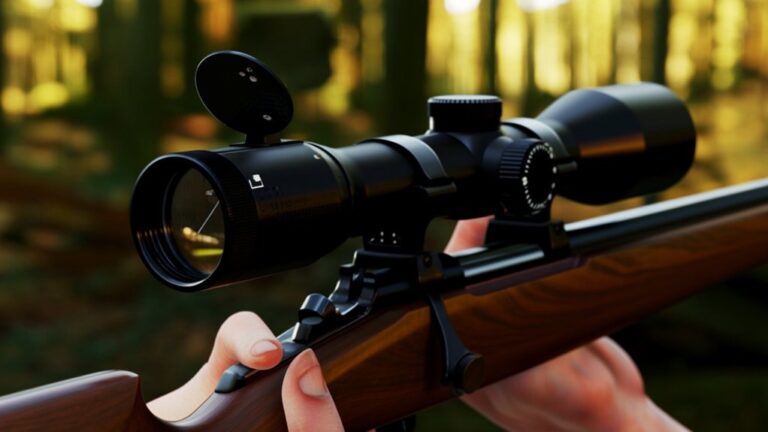
To sight in your Leupold CDS scope, start by securely mounting it on your rifle using quality rings and a stable rest. Set a measured target distance, typically 100 yards, then fire a group and adjust windage and elevation dials accordingly. Use the CDS dial to match your shooting distances for quick adjustments. Keep your scope zeroed by regularly verifying settings and considering environmental factors. Follow these steps, and you’ll quickly boost your shooting precision and reliability with this scope.
Key Takeaways
- Mount the Leupold CDS scope securely using quality rings and ensure proper base alignment on the rifle.
- Use a stable shooting rest and fire a three-shot group at 100 yards to observe bullet impact.
- Adjust windage and elevation turrets based on shot placement, then repeat firing to center the group.
- Calibrate and set the CDS dial to the target distance for quick, accurate range adjustments in the field.
- Regularly verify zero and adjust for environmental factors like wind, temperature, and altitude to maintain accuracy.
Understand Why Sighting Your Leupold CDS Scope Matters
Because your Leupold CDS scope is designed to provide precise adjustments for various distances, sighting it correctly guarantees your shots hit exactly where you aim. Without proper sighting, you risk wasting time and ammo guessing where your bullet will land.
When you sight in your scope, you align the reticle with the bullet’s point of impact, ensuring accuracy at specific distances. This process accounts for variables like bullet drop and windage, which can drastically affect your shot.
If you don’t sight in, your scope’s adjustments won’t match the actual trajectory, leading to frustrating misses. Taking the time to sight in your Leupold CDS scope means you can confidently rely on it in the field and maximize your shooting performance every time.
Gather Essential Gear Before Sighting In
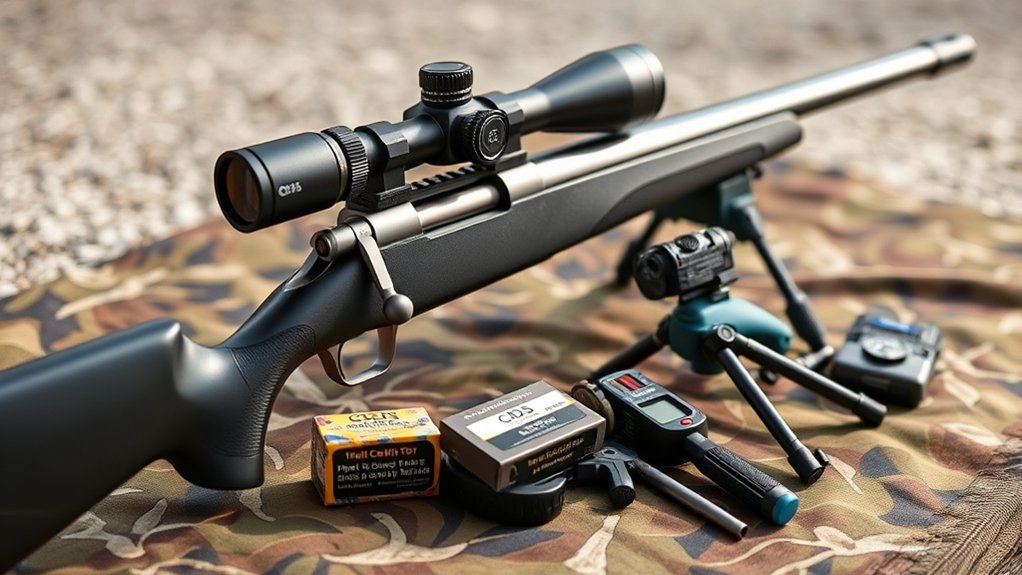
Sighting your Leupold CDS scope accurately starts with having the right equipment on hand. First, grab a stable shooting rest or bench to minimize movement. You’ll need quality ammunition that you plan to use regularly, as consistency is key.
Don’t forget a reliable target placed at a measured distance—usually 100 yards is standard. Bring a spotting scope or binoculars to check your target without moving from your shooting position. Have a wind meter or app handy to track environmental conditions, since wind can affect shot placement.
Finally, carry tools like an Allen wrench or screwdriver set for any minor adjustments on your scope mounts or turrets. Gathering these essentials ensures a smooth and precise sighting-in process.
Mount Your Leupold CDS Scope Correctly
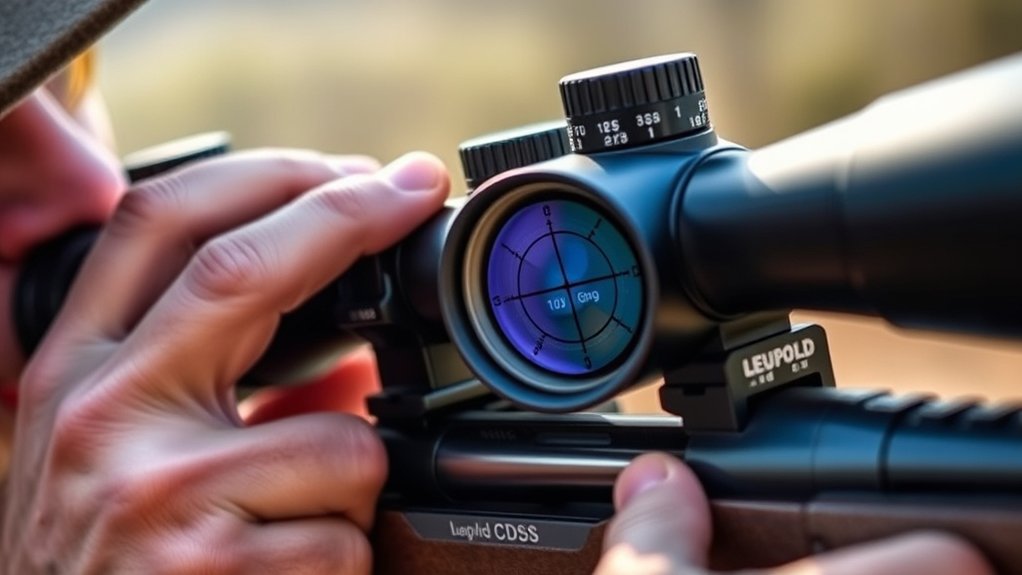
Now that you have your gear ready, it’s time to mount your Leupold CDS scope properly.
Make certain you align the scope base carefully to ensure accuracy and stability.
Taking the time to secure it correctly will make sighting in much easier.
Proper Mounting Techniques
Before you start adjusting your Leupold CDS scope, make sure it’s mounted securely and aligned properly on your rifle. Begin by cleaning the mounting surfaces to remove dirt or oil that can affect stability.
Use quality rings designed for your scope and rifle model, and tighten them evenly to avoid damaging the tube. Position the scope so your eye naturally falls on the ocular lens without straining.
Avoid over-tightening screws; they should be snug but not stripped. Once the scope is in place, check for any movement by gently rocking it. If you notice any play, retighten the mounts carefully.
Proper mounting is essential because even slight misalignment can throw off your sighting, so take your time to get it right before moving on.
Aligning The Scope Base
Although mounting your Leupold CDS scope securely is essential, properly aligning the scope base guarantees your adjustments will be precise and reliable.
Start by placing the scope base on your rifle’s receiver, ensuring it sits flat without any gaps. Use alignment tools or a straight edge to verify the base is perfectly parallel to the barrel.
Tighten the screws incrementally, alternating between them to maintain even pressure and avoid shifting. Double-check alignment after securing the base, since even a slight misalignment can cause inconsistent point of impact.
Taking these careful steps ensures your scope’s reticle stays true to your bullet’s trajectory, making sighting in more accurate and straightforward. Don’t rush—precision here saves you time and frustration downrange.
Set Your Initial Zeroing Distance
Since your Leupold CDS scope relies on precise adjustments, setting your initial zeroing distance correctly is essential for accurate shooting.
Begin by choosing a practical distance, usually 100 yards, as it balances bullet drop and trajectory for most hunting and target scenarios. Make sure your target is clearly visible and securely placed.
Next, set up your rifle on a stable rest or bipod to minimize movement. Position yourself comfortably for consistent shooting.
Before firing, confirm your bore axis is aligned with the target. Take a few shots to see where your rounds impact relative to the bullseye.
This initial zeroing distance will serve as the foundation for further fine-tuning, so take your time ensuring your shots cluster consistently around the point of aim before moving on to adjustments.
Adjust Windage and Elevation on Your Leupold CDS Dial
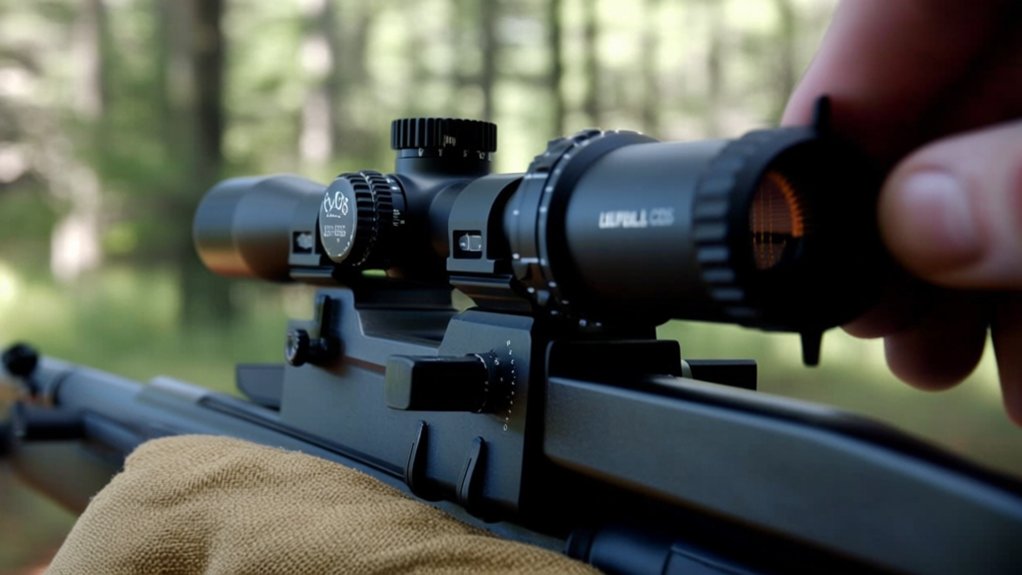
Once you’ve established your initial zero, you’ll need to calibrate the windage and elevation dials on your Leupold CDS scope to fine-tune your point of impact. Use the knobs to shift the reticle left or right (windage) and up or down (elevation). Each click moves the point of impact by a specific increment, usually measured in MOA or MIL.
| Adjustment Type | Direction | Effect on Point of Impact |
|---|---|---|
| Windage | Clockwise | Moves impact right |
| Windage | Counterclockwise | Moves impact left |
| Elevation | Clockwise | Moves impact down |
| Elevation | Counterclockwise | Moves impact up |
Turn the dials slowly and check your target after every adjustment to verify precise zeroing.
Take Your First Shots for Zeroing
After adjusting the windage and elevation dials on your Leupold CDS scope, you’re ready to take your first shots to confirm your zero.
Set up a stable shooting position, use a solid rest or bipod, and aim carefully at your target’s center.
Fire a three-shot group to get a reliable pattern.
Once you’ve shot, check where the bullets hit relative to your aiming point. This will show if your adjustments were accurate or if the point of impact shifted.
Record these impacts precisely before making any further changes.
Remember to stay consistent with your shooting technique and maintain the same distance you intend to zero at.
Taking these initial shots carefully lays the foundation for fine-tuning your scope later.
Fine-Tune Your Leupold CDS Scope After Initial Shots
When you’ve reviewed your initial groupings, start adjusting the windage and elevation dials in small increments to bring your point of impact closer to your aim point. Make adjustments based on the direction and distance your shots landed from the center of the target.
For example, if your shots are hitting low and to the left, raise the elevation dial slightly and turn the windage dial right. After each adjustment, fire another group to verify changes. Repeat this process until your shots consistently land where you’re aiming.
Remember, fine-tuning requires patience—small, precise movements avoid overshooting your zero. Keep notes of your dial changes to track progress.
Once you’ve achieved tight, centered groupings, your Leupold CDS scope is properly fine-tuned for accurate shooting.
Use the Leupold CDS Dial for Different Distances
Fine-tuning your Leupold CDS scope brings your shots right to the target, but hitting accurately at various distances requires calibrating the CDS dial accordingly. The dial lets you compensate for bullet drop by turning it to the range you’re shooting at. Simply set the CDS dial to your target distance, and the scope adjusts the reticle for precise aiming. Here’s a quick reference for common distances and dial settings:
| Distance (yards) | CDS Dial Setting | Notes |
|---|---|---|
| 100 | 0 | Zero range |
| 200 | 2 | Moderate drop |
| 300 | 3 | Longer shot |
| 400 | 4 | Extended range |
| 500 | 5 | Maximum typical use |
Adjust the dial before each shot to ensure your aim matches the distance.
Avoid Common Sighting Mistakes
Although sighting in your Leupold CDS scope is straightforward, you can easily make mistakes that throw off your accuracy. First, don’t rush the process—take your time to guarantee each shot is carefully aimed.
Sighting your Leupold CDS scope is simple, but accuracy depends on patience and careful aiming.
Avoid inconsistent shooting positions; always maintain the same stance and cheek weld. Neglecting to properly secure the scope can also cause shifts, so double-check your mounts are tight.
Don’t overlook environmental factors like wind or lighting, as they can affect your shot placement. Another common error is adjusting the CDS dial without confirming your initial zero, leading to compounding errors.
Finally, keep your target at a consistent distance during sighting. By steering clear of these pitfalls, you’ll ensure your Leupold CDS scope delivers reliable, precise performance every time you shoot.
Keep Your Leupold CDS Zeroed in the Field and at the Range
To keep your Leupold CDS zeroed, you’ll need to regularly check and maintain zero consistency both at the range and in the field.
Be ready to adjust for environmental changes like temperature, altitude, and wind that can affect your shot placement.
Staying on top of these factors guarantees your scope performs reliably when it counts.
Maintaining Zero Consistency
Consistency plays a crucial role in keeping your Leupold CDS scope zeroed, whether you’re at the range or out in the field. To maintain zero consistency, always use the same mounting system and confirm your scope rings are properly torqued. Avoid removing and remounting the scope unnecessarily, as this can shift your zero.
When carrying your rifle, use a protective case to minimize bumps and vibrations that might affect the scope’s alignment. Before each shooting session, verify that your scope’s turrets are set to your established zero settings.
Regularly clean the lenses and inspect the scope for any physical damage. By following these steps, you’ll keep your Leupold CDS scope accurate and reliable, saving time and improving your shooting performance in every environment.
Adjusting For Environmental Changes
Three key environmental factors can affect your Leupold CDS scope’s zero: temperature, humidity, and altitude. When you move between different climates or elevations, these changes can alter bullet trajectory.
Start by checking your scope’s settings every time you switch locations. Use your Leupold CDS’s adjustment features to compensate accurately.
For temperature variations, cold air makes bullets drop more, so dial in slight elevation increases.
Higher humidity can reduce air density, slightly affecting your shot—make minor corrections accordingly.
Altitude plays a big role; at higher elevations, bullets tend to hit higher, so adjust your scope’s elevation turret downward.
Regularly confirm your zero at the range before heading out to the field to guarantee your adjustments are spot-on and your shots stay consistent.
Frequently Asked Questions
Can Leupold CDS Scopes Be Used for Tactical Shooting?
Yes, you can use Leupold CDS scopes for tactical shooting since they offer precise adjustments and durable construction. Just make sure you’re comfortable with its features and practice regularly to maximize your accuracy and quick target acquisition.
How Do Temperature Changes Affect Leupold CDS Scope Performance?
Temperature changes can cause your Leupold CDS scope’s adjustments to shift slightly, impacting accuracy. You’ll want to recalibrate when temps vary considerably, as metal expansion or contraction affects the scope’s zero and ballistic settings.
What Is the Warranty Coverage for a Leupold CDS Scope?
Your Leupold CDS scope carries a lifetime warranty, standing as a steadfast shield against defects in materials and workmanship. If anything falters, you can trust Leupold to repair or replace it without hassle.
Are There Any Recommended Cleaning Products for Leupold CDS Lenses?
You should use lens cleaning solutions made specifically for optics, like those from Leupold or other reputable brands. Avoid harsh chemicals; instead, use a microfiber cloth and gentle cleaner to keep your CDS lenses clear and damage-free.
Can I Transfer My Leupold CDS Scope Adjustments to Another Rifle?
Think of your CDS adjustments as a unique fingerprint—tied to one rifle’s soul. While you can transfer settings to another, you’ll need to fine-tune them again since each rifle’s “heartbeat” affects zero differently.
Conclusion
Sighting in your Leupold CDS scope might seem tricky, but once you get it right, your shots will consistently hit their mark—coincidentally, just when you need them most. By carefully mounting, zeroing, and adjusting your CDS dial, you’ll enjoy precision at every distance. Remember, keeping your scope zeroed isn’t just about accuracy; it’s about confidence in the field. So, take your time now, and your Leupold will reward you exactly when it counts.