How To Line Up Iron Sights?
To line up iron sights, focus sharply on the front sight post, keeping it clear, centered, and level within the rear sight notch. Position your dominant eye directly behind the rear sight to maintain a consistent sight picture. Avoid shifting focus to the target or rear sight, and keep your head steady to prevent alignment errors. Practice steady trigger pulls to maintain accuracy. Keep this technique consistent, and you’ll improve quickly—explore adjustments and drills that make your aim even better.
Key Takeaways
- Focus sharply on the front sight post, keeping it clear and centered within the rear sight notch.
- Align the rear sight notch so its top edge is level and centered around the front sight post.
- Maintain a consistent eye position directly behind the rear sight for a clear, stable sight picture.
- Keep the target slightly blurred while focusing on the front sight to ensure proper sight alignment.
- Practice holding the sight picture steadily and smoothly pull the trigger to avoid disturbing alignment.
What Are Iron Sights And Why They Matter
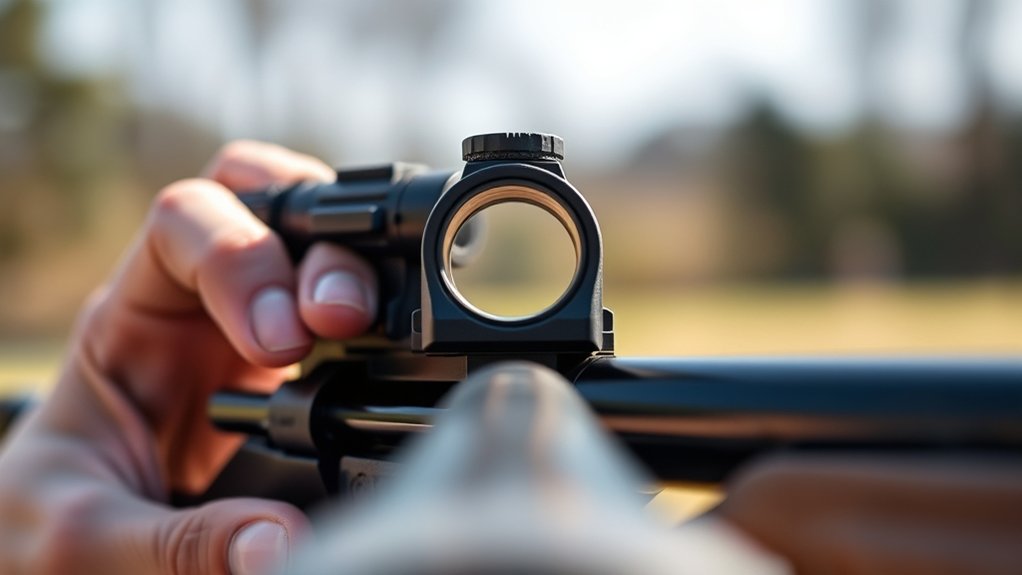
Although they might seem simple, iron sights are essential aiming tools that help you align your shot accurately. When you look through them, you’re using two reference points: the front sight post and the rear sight aperture or notch.
These sights don’t rely on batteries or advanced tech, so you can count on them in any situation. Whether you’re target shooting, hunting, or in a defensive scenario, iron sights provide a reliable way to focus on your target.
They matter because they train your eye to develop proper sight picture and trigger control, improving your overall shooting skills. Mastering iron sights lays the foundation for using more advanced optics, making your shooting more consistent and effective.
How To Align Iron Sights Step-By-Step
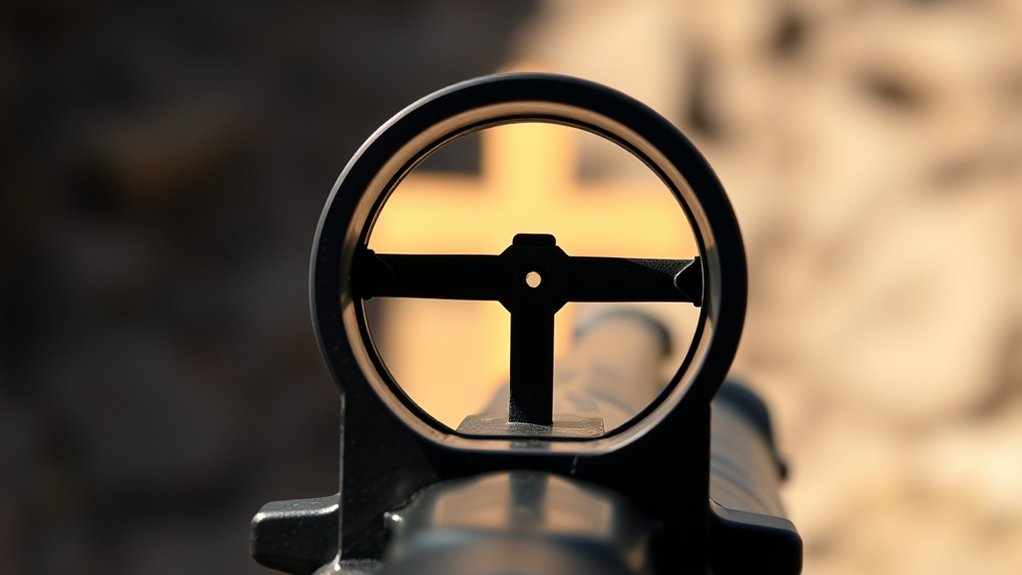
To line up your iron sights effectively, you’ll start by focusing on the front sight while keeping the rear sight aligned properly.
You’ll then guarantee the sight picture stays consistent with every shot.
Mastering these steps will improve your accuracy and confidence.
Front Sight Focus
When you focus on the front sight, your eyes naturally blur the target and rear sight, which helps you achieve proper alignment. Concentrate your vision sharply on that front post—this is your primary reference point. Keep the front sight clear, crisp, and centered in your line of sight.
Avoid shifting focus to the target or rear sight, as this will disrupt your alignment. The front sight should appear steady and well-defined, while the other elements become slightly fuzzy.
This focus technique guarantees you’re aiming precisely where the bullet will travel. Practice holding your focus there, even as you prepare to fire.
Rear Sight Alignment
Focusing on the front sight sets the foundation, but proper aiming also depends on aligning the rear sight correctly. When you look through your iron sights, position the rear sight so its notch is centered perfectly around the front sight post.
Make sure the top edges of both sights line up evenly, forming a straight horizontal plane. Avoid tilting the rear sight notch, as this will throw off your aim.
Keep your head steady and your eye level with the sights to maintain consistent alignment. Once the rear sight notch frames the front sight post properly, you can confidently place your front sight on the target.
Mastering this step ensures your shots stay accurate and helps build reliable shooting habits.
Sight Picture Consistency
Although aligning your rear and front sights is crucial, maintaining sight picture consistency is what truly sharpens your accuracy over time. Every shot you take should replicate the same sight picture to build muscle memory and improve precision.
Focus on keeping the front sight centered and level against the rear sight while ensuring the target appears clear. Here’s how to maintain consistency:
- Keep your eye focused on the front sight, not the target or rear sight
- Maintain a steady head and body position to avoid shifting the sight picture
- Practice smooth trigger pulls without disturbing your alignment
How To Hold Your Firearm For Better Sight Alignment
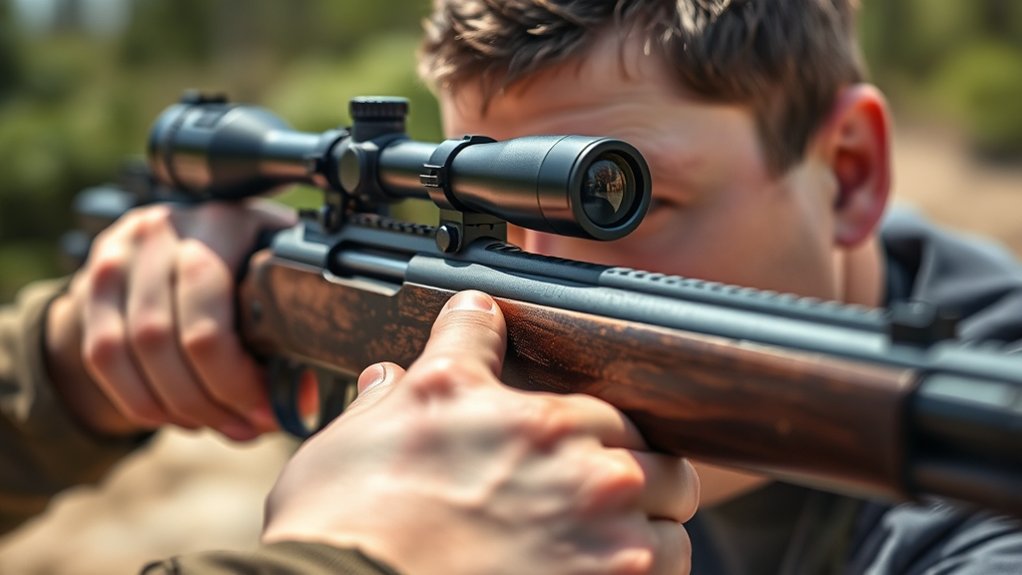
To achieve better sight alignment, you need to hold your firearm steadily and consistently. Start by gripping the firearm firmly with your dominant hand while keeping your support hand under the firearm for stability. Maintain a high grip on the backstrap to control recoil and keep your wrists locked but relaxed to reduce fatigue. Position your stance shoulder-width apart, leaning slightly forward for balance.
Here’s a quick guide to holding your firearm effectively:
| Grip Technique | Stance Position | Wrist Placement |
|---|---|---|
| Firm but not tense | Feet shoulder-width | Locked but relaxed |
| High on backstrap | Lean slightly forward | Avoid bending |
| Support hand stable | Balanced posture | Consistent angle |
This method helps you maintain consistent sight alignment shot after shot.
What You Need To Know About Front And Rear Sights
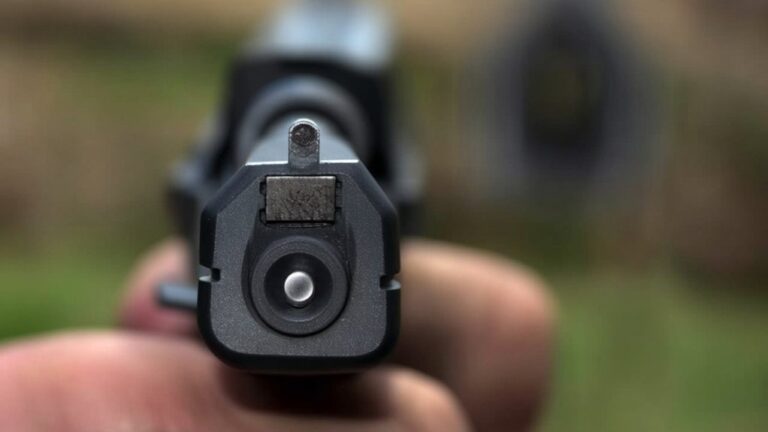
Holding your firearm correctly sets the stage for understanding how front and rear sights work together to help you aim accurately. The front sight is usually a single post or bead that you focus on, while the rear sight features two notches or apertures that frame the front sight. You’ll want to line them up perfectly for a clear sight picture.
Here’s what you need to know about the sights:
- Front Sight: This is your primary aiming point and should be in sharp focus.
- Rear Sight: It helps align the front sight horizontally and vertically.
- Alignment: The top of the front sight should be level with the rear sight’s top, centered between the rear sight’s notches.
Mastering this alignment is key to hitting your target consistently.
How To Position Your Eye For A Clear Iron Sight Picture
When you position your eye correctly, you’ll get a clear and consistent iron sight picture that improves your accuracy. To do this, keep your dominant eye aligned directly behind the rear sight aperture, focusing on the front sight post.
Don’t try to focus on both sights simultaneously; your eye should naturally sharpen the front sight while the rear sight and target remain slightly blurred. Maintain a consistent cheek weld on the stock to guarantee your eye stays in the same position shot after shot.
Avoid leaning too far forward or back, as this shifts your eye and distorts the sight picture. Practicing this alignment will help you develop muscle memory, making it easier to acquire a crisp sight picture quickly and reliably every time you aim.
Why Your Sight Picture Matters When Aiming
Mastering your eye position sets the stage for a reliable sight picture, but understanding why that picture matters makes all the difference in your aim.
When your sight picture is clear and steady, you’re able to:
- Align your front and rear sights precisely with the target, reducing errors.
- Consistently replicate your aiming process, building muscle memory.
- Quickly identify and correct any misalignment or movement before you shoot.
A proper sight picture ensures your shots land where you intend, not just close. It’s the visual confirmation that your point of aim matches your point of impact.
Without it, even perfect trigger control can’t save your accuracy. So, focus on creating a clean sight picture every time—you’ll notice better grouping and more confidence in your shooting.
How To Focus On The Front Sight For Better Accuracy
Because your front sight plays the essential role in aligning your shot, you’ll want to keep your focus sharp and steady on it. When aiming, concentrate your eyes directly on the front sight’s tip rather than the target or rear sight. This focus guarantees your shot lines up accurately, as the front sight determines the bullet’s point of impact.
Practice by slowly bringing the front sight into crisp focus while allowing the target and rear sight to appear slightly blurred. This technique enhances precision and reduces aiming errors.
Common Mistakes When Lining Up Iron Sights (And How To Fix Them)
Although lining up iron sights may seem straightforward, many shooters make common mistakes that undermine their accuracy. You might find yourself struggling because of these common errors:
- Misaligning the front and rear sights: If the front sight isn’t perfectly centered and level with the rear sight, your shots will consistently miss the target.
- Not focusing on the front sight: Your eyes may wander to the target or rear sight, blurring the critical front sight and throwing off your aim.
- Uneven sight picture brightness: Ignoring the contrast between sights leads to difficulty in proper alignment, especially in different light conditions.
To fix these, always center and level your sights, lock your focus on the front sight, and ensure your sight picture is clear and balanced before shooting.
How Lighting And Environment Affect Iron Sight Alignment
Lighting and environmental conditions play a crucial role in how well you can align your iron sights. Bright sunlight can cause glare on your sights, making it harder to focus on the front sight post.
Lighting and environment greatly impact your ability to align iron sights accurately, with glare and brightness as key factors.
Conversely, low light or dusk can reduce contrast, so you might struggle to see the sights clearly. Shadows and uneven lighting also affect your ability to line up the sights accurately.
You can adjust your head position or find a shaded spot to improve visibility. Weather conditions like rain or fog blur the sight picture, requiring extra attention.
Be aware of your surroundings and lighting to maintain proper alignment. Adapting quickly to these factors ensures you stay on target and shoot accurately.
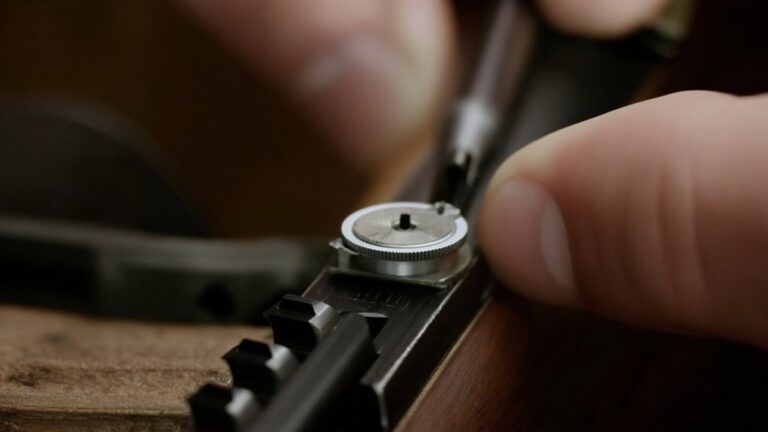
Adjusting Iron Sights For Windage And Elevation
When you want to improve your accuracy, adjusting your iron sights for windage and elevation is essential.
Windage controls the horizontal alignment, while elevation adjusts the vertical point of impact. Here’s how you can fine-tune these settings effectively:
- Windage: Turn the windage knob or screw to shift the front sight left or right until your shots group centrally.
- Elevation: Adjust the elevation knob to raise or lower the front sight, matching the bullet’s impact on the target.
- Test and repeat: Fire a few rounds after each adjustment to confirm the impact shifts correctly.
Drills And Exercises To Improve Your Sight Alignment
To sharpen your sight alignment, start with basic drills that build consistency and muscle memory.
Once you’ve mastered the fundamentals, challenge yourself with advanced focus exercises to improve precision under pressure.
These practices will help you line up your iron sights faster and more accurately every time.
Basic Sight Alignment Drills
Although mastering sight alignment takes practice, incorporating basic drills into your routine will sharpen your focus and improve your accuracy. Start with simple exercises to build muscle memory and consistency. Focus on maintaining a perfect front sight post centered within the rear sight notch.
Try these drills to get started:
- Dry Fire Practice: Without live rounds, practice aligning your sights and pressing the trigger smoothly.
- Wall Target Drill: Use a paper target on a wall at close range to check your sight picture and shot placement.
- Sight Picture Hold: Take time holding your sight alignment steady for several seconds to build visual discipline.
These foundational drills will prepare you for more advanced techniques while reinforcing proper sight alignment basics.
Advanced Focus Exercises
Building on the basic sight alignment drills, you can challenge yourself further with advanced focus exercises that sharpen your precision under varying conditions.
Start by practicing sight alignment while shifting your focus rapidly between the front sight, rear sight, and target. This drill trains your eyes to maintain clarity on the front sight, which is essential for accuracy.
Next, try shooting with one eye closed and then both eyes open to build flexibility in focus and depth perception.
Incorporate movement by adjusting your stance or position between shots, forcing your brain to adapt quickly.
Finally, use different lighting conditions or simulate distractions to strengthen your concentration.
These exercises will help you maintain consistent sight alignment, even when faced with real-world shooting challenges.
Choosing Between Iron Sights And Other Sight Options
When deciding how to equip your firearm, you’ll find that iron sights offer simplicity and reliability that many other sight options can’t match. They don’t rely on batteries or electronics, making them dependable in any situation.
However, you might consider other sights depending on your needs. For example:
- Red dot sights provide quick target acquisition, especially in close quarters.
- Scopes offer magnification for long-range precision.
- Holographic sights combine a clear reticle with fast aiming in dynamic environments.
Ultimately, choosing iron sights means prioritizing durability and ease of use. Other options might enhance speed or accuracy but come with added complexity and maintenance.
Decide based on your shooting style, environment, and comfort with technology to get the best fit for your firearm.
How To Maintain Iron Sights For Consistent Accuracy
To keep your iron sights accurate, you need to maintain them regularly and carefully. Start by cleaning the sights with a soft brush to remove dirt and debris. Apply a light coat of oil to prevent rust, but avoid excess that can attract dust. Check screws and mounts often to ensure the sights stay securely in place.
| Task | Frequency | Tips |
|---|---|---|
| Cleaning | After each use | Use a soft brush |
| Lubrication | Monthly | Light oil, no excess |
| Tightening | Weekly | Use proper tools |
Frequently Asked Questions
Can Iron Sights Be Used Effectively at Long Distances?
Yes, you can use iron sights effectively at long distances, but it takes practice. You’ll need to focus carefully, account for bullet drop, and steady your aim since iron sights lack magnification compared to scopes.
Are Iron Sights Legal for All Types of Firearms?
Yes, you can use iron sights on most firearms, but legality depends on your local laws and specific firearm regulations. Always check your area’s rules to guarantee your iron sights and firearm comply with legal requirements.
How Do Weather Conditions Affect Iron Sight Durability?
Weather conditions can cause rust, corrosion, and wear on your iron sights, especially in rain or humidity. You’ll want to regularly clean and oil them to keep durability intact and guarantee reliable performance over time.
What Materials Are Iron Sights Typically Made From?
Imagine holding a steel sword in medieval times—that’s how iron sights often feel, made from steel or aluminum for durability. Some use polymer too, giving you lightweight, sturdy options that can handle rough conditions without fuss.
Can Iron Sights Be Customized or Personalized?
Yes, you can customize iron sights by adjusting their height, adding tritium inserts for low light, or swapping out front and rear sights. You’ll find plenty of options to personalize your setup for better accuracy and comfort.
Conclusion
Mastering iron sights boosts your shooting accuracy markedly—studies show shooters improve hit rates by up to 30% with proper sight alignment. By understanding how to align sights, position your eye, and adjust for windage and elevation, you’ll gain reliable precision. Keep practicing drills regularly and maintain your sights well to guarantee consistent performance. Whether you stick with iron sights or explore other options, these fundamentals will keep your aim sharp and your confidence high every time you shoot.