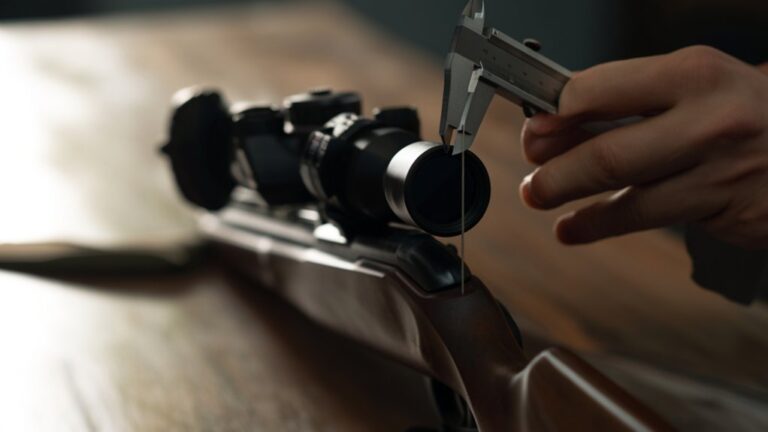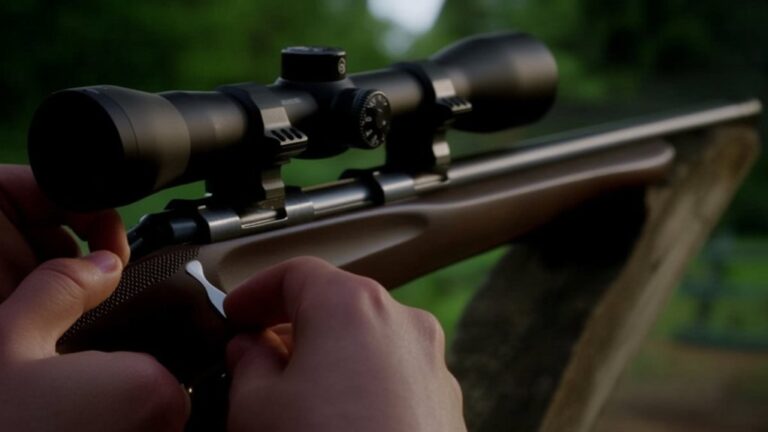
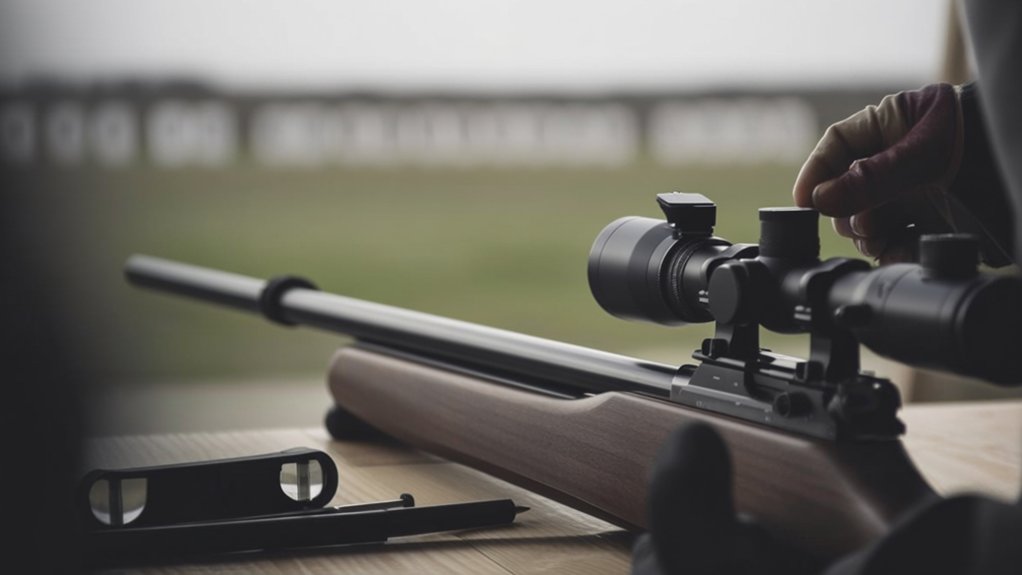
How to Align a Rifle Scope in 5 Easy Steps
To align your rifle scope in five easy steps, first gather essential tools like mounting rings, a torque wrench, and a bubble level. Next, securely mount and level the scope on your rifle, ensuring the reticle is perfectly vertical and horizontal. Then, adjust the eyepiece for a crisp reticle focus. Zero your scope by shooting groups at a set distance, adjusting windage and elevation until shots cluster on target. Follow these basics, and you’ll naturally improve your shooting precision as you explore further.
Gather Essential Tools to Align Your Rifle Scope
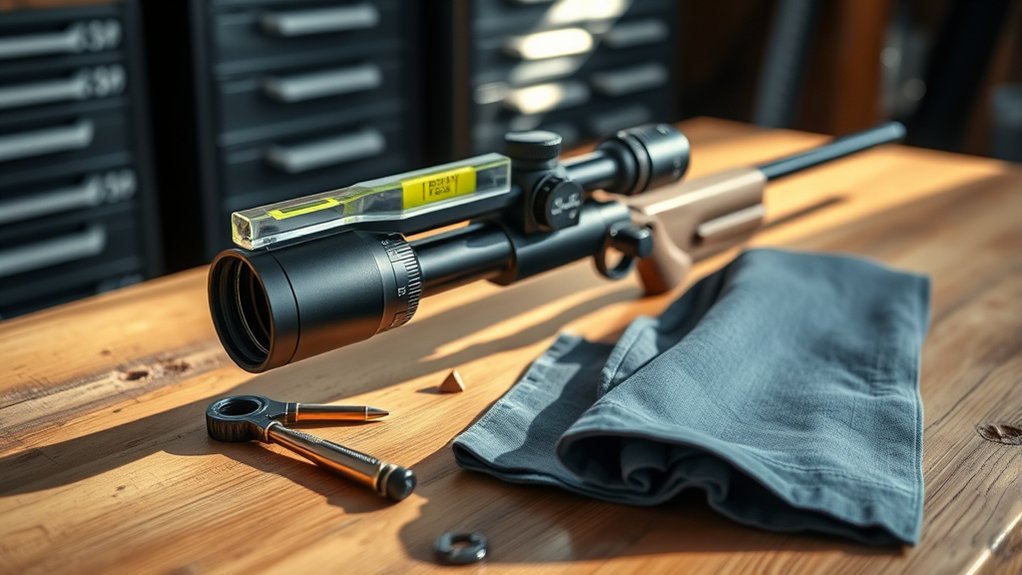
Before you begin aligning your rifle scope, you’ll need to gather a few essential tools to guarantee accuracy and efficiency. Start with a quality rifle scope mounting kit, including rings and a base compatible with your firearm.
You’ll also need a torque wrench or screwdriver to tighten screws precisely without overdoing it. A bubble level is vital to ensure your rifle and scope remain perfectly horizontal during alignment.
Don’t forget a cleaning cloth to wipe lenses and mounts, preventing dirt from affecting your adjustments.
A bore sighter or laser bore alignment tool speeds up initial sighting by projecting a reference point down the barrel.
Having these tools ready ensures you can align your scope smoothly and accurately without interruptions or guesswork.
Mount and Level Your Rifle Scope Securely
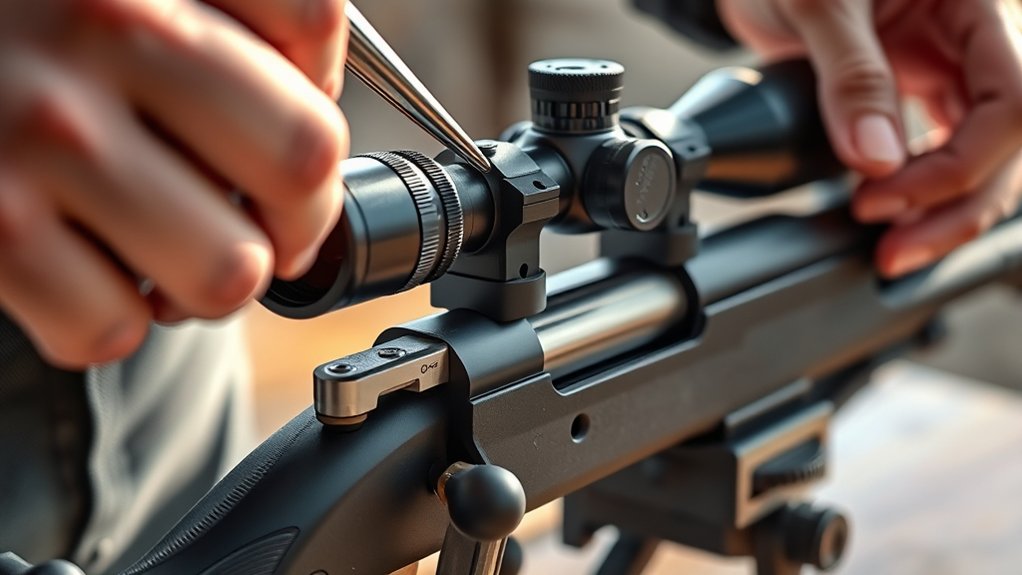
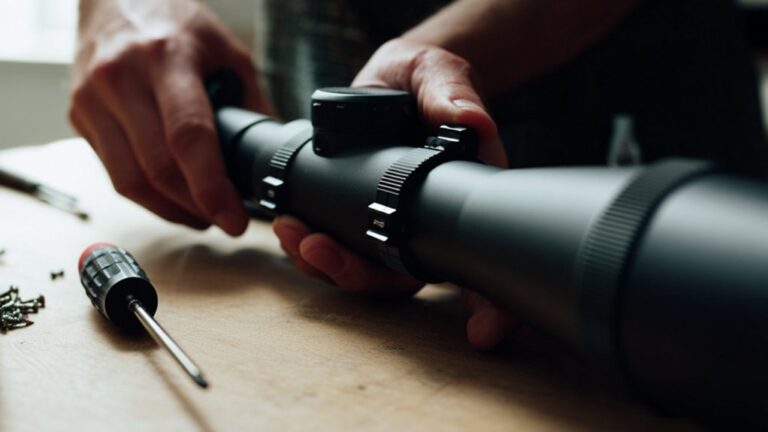
How exactly do you guarantee your rifle scope is mounted and leveled securely? Start by attaching the rings to your rifle’s base, ensuring they’re tight but not overtightened. Place the scope in the rings and loosely fasten the top halves. Use a scope level or bubble level on the turret to check alignment, adjusting until the reticle is perfectly vertical and horizontal. Double-check the rifle’s position to maintain consistency. Once level, evenly tighten each screw in a crisscross pattern to secure the scope without shifting it.
| Step | Tool Needed | Key Tip |
|---|---|---|
| Attach Rings | Screwdriver/Allen | Avoid overtightening |
| Position Scope | None | Keep scope loose initially |
| Level & Tighten | Bubble Level | Tighten screws evenly |
Adjust Your Scope’s Eyepiece and Confirm Reticle Focus
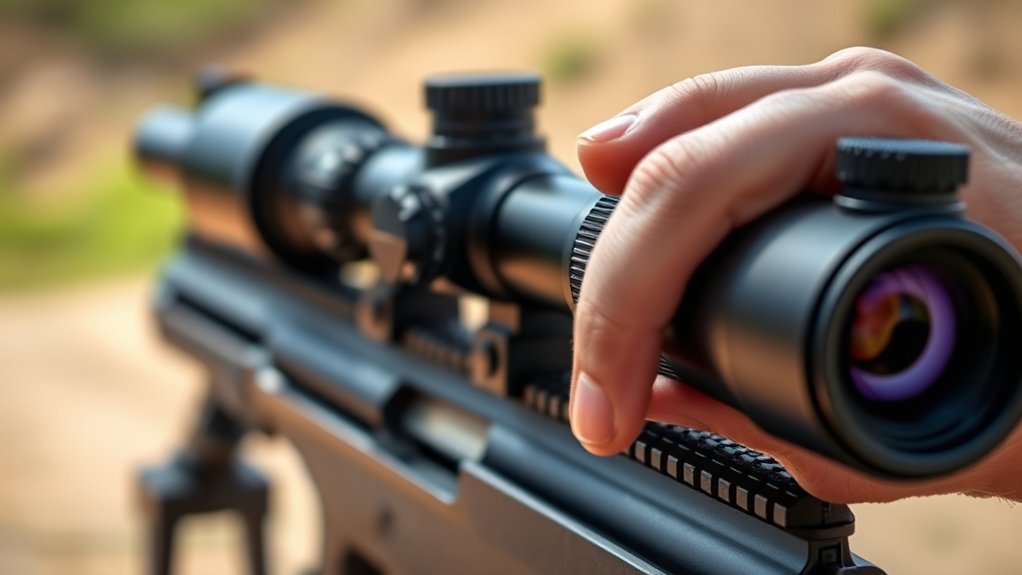
Once you’ve securely mounted and leveled your rifle scope, turn your attention to adjusting the eyepiece to guarantee the reticle is crisp and in sharp focus.
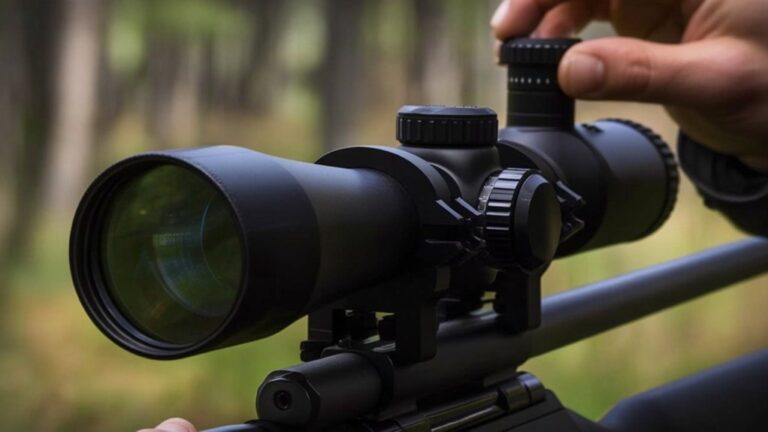
Start by looking through the scope at a plain, bright background like the sky or a white wall. Slowly rotate the eyepiece ring until the reticle appears as clear and sharp as possible. Avoid adjusting while looking at a target, as it can blur the reticle.
If your scope has a fast-focus eyepiece, this step is quick and intuitive. Make small adjustments until the reticle doesn’t strain your eyes. Once it feels natural and clear, lock the eyepiece in place if your model allows. This assures your reticle remains perfectly focused during shooting sessions.
Zero Your Scope on the Target
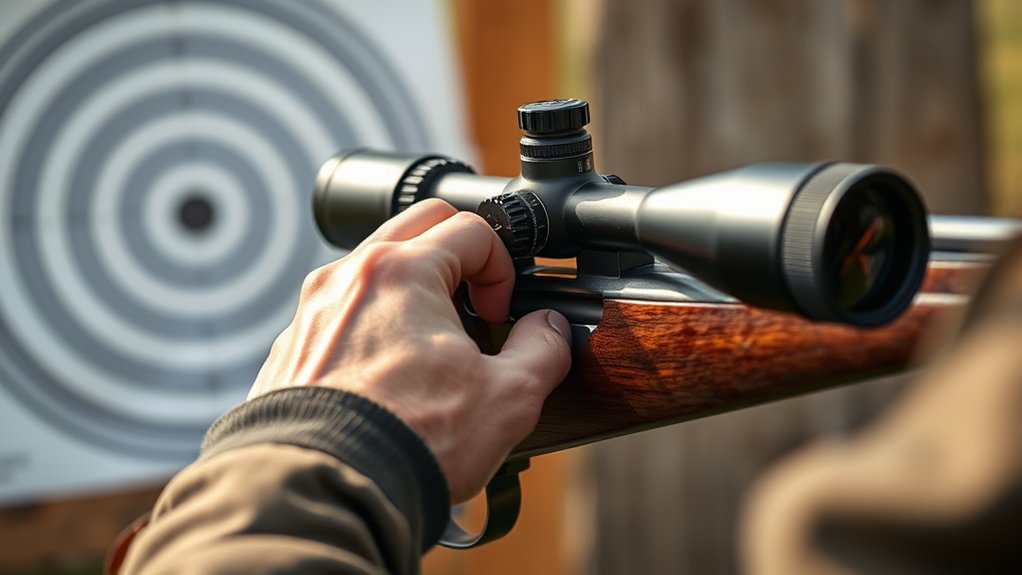
Why is zeroing your scope essential? Zeroing ensures your rifle’s point of aim matches the bullet’s point of impact at a specific distance. Without it, you’ll struggle to hit targets accurately.
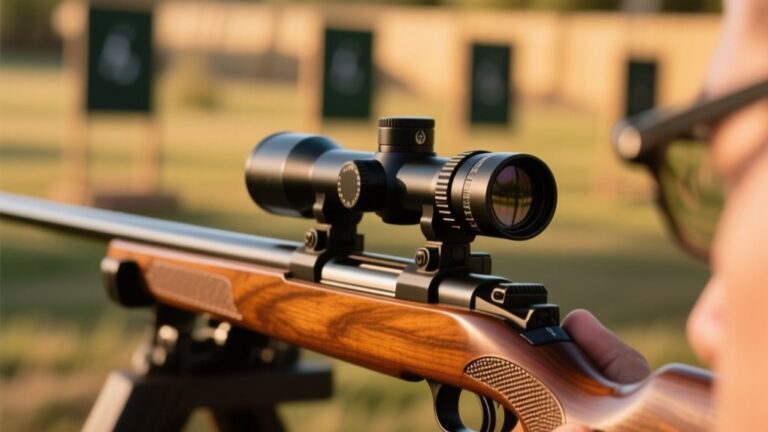
To zero your scope, start by setting up a target at your chosen distance—commonly 100 yards. Secure your rifle using a stable rest to minimize movement.
Fire a three-shot group, then check where the rounds hit relative to the target’s center. Adjust your scope’s windage and elevation knobs to move the reticle toward the group’s center.
Repeat this process, firing groups and adjusting, until your shots consistently land on target. Once zeroed, your scope will reliably guide your shots, making every shot count.
Fine-Tune Windage and Elevation Adjustments for Accuracy
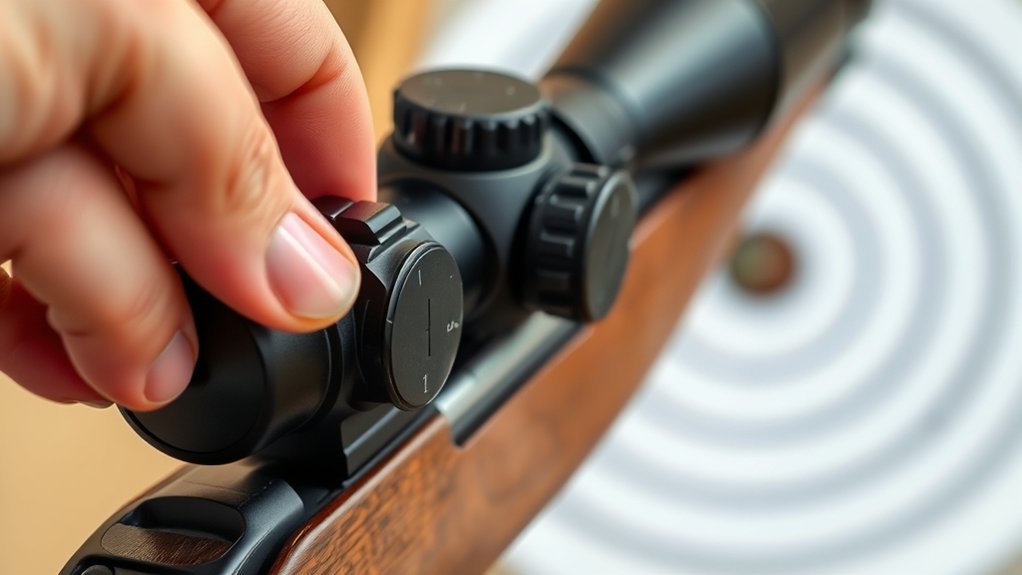
Although zeroing your scope gets you close, fine-tuning windage and elevation adjustments is key to achieving pinpoint accuracy. After your initial zero, shoot a group of rounds at your target and observe where they land.
Use the scope’s adjustment knobs to make small, precise changes: turn the windage knob to move the point of impact left or right, and the elevation knob to adjust it up or down. Remember, each click corresponds to a specific measurement, usually in MOA or MIL, so keep track of your adjustments.
Make incremental changes and shoot additional groups to confirm your corrections. Patience during this step guarantees your shots will consistently hit your intended point, even at varying distances or in different wind conditions.
Frequently Asked Questions
What Type of Rifle Scope Is Best for Long-Range Shooting?
You’ll want a scope with high magnification, clear glass, and precise turrets for adjustments. Look for features like a first focal plane reticle and parallax adjustment to guarantee accuracy at long distances.
How Often Should I Clean My Rifle Scope Lenses?
You should clean your rifle scope lenses after every 10 uses or whenever you notice dirt or smudges. Studies show 70% of missed shots stem from dirty lenses, so keeping them spotless boosts your accuracy dramatically.
Can Temperature Changes Affect My Scope’s Accuracy?
Yes, temperature changes can affect your scope’s accuracy by causing materials to expand or contract, slightly shifting your point of impact. You should recheck and adjust your zero when moving between extreme temperature conditions.
What Is the Difference Between First and Second Focal Plane Scopes?
Think of your scope’s reticle as a river’s flow—first focal plane scopes keep it proportional at every zoom, while second focal plane scopes hold steady size. You’ll choose based on how you want your aiming to adapt while shooting.
How Do I Store My Rifle Scope When Not in Use?
You should store your rifle scope in a cool, dry place, ideally in a padded case to protect it from dust and impact. Keep the lens caps on and avoid extreme temperatures or humidity to maintain its performance.
Conclusion
By following these five easy steps, you’ll guarantee your rifle scope is perfectly aligned for accurate shooting. Imagine a hunter who struggled with missed shots until he properly zeroed his scope and fine-tuned adjustments—after that, his hunting success soared. With the right tools, secure mounting, focused reticle, and careful zeroing, you’ll hit your target every time. Take your time and trust the process; precision comes with practice and attention to detail.