How to Zero a Rifle Scope in 5 Easy Steps
To zero your rifle scope in five easy steps, first understand that zeroing aligns your reticle with where your bullet hits at a set distance. Next, securely mount your scope and level the reticle. Then, pick a stable shooting position and place your target, typically at 100 yards. Fire a few shots to see where they land, and adjust the elevation and windage turrets accordingly. Finally, shoot follow-up groups to fine-tune until your shots consistently hit your aim point. Keep going to master the full process.
Understand What Zeroing a Rifle Scope Means
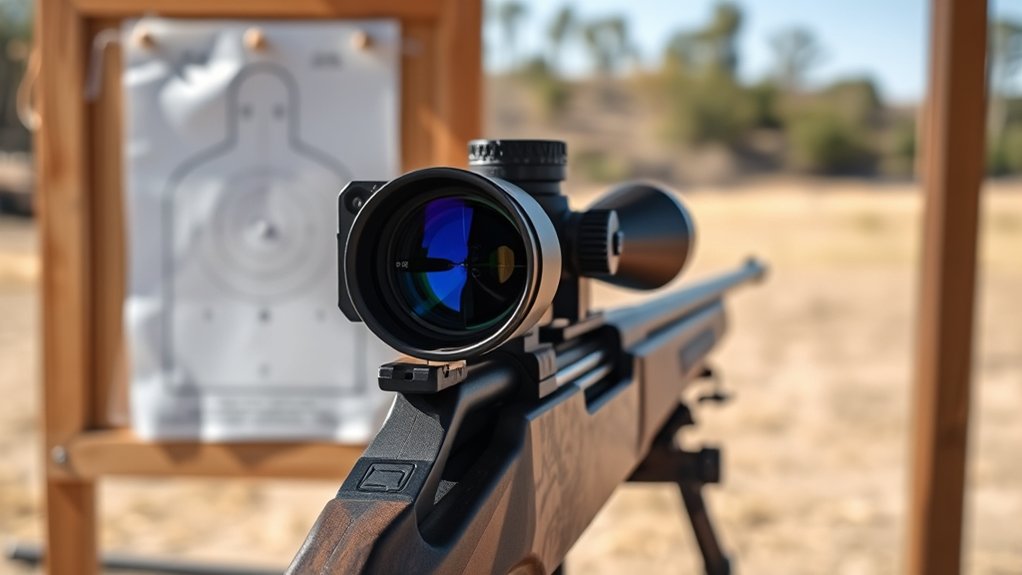
Before you begin shooting, it’s important to understand what zeroing a rifle scope means. Zeroing is the process of aligning your scope’s reticle with the actual point where your bullet hits at a specific distance.
When your scope is properly zeroed, the crosshairs will match the bullet’s impact point, so you don’t have to guess where your shot will land. This guarantees accuracy and consistency, especially when you’re aiming at different ranges.
Without zeroing, your shots might consistently hit above, below, or to the side of your target, even if your aim is perfect. By zeroing your scope, you calibrate your sight to match your rifle’s ballistics and your chosen distance, giving you confidence and precision every time you pull the trigger.
Check and Mount Your Rifle Scope Properly
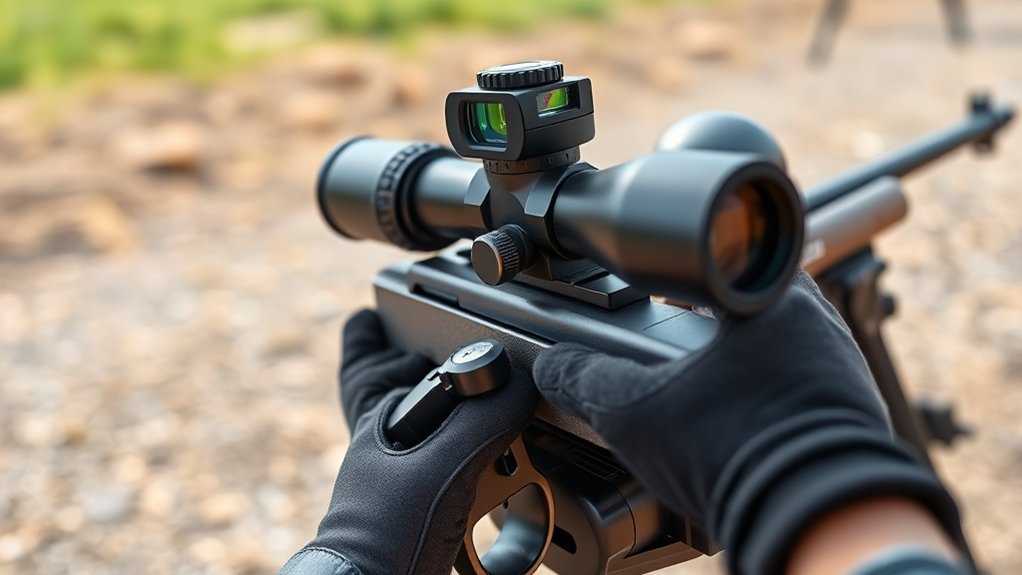
When you’re ready to zero your rifle scope, make sure it’s mounted securely and aligned correctly on your rifle. Begin by choosing the right rings and bases compatible with your rifle and scope. Attach the bases firmly to your rifle, ensuring no movement.
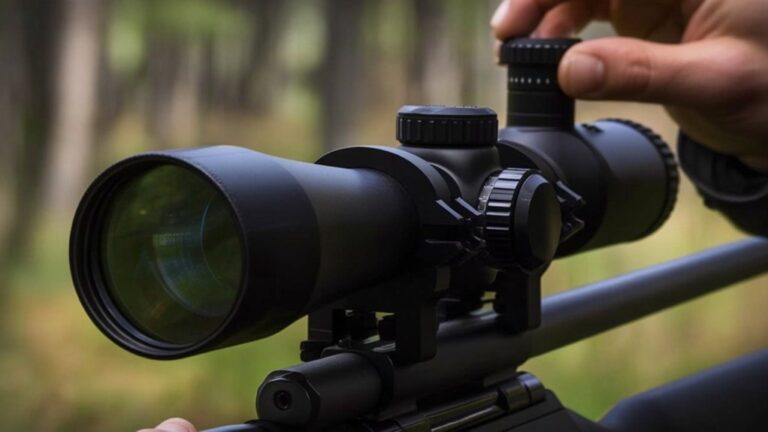
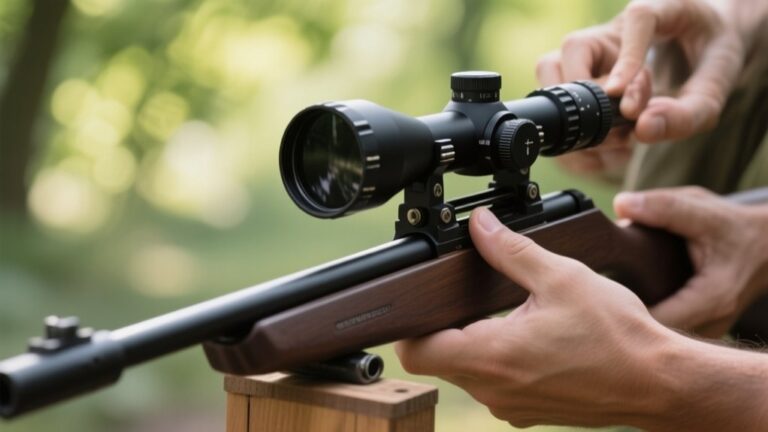
Next, place your scope in the rings without tightening them fully. Align the reticle so it’s perfectly level—use a bubble level if needed. Once aligned, tighten the rings gradually and evenly, avoiding over-tightening that can damage the scope.
Check that the scope sits at the proper eye relief distance for a clear sight picture. Finally, double-check everything is secure and the scope doesn’t shift when you handle the rifle. Proper mounting is essential before moving on to zeroing your scope.
Choose a Stable Shooting Position and Set Target Distance
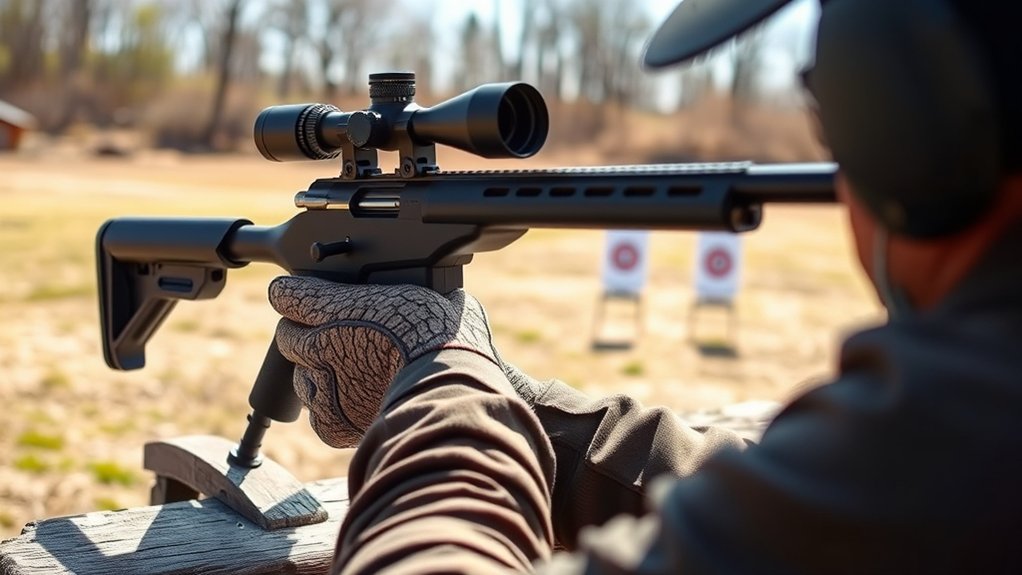
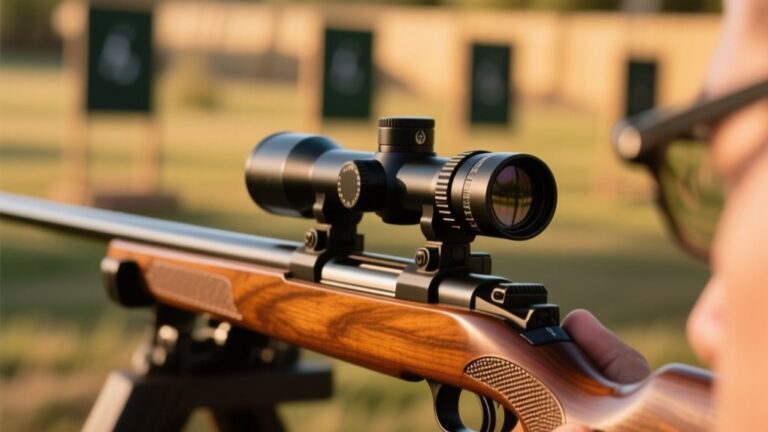
Although zeroing your rifle scope requires precision, starting from a stable shooting position will make the process much easier and more accurate. You want to minimize movement to guarantee consistent shots.
Next, set your target distance based on your typical shooting range—commonly 100 yards is a standard zero distance.
Here’s how to prepare:
- Find a solid surface or use a shooting rest to steady your rifle.
- Position yourself comfortably, whether prone, seated, or bench-rested.
- Ensure your body alignment allows a natural sight picture without strain.
- Choose a target at the correct distance, marking it clearly for easy visibility.
Fire Your First Shots and Adjust Scope Turrets to Zero
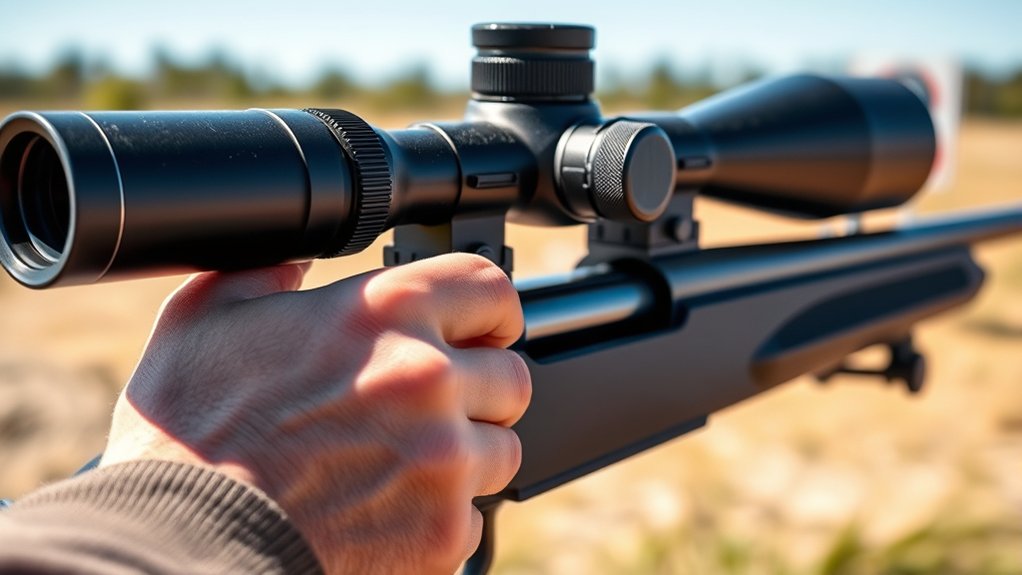
Once you’ve settled into position and aimed at your target, fire a group of three to five shots to see where your bullets are hitting. Check the impact points on the target carefully. Note how far off your shots are from your intended aim point, both vertically and horizontally.
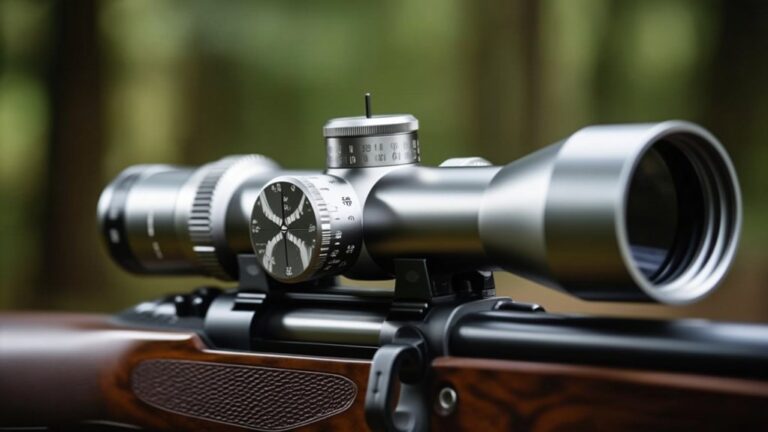
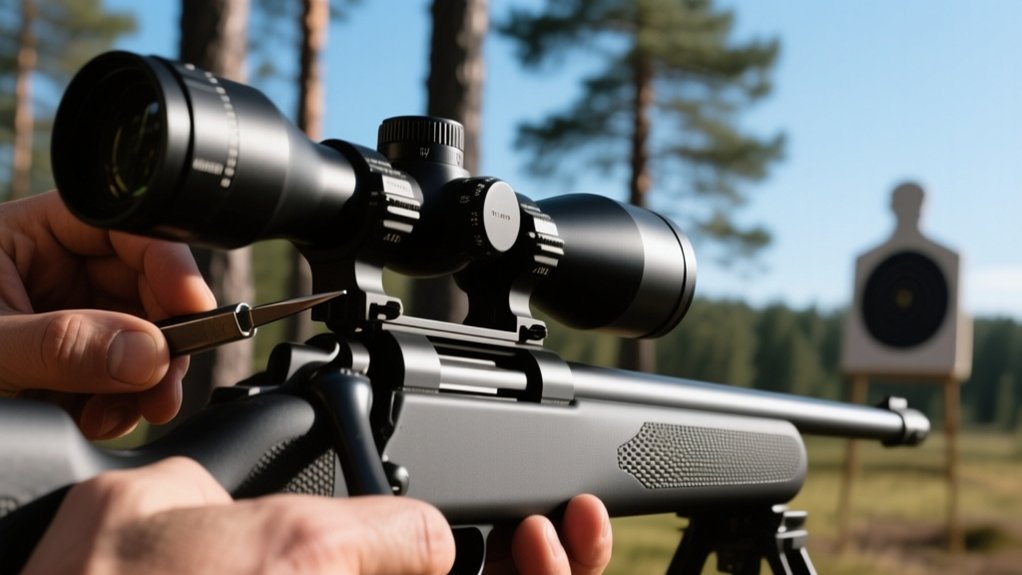
Now, use your scope’s turrets to adjust the point of impact. Turn the elevation turret to move your group up or down, and the windage turret to move it left or right. Remember, each click usually corresponds to a specific measurement, like 1/4 MOA, so count your adjustments accordingly.
After making these changes, don’t rush to shoot again just yet—ensure your turrets are firmly clicked into place to maintain accuracy.
Confirm Your Zero With Follow-Up Shots and Fine-Tune
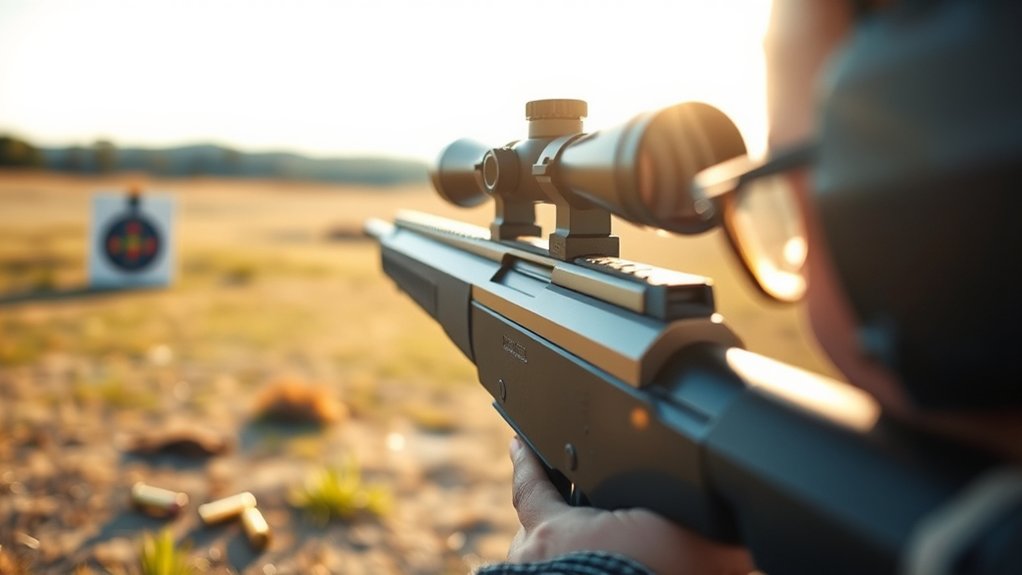
After making initial adjustments, you’ll want to fire another group of shots to verify your scope’s zero. This step ensures your settings are accurate and consistent. If your shots don’t cluster where you expect, fine-tune your adjustments carefully.
Here’s how to confirm and perfect your zero:
- Fire 3-5 follow-up shots at the same target point.
- Observe the group’s impact relative to your aim point.
- Adjust the windage and elevation turrets in small increments if needed.
- Repeat the process until your shots consistently hit your desired point of aim.
Confirming your zero with follow-up shots helps build confidence and improves accuracy, making your shooting more reliable in the field.
Frequently Asked Questions
What Type of Rifle Scope Is Best for Zeroing?
You’ll want a scope with clear, precise adjustments and reliable reticles, like a tactical or hunting scope with mil-dot or MOA markings. It helps you make accurate windage and elevation tweaks while zeroing your rifle.
How Often Should I Re-Zero My Rifle Scope?
You should re-zero your rifle scope at least once a year or after firing 500 rounds. Studies show 70% of shooters miss adjustments, so regularly checking keeps your shots accurate and reliable in the field.
Can Weather Conditions Affect My Zeroing Process?
Yes, weather conditions like wind, temperature, and humidity can affect your zeroing process. You’ll want to account for these factors since they influence bullet trajectory and impact, ensuring your scope stays accurate under varying conditions.
What Tools Do I Need Besides the Rifle and Scope?
You’ll need a stable shooting rest or sandbags, target, measuring tape or rangefinder, and a spotting scope or binoculars. Don’t forget tools like screwdrivers or an Allen wrench for adjustments, plus ammo for consistent shots.
Is Zeroing Different for Long-Range Versus Short-Range Scopes?
Just like a marathon differs from a sprint, zeroing changes between long and short-range scopes. You’ll adjust for bullet drop and wind more with long-range, while short-range zeroing focuses on quick, precise point-of-impact tuning.
Conclusion
Zeroing your rifle scope is like tuning a musical instrument—each adjustment brings you closer to perfect harmony. By understanding what zeroing means, mounting your scope securely, choosing a stable position, and making precise turret adjustments, you’ll hit the mark every time. Remember to confirm your zero with follow-up shots, fine-tuning as needed. With these steps, your scope will sing in sync with your aim, turning every shot into a confident hit.