How to Set Up a Rifle Scope in 3 Simple Steps
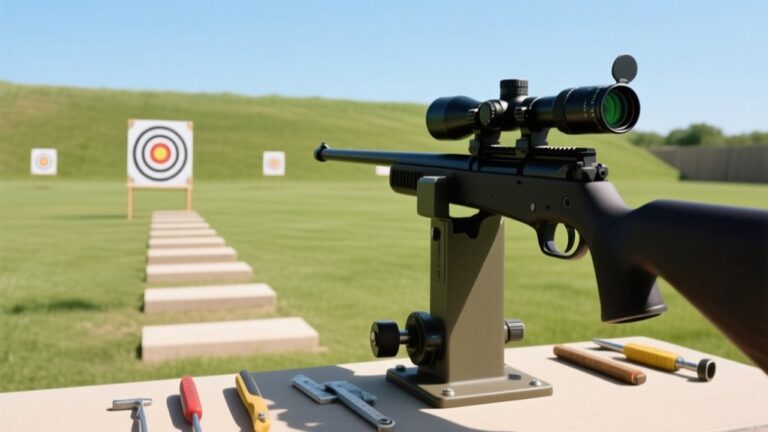
To set up your rifle scope in three simple steps, start by securely mounting and leveling the scope on your rifle, ensuring proper eye relief and using a bubble level for accuracy. Next, zero the scope by shooting groups at a set distance and making windage and elevation adjustments until your shots consistently hit the target. Finally, adjust your scope’s turrets for different distances, compensating for bullet drop and wind drift. Keep going to explore detailed tips for perfect sighting.
How to Mount and Level Your Rifle Scope
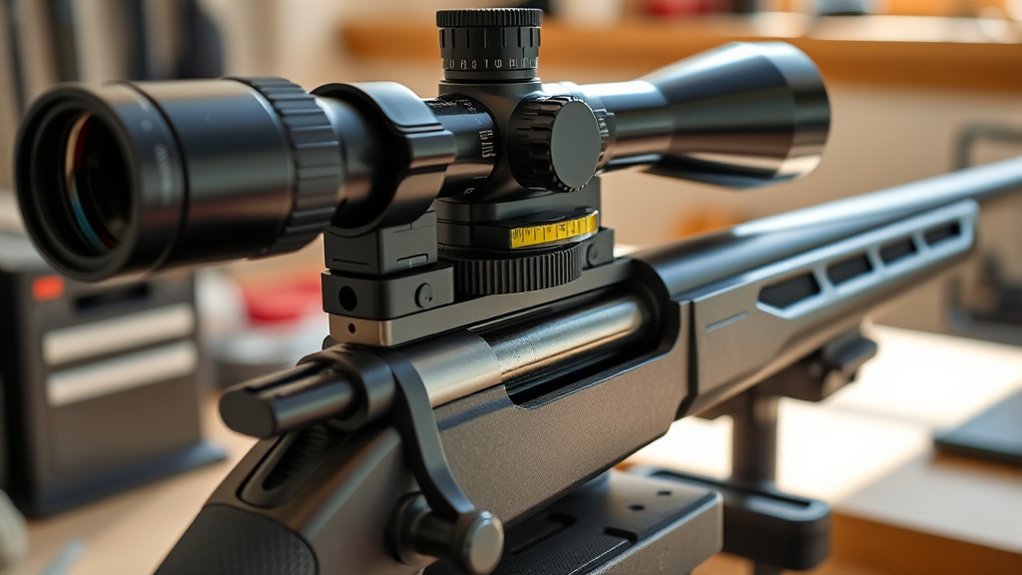
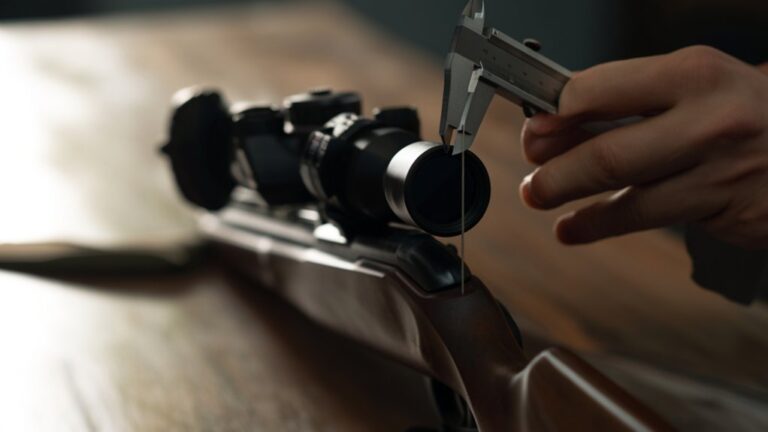
How do you guarantee your rifle scope sits perfectly aligned? Start by choosing quality scope rings that fit your rifle and scope tube diameter. Place the rings on your rifle’s base and loosely tighten them.
Next, set the scope into the rings and adjust it forward or backward for proper eye relief. Before fully tightening, check the scope’s level by placing a small bubble level on top of the turret housing and ensuring it matches the rifle’s level.
You can also use a rifle rest or sandbags to keep the rifle steady during this process. Once everything is aligned and level, carefully tighten the rings in an alternating pattern to avoid shifting the scope.
Proper mounting ensures consistent accuracy and prevents damage to your scope.
Zero Your Rifle Scope for Accurate Shooting
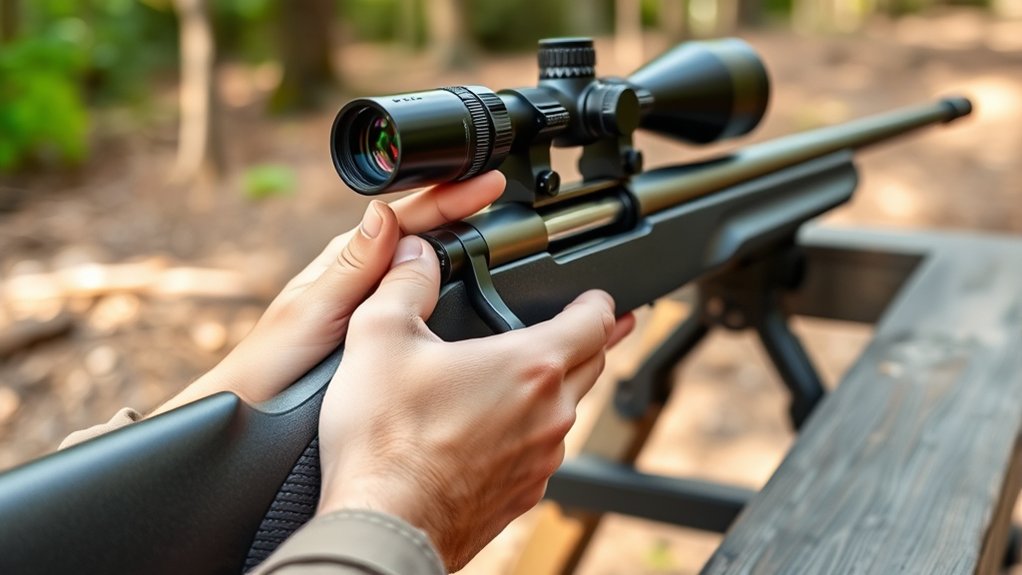
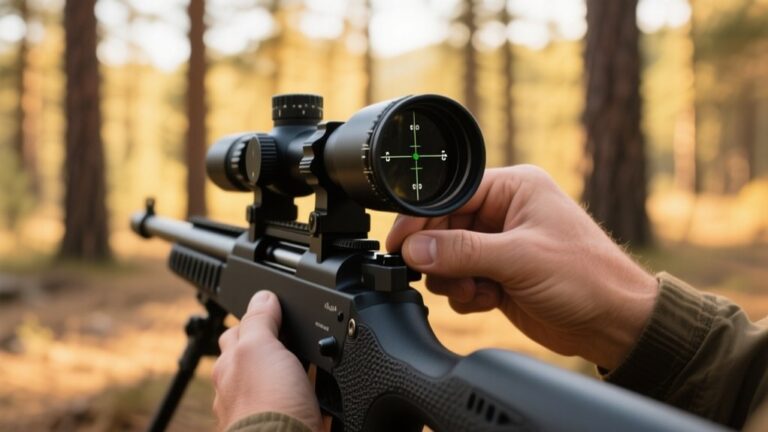
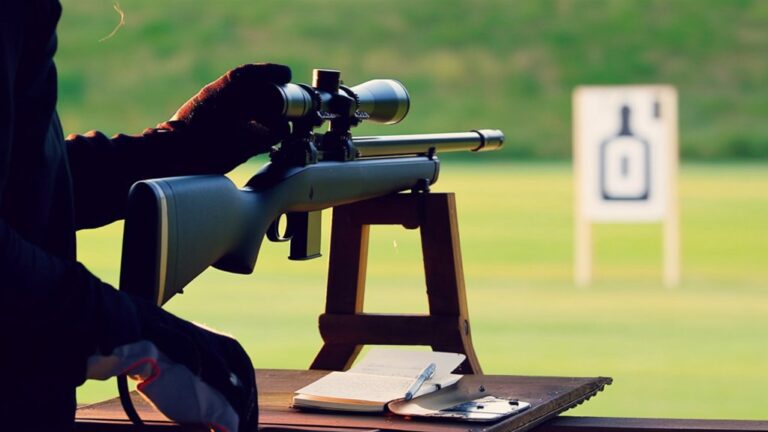
Once your rifle scope is securely mounted and level, you’ll need to zero it to guarantee your shots hit the exact point of aim. Start by setting up a target at a known distance, commonly 100 yards. Fire a three-shot group, then adjust the windage and elevation turrets based on where the group lands relative to your aiming point. Repeat until your shots consistently hit the bullseye. Use the table below to track your adjustments:
| Shot Group | Windage Adjustment | Elevation Adjustment |
|---|---|---|
| 1 | 0.5 MOA right | 1 MOA up |
| 2 | 0.3 MOA left | 0.5 MOA down |
| 3 | 0.2 MOA right | 0.2 MOA up |
| Final | Confirmed zero | Confirmed zero |
This process guarantees precise alignment for accurate shooting.
Adjust Your Rifle Scope for Different Distances
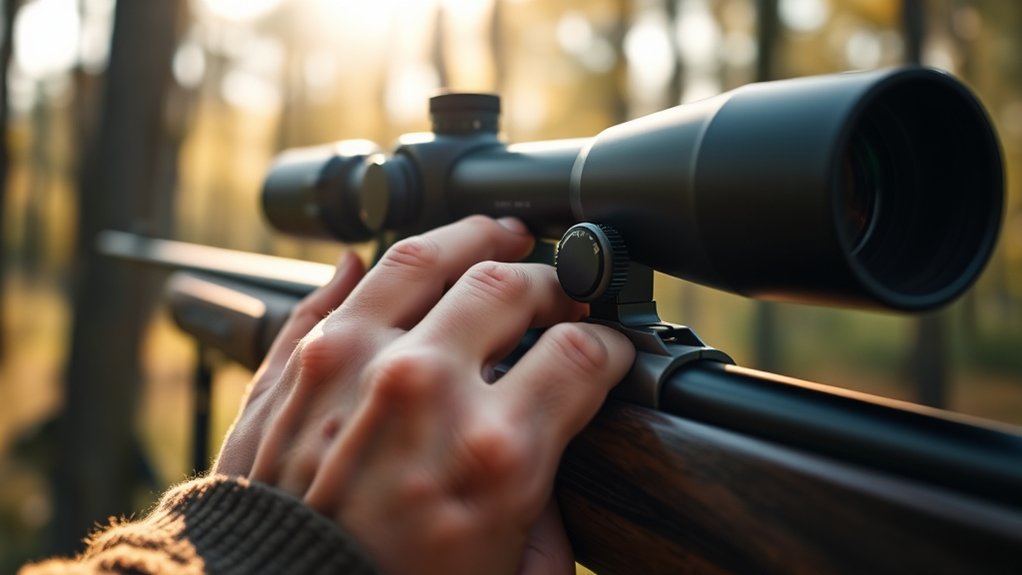
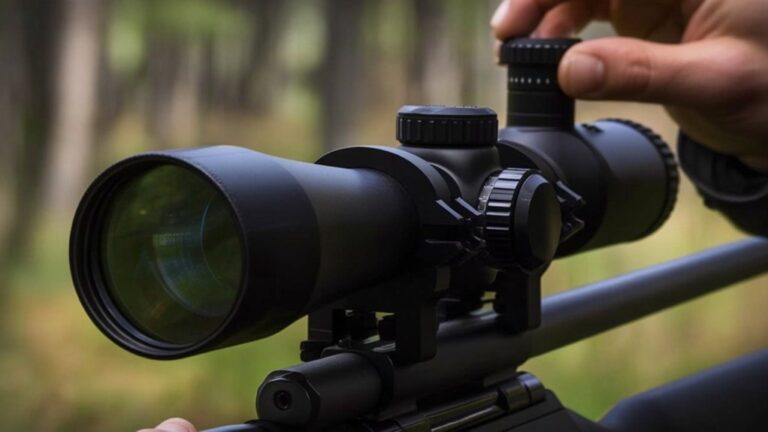
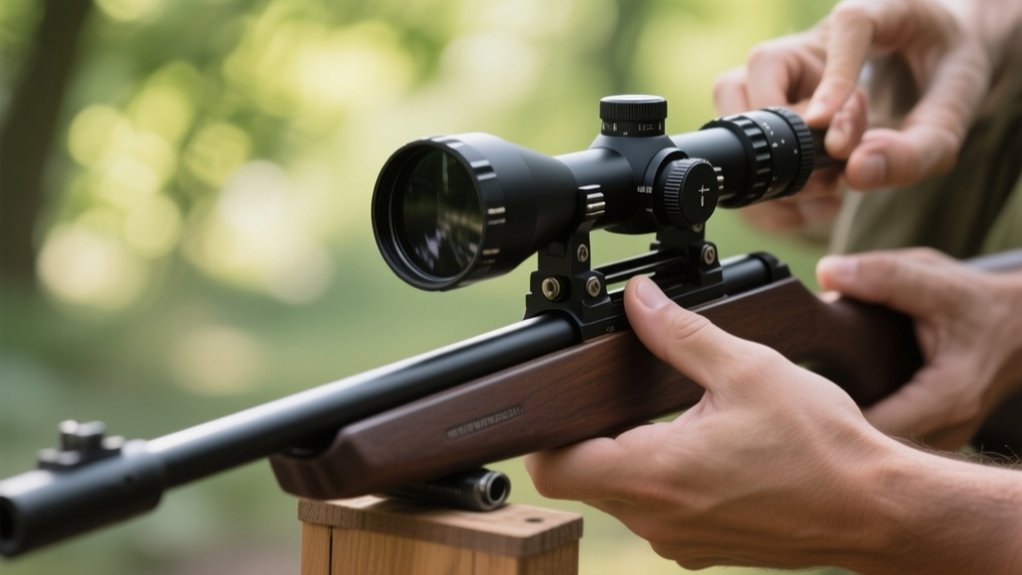
After zeroing your rifle scope at a specific distance, you’ll need to adjust it when shooting at varying ranges. Use the elevation turret to compensate for bullet drop as your target moves farther or closer. Turn it in small increments, usually measured in MOA or MIL, based on the distance difference from your zero.
Windage adjustments help correct for wind drift but are less often changed for distance alone. Always estimate the range accurately, using a rangefinder if possible, since incorrect distance leads to poor shot placement.
Practice dialing your scope adjustments quickly and confidently so you can make real-time changes in the field. Remember, consistent hold and proper breathing also play vital roles when shooting at different distances.
Frequently Asked Questions
What Types of Rifle Scopes Are Best for Beginners?
You’ll want beginner-friendly rifle scopes with simple, clear reticles and adjustable magnification around 3-9x. Look for durable, lightweight models with easy-to-use turrets so you can quickly zero in and improve your shooting skills.
How Do I Clean and Maintain My Rifle Scope?
Think of your rifle scope as a delicate garden—clean its lenses gently with a microfiber cloth, avoid harsh chemicals, and keep it dry. Regularly check screws and lenses, so your “garden” stays clear and sharp for every shot.
Can I Use a Rifle Scope in Low-Light Conditions?
Yes, you can use a rifle scope in low-light conditions. Just make sure your scope has good light-gathering capabilities or an illuminated reticle to improve visibility, so you can aim accurately even as light fades.
What Is the Difference Between Fixed and Variable Zoom Scopes?
Imagine spotting a deer at varying distances: fixed zoom scopes have one magnification, like 4x, while variable zoom lets you adjust, say from 3x to 9x. You’ll choose flexibility or simplicity based on your needs.
Are There Legal Restrictions on Using Rifle Scopes?
Yes, you’ll find legal restrictions vary by location, so you should check local laws before using rifle scopes. Some areas limit magnification or ban specific features, so knowing your regulations helps you stay compliant and safe.
Conclusion
Setting up your rifle scope correctly can improve your accuracy by up to 90%, making every shot count. By mounting and leveling your scope, zeroing it precisely, and adjusting for distance, you’ll boost your confidence and performance in the field. Remember, practice makes perfect—regularly check your settings to stay sharp. With these simple steps, you’re well on your way to mastering your rifle scope and hitting your target every time.