How to Use a Mil Dot Rifle Scope in 3 Easy Steps
To use a mil dot rifle scope in three easy steps, start by estimating the target’s range by counting how many mil dots it spans and plugging that into a simple formula using the target’s known size. Next, use the mil dot spacing on your reticle to accurately measure distance without extra tools. Finally, compensate for bullet drop by converting the drop from your ballistics chart into mil dots and hold over the target accordingly. Keep going to sharpen your skills and boost your precision.
Estimate Range Using Mil Dots
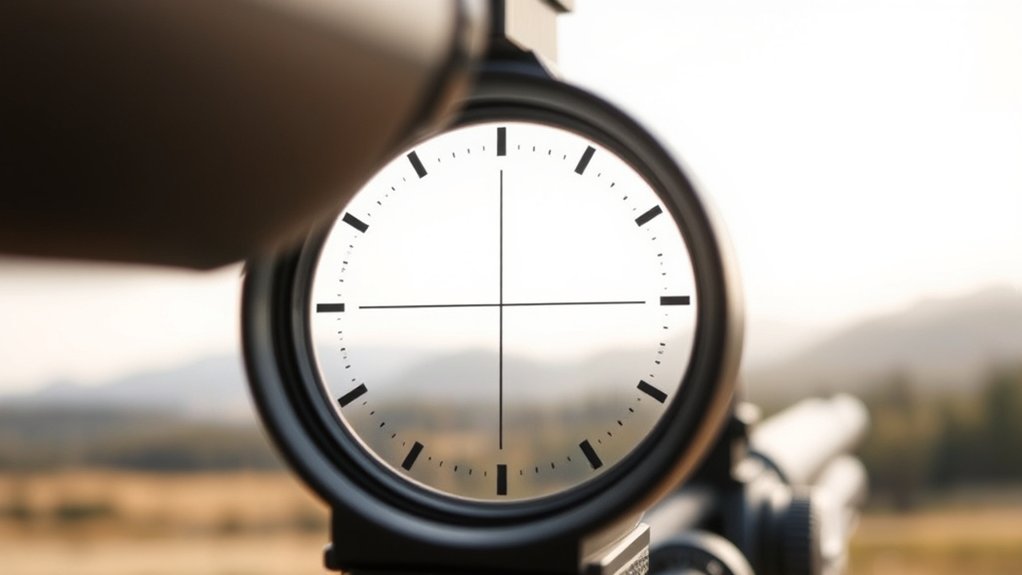
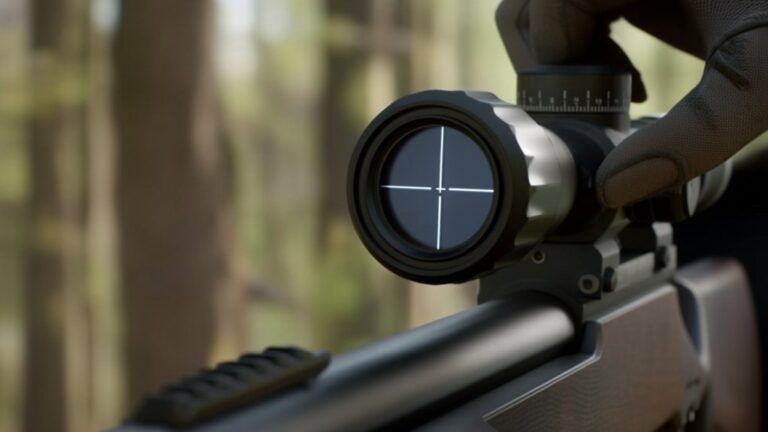
Before you take a shot, you’ll need to estimate the distance to your target using the mil dots on your rifle scope. First, align your target within the reticle and count how many mil dots or fractions of mils it spans vertically or horizontally.
Knowing the actual size of your target helps you determine distance. You’ll use this measurement together with the mil reading in a formula or a range estimation chart.
Remember, the mil dot spacing represents a specific angular measurement, which changes how your target size appears at different distances. By accurately gauging this, you can adjust your aim more precisely.
Practice estimating target size and counting mil dots to build confidence before relying on this method in real situations.
How Mil Dot Scopes Help You Measure Distance
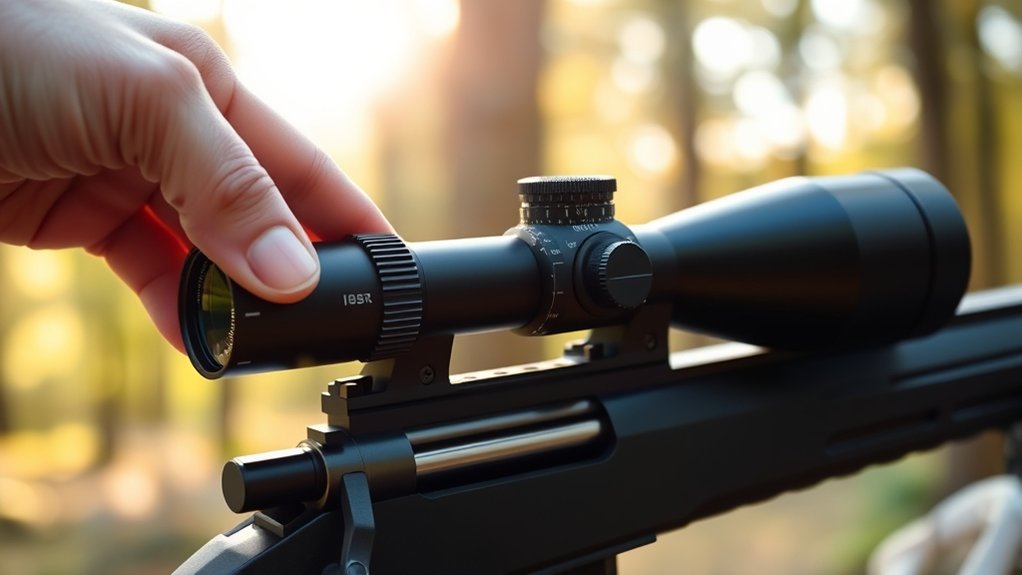
How exactly do mil dot scopes help you measure distance? They allow you to use the known size of a target and the spacing between the mil dots to calculate how far away it is.
When you look through your scope, you align the target within the reticle and count how many mil dots it spans. Since each mil dot represents a specific angular measurement, you can plug that number into a simple formula to find the distance.
This method is especially useful because it doesn’t rely on guesswork or external devices. By mastering this technique, you can quickly and accurately determine range, which is essential for effective shooting and making informed decisions in the field.
Compensate for Bullet Drop Using Mil Dots
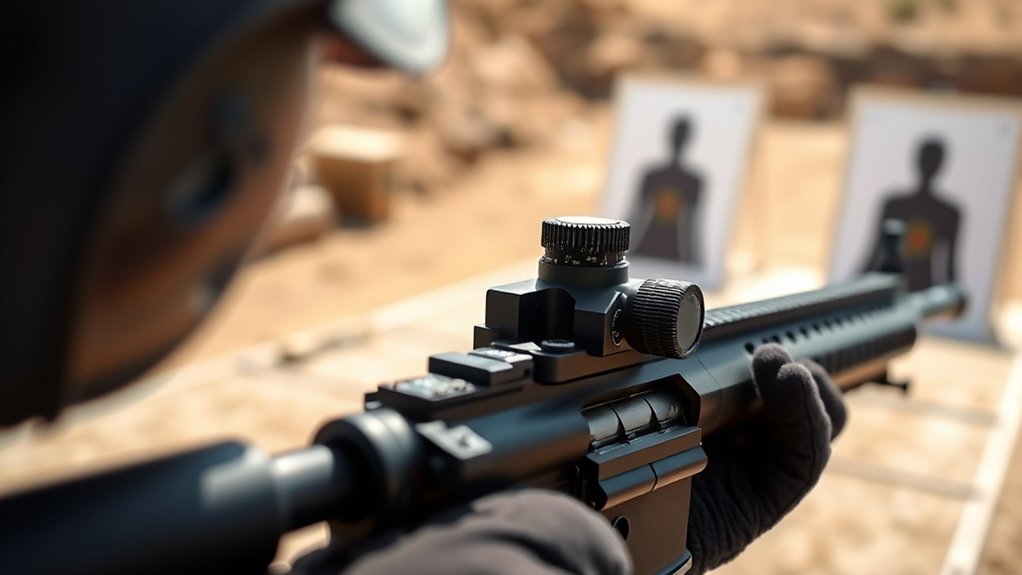
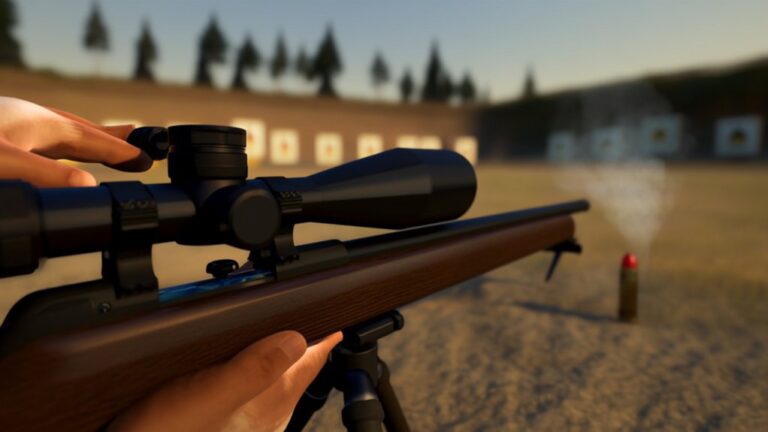
When you take a shot at a distant target, gravity pulls your bullet downward, causing it to drop over distance. To compensate using mil dots, follow these steps:
- Calculate the range to your target using the mil dot reticle.
- Determine the bullet drop at that distance from your ballistics chart.
- Translate the drop into mil dots by dividing the drop (in inches or centimeters) by the mil value per click on your scope.
- Adjust your aim by holding over the appropriate number of mil dots above the target.
This method lets you precisely compensate for bullet drop without guessing. Practice it, and your long-range shots will become much more accurate.
Frequently Asked Questions
What Is the History of Mil Dot Scopes?
Mil dot scopes originated in the 1950s, developed for military snipers to estimate distance accurately. You’ll find their reticles marked with dots spaced in milliradians, helping you measure range and adjust shots precisely.
How Do I Clean and Maintain My Mil Dot Scope?
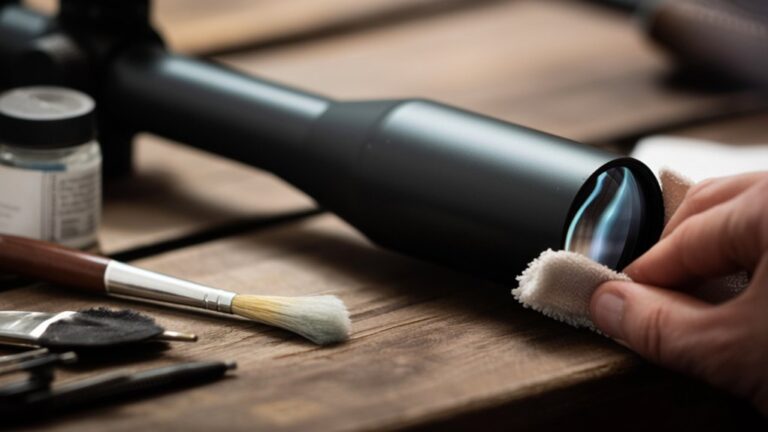
Don’t let dirt rain on your parade—clean your mil dot scope with a soft brush, lens cloth, and mild cleaner. Store it dry, check screws regularly, and avoid touching lenses to keep your scope sharp and reliable.
Can Mil Dot Scopes Be Used for Moving Targets?
Yes, you can use mil dot scopes for moving targets. You’ll need to lead your shot by estimating the target’s speed and direction, then adjust your aim accordingly using the mil dots for accurate holdover and lead compensation.
Are Mil Dot Scopes Compatible With All Rifles?
Think of your rifle as a canvas; mil dot scopes are versatile brushes but don’t fit every frame. You’ll find most rifles compatible, but always check mounting systems and sizes to guarantee a perfect match before buying.
What Is the Difference Between Mil Dot and Other Reticles?
Mil dot reticles use spaced dots for precise range estimation and holdover, while other reticles often have simple crosshairs or hash marks. You’ll get more accurate distance calculations with mil dots compared to basic reticles.
Conclusion
Using a mil dot rifle scope can dramatically improve your accuracy, especially since 90% of shooters miss targets beyond 300 yards without proper range estimation. By mastering range estimation, understanding how mil dots measure distance, and compensating for bullet drop, you’ll make every shot count. With just these three easy steps, you’ll gain confidence and precision in the field, turning complex calculations into simple, effective techniques. Keep practicing, and watch your shooting skills soar!