How to Wear an Inside Waistband Holster in 7 Easy Steps
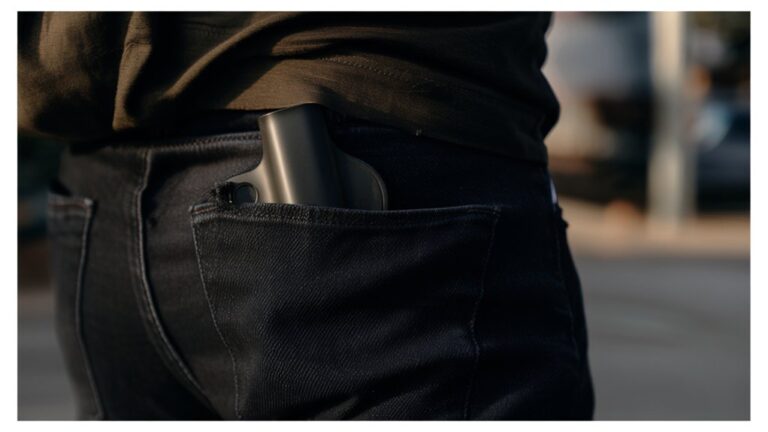
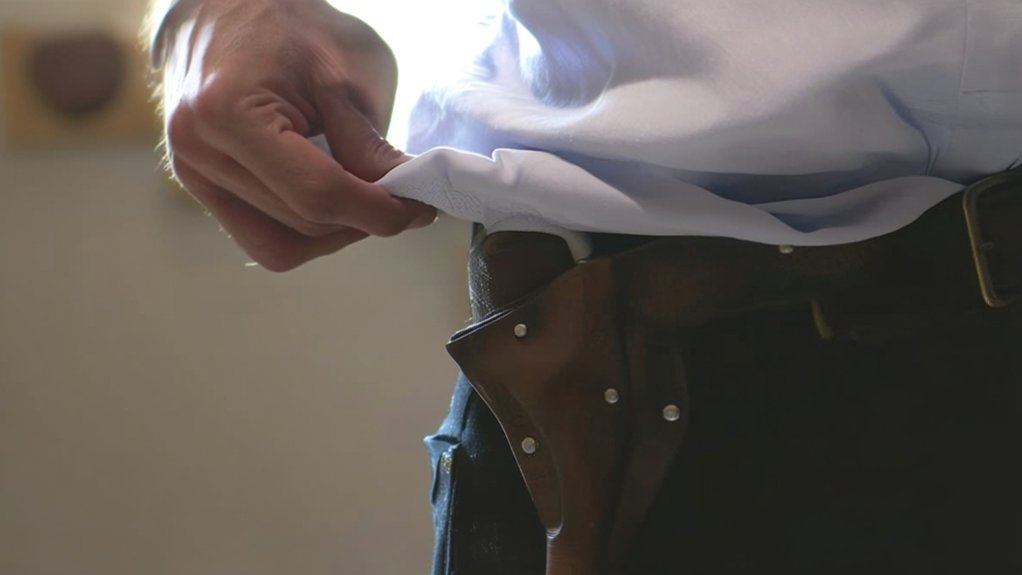
To wear an inside waistband holster comfortably, first pick one that fits your firearm and suits your daily activities. Prepare by wearing sturdy pants and breathable shirts. Choose a position like appendix or strong side that balances comfort and access. Secure the holster firmly to a strong belt inside your waistband. Practice smooth drawing and reholstering safely. Adjust for all-day comfort, then maintain your gear regularly. Following these steps sets you up for confident, concealed carry with ease.
Pick the Right Inside Waistband Holster for You
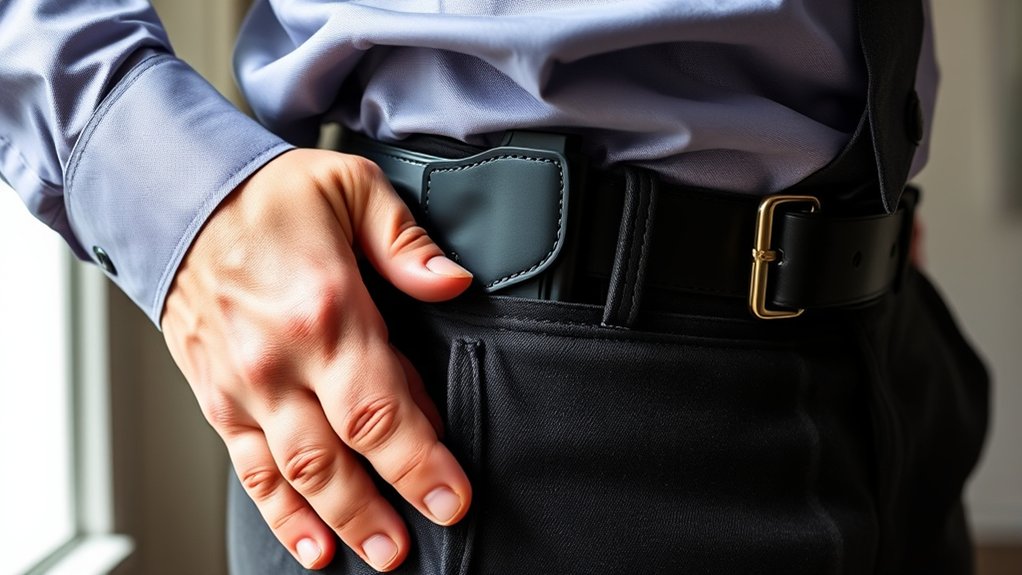
Before you buy an inside waistband holster, think about your daily activities and comfort preferences. You’ll want a holster that fits your lifestyle, whether you’re sitting at a desk, moving around a lot, or exercising.
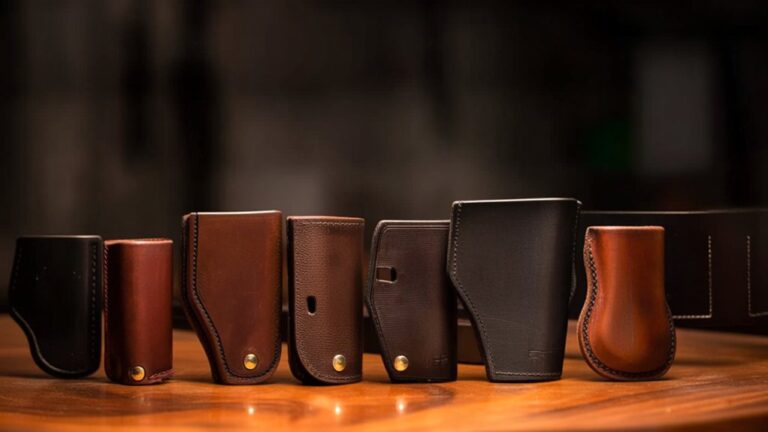
Look for materials that feel comfortable against your skin—leather offers durability and molds over time, while Kydex provides a rigid, secure fit.
Also, reflect on your firearm’s size and shape; the holster must hold it snugly without being too tight.
Check if you prefer adjustable cant angles for easier access or a fixed position for stability.
Don’t forget to contemplate how easy it’s to attach and detach the holster from your waistband.
Choosing the right holster ensures you carry safely and comfortably all day long.
Get Your Clothes and Body Ready for IWB Carry
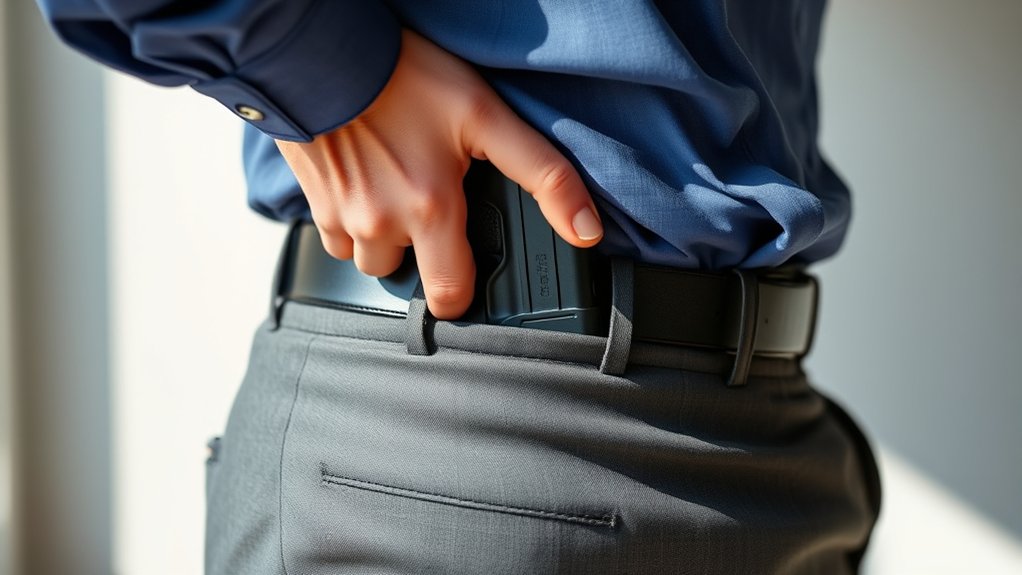
Since comfort and concealment go hand in hand, you’ll want to choose clothing that works well with your inside waistband holster. Start by wearing sturdy, well-fitted pants with a strong waistband to support the holster’s weight.
Opt for shirts that are loose enough to drape naturally over your holster without printing or clinging. Layering can help, but avoid bulky jackets that restrict movement.
Don’t forget to prepare your body by maintaining good posture, as slouching can make concealment difficult and uncomfortable.
Here are some tips to get ready:
- Select breathable fabrics to reduce sweat buildup around the holster.
- Use a belt rated for carrying to keep your holster stable.
- Practice adjusting your shirt to ensure quick, discreet access.
- Consider slight weight shifts to find the most comfortable stance.
Choose the Best IWB Holster Position for Comfort and Access
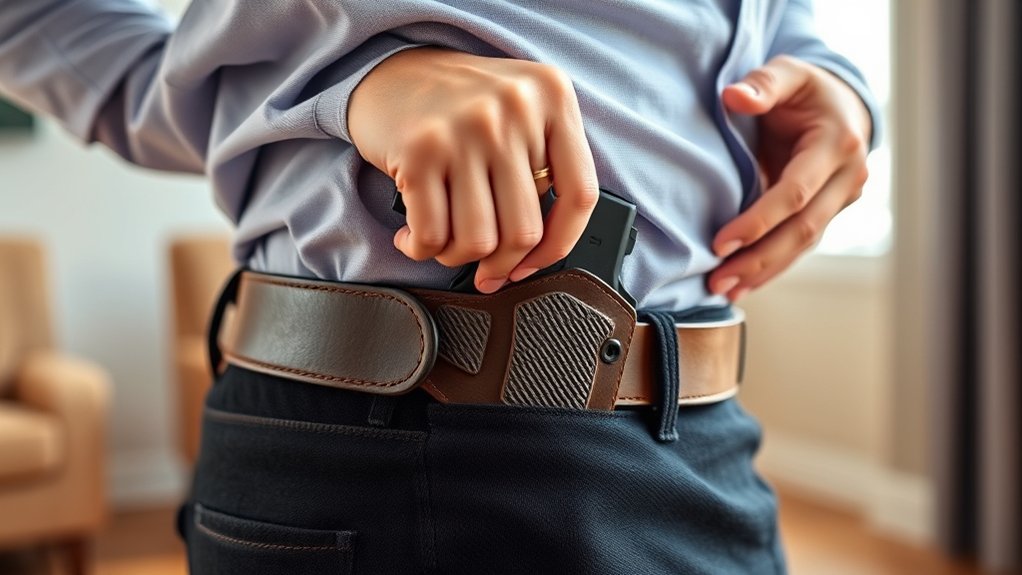
Although comfort and quick access are both essential, finding the best inside waistband (IWB) holster position depends largely on your body shape and daily activities.
Many choose the appendix carry (front, around 1-2 o’clock) for fast access, but it might feel uncomfortable if you sit a lot or have a larger midsection.
The strong side (3-4 o’clock) is popular for right-handed shooters, offering a balance of concealment and comfort.
If you prefer minimal printing and less discomfort while seated, try the back carry (5-6 o’clock), but keep in mind it can be harder to reach quickly.
Experiment with different positions to see what feels natural and allows you to draw smoothly in your daily routine.
Securely Attach Your Holster Inside the Waistband
When you attach your holster inside the waistband, you want it to stay firmly in place without shifting throughout the day. To secure your holster properly, start by making sure your belt is sturdy and fits snugly.
Slip the holster inside your pants, positioning it where you chose for comfort and quick access. Use the holster’s clips or loops to fasten it tightly to your belt.
Finally, adjust your pants and belt to press the holster firmly against your body.
Keep in mind these tips:
- Use a reinforced gun belt for extra support
- Tighten clips or loops to prevent movement
- Position the holster deep enough inside your waistband
- Wear pants that fit well with enough tension to hold the holster securely
This guarantees your holster stays put all day.
Practice Drawing and Reholstering Your IWB Holster Safely
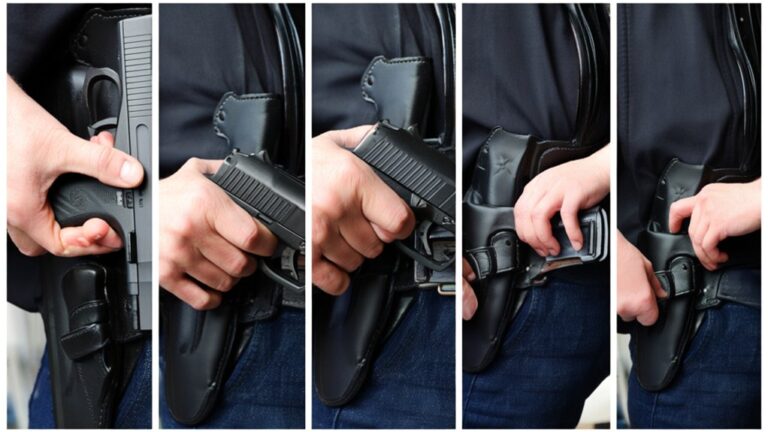
Before you carry your inside waistband holster daily, you need to practice drawing and reholstering safely to build muscle memory and prevent accidents. Start by using an unloaded firearm or a training gun to reduce risk.
Practice slowly, focusing on a smooth, controlled draw that clears your garment without snagging. When reholstering, keep your finger off the trigger and your eyes on the holster to make sure the muzzle aligns properly.
Avoid rushing—speed will come naturally with repetition. Conduct drills in front of a mirror or with a partner who can provide feedback on your technique.
Regular practice helps you react confidently and safely under stress, making your daily carry both comfortable and secure. Safety should always be your priority during every draw and reholster.
Adjust Your Holster for All-Day Comfort
Since you’ll be wearing your inside waistband holster for extended periods, adjusting it for all-day comfort is essential. Start by positioning the holster where it feels natural and doesn’t dig into your skin. Use your belt to secure it firmly but avoid overtightening, which can cause discomfort.
Experiment with cant angles to find a balance between accessibility and comfort. Finally, consider your clothing choice; looser fabrics can reduce pressure points.
Here are some tips to enhance comfort:
- Adjust the depth of carry to prevent printing and pressure.
- Use sweat guards to minimize irritation from moisture.
- Rotate your carry position occasionally to relieve pressure.
- Choose holsters with padded backing for added cushioning.
These adjustments keep you comfortable and ready throughout your day.
Maintain Your Holster and Carry Routine
Though you’ve found the perfect fit and position for your inside waistband holster, maintaining both the holster and your carry routine guarantees consistent performance and comfort.
Regularly inspect your holster for signs of wear or damage, especially at stress points like the clip and stitching. Clean it according to the manufacturer’s guidelines to prevent buildup that can affect retention.
Keep your firearm clean and properly lubricated to assure smooth draw and function. Practice your draw and reholstering techniques frequently to build muscle memory and speed.
Adjust your carry routine as needed based on changes in clothing, activity level, or environment. By staying proactive with maintenance and practice, you’ll guarantee your holster performs reliably and stays comfortable day after day.
Frequently Asked Questions
Can I Carry an Inside Waistband Holster in All Weather Conditions?
You can carry an inside waistband holster in most weather conditions, but heavy rain or extreme heat might affect comfort and retention. Make sure your holster material is weather-resistant and adjust your clothing to stay dry and secure.
Are Inside Waistband Holsters Legal in All States?
Think of inside waistband holsters like fishing licenses—legal in many states, but not all. You’ll want to check your local laws carefully before carrying, so you don’t get caught off guard like a fisherman without a license.
How Do I Clean the Gun Inside the Holster Without Removing It?
You can’t properly clean your gun inside the holster without removing it. Always take the firearm out first to avoid damage and guarantee thorough cleaning. Clean the holster separately with mild soap and water as needed.
Can I Wear an IWB Holster While Sitting for Long Periods?
Yes, you can wear an IWB holster while sitting for long periods, but comfort depends on your body type, clothing, and holster design. Adjust placement and try different positions to avoid pressure or irritation during extended sitting.
What Types of Guns Fit Best in Inside Waistband Holsters?
You’ll find compact, subcompact, and slim full-size pistols fit best in inside waistband holsters. They’re easier to conceal and comfortable to carry, especially models like Glock 19, SIG P365, or Smith & Wesson M&P Shield.
Conclusion
Wearing an inside waistband holster might seem tricky at first, but with the right holster and proper positioning, it quickly becomes second nature. You’ll go from awkwardly adjusting your gear to confidently carrying all day with ease. Remember, comfort and safety aren’t opposing goals—they work hand in hand. By practicing draws and maintaining your setup, you turn a simple accessory into a reliable extension of yourself. Keep at it, and you’ll carry like a pro.