How To Serve A Peep Sight?
To serve a peep sight, first remove the old thread carefully and clean the bowstring. Use high-quality serving thread and a serving jig to wrap tight, even coils around the string, securing the peep at your eye level for accurate alignment. Tie off the thread firmly and tuck in the ends to prevent unraveling. Keep tension consistent to avoid damage or loosening. If you want to master all the details and avoid common pitfalls, you’ll find useful tips ahead.
Key Takeaways
- Remove old serving thread carefully without damaging the bowstring and clean the area before applying new thread.
- Position the peep sight at eye level by drawing the bow and marking the string for consistent alignment.
- Use a serving jig to wrap high-quality serving thread tightly and evenly around the peep sight area.
- Secure the thread with firm knots, tuck the ends under the wraps, and trim excess to prevent unraveling.
- Regularly inspect and adjust the serving tension to maintain durability and prevent loosening during use.
What Is a Peep Sight and Why Serve It
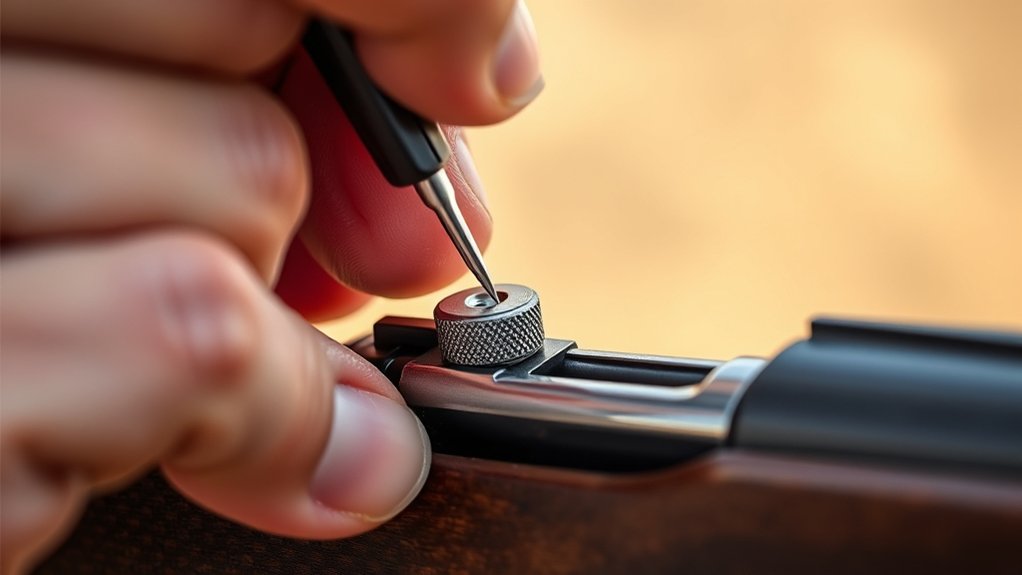
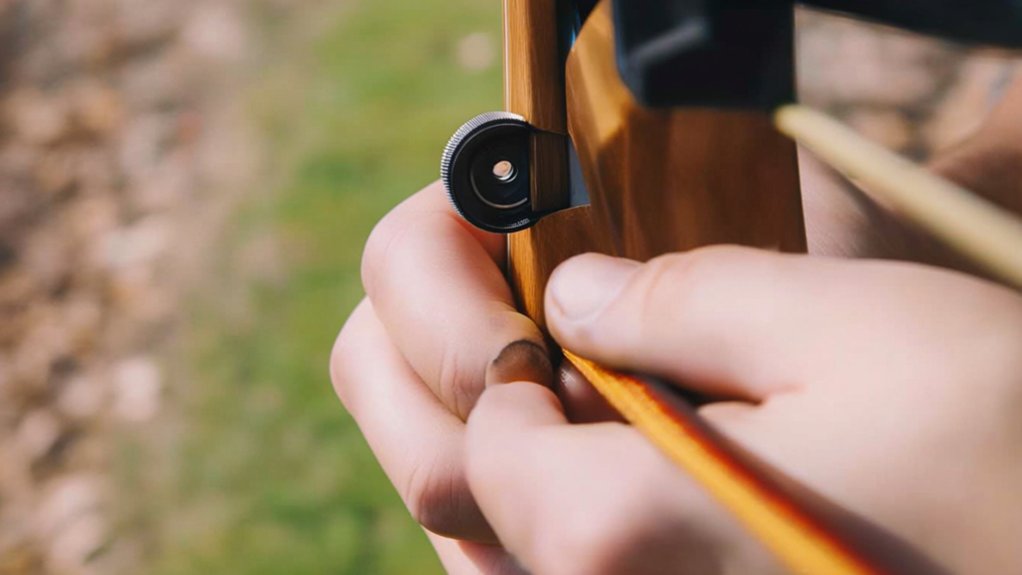
What exactly is a peep sight, and why should you bother serving it? A peep sight is a small ring mounted on your bowstring that helps you aim more accurately by aligning your eye with the front sight. It’s essential for consistent shots, especially in archery or bow hunting.
Serving a peep sight means wrapping it securely with strong thread to hold it in place without damaging your bowstring. If you don’t serve it properly, the sight can slip or cause uneven wear, affecting your accuracy and safety.
When to Serve or Replace Your Peep Sight
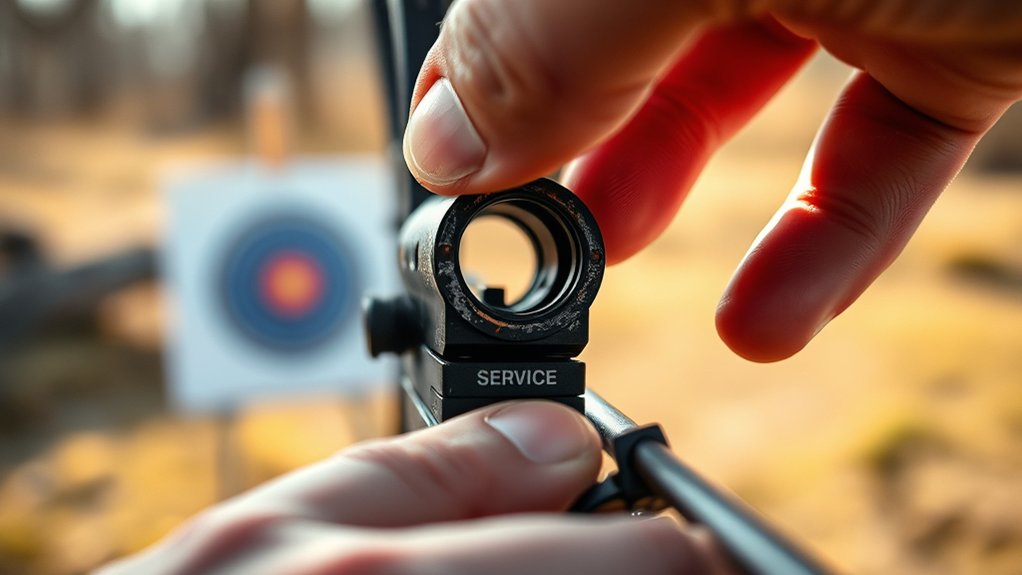
You’ll want to serve or replace your peep sight if you notice signs of wear like cracks or distortion. These issues can affect your accuracy and overall performance.
Staying on top of maintenance guarantees your sight stays reliable every time you shoot.
Signs of Wear
Although peep sights are designed to endure regular use, they will eventually show signs of wear that can affect your accuracy. You should inspect your peep sight regularly for these key indicators. Cracks, worn edges, or a loose fit can all signal that it’s time to serve or replace your peep sight. Ignoring these signs can lead to inconsistent shots. Use the table below to quickly identify common wear signs and their implications:
| Sign of Wear | Description | Action Needed |
|---|---|---|
| Cracks | Visible fractures in sight | Replace immediately |
| Worn Edges | Smooth or rounded edges | Serve or replace |
| Loose Fit | Sight moves during use | Tighten or replace |
| Faded Markings | Difficult to see markings | Repaint or replace |
| Dirt/Corrosion | Build-up affecting clarity | Clean or replace |
Performance Impact
Since your peep sight directly affects your aim, even minor performance issues can lead to missed shots or inconsistent grouping. You need to serve or replace your peep sight as soon as you notice a drop in accuracy or comfort.
Here are three key performance impacts to watch for:
- Blurring or distortion – If your sight glass is scratched or foggy, it’ll mess with your focus and reduce shot precision.
- Misalignment – A peep sight that’s off-center can throw off your aiming point, causing erratic shot placement.
- Wear and tear on mounting – Loose or damaged mounts can shift your sight unexpectedly, leading to inconsistent groups.
Addressing these issues promptly keeps your shooting performance sharp and reliable.
Essential Tools and Materials You’ll Need
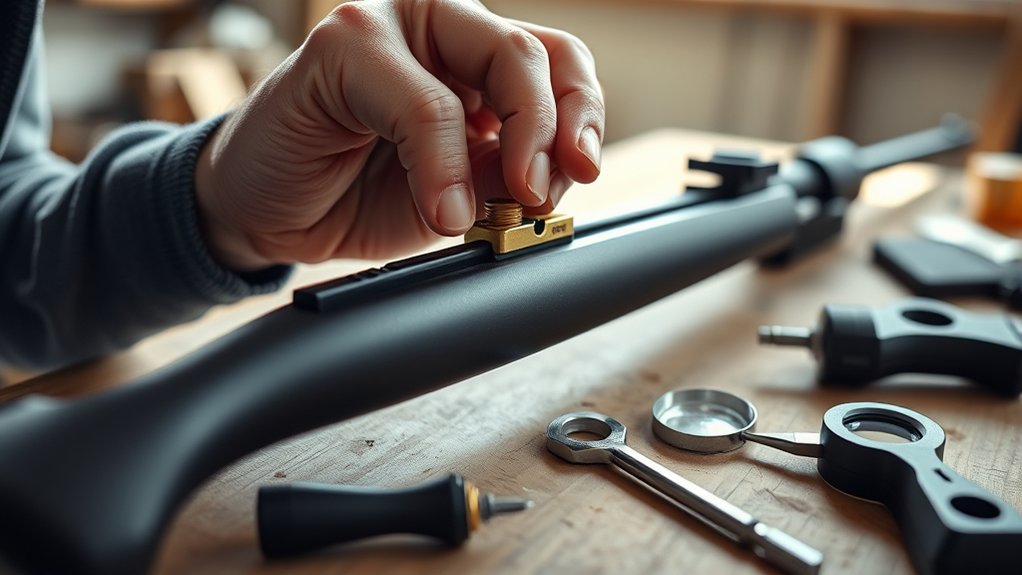
Before you begin serving a peep sight, gather the essential tools and materials to guarantee a smooth process. You’ll need high-quality serving thread designed specifically for archery to ensure durability and proper grip.
Gather quality serving thread and essential tools before starting to serve your peep sight for best results.
A serving jig or a makeshift device helps keep the thread tight and even while you wrap.
Scissors or thread cutters are necessary for clean trimming.
A lighter or flame source will help seal the thread ends, preventing fraying.
Additionally, you might want a small ruler or caliper to measure the length of your serving accurately.
Having a clean workspace and good lighting will make the task easier and more precise.
With these tools at hand, you’ll be well-prepared to serve your peep sight efficiently and more effectively.
How to Remove Old Serving Thread Safely
Wondering how to remove old serving thread without damaging your bowstring? You’ll want to be careful and methodical to keep your bowstring intact. Here’s how you can do it safely:
- Use a sharp blade or thread scissors: Carefully cut the old serving thread in small sections without touching the bowstring fibers.
- Peel off gently: Slowly unwrap or pull away the cut sections of thread. Avoid yanking to prevent fraying the bowstring.
- Clean the bowstring: After removing all serving thread, wipe the bowstring with a soft cloth to remove any leftover debris or adhesive.
Following these steps ensures your bowstring stays strong and ready for a fresh serving thread application.
Choosing the Right Serving Thread for Your Peep Sight
When choosing serving thread for your peep sight, you’ll want to take into account the types available and how their materials perform.
Different threads offer unique benefits like durability, grip, and weather resistance.
Picking the right one ensures your peep sight stays secure and lasts longer.
Types Of Serving Thread
Although selecting the right serving thread might seem straightforward, it plays a crucial role in the durability and performance of your peep sight. Choosing the proper type ensures your sight stays secure and functions well over time.
Here are three common types of serving thread you’ll encounter:
- Nylon Thread – Durable and affordable, it resists moisture and is easy to work with, making it a popular choice for beginners.
- Dacron Thread – Known for its strength and abrasion resistance, perfect if you want extra durability under heavy use.
- Kevlar Thread – Extremely strong and heat-resistant, ideal for high-performance setups but can be harder to handle.
Pick the thread that best fits your needs and skill level to get the most out of your peep sight serving.
Thread Material Benefits
Since your peep sight’s performance depends heavily on the serving thread, picking the right material can make a big difference in durability and ease of use. You want a thread that resists wear, grips well, and won’t unravel easily. Synthetic threads like nylon or polyester offer strong abrasion resistance, while natural threads like linen provide excellent grip and traditional appeal. Consider your climate too—some materials handle moisture better than others. Here’s a quick comparison to guide your choice:
| Thread Material | Key Benefit |
|---|---|
| Nylon | High abrasion resistance |
| Polyester | Moisture resistant |
| Linen | Strong grip |
| Kevlar | Extreme durability |
| Dacron | Low stretch |
Choose a thread that matches your shooting style and conditions for a reliable serving.
Preparing Your Bowstring for Serving
Before you start serving your bowstring, you’ll want to make sure it’s clean and free of any dirt or oils that could affect adhesion. A well-prepared bowstring guarantees your serving stays put and lasts longer. Here’s how to get your bowstring ready:
- Clean the String: Use a mild detergent or rubbing alcohol on a cloth to wipe down the serving area, removing any residue or grease.
- Dry Thoroughly: Let the string dry completely to prevent moisture from weakening the serving thread’s grip.
- Secure the Bowstring: Use clamps or a serving jig to hold the string taut and steady while you work, ensuring even tension throughout the serving process.
Taking these steps sets a solid foundation for a professional, durable serving.
Step-by-Step Instructions to Serve Your Peep Sight
When you’re ready to serve your peep sight, start by positioning the serving thread precisely where the peep will sit on the bowstring. Hold the thread taut, then begin wrapping tightly and evenly around the bowstring, covering about an inch in length. Keep your wraps close without overlapping to guarantee durability.
After about 20-30 wraps, fold the loose end of the serving thread back under the wraps and pull it tight to lock the serve in place. Use a small lighter flame to carefully melt the thread’s ends to prevent unraveling—don’t burn the bowstring.
Finally, smooth the serve with your fingers or a serving tool to ensure an even finish. Your peep sight serve is now secure and ready for installation.
How to Position the Peep Sight on the Bowstring
You’ll want to position the peep sight at the ideal height on your bowstring to guarantee clear visibility.
Make certain it aligns perfectly with your eye when you draw the bow.
This alignment is vital for consistent accuracy and comfort.
Optimal Height Placement
How high should you place the peep sight on your bowstring for the best accuracy? Getting the height right is crucial for consistent shooting. You want the peep sight to be comfortably in line with your sight picture without forcing your head into an awkward position.
Follow these steps to find the optimal height placement:
- Draw your bow naturally and mark where your dominant eye looks through the bowstring.
- Position the peep sight so it sits just at that eye level when the bow is fully drawn.
- Fine-tune the height by shooting a few arrows, adjusting the peep sight up or down to improve grouping.
This ensures you maintain a natural anchor point and steady aiming, boosting your accuracy every time.
Aligning With Eye
Why does aligning the peep sight perfectly with your eye matter? When you position the peep sight correctly on the bowstring, it guarantees a clear, consistent sight picture every time you draw.
To do this, first nock an arrow and draw your bow to your anchor point. Look through where the peep sight should sit and mark that spot on the string.
This alignment ensures the peep will be centered in your line of sight, allowing for precise aiming. If the peep is off-center, it can cause misalignment and affect accuracy.
Serving the peep sight at this marked spot locks in your ideal eye alignment, helping you maintain consistent form and improving your overall shooting performance.
Tips for Keeping Your Serving Tight and Even
Although serving a peep sight can be challenging, maintaining a tight and even wrap is essential for both durability and accuracy. Here are some tips to help you keep your serving consistent:
Serving a peep sight demands a tight, even wrap for lasting durability and precise accuracy.
- Control Tension: Keep steady tension on the serving thread as you wrap. Too loose, and it will slip; too tight, and you risk damaging the bowstring.
- Use a Serving Jig: This tool helps you maintain even spacing and pressure, reducing hand fatigue and improving consistency.
- Wrap Slowly and Deliberately: Don’t rush. Moving at a controlled pace ensures each wrap lies neatly beside the last without overlapping or gaps.
How to Tie Off and Secure Your Serving Thread
Once you’ve wrapped your serving thread tightly and evenly, the next step is to securely tie it off to prevent unraveling during use. Start by making a small loop with the thread near the end of your serving. Pass the working end through this loop and pull it tight, creating a simple knot.
Next, wrap the remaining thread a few times around the serving below the knot for extra security. Then, tuck the thread end under these wraps using a serving tool or a small needle. Pull everything snugly to lock the thread in place.
Finally, trim any excess thread close to the serving without cutting too close to avoid weakening the knot. This method guarantees your serving stays firm and reliable through many shots.
Checking Alignment and Adjusting Your Peep Sight
Before you finalize your peep sight installation, you need to check its alignment carefully to guarantee accurate shooting. Misalignment can throw off your aim, so take your time to get it right. Here’s how you can verify proper alignment and adjust your peep sight effectively:
Carefully verify your peep sight alignment to ensure accurate shooting and avoid aim errors.
- Look Through the Peep: Draw your bow and look through the peep sight with your dominant eye. The peep should be centered on your sight pins or scope without shifting when you move your head slightly.
- Check Vertical and Horizontal Position: Ensure the peep sight is positioned so the top and bottom edges align with your bowstring and your front sight.
- Make Adjustments: Loosen the serving thread slightly and rotate the peep sight until it lines up perfectly, then retighten securely.
Common Mistakes to Avoid When Serving Your Peep Sight
When serving your peep sight, you need to avoid common mistakes that can compromise its durability and your accuracy.
First, don’t wrap the serving thread too tightly; it can cut into the bowstring fibers, weakening them. Also, avoid uneven wraps—consistency is key for a secure, smooth serving.
Skipping cleaning the bowstring before starting is another error; dirt or oils prevent the serving from adhering properly.
Don’t neglect to use the right serving thread—thin or weak thread won’t hold up under tension.
Finally, avoid rushing the process. Taking your time ensures the serving is neat and tight, preventing slippage during shooting.
How to Maintain Your Peep Sight Serving for Longer Life
To extend the life of your peep sight serving, you should regularly inspect it for signs of wear and address any issues promptly. Proper maintenance guarantees consistent performance and saves you from frequent replacements.
Here’s how you can keep your serving in top shape:
- Clean regularly: Use a soft cloth to remove dirt and sweat, preventing buildup that can weaken the fibers.
- Avoid moisture: Store your bow in a dry place and wipe down the serving if it gets wet to prevent mold or rot.
- Check tension: Ensure the serving remains tight; loose strands can cause uneven wear and reduce accuracy.
Fixing Common Peep Sight Serving Issues
You’ll want to start by identifying any issues with your peep sight serving, like loose threads or uneven wraps.
Next, focus on correcting the thread tension to guarantee a tight, secure fit.
Getting these basics right will keep your peep sight functioning smoothly.
Identifying Serving Problems
Although serving your peep sight properly can be challenging, spotting common issues early helps you fix them quickly. You need to know what to look for to guarantee a clean, durable serving.
Here are three common problems to watch for:
- Uneven Wrapping: If the thread looks bunched or inconsistent, your serving won’t last and might slip. Make sure your tension is steady as you wrap.
- Frayed Thread Ends: Loose or frayed ends can unravel quickly. Always trim carefully and secure the ends properly.
- Gaps in the Serving: Visible gaps reduce strength and can cause the serving to wear out faster. Wrap tightly and maintain even spacing.
Identifying these issues early saves you time and ensures your peep sight performs reliably on the bow.
Correcting Thread Tension
When serving your peep sight, correcting thread tension is crucial to avoid weak spots or slipping. You want the thread tight enough to hold firm but not so tight it damages the string or peep. If the thread is too loose, your serving can unravel during use. Too tight, and it could deform the bowstring or create uneven serving layers. Adjust tension gradually by pulling the thread with consistent force and checking the serving’s firmness frequently.
| Issue | Cause | Solution |
|---|---|---|
| Slipping | Loose thread tension | Pull thread tighter |
| Weak spots | Inconsistent tension | Maintain steady thread pull |
| Thread breakage | Excessive tension | Loosen thread slightly |
| Uneven layers | Uneven pulling | Pull thread evenly throughout |
| Serving unravel | Poor knot or tension | Secure knots, adjust tension |
When to Get Professional Help With Your Peep Sight
If adjusting your peep sight feels overwhelming or you notice persistent issues like blurry vision or inconsistent accuracy, it’s a good idea to seek professional assistance. A pro can help you avoid damaging your sight or bow and make sure your setup is spot-on.
Here are three key signs you should get professional help:
- Your peep sight won’t stay in place despite correct tension adjustments.
- You experience continuous eye strain or discomfort while aiming.
- You’ve tried multiple adjustments but still can’t achieve consistent grouping.
Don’t hesitate to visit an experienced archery technician or coach. They’ve the tools and know-how to fine-tune your peep sight safely, helping you shoot more accurately and comfortably.
Frequently Asked Questions
Can I Use a Peep Sight on Any Type of Bow?
You can use a peep sight on most compound bows, but it’s not suitable for traditional or recurve bows. Make sure your bow has a string that can accommodate the peep sight without damaging it.
How Does a Peep Sight Improve Shooting Accuracy?
A peep sight improves your shooting accuracy by providing a consistent anchor point, helping you align your eye with the front sight. This reduces parallax error, making your aim steadier and shots more precise every time you release.
Are There Different Sizes of Peep Sights for Beginners and Experts?
Of course, you don’t need different peep sight sizes—everyone loves one-size-fits-all headaches! But seriously, beginners often pick larger apertures for easier aiming, while experts prefer smaller ones for precision. So, yes, sizes do matter.
Can Weather Conditions Affect Peep Sight Performance?
Yes, weather conditions can affect your peep sight’s performance. Moisture, fog, or dirt can obscure your view, and extreme temperatures might cause material expansion or contraction, impacting alignment. Regular cleaning and adjustments help maintain accuracy.
Is It Legal to Use Peep Sights in All Archery Competitions?
You won’t always find peep sights allowed in every archery competition. Rules vary by event and organization, so you should check specific regulations beforehand to make certain your gear’s legal and ready to help you hit the bullseye.
Conclusion
Now that you know how to serve your peep sight properly, you’re well on your way to sharper accuracy and a smoother shooting experience. Just remember, practice makes perfect, and staying patient will help you avoid common pitfalls. Keep your tools handy, maintain your serving regularly, and don’t hesitate to call in a pro if things get tricky. After all, you want your gear to perform at its best when it counts.