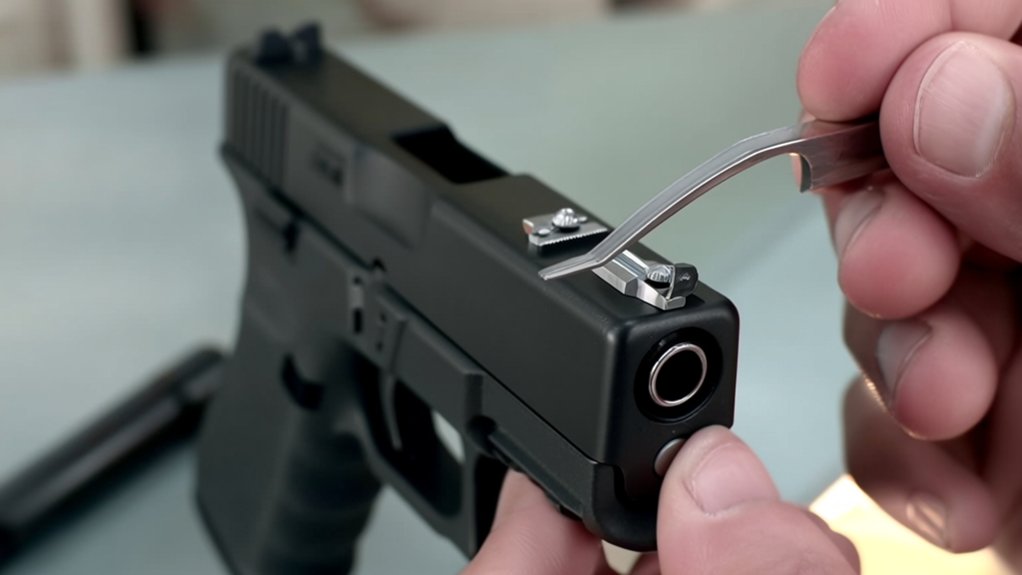
How To Change Glock Sights?
To change your Glock sights, first guarantee the gun is unloaded and secure it on a stable surface. Use a sight pusher tool or a brass punch to gently remove the old sights without damaging the slide. Clean the sight channels, then carefully install the new sights, applying thread locker for stability. Align and verify the sights with test shots, adjusting as needed for accuracy. Keep going to uncover tips on selecting, maintaining, and troubleshooting Glock sights.
Key Takeaways
- Ensure the Glock is unloaded and secured safely before starting the sight replacement process.
- Use a sight pusher tool or brass punch to carefully remove the existing sights without damaging the slide.
- Clean the sight channels thoroughly and apply thread locker before installing new sights to secure them firmly.
- Align the new sights properly by centering the front sight in the rear notch and adjusting windage and elevation as needed.
- Verify sight stability by checking for movement and cycling the slide multiple times, re-tightening if necessary.
Why Upgrading Your Glock Sights Improves Accuracy
Although Glock pistols come with functional factory sights, upgrading them can greatly boost your shooting accuracy. Factory sights are designed to meet basic standards, but they often lack the precision and visibility you need in various lighting conditions.
By switching to aftermarket sights, you’ll get clearer, more distinct aiming points that help you align your shot faster and more consistently. Enhanced sight designs, such as fiber optic or night sights, improve target acquisition, especially in low light or stressful situations.
Better sights reduce the guesswork, so you can focus on your trigger control and follow-through. Ultimately, upgrading your Glock sights sharpens your shooting performance, making your shots more accurate and reliable every time you pull the trigger.
Choosing the Right Replacement Glock Sights
When selecting replacement Glock sights, you’ll want to evaluate how you plan to use your pistol and the conditions you’ll face.
If you frequently shoot in low light, consider tritium night sights for better visibility.
For improved visibility in low light, opt for tritium night sights.
For competition or target shooting, fiber optic sights provide a bright, clear sight picture.
If durability is a priority, steel or aluminum sights withstand rough handling better than plastic ones.
Also, decide between fixed and adjustable sights depending on your preference for precision.
Keep in mind your Glock model, as sight compatibility varies.
Finally, think about your budget—high-end sights offer advanced features but aren’t always necessary for casual use.
Choosing the right sights guarantees you maintain accuracy and confidence with every shot.
What Tools You Need to Change Glock Sights
Before you start changing your Glock sights, you’ll need a few essential tools to make the process smooth and safe. First, get a sight pusher tool designed specifically for Glock sights—it helps you remove and install sights without damaging your pistol.
You’ll also need a small hammer and brass or nylon punch for fine adjustments. A quality set of needle-nose pliers can assist with gripping stubborn sights.
Don’t forget a cleaning brush or cloth to clear debris before installing new sights.
Finally, using some blue thread locker will secure the sights in place once installed.
Having these tools ready guarantees you’ll work efficiently and keep your Glock in top condition during the sight change.
How to Safely Remove Your Glock’s Current Sights
Before you start removing your Glock’s sights, make sure you have the right tools on hand.
Always secure your firearm safely to prevent any accidents.
Taking these precautions will help you work efficiently and avoid damage.
Prepare Proper Tools
Although changing your Glock sights might seem straightforward, preparing the proper tools is essential to avoid damaging your firearm. Having the right equipment guarantees a smooth removal process and prevents unnecessary scratches or misalignment.
Before you start, gather these key tools:
- A sight pusher tool or brass punch to carefully push out the old sights
- A small hammer for gentle taps when using the punch
- A non-marring cloth or soft surface to protect your Glock during work
- Thread locker (optional) for securing new sights if needed
Using these tools correctly helps maintain your Glock’s integrity while making the sight change efficient. Don’t rush—take your time setting up to ensure a safe and precise removal of the existing sights.
Secure The Firearm
How do you guarantee your Glock is secure while removing its sights? First, confirm the firearm is unloaded by removing the magazine and visually inspecting the chamber. Work in a well-lit area free from distractions.
Place your Glock in a sturdy gun vise or a dedicated firearm holder to prevent any movement during the process. If you don’t have a vise, use a non-slip mat on a flat surface and hold the gun firmly.
Always keep the muzzle pointed in a safe direction. Wearing safety glasses is vital to protect your eyes from any potential debris or tool slips.
Securing your Glock properly minimizes the risk of injury and damage, allowing you to confidently and safely remove its current sights.
How to Use a Sight Pusher Tool Safely and Effectively
When using a sight pusher tool, make sure your Glock is securely positioned and the sights are properly aligned before applying pressure.
You’ll want to handle the tool steadily to avoid slipping and damaging your firearm.
Taking your time and following correct techniques will help you swap sights safely and accurately.
Proper Sight Alignment
Before you begin adjusting your Glock sights, you’ll want to make sure you have proper sight alignment to maintain accuracy. Proper alignment means your front sight is centered and level with the rear sight, creating a clear, consistent sight picture every time you aim.
To achieve this, focus on:
- Keeping the front sight post directly between the rear sight’s two notches
- Ensuring the top of the front sight is flush with the top of the rear sight
- Maintaining equal light gaps on both sides of the front sight
- Aligning your eye naturally with the sights without tilting your head
Tool Handling Techniques
Although changing Glock sights can be straightforward, using a sight pusher tool requires careful handling to avoid damage. First, secure your Glock firmly in a vise with soft jaws to prevent scratches.
Position the sight pusher so it aligns precisely with the sight’s base. Apply slow, steady pressure—never force it—to gently slide the sight out or in.
Keep your hands clear of moving parts to avoid injury. If the sight resists, stop and reassess; forcing it risks bending the slide or tool.
Regularly check the tool’s alignment throughout the process to maintain control and accuracy.
After installation, clean any debris and inspect the sights for proper seating. Following these steps ensures a safe, effective sight change without harming your Glock or tools.
Install Front Glock Sights
Since the front sight plays a crucial role in your accuracy, you’ll want to install it carefully and securely. Begin by cleaning the sight channel to remove any debris or oil.
Next, apply a small amount of sight glue or thread-lock compound to the base of the new front sight to keep it firmly in place.
Then, use a sight pusher tool or a brass punch and hammer to gently tap the sight into the channel, guaranteeing it aligns perfectly.
Finally, check the sight’s position to confirm it sits flush and straight.
- Clean the sight channel thoroughly
- Apply a small drop of glue or thread-lock
- Tap the sight gently into place
- Verify the sight is straight and flush
This approach guarantees your front sight is stable and ready for accurate shooting.
Install Rear Glock Sights
When you install the rear Glock sights, precision and care are just as important as with the front sights. Begin by securing the slide in a vise with protective jaws to avoid damage.
Use a sight pusher tool designed for Glock rear sights to carefully push the old sight out of its dovetail slot.
Clean the dovetail area thoroughly to remove any debris or residue.
Apply a small drop of blue thread locker or sight adhesive inside the dovetail to keep the new sight firmly in place.
Align the new rear sight with the dovetail and slowly press it in using the sight pusher, ensuring it seats evenly without tilting.
Double-check that the sight sits flush and secure before releasing the slide from the vise.
Align Your New Glock Sights for Accuracy
Before firing your Glock, you’ll want to align your new sights carefully to guarantee accuracy. Proper alignment ensures your shots hit the target where you intend.
Start by securing your Glock on a stable rest. Then, focus on these key steps:
- Look through the rear sight and center the front sight post perfectly.
- Adjust windage and elevation screws as needed to match your point of aim.
- Use a target at a standard distance (usually 25 yards) to verify alignment.
- Make small adjustments, firing test shots between each change until your group centers on the bullseye.
Take your time during this process. Properly aligned sights improve your shooting confidence and performance every time you pull the trigger.
Check Glock Sights for Fit and Stability
Now that your sights are aligned, take a close look to make certain they fit perfectly on your Glock.
Double-check that the sights are mounted securely without any wobble or gaps.
This step is vital for maintaining accuracy and reliability during use.
Inspect Sight Alignment
Although you’ve installed the new Glock sights, you should carefully inspect their alignment to guarantee they fit securely and sit properly on the slide. Misaligned sights can affect your accuracy and overall shooting experience.
Start by visually checking that the front and rear sights line up evenly. Then, verify the sights aren’t tilted or crooked in any direction. Use a flat surface or sighting tool to confirm their positioning.
Pay attention to these key points:
- Front sight should be centered in the rear notch
- Both sights must be level horizontally
- No gaps should exist between sights and slide
- Sights mustn’t lean forward or backward
This careful inspection helps ensure your Glock performs reliably with the new sights installed.
Verify Mounting Security
How can you be sure your new Glock sights will stay put under recoil? After installing the sights, firmly check their fit by gently wiggling them side to side and front to back. They shouldn’t move or feel loose.
If you used set screws or dovetail punches, verify everything is tightened properly without over-torquing. Double-check that no debris or oil remains in the mounting slots, as this can affect stability.
Once installed, cycle the slide a few times and inspect the sights again to confirm they haven’t shifted. If you notice any movement, re-seat and tighten the sights.
Confirming mounting security not only guarantees consistent accuracy but also prevents damage to your firearm during use. Don’t skip this vital step before heading to the range.
Troubleshooting Common Issues When Changing Glock Sights
When changing Glock sights, you might encounter issues like misalignment, stubborn pins, or damaged sights. To troubleshoot effectively, first verify the sights are properly seated in their dovetails.
If pins won’t budge, apply a small amount of penetrating oil and tap gently with a punch. Avoid forcing parts to prevent damage.
Here are some common issues and fixes:
- Misaligned sights: Adjust using a sight pusher or carefully tap with a brass punch.
- Stubborn pins: Use penetrating oil and gentle taps to loosen.
- Scratched or chipped sights: Replace immediately to maintain accuracy.
- Sight movement after installation: Double-check mounting security and re-tighten if necessary.
How Night and Fiber Optic Sights Impact Glock Performance
Choosing night or fiber optic sights can substantially enhance your Glock’s performance by improving visibility and target acquisition in various lighting conditions. Night sights use tritium to glow in the dark, helping you aim confidently in low light. Fiber optic sights gather ambient light, making the front sight pop in bright environments. Both types reduce the time it takes to align your sights, boosting accuracy.
| Sight Type | Best Use |
|---|---|
| Night Sights | Low light, nighttime |
| Fiber Optic | Daylight, bright areas |
| Night + Fiber | Versatile, all conditions |
| Standard Sights | Basic, budget-friendly |
Picking the right sights depends on your typical shooting environment and preferred visibility.
Maintaining Your Glock Sights for Long-Term Accuracy
To keep your Glock sights accurate over time, you need to perform regular maintenance and inspections. Dirt, oil, and impact can affect their performance, so staying on top of care is essential.
Here’s how you can maintain your Glock sights for long-term accuracy:
- Clean the sights gently with a soft cloth and mild solvent to remove grime.
- Inspect for any chips, cracks, or loose fittings that could affect alignment.
- Avoid using harsh chemicals that might damage sight coatings or materials.
- Store your Glock in a dry, secure case to prevent rust or physical damage.
When to Consult a Professional Gunsmith for Sight Installation
Although changing Glock sights can often be a straightforward task, you should consult a professional gunsmith if you’re unsure about the process or lack the proper tools.
If you don’t have a sight pusher tool or the experience to avoid damaging your firearm, a gunsmith’s expertise can prevent costly mistakes.
Also, if your Glock has custom or aftermarket sights that require precise alignment or special installation methods, a professional can ensure accuracy and safety.
Don’t hesitate to seek help if you notice unusual wear or damage on your sights or slide, as improper installation might worsen these issues.
Ultimately, trusting a gunsmith guarantees your Glock’s sights function correctly, so you maintain reliable accuracy and safe operation.
Frequently Asked Questions
Can I Change Glock Sights Without Prior Gunsmith Experience?
You can change Glock sights without prior gunsmith experience, just like a knight learning new sword tricks. With patience, proper tools, and careful steps, you’ll safely upgrade your sights without needing a pro’s help.
Are There Legal Restrictions on Modifying Glock Sights in My State?
You usually won’t face legal restrictions on changing Glock sights, but laws vary by state. Always check local firearm regulations first to guarantee compliance, especially if your state has specific rules about firearm modifications or optics.
How Do Different Glock Models Affect Sight Compatibility?
Different Glock models have varying sight dimensions and dovetail sizes, so you’ll need to check compatibility carefully. Some sights fit multiple models, but others are model-specific, so always verify before purchasing replacements or upgrades.
What Are the Common Sight Issues Caused by Recoil Over Time?
You’ll often face loose or misaligned sights due to recoil over time. This can cause accuracy problems and inconsistent shot placement. You’ll also notice wear on the sight edges, making them harder to see clearly during aiming.
Can Aftermarket Sights Affect My Glock’s Resale Value?
Yes, aftermarket sights can affect your Glock’s resale value. Some buyers prefer original parts, while others appreciate upgrades. It depends on the quality and brand of the sights, plus how well they match the buyer’s preferences.
Conclusion
Upgrading your Glock sights is like sharpening the arrow’s tip before the shot—it transforms your aim from guesswork to precision. With the right tools and care, you can confidently swap out sights and enhance your shooting experience. Remember, patience is your steady hand; if the task feels tricky, don’t hesitate to call in a professional. Keep your sights in top shape, and you’ll hit your mark every time, turning every shot into a masterpiece.