What Do Rifle Scope Numbers Mean?
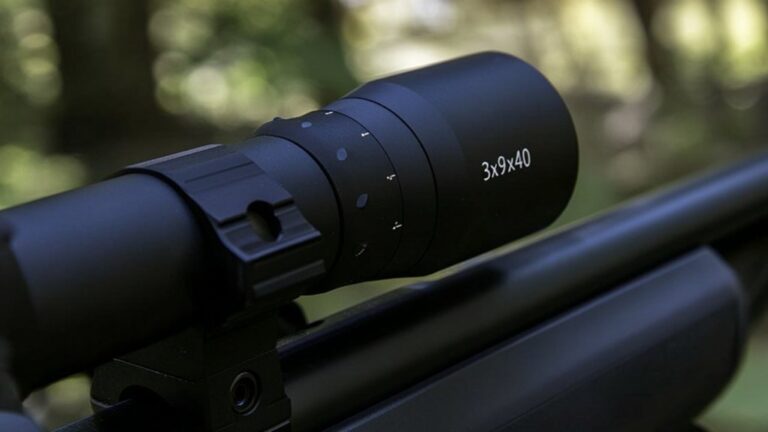
Rifle scope numbers tell you key details like magnification and lens size. For example, in 3-9×40, 3-9x means you can zoom between 3 and 9 times closer, adjusting to your target and environment, while 40 refers to the objective lens diameter in millimeters, affecting light gathering and clarity. Choosing the right combination helps balance visibility, weight, and precision. Understanding these numbers helps you pick a scope that suits your shooting style and conditions perfectly.
What Do the Numbers on a Rifle Scope Represent
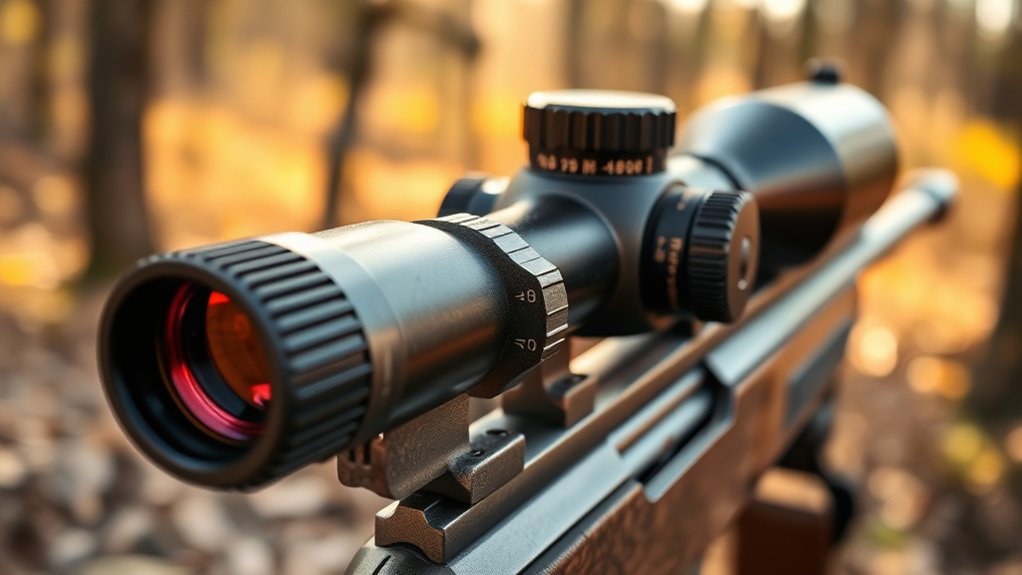
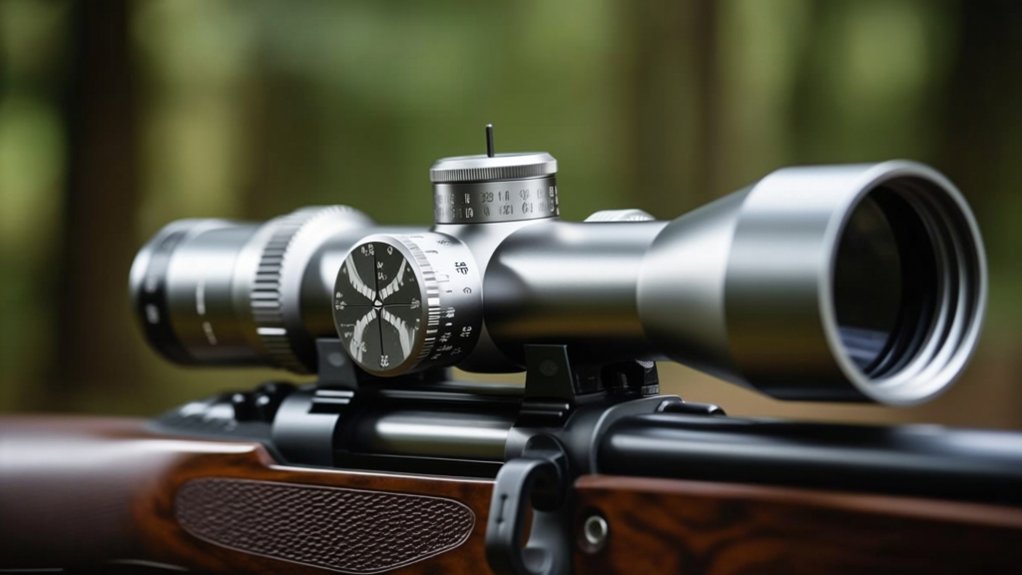
When you look at a rifle scope, the numbers you see tell you important details about its magnification and lens diameter.
For example, a scope marked 3-9×40 means it has a variable magnification from 3 times up to 9 times, and the objective lens diameter is 40 millimeters.
The first number or range indicates how much closer the target will appear through the scope compared to the naked eye.
The second number refers to the size of the front lens, which affects the amount of light entering the scope, impacting brightness and clarity.
Understanding these numbers helps you choose the right scope for different shooting situations, ensuring your setup matches your needs for accuracy and visibility.
How Rifle Scope Magnification Numbers Affect Your View
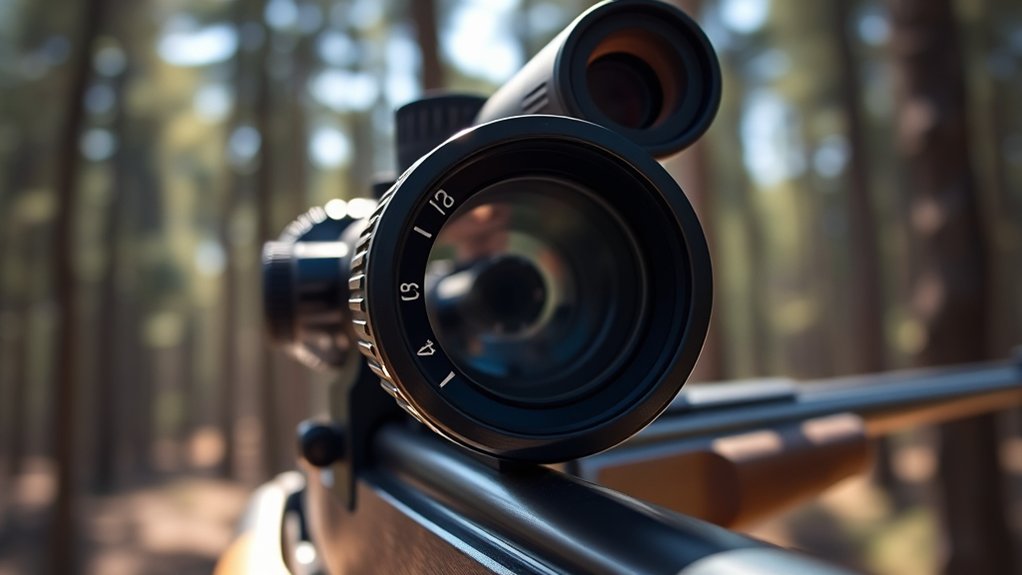
Although magnification numbers might seem straightforward, they directly influence what you see through your rifle scope in significant ways. Higher magnification zooms in closer, making distant targets appear larger but narrowing your field of view. Lower magnification offers a wider view, helping you spot targets more quickly and maintain situational awareness. Choosing the right magnification depends on your shooting distance and environment.
| Magnification Level | View Impact |
|---|---|
| 1x | No zoom, widest field of view |
| 3x | Moderate zoom, balanced view |
| 6x | Closer view, narrower field |
| 9x | High zoom, very narrow field |
| 12x+ | Maximum zoom, limited view |
Understanding this helps you pick the perfect scope for your needs.
How Objective Lens Size Affects Light Transmission and Clarity
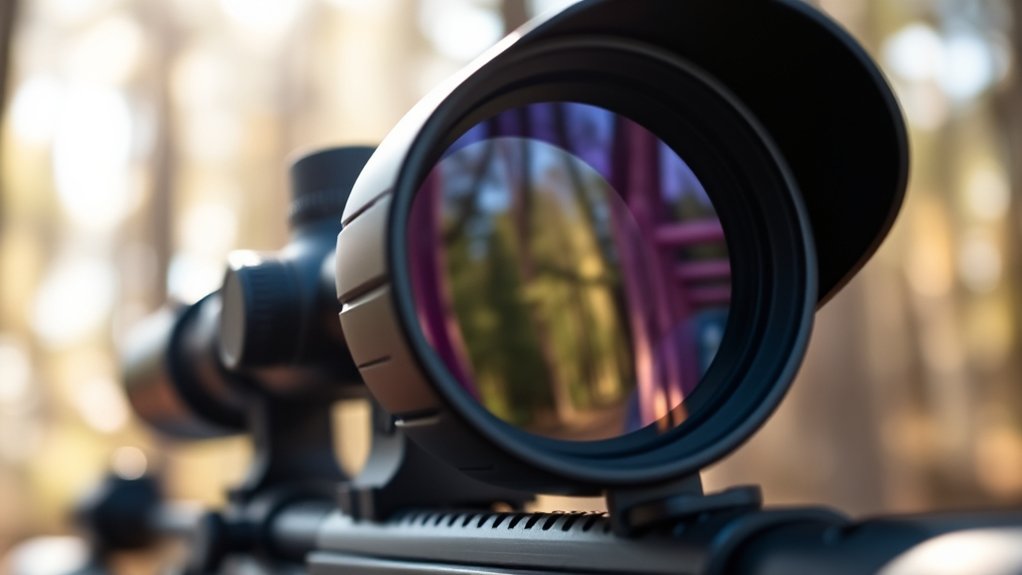
Magnification changes how close your target appears, but the objective lens size determines how much light enters your scope, directly affecting brightness and image clarity.
A larger objective lens lets in more light, which is especially helpful in low-light conditions like dawn or dusk. This extra light makes your view brighter and clearer, helping you spot details more easily.
However, bigger lenses also add weight and bulk to your scope, which might affect handling. Conversely, smaller lenses keep your setup lighter and more compact but may struggle in dim environments since they gather less light.
When choosing a rifle scope, balance lens size with your typical shooting conditions. If you often shoot in varied lighting, a larger objective lens can considerably improve your accuracy by enhancing image clarity.
How Variable Magnification Rifle Scopes Use Two Numbers
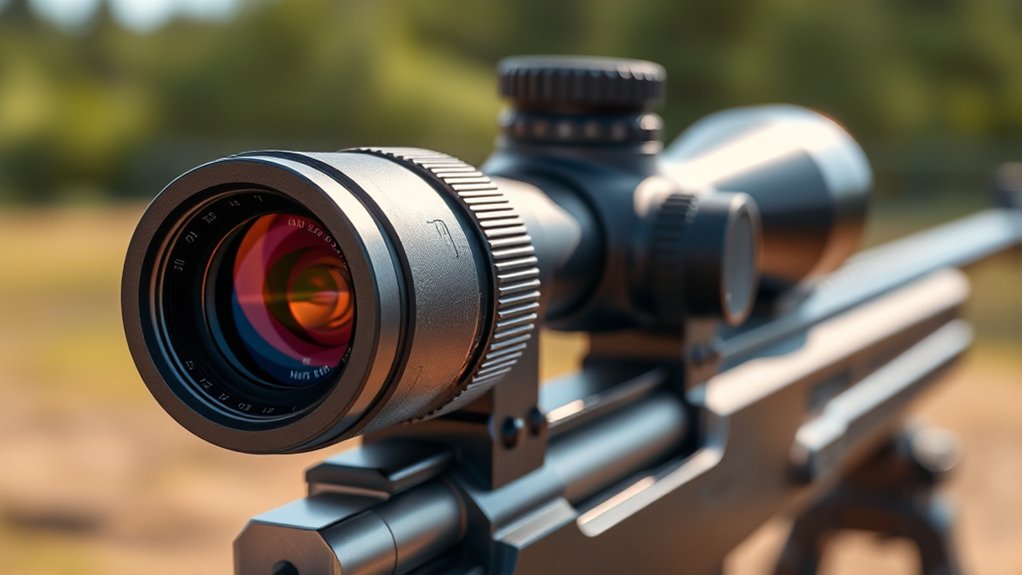
If you want flexibility in how close your target appears, variable magnification rifle scopes offer a range of zoom levels indicated by two numbers. These numbers tell you the minimum and maximum magnification the scope provides.
Here’s what they mean:
- The first number is the lowest magnification setting, giving you a wider field of view for close or moving targets.
- The second number is the highest magnification, allowing you to zoom in for precise shots at longer distances.
- You can adjust the scope between these two numbers smoothly, adapting to different shooting scenarios.
Understanding these numbers helps you pick a scope that matches your needs, whether you’re hunting in dense woods or spotting at open ranges.
Understanding Fixed Magnification Rifle Scope Numbers
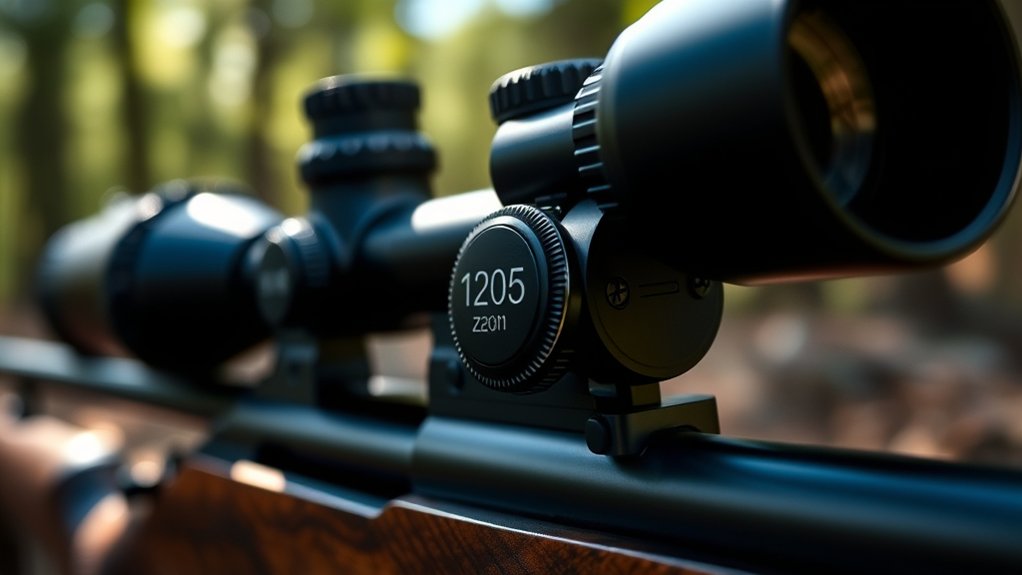
When you choose a fixed magnification rifle scope, you get a single, unchanging zoom level that’s clearly indicated by one number. This number tells you exactly how much closer your target will appear compared to the naked eye. For example, a 4x scope means the target looks four times closer. Fixed scopes are simpler, lighter, and often more durable since they have fewer moving parts.
Here’s a quick look at common fixed magnification numbers and what they mean for you:
| Magnification | What It Means |
|---|---|
| 2x | Target appears 2 times closer |
| 4x | Target appears 4 times closer |
| 6x | Target appears 6 times closer |
| 10x | Target appears 10 times closer |
Choosing the right fixed scope depends on your shooting needs and environment.
What Rifle Scope Field of View Numbers Mean
Although you might focus on how much closer a scope brings your target, the field of view (FOV) numbers tell you how much area you can see through the scope at a given distance. The FOV is usually expressed in feet or yards at 100 yards.
Knowing your FOV helps you track moving targets and situational awareness.
Here’s what you need to know about FOV numbers:
- A larger FOV number means you see more area, which is great for scanning wide fields.
- Higher magnification generally decreases FOV, narrowing your visible area.
- FOV is vital for quick target acquisition and maintaining context around your target.
Understanding FOV helps you pick the right scope for your shooting needs.
How Rifle Scope Numbers Influence Your Effective Shooting Distance
Understanding your scope’s field of view gives you a clearer picture of the area around your target, but the numbers on your rifle scope also directly affect how far you can accurately shoot.
The magnification range, like 3-9x, tells you how much closer the target appears. Higher magnification helps you see distant targets more clearly, making precise shots easier at extended ranges. However, too much magnification can narrow your view and make it harder to track moving targets.
The reticle’s subtensions, often indicated by numbers, assist in estimating distance and adjusting for bullet drop. By understanding these numbers, you can judge the effective shooting distance better, improving your accuracy and confidence when aiming at targets far away.
How Objective Lens Diameter Boosts Low-Light Performance
When you choose a scope with a larger objective lens diameter, you’re letting more light reach your eye, which boosts image brightness.
This increased light gathering capability is especially helpful in low-light situations like dawn or dusk.
You’ll notice clearer, brighter views that make it easier to spot your target when visibility is limited.
Light Gathering Capabilities
How does the objective lens diameter affect your rifle scope’s performance in low light? The diameter directly influences how much light your scope can gather, which is vital when visibility drops. A larger objective lens collects more light, improving your ability to see targets clearly at dawn, dusk, or in shaded areas.
Here’s how it impacts you:
- Enhanced Visibility: Bigger lenses capture more ambient light, making details sharper in dim conditions.
- Reduced Eye Strain: With better light gathering, your eyes don’t have to work as hard, letting you focus longer.
- Improved Target Acquisition: More light means faster and easier spotting of moving or camouflaged targets.
Choosing the right objective lens diameter guarantees your scope performs well when lighting isn’t ideal.
Impact On Image Brightness
Why does the objective lens diameter matter so much for image brightness in your rifle scope? A larger objective lens gathers more light, which directly impacts the brightness of the image you see.
When you’re aiming in low-light conditions, this extra light makes your target clearer and easier to identify. Smaller lenses restrict light entry, resulting in dimmer images that can strain your eyes and reduce accuracy.
By choosing a scope with a bigger objective lens, you guarantee better light transmission, which brightens the view through your scope. This boost in brightness isn’t just about seeing better—it helps you make faster, more confident shots when lighting isn’t ideal.
Advantages In Dusk Conditions
Ever wondered what makes a rifle scope perform better as daylight fades? The answer lies mainly in the objective lens diameter. Here’s how a larger lens helps you in low-light conditions like dusk:
- More Light Gathering – A bigger objective lens captures more ambient light, brightening your view when natural light dims.
- Clearer Images – With increased light, the scope delivers sharper, more detailed images, helping you spot targets easily.
- Improved Contrast – Enhanced brightness boosts contrast, allowing you to distinguish objects against shadowy backgrounds better.
How Eye Relief Complements Rifle Scope Numbers
Where you position your eye relative to the rifle scope can make a big difference in your shooting experience. Eye relief—the distance between your eye and the scope’s lens—ensures you get a full, clear sight picture without straining or risking injury from recoil.
If the eye relief is too short, you might struggle to find the right position, leading to discomfort or a limited field of view. On the other hand, a generous eye relief offers flexibility, allowing you to maintain proper alignment even during quick shots or with larger calibers.
When you understand eye relief alongside magnification and objective lens size, you can optimize your setup for comfort and accuracy, making every shot count.
Common Rifle Scope Number Combinations Explained
When you look at rifle scope numbers like 3-9×40, each part tells you something important. The magnification range shows how close you can zoom in.
While the objective lens diameter affects how much light the scope gathers. You’ll also want to think about how the reticle size impacts your aiming precision.
Magnification Range Meaning
How do you decode the numbers on a rifle scope? The magnification range tells you how much closer the scope can make your target appear. For example, a scope marked 3-9x means you can zoom in from 3 times up to 9 times the naked eye view. Understanding this helps you pick the right scope for your shooting needs.
Here’s what to know about magnification ranges:
- Lower magnification (e.g., 3x) lets you see a wider field, ideal for close or moving targets.
- Higher magnification (e.g., 9x) zooms in for detailed shots at longer distances.
- Variable scopes offer flexibility to adjust magnification depending on your environment or target type.
This range gives you versatility in the field.
Objective Lens Diameter
Along with magnification, the objective lens diameter plays a big role in how well your scope performs. This number, usually the second in your scope’s description (like 3-9×40), refers to the lens size in millimeters at the front of the scope.
A larger objective lens lets in more light, improving brightness and clarity, especially in low-light conditions like dawn or dusk. However, bigger lenses also add weight and bulk, which might affect your rifle’s balance and handling.
If you’re hunting in dense woods or need a lightweight setup, a smaller objective lens might suit you better. But for long-range shooting or low-light scenarios, opting for a larger diameter will enhance your visual performance and target acquisition.
Reticle Size Impact
Why does reticle size matter in your rifle scope’s performance? The size directly influences your aiming precision and target visibility. A reticle that’s too thick can obscure small targets, while one too fine might be hard to see in low light.
Here’s how reticle size impacts your shooting experience:
- Precision: Smaller, finer reticles help you place shots exactly where you want, especially at long distances.
- Visibility: Thicker reticles stand out better in low-light or dense foliage, making quick target acquisition easier.
- Magnification Compatibility: Some reticles can appear too large or small depending on your scope’s magnification range, affecting accuracy.
Choosing the right reticle size balances clear visibility with precise aiming, optimizing your scope’s overall effectiveness.
Common Mistakes to Avoid When Picking Rifle Scope Numbers
Though selecting rifle scope numbers might seem straightforward, many shooters fall into common pitfalls that can compromise accuracy and performance. One mistake is choosing a scope with too high magnification for your typical shooting distance, which can make your field of view narrow and tracking moving targets harder.
Another is ignoring the objective lens size; bigger isn’t always better, especially if it adds unnecessary weight or glare. Don’t overlook the importance of clarity and light transmission—numbers alone don’t guarantee a quality image.
Also, avoid buying scopes without considering your rifle’s recoil, as some optics aren’t built to handle heavy kicks.
Finally, don’t assume that higher zoom ranges automatically mean better performance; balance your scope numbers with your shooting style and environment to get the best results.
How to Match Rifle Scope Numbers to Your Hunting or Shooting Needs
When you choose rifle scope numbers that fit your hunting or shooting style, you improve your chances of accuracy and success. To match your scope numbers effectively, consider these key points:
1. Magnification Range: If you hunt in dense woods, pick lower magnification (e.g., 3-9x) for a wider view.
For long-range shooting, higher magnification (e.g., 6-24x) helps you see distant targets clearly.
2. Objective Lens Diameter: Larger lenses (40mm or more) gather more light, improving visibility in low-light conditions like dawn or dusk.
3. Reticle Type and Subtensions: Choose reticles that suit your shooting needs, whether for quick target acquisition or precise range estimation.
How to Verify Rifle Scope Performance Using Numbers
Once you’ve selected scope numbers that match your shooting needs, you’ll want to verify that your rifle scope performs as expected.
Start by checking the magnification range—zoom in and out to ensure smooth adjustment without image distortion.
Next, confirm the objective lens size delivers a bright, clear picture in various lighting conditions.
Test your scope’s reticle for accuracy by sighting in at a known distance and making precise adjustments using the elevation and windage turrets.
Pay attention to the parallax setting if your scope offers one, making sure the target stays sharp and aligned when you move your eye.
Finally, assess the field of view to make certain you can track targets effectively.
These numbers guide you in confirming your scope’s real-world performance.
Frequently Asked Questions
How Do Rifle Scope Numbers Relate to Reticle Types?
You’ll find that rifle scope numbers often indicate magnification and objective size, which influence reticle types. Higher magnification suits finer reticles, while lower magnification pairs better with simpler reticles for quick target acquisition.
Can Rifle Scope Numbers Indicate Waterproof or Fog-Proof Features?
Think of rifle scope numbers as a map’s directions—they don’t show if it’s waterproof or fog-proof. You’ll need to check the product details or manufacturer specs to know if your scope can brave the elements.
Do Rifle Scope Numbers Affect the Durability of the Scope?
No, rifle scope numbers don’t affect durability. They show magnification and objective lens size. To guarantee durability, you should check materials, waterproofing, and fog-proofing features instead of relying on those numbers alone.
How Are Rifle Scope Numbers Linked to Adjustment Turrets?
You’ll find rifle scope numbers show magnification and objective size, but adjustment turret markings relate to click values for windage and elevation changes, helping you fine-tune your aim precisely at different distances.
Are Rifle Scope Numbers Connected to Scope Mounting Options?
No, rifle scope numbers don’t directly connect to mounting options. You’ll choose mounts based on your rifle and scope size, not those numbers. Focus on compatibility and stability to guarantee your scope stays securely attached during use.
Conclusion
Now that you know what those rifle scope numbers mean, you can choose the right scope with confidence. Don’t just guess—understand how magnification and objective lens size impact your view and clarity. Remember, bigger numbers aren’t always better; it’s about matching the scope to your shooting needs. By knowing the truth behind these numbers, you’ll enjoy a clearer, more accurate experience every time you take aim.