How to Pick a Rifle Scope Step by Step
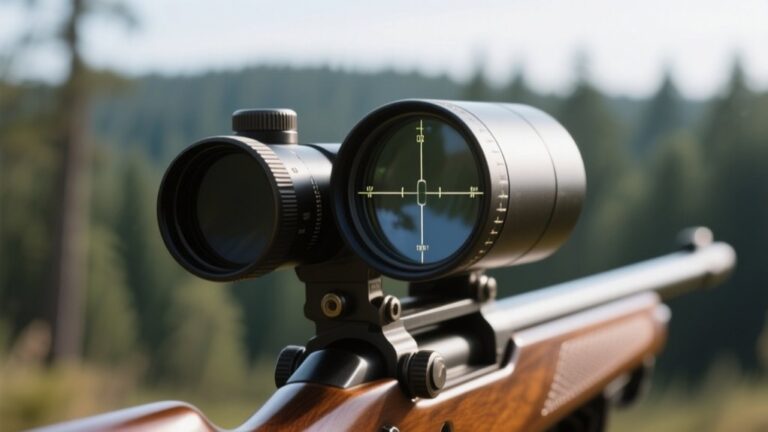
To pick a rifle scope step by step, start by defining your shooting needs and environment to match scope features like magnification and reticle type. Choose between fixed or variable power scopes based on versatility and simplicity. Consider optical qualities such as lens size, eye relief, and durability for reliable performance. Confirm precise mounting and zeroing, and avoid common mistakes like poor eye relief or insecure mounts. With these basics covered, you’ll get closer to choosing the perfect scope for your setup.
Finding the Right Rifle Scope for Your Shooting Needs
When choosing a rifle scope, you need to take into account the type of shooting you’ll be doing most often. Are you mainly hunting in dense woods, shooting at long-range targets, or engaging in tactical scenarios? Each activity demands different features.
For example, hunting in thick brush calls for a scope with a wider field of view and quick target acquisition. Long-range shooting requires precise adjustments and clear optics with higher magnification.
Consider the typical distance you’ll be shooting at and the lighting conditions, as some scopes perform better in low light.
Don’t forget about durability; if you’re outdoors often, pick a scope that can withstand rough handling and weather.
Fixed vs Variable Power Rifle Scopes: Which Should You Choose?
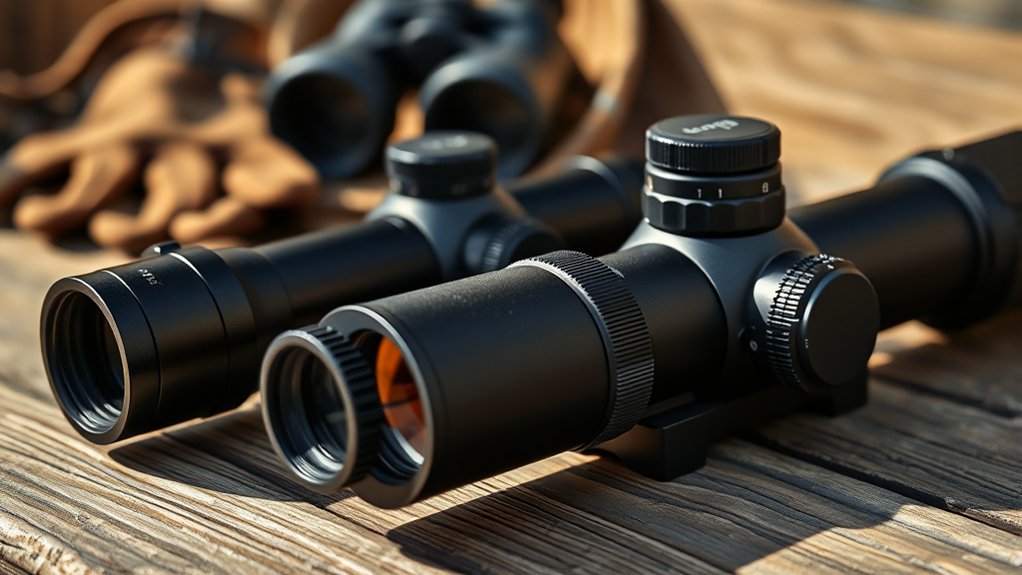
You’ll want to weigh the simplicity and durability of fixed power scopes against the flexibility and range of variable power models.
Think about how you plan to use your rifle—each type offers distinct benefits depending on your shooting style.
Let’s break down what makes each option a smart choice.
Advantages Of Fixed Power
Although variable power scopes offer flexibility, fixed power scopes provide unmatched simplicity and reliability that many shooters appreciate. When you choose a fixed power scope, you get consistent clarity since there’s no zoom mechanism to impact the optics. They’re also lighter and more durable, making them ideal for rugged conditions. Plus, fixed power scopes often have wider objective lenses, giving you a brighter image.
Here’s a quick look at fixed power scope advantages:
| Advantage | Benefit |
|---|---|
| Simplicity | Easy to use, no adjustments needed |
| Durability | Fewer moving parts, less prone to damage |
| Weight | Lighter, easier to carry |
| Brightness | Larger lenses for better light transmission |
You’ll find fixed power scopes straightforward, dependable, and ready for quick target acquisition.
Benefits Of Variable Power
Why settle for one magnification when you can have many? Variable power scopes let you adjust the zoom to fit different shooting situations.
Whether you’re taking close-range shots or aiming at distant targets, you can quickly switch magnification without swapping optics. This flexibility helps you stay accurate and responsive in changing environments.
You also get a broader range of use from a single scope, saving you money and gear weight. Plus, variable scopes often include features like adjustable parallax and reticle illumination, enhancing clarity and precision.
While they can be a bit more complex, the ability to fine-tune your view means you’re ready for almost anything the field throws at you. Variable power scopes truly offer versatility and convenience.
Choosing Based On Usage
When deciding between fixed and variable power rifle scopes, consider how you plan to use your rifle most often. If you mainly shoot at consistent distances, a fixed power scope offers simplicity and durability without the need to adjust magnification. It’s lighter, often clearer, and less expensive.
However, if you expect to engage targets at varying ranges, a variable power scope gives you flexibility. You can quickly zoom in for distant shots or zoom out for close-range targets.
Think about your typical shooting environment—whether it’s dense woods, open fields, or a range—this will guide your choice. Ultimately, match your scope to your shooting style and conditions to improve accuracy and confidence in the field.
Fixed scopes excel in simplicity; variable scopes thrive in versatility.
Picking the Perfect Magnification for Your Rifle Scope
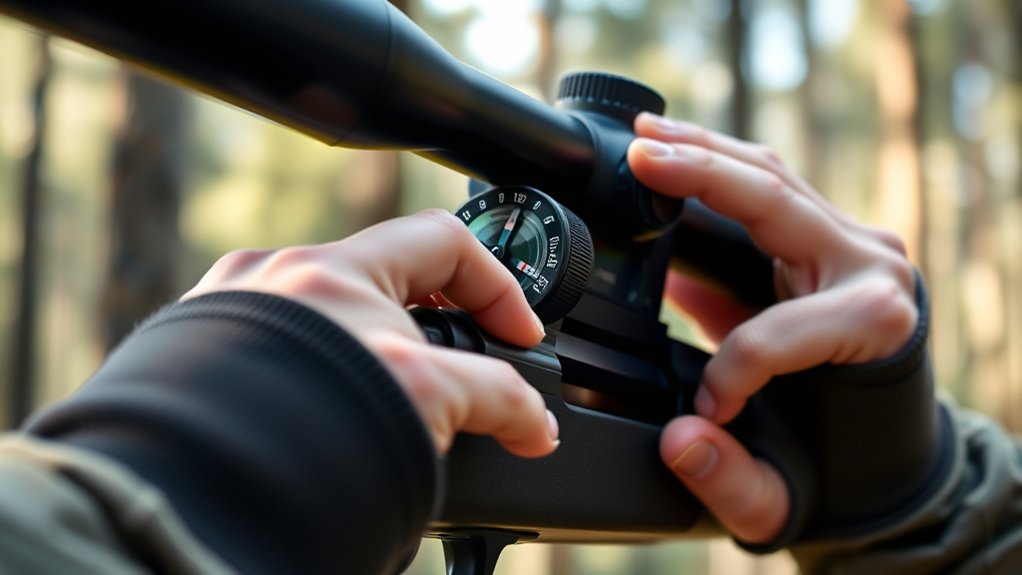
Since your shooting needs vary, choosing the right magnification for your rifle scope is essential to hitting your target accurately.
If you’re hunting at close to moderate ranges, a low to mid-range magnification (around 3x to 9x) gives you a wider field of view and quicker target acquisition.
For long-range shooting, higher magnifications (10x and above) help you see distant targets clearly, but they narrow your field of view and can make tracking moving targets harder.
Variable scopes let you adjust magnification on the fly, offering versatility for different situations.
Consider your typical shooting distances and environments to pick magnification that balances clarity and usability.
Choosing the Best Reticle Type for Hunting or Target Shooting
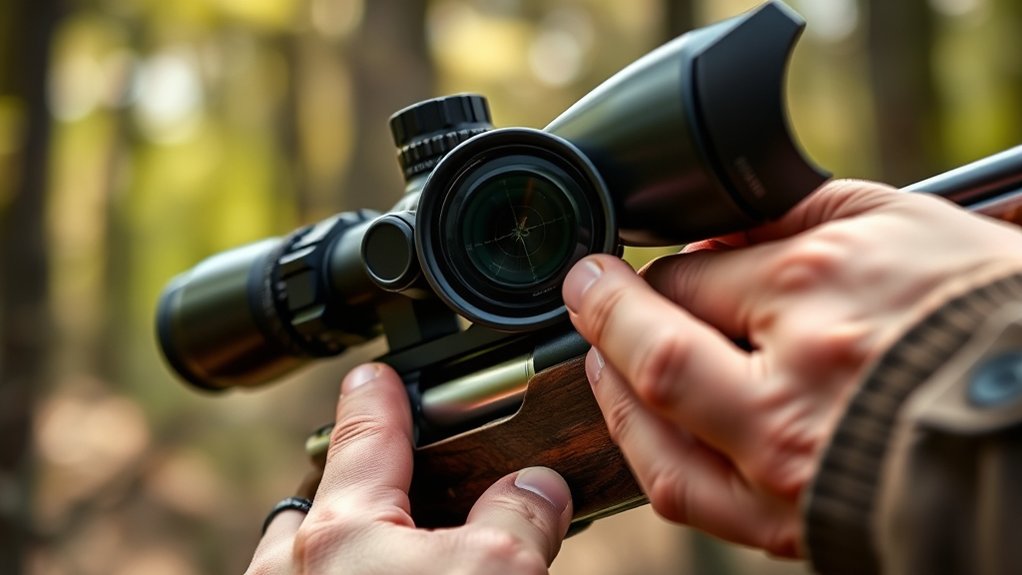
Now that you’ve considered magnification, it’s time to pick the right reticle type for your needs. Different reticles offer unique advantages depending on whether you’re hunting or target shooting.
You’ll want to weigh factors like visibility, range estimation, and ease of use to find the best fit.
Reticle Types Overview
Although many shooters focus on magnification and clarity, choosing the right reticle type plays a crucial role in your accuracy and ease of use. You’ll find several reticle styles, each designed for specific purposes.
Duplex reticles are popular for hunting due to their simple, bold crosshairs that quickly draw your eye to the target.
Mil-dot reticles include dots spaced evenly along the crosshairs, helping you estimate range and bullet drop. They are ideal for precision shooting.
BDC (Bullet Drop Compensation) reticles feature hash marks calibrated for specific cartridges, letting you adjust aim without dialing turrets.
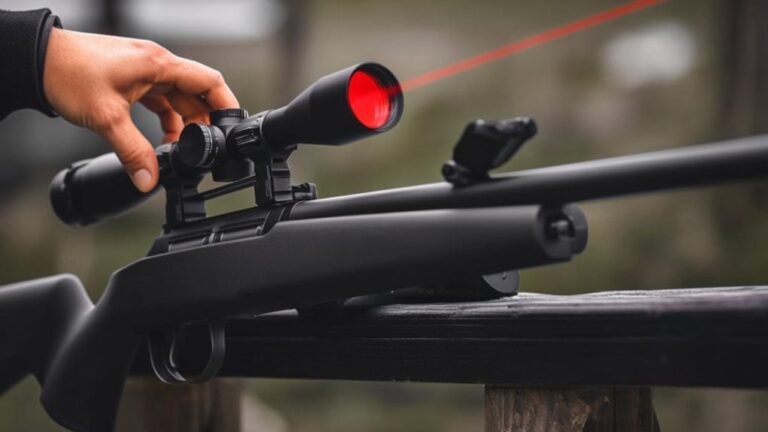
Illuminated reticles improve visibility in low light, enhancing target acquisition at dawn or dusk.
Knowing these types helps you pick a reticle that fits your shooting style and environment perfectly.
Reticle Choice Factors
When selecting a reticle for hunting or target shooting, you need to take into account factors like your typical shooting distance, lighting conditions, and the type of game or targets you engage.
For close-range hunting, a simple duplex reticle works well, offering quick target acquisition. If you shoot at longer distances or need precise holdovers, a mil-dot or BDC reticle provides helpful reference points.
Consider lighting too—illuminated reticles enhance visibility in low light but might distract in bright conditions.
Also, think about your target: fine crosshairs suit small targets, while thicker lines help track moving game.
Ultimately, match your reticle choice to your shooting style and environment to improve accuracy and confidence in the field or on the range.
Why Objective Lens Size Matters for Clarity and Light
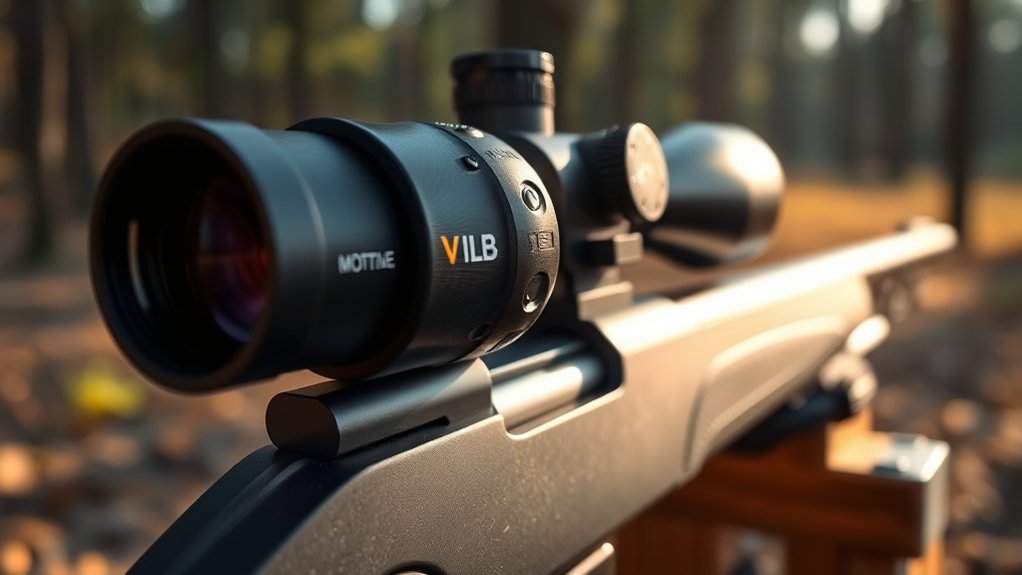
Because the objective lens is the part of the scope that gathers light, its size directly affects how bright and clear your view will be. A larger lens collects more light, improving visibility in low-light conditions like dawn or dusk.
However, bigger lenses can add weight and bulk to your rifle, so you want to balance size with practicality. Here’s why objective lens size matters:
- Larger lenses provide a brighter, clearer image by capturing more light.
- In low-light environments, a bigger lens helps you spot targets more easily.
- Bigger lenses can increase the scope’s overall size and weight.
- Smaller lenses are lighter but may reduce image brightness and clarity.
Choosing the right objective lens size means matching your shooting conditions and preferences.
Why Eye Relief Matters in Rifle Scopes
If you want to shoot comfortably and accurately, you need to understand why eye relief matters in rifle scopes. Eye relief is the distance between your eye and the scope’s lens where you get a full, clear sight picture.
If the eye relief is too short, you risk getting hit by the scope’s recoil, which can be painful and dangerous. On the other hand, longer eye relief gives you more flexibility in mounting the scope and helps you maintain a safe distance from the scope, especially with high-recoil rifles.
It also allows quicker target acquisition since you don’t have to perfectly position your eye every time. Guaranteeing the right eye relief ensures comfort, safety, and consistent accuracy during your shooting sessions.
How Tube Diameter Affects Rifle Scope Performance
Three common tube diameters—1 inch, 30mm, and 34mm—play an essential role in how your rifle scope performs. Choosing the right tube diameter affects brightness, mounting options, and overall durability.
Larger tubes usually allow more light to enter, improving clarity in low-light conditions. However, they can add weight and may require specialized mounts.
Smaller tubes tend to be lighter and fit more standard mounts but might limit light transmission.
Consider these factors when picking your scope’s tube diameter:
- Light transmission: Larger tubes gather more light for brighter images.
- Mount compatibility: Smaller tubes fit a wider range of mounts.
- Weight: Bigger tubes generally mean heavier scopes.
- Adjustment range: Larger tubes often provide more internal adjustment travel.
Understanding these helps you match your scope to your shooting needs.
Assessing Scope Durability and Weather Resistance
When you choose a rifle scope, you want one that can withstand tough conditions without failing. Look for scopes made from durable materials like aircraft-grade aluminum, which resist impact and corrosion.
Check if the scope is shockproof to handle recoil and accidental bumps.
Weather resistance is essential—ensure the scope is waterproof, fog-proof, and dustproof, typically achieved through nitrogen or argon purging and sealed O-rings. This protects your optics in rain, snow, or humid environments.
Also, consider the lens coatings, as they help repel water and reduce glare, maintaining clear vision in adverse weather.
Prioritizing durability and weather resistance means your scope stays reliable and accurate no matter where you hunt or shoot.
Understanding Scope Adjustments and Turret Functions
You’ll want to get familiar with the types of scope adjustments and how each turret functions. Knowing how to properly use elevation, windage, and parallax turrets can make a big difference in accuracy.
Let’s break down what each adjustment does and how to use them effectively.
Types Of Scope Adjustments
Although rifle scopes may look simple, their adjustments play a crucial role in accuracy and performance. Knowing the types of scope adjustments helps you customize your shooting experience. You’ll mainly encounter four types:
- Elevation Adjustment: Moves the reticle up or down to compensate for bullet drop.
- Windage Adjustment: Shifts the reticle left or right to counteract wind or shooter error.
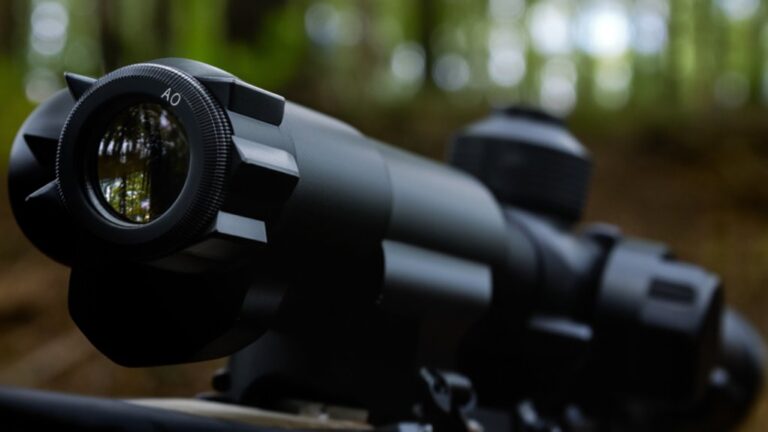
- Parallax Adjustment: Corrects image focus and reticle alignment at different distances.
- Focus Adjustment: Ensures a clear and sharp reticle for precise aiming.
Each adjustment lets you fine-tune your scope for varying distances and conditions, giving you confidence in your shot placement.
Understanding these basics prepares you to use your scope effectively in the field.
Turret Functions Explained
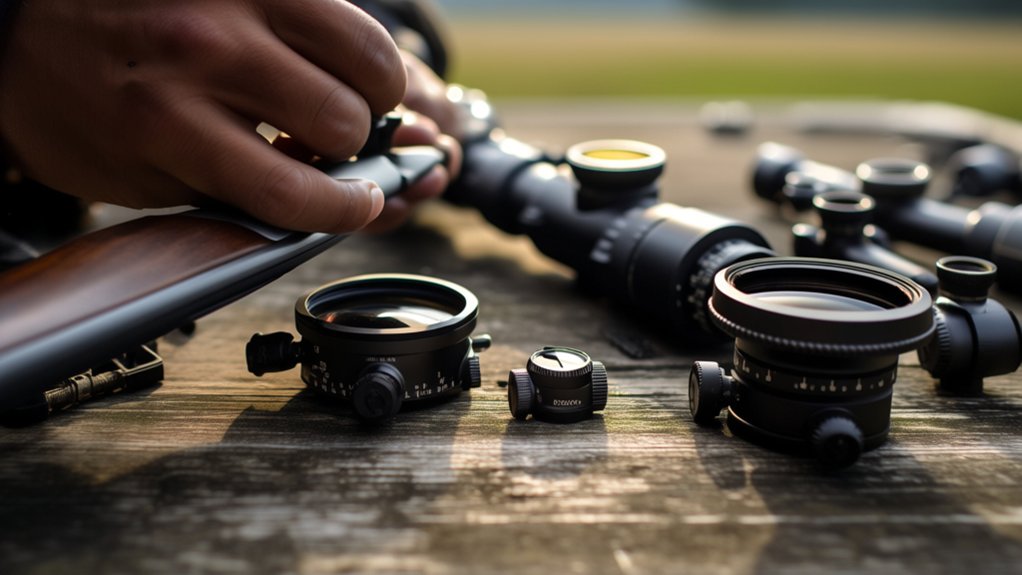
Since turret adjustments are central to fine-tuning your rifle scope, understanding their functions is essential for accurate shooting. Turrets are the knobs on your scope that let you adjust windage (horizontal) and elevation (vertical).
By turning these, you compensate for bullet drop and wind drift, aligning your reticle precisely with your target. Some turrets also offer parallax adjustment, which sharpens your image at different distances.
Many scopes feature zero-reset turrets, allowing you to return to your original zero quickly after making temporary adjustments.
Knowing how many clicks equal a certain measurement, typically in MOA or MILs, helps you make precise changes.
The Importance of Lens Coatings for Better Visibility
How do lens coatings impact your shooting experience? They play a vital role in enhancing visibility by reducing glare and improving light transmission. With better visibility, you can quickly acquire targets and maintain accuracy in various lighting conditions.
Here’s why lens coatings matter:
- Reduce reflections on lens surfaces, giving you a clearer sight picture.
- Increase light transmission, making your view brighter in low-light situations.
- Enhance contrast and color fidelity so targets stand out sharply.
- Protect lenses from scratches, dirt, and moisture, ensuring durability and consistent performance.
Choosing a scope with quality lens coatings means you’ll have a more reliable, crisp image that helps you shoot confidently, whether at dawn, dusk, or in bright sunlight.
Matching Your Rifle Scope to Your Rifle’s Caliber and Use
You’ll want to choose a scope that matches your rifle’s caliber to guarantee durability and accuracy.
Consider the specific features that suit your shooting purpose, whether it’s hunting or target practice.
Balancing magnification and precision will help you get the most out of every shot.
Caliber Compatibility Essentials
When selecting a rifle scope, matching it to your rifle’s caliber is essential for ideal performance. Your scope must withstand the recoil and provide a clear sight picture tailored to your shooting needs.
Using a scope not suited for your caliber can lead to damage or poor accuracy.
Keep these in mind when choosing your scope:
- Guarantee the scope’s durability matches your rifle’s recoil force.
- Verify the scope’s reticle and magnification suit your typical shooting distance.
- Choose lens coatings that enhance clarity for your usual environments.
- Confirm the scope’s mounting system fits your rifle securely.
Aligning your scope with your rifle’s caliber helps you shoot confidently and accurately every time.
Purpose-Driven Scope Features
Three key purpose-driven features can transform your rifle scope from a simple aiming tool into a precision instrument tailored to your shooting style and rifle caliber.
First, consider the reticle type: choose a design that complements your typical shooting distance and environment, whether it’s a simple duplex for quick target acquisition or a mil-dot for range estimation.
Next, look at the turret adjustments—make sure they match the ballistic profile of your rifle’s caliber for accurate windage and elevation changes.
Finally, pay attention to the scope’s durability features like shockproofing and waterproofing, especially if you hunt in rugged or wet conditions.
Balancing Power And Precision
Choosing the right reticle, turret adjustments, and durability features sets the foundation for a scope that suits your shooting style.
Next, you need to balance power and precision by matching your scope to your rifle’s caliber and intended use. Higher calibers often require scopes with lower magnification but rugged construction, while smaller calibers benefit from higher magnification for detailed shots.
Consider these factors:
- Caliber compatibility: Guarantee the scope handles recoil and ballistics of your rifle.
- Magnification range: Match it to your typical shooting distance.
- Reticle type: Choose one that complements your shooting scenario.
- Turret precision: Opt for fine adjustments if you need pinpoint accuracy.
This balance ensures your scope enhances your rifle’s strengths without compromising performance.
Setting a Budget Without Sacrificing Quality
Although it’s tempting to go for the cheapest option, setting a budget that balances cost and quality guarantees you get a reliable rifle scope without overspending.
Start by researching scopes within your price range and compare their features, durability, and customer reviews.
Remember, the most expensive scope isn’t always the best for your needs, and a very cheap one might lack essential quality.
Focus on scopes made with sturdy materials, clear optics, and reliable adjustment mechanisms.
Prioritize features that matter most to your shooting style and environment.
Where to Buy Trustworthy Rifle Scopes Online and In-Store
Finding a rifle scope that fits your budget and quality standards is only half the battle; knowing where to buy it guarantees you get a genuine product and reliable service.
Whether you prefer shopping online or in-store, choose retailers known for authenticity and customer support.
Consider these options:
- Specialty outdoors stores: Staff can offer expert advice and hands-on testing.
- Reputable online retailers: Look for verified reviews and clear return policies.
- Manufacturer websites: They often sell directly or list authorized dealers.
- Local gun shops: Great for personalized service and immediate availability.
Avoid unknown sellers or unauthorized dealers to reduce risks of counterfeits.
Tips for Mounting and Zeroing Your Rifle Scope
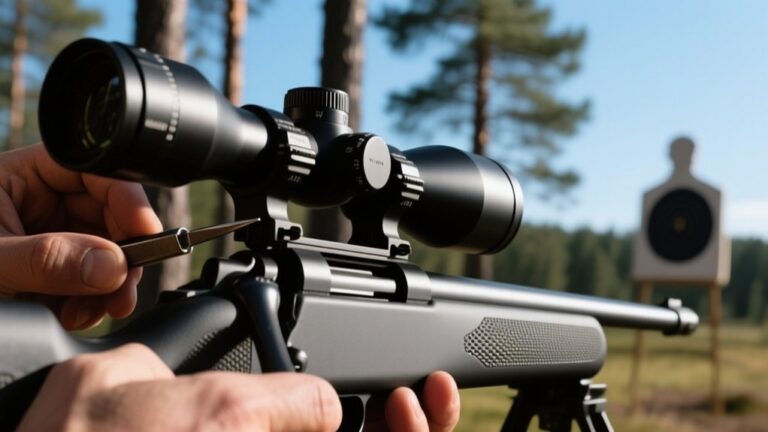
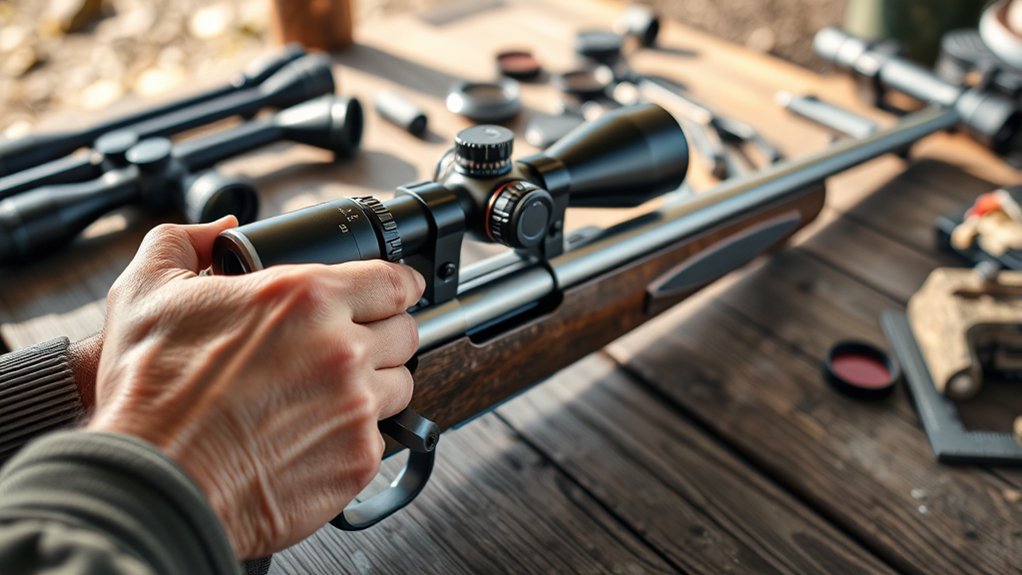
Once you’ve secured your rifle scope, mounting it correctly is essential to guarantee accuracy and reliability. Begin by choosing quality rings and a sturdy base that match your rifle. Make sure the scope sits at a comfortable eye relief distance. Tighten the rings evenly to avoid damaging the scope tube.
Next, level your scope using a bubble level or similar tool to ensure the reticle is perfectly horizontal.
When zeroing your scope, start at a close distance, like 25 yards, to confirm your point of impact. Adjust the windage and elevation turrets based on your shots. Then move to your preferred zeroing distance, typically 100 yards.
Always fire a group, adjust, and repeat until your shots consistently hit the target center. This process ensures your scope delivers precision when it counts.
Avoid These Common Rifle Scope Mistakes
When you’re setting up your rifle scope, avoiding common mistakes can save you time and frustration down the line. Many shooters overlook critical details that impact accuracy and reliability.
Here are some mistakes to steer clear of:
- Choosing the wrong magnification for your typical shooting distance
- Neglecting proper eye relief, causing discomfort and poor sight picture
- Failing to firmly mount the scope, leading to scope shift or damage
- Ignoring parallax adjustment, which affects precision at various ranges
Frequently Asked Questions
How Do Temperature Changes Affect Rifle Scope Performance?
Temperature changes can cause your rifle scope’s lenses and tubes to expand or contract, affecting zero and clarity. You’ll want a scope with good temperature resistance or nitrogen purging to prevent fogging and maintain accuracy.
Can I Use a Rifle Scope for Air Rifles or Only Firearms?
Imagine lining up a calm, precise shot—yes, you can use a rifle scope on air rifles, not just firearms. Just pick one designed for lower recoil and shorter ranges to keep your sight picture sharp and steady.
What Maintenance Is Required to Keep My Rifle Scope in Top Condition?
You’ll want to regularly clean the lenses with a soft cloth, check for loose screws, keep the scope dry, and store it in a protective case. Avoid harsh chemicals and always handle it gently to maintain clarity and accuracy.
Are Illuminated Reticles Suitable for All Types of Hunting Environments?
Imagine trying to read a map by moonlight—illuminated reticles help you see clearly in low light but can glare in bright conditions. So, they’re great for dawn, dusk, or dense woods but less ideal in open, sunny areas.
How Does Altitude Impact the Effectiveness of a Rifle Scope?
Altitude affects your rifle scope’s effectiveness by changing air density, which impacts bullet trajectory. You’ll need to adjust for thinner air at high altitudes, as it causes less drag and a flatter trajectory for your shots.
Conclusion
Choosing the right rifle scope can transform your shooting experience. Imagine you’re prepping for a hunting trip and opt for a variable power scope with a clear reticle and a larger objective lens—this setup helps you adapt to changing light and distance. By balancing your budget and avoiding common mistakes like poor mounting, you’ll guarantee accuracy and confidence every time you take a shot. Your perfect scope is out there—go find it!