How to Install a Rifle Scope in 3 Easy Steps
To install a rifle scope in 3 easy steps, first choose the right scope based on your needs, such as hunting or target shooting, and pick suitable magnification and durability. Next, gather essential tools like a torque wrench, leveling kit, and thread locker. Finally, mount the scope by securing it in the rings, level the reticle carefully, and zero it by adjusting windage and elevation on a target. Keep going to uncover tips for perfect alignment and accuracy.
Choose the Right Rifle Scope for Your Needs
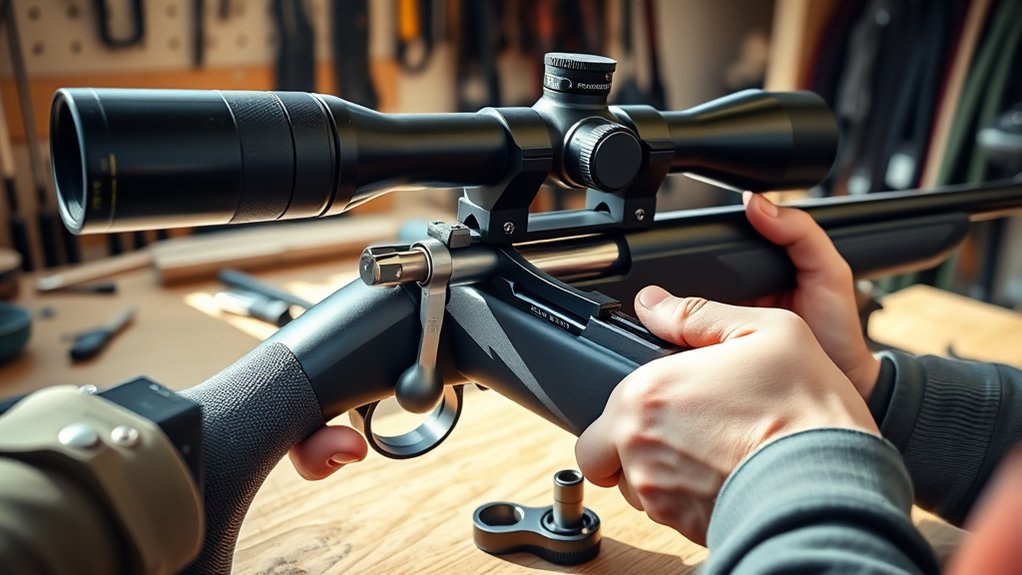
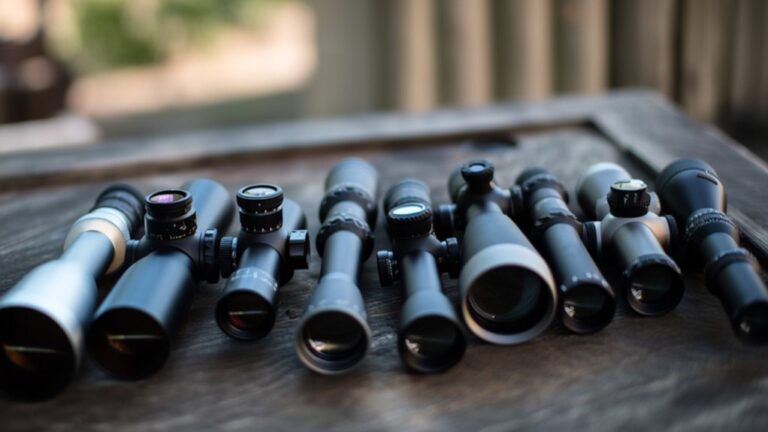
How do you pick the right rifle scope for your needs? First, consider what you’ll use your rifle for—hunting, target shooting, or tactical purposes. Each demands different features.
Think about magnification: low power (3x-9x) suits close to mid-range, while higher magnification helps with long-distance shots but can be harder to handle.
Next, focus on the objective lens size; larger lenses gather more light, improving visibility in low light.
Don’t forget durability—choose scopes with waterproof, fog-proof, and shockproof qualities if you expect rough conditions.
Ultimately, decide on the reticle style that fits your shooting style—simple crosshairs or more complex designs with range estimation.
Matching these factors with your rifle ensures a scope that enhances accuracy without unnecessary complications.
Gather the Tools Needed to Mount Your Scope
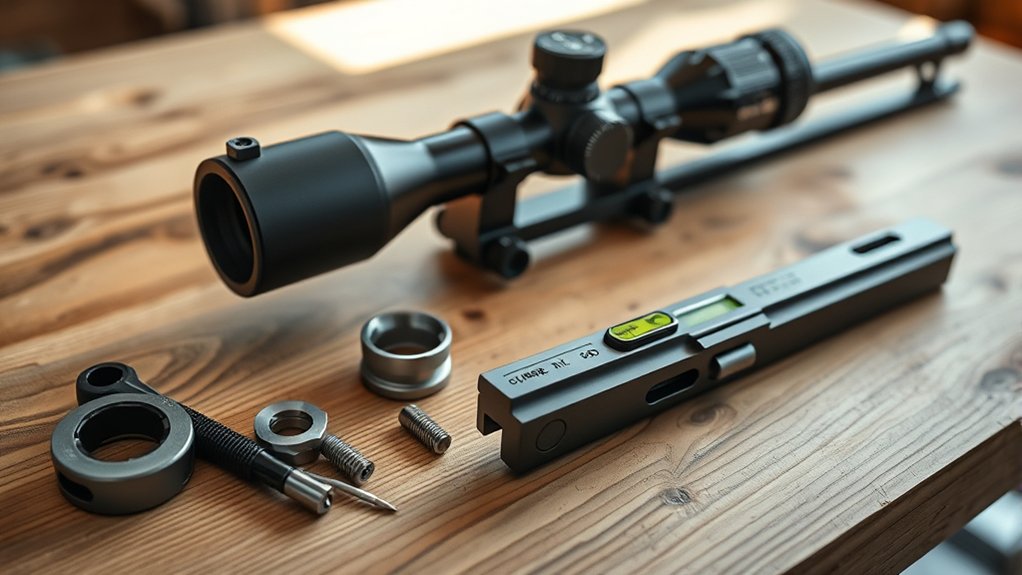
When preparing to mount your rifle scope, what tools do you need to get the job done right? Having the right tools on hand guarantees a smooth installation process and prevents damage to your scope or rifle. You’ll want to gather essential items before you start, so you’re not scrambling mid-installation.
Here are the key tools you’ll need:
- Torque wrench or screwdriver with adjustable torque settings
- Leveling kit (bubble level or scope leveling tool)
- Cleaning cloth or microfiber towel
- Thread locker (medium-strength, like blue Loctite)
With these tools, you can confidently proceed, knowing you have everything necessary to install your scope securely and accurately.
Next, you’ll be ready to mount, secure, and zero your rifle scope properly.
Mount, Secure, and Zero Your Rifle Scope
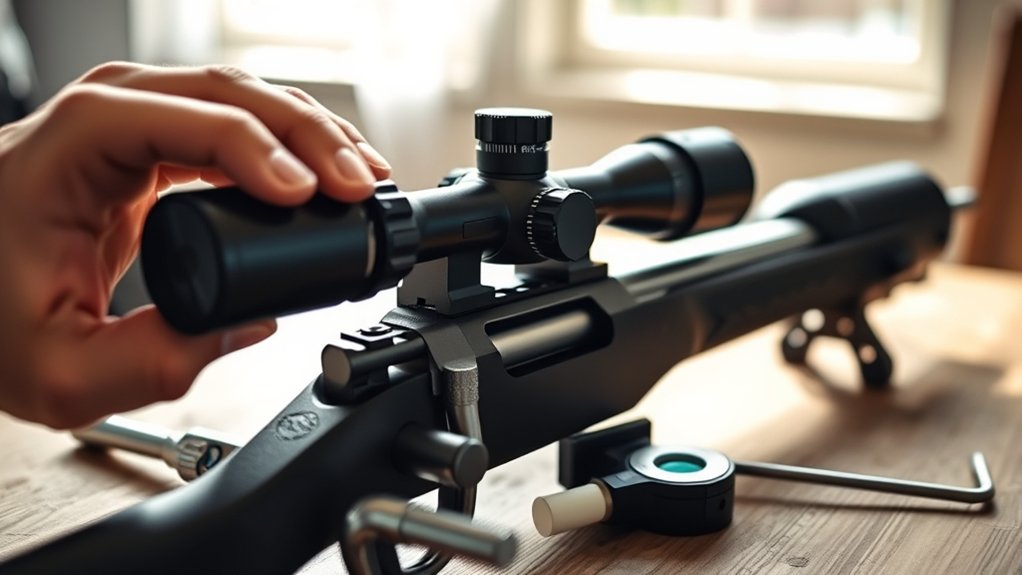
Before you mount your rifle scope, make sure your rifle is unloaded and secured in a stable position.
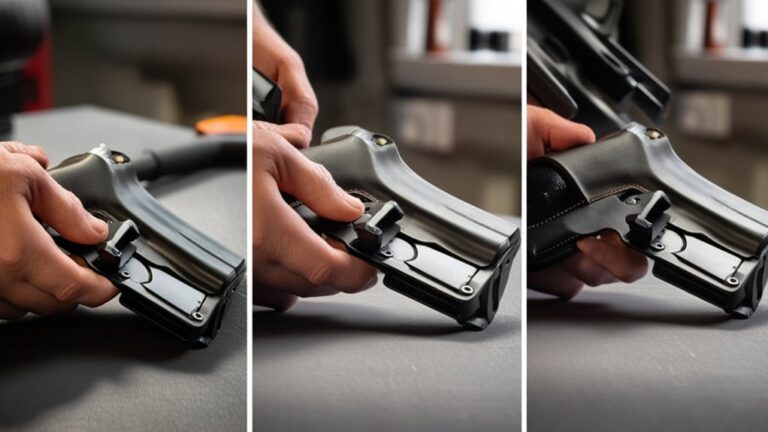
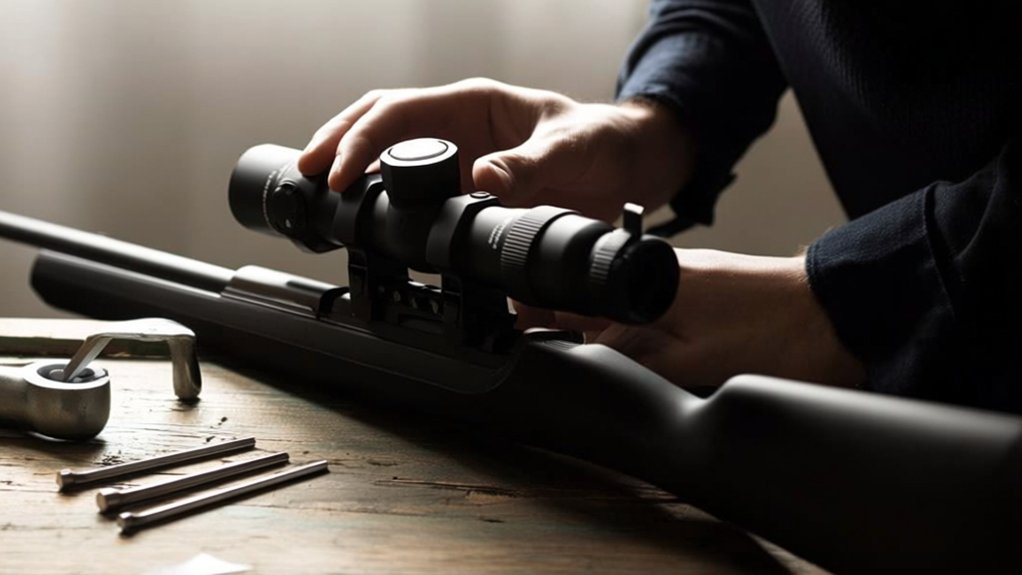
Begin by attaching the scope rings to the base, then carefully place the scope into the rings.
Adjust the eye relief by moving the scope forward or backward until you get a clear sight picture.
Tighten the ring screws evenly, alternating between them to avoid uneven pressure.
Once secured, level the reticle using a bubble level or by eyeballing it against a known horizontal surface.
To zero your scope, set up a target at a known distance, typically 25 to 100 yards.
Fire a group, note the impact point, and adjust the windage and elevation turrets accordingly.
Repeat until your shots consistently hit the target’s center.
Frequently Asked Questions
How Do I Clean and Maintain My Rifle Scope?
You clean your rifle scope by gently blowing off dust, using a soft brush, and wiping lenses with a microfiber cloth and lens cleaner. Regularly check mounts for tightness, avoid harsh chemicals, and store it in a protective case.
What Is the Difference Between First and Second Focal Plane Scopes?
The proof is in the pudding: first focal plane scopes keep reticle size proportional to zoom, while second focal plane scopes keep reticle size constant. You’ll choose based on whether you want consistent holdovers or better low-light use.
Can I Use a Rifle Scope for Air Rifles or Pistols?
Yes, you can use a rifle scope for air rifles or pistols, but you’ll want a scope designed for lower recoil and closer ranges. Make sure it’s durable and offers the right magnification for your shooting needs.
How Do Weather Conditions Affect Scope Performance?
Ever tried aiming through a foggy window? Weather conditions like rain, fog, and extreme temperatures can blur your scope’s lens or affect its internal mechanics, so you’ll want to keep it clean and protected for clear shots.
What Are Common Signs My Scope Needs Repair or Replacement?
You’ll notice blurry or inconsistent images, loose mounts, damaged lenses, or difficulty adjusting focus. If your scope fogs up inside or the reticle shifts during use, it’s time to repair or replace it to maintain accuracy.
Conclusion
You’ve just mastered the ancient art of sticking a tube to a stick. Now, instead of guessing where your bullet lands, you’ll *almost* be as accurate as a professional marksman—well, with practice. Remember, if your scope doesn’t line up perfectly, just pretend you meant to shoot that way all along. With your scope mounted and zeroed, you’re officially ready to impress friends, confuse foes, and maybe hit a target or two!