How Does a Holster Work?
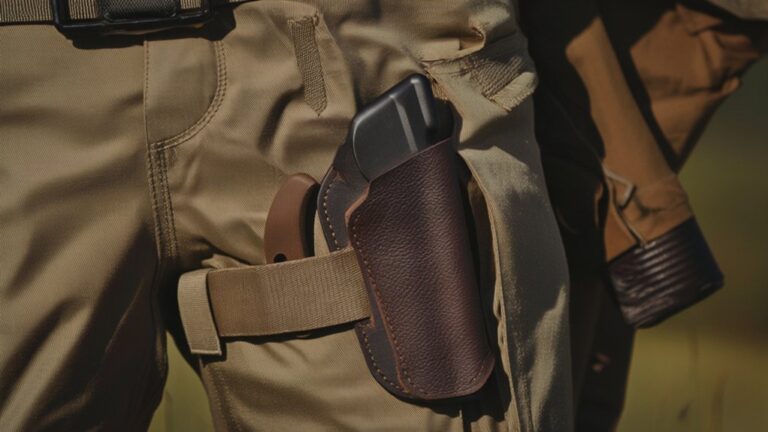
A holster works by securely holding your firearm, keeping it accessible while preventing accidental drops and misfires. It protects the trigger to reduce unintentional discharges and often features retention systems like thumb breaks or friction fit for added safety. Holsters come in various materials and styles to balance comfort, concealment, and quick access. Understanding how retention and fit affect your carry will help you choose one that meets your needs and keeps you prepared.
What Is a Holster and Why Do You Need One?
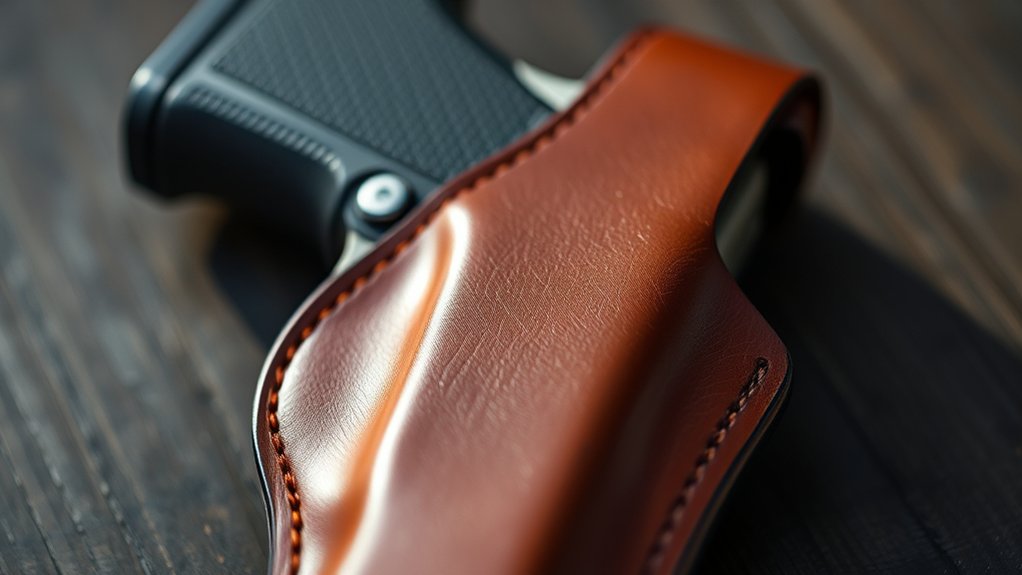
A holster is a device designed to securely hold a firearm, keeping it accessible and safe. You need one to guarantee your gun stays in place, preventing accidental drops or misfires. Without a holster, carrying a firearm becomes risky and uncomfortable.
It also protects the trigger, reducing the chance of unintentional discharge. Holsters allow you to draw your weapon quickly and efficiently when necessary, which is vital in emergencies.
They come in various styles to fit your preferred carry method, whether concealed or open. Using a holster also helps distribute your firearm’s weight evenly, making it easier to carry for extended periods.
Ultimately, it’s about safety, convenience, and readiness whenever you carry a firearm.
Common Materials Used to Build Holsters
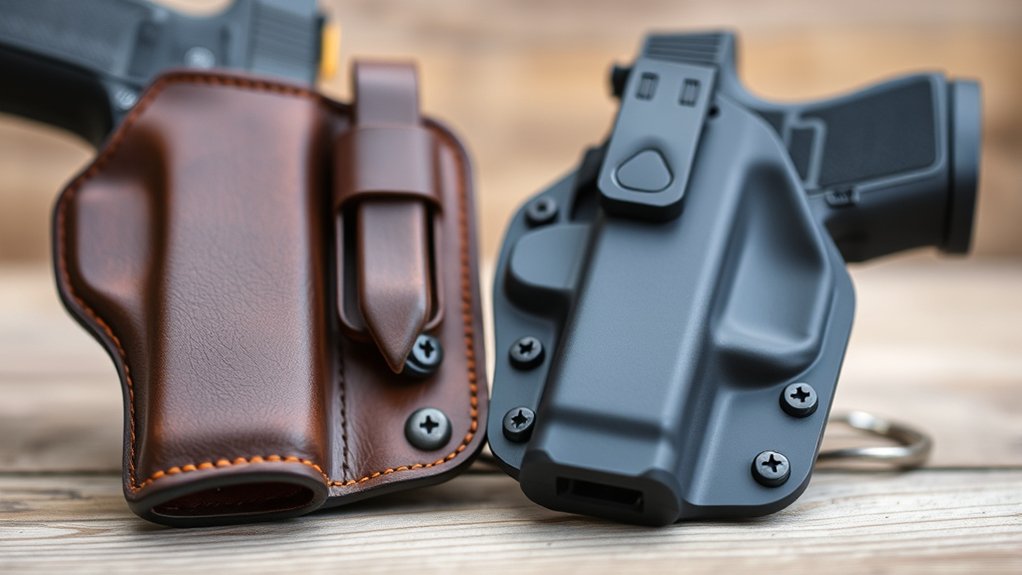
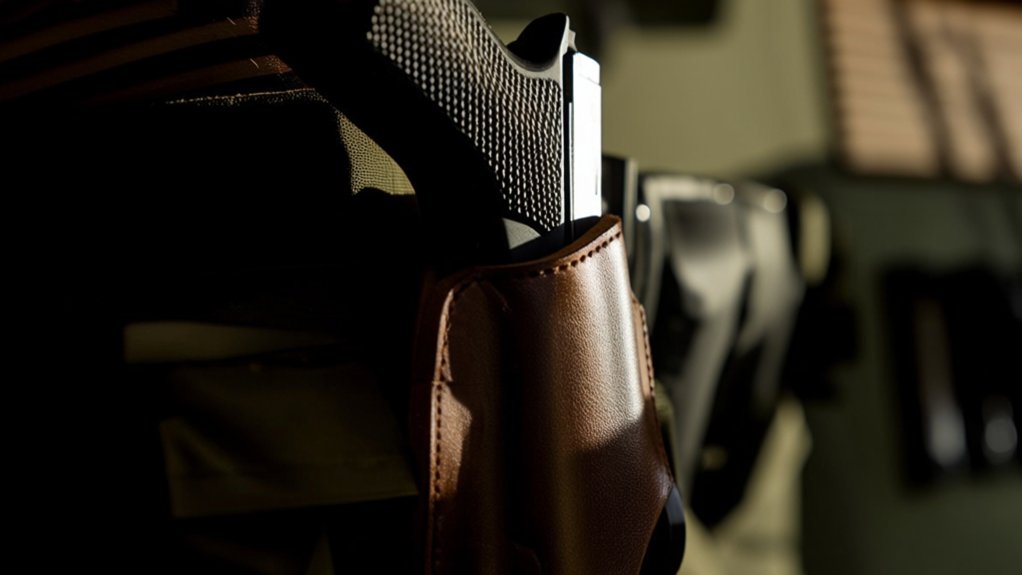
Several materials dominate the holster market, each offering unique benefits depending on your needs. Leather provides a classic look and molds to your firearm over time, enhancing comfort and retention.
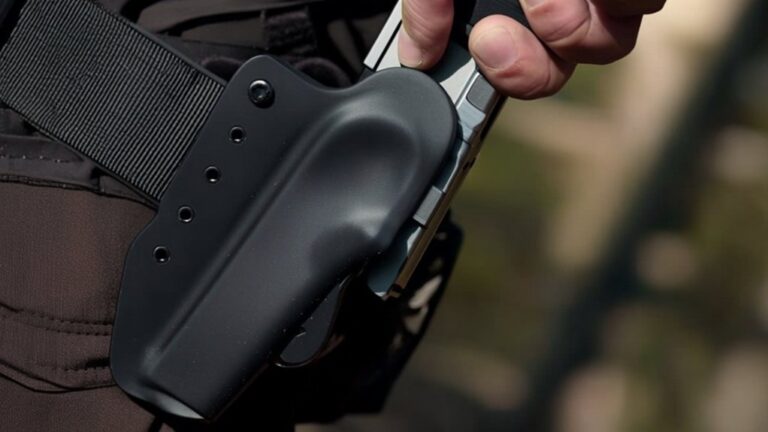
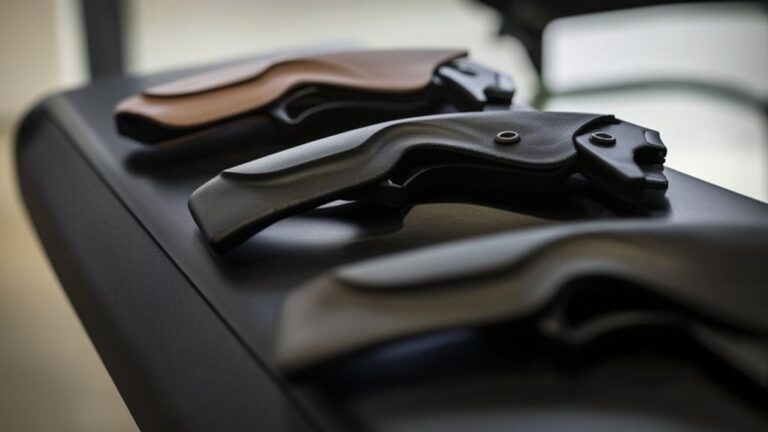
If you want something lightweight and rigid, Kydex is a popular thermoplastic choice that holds its shape well and allows for quick draws.
Nylon holsters offer affordability and flexibility, perfect for casual or budget-conscious users.
You might also find hybrid holsters combining leather and synthetic materials to balance comfort and durability.
When choosing, consider how the material affects weight, concealability, and maintenance.
Your lifestyle and how often you carry will guide you to the best option.
Understanding these materials helps you pick a holster that fits your daily routine and firearm securely.
Inside vs. Outside-The-Waistband Holsters
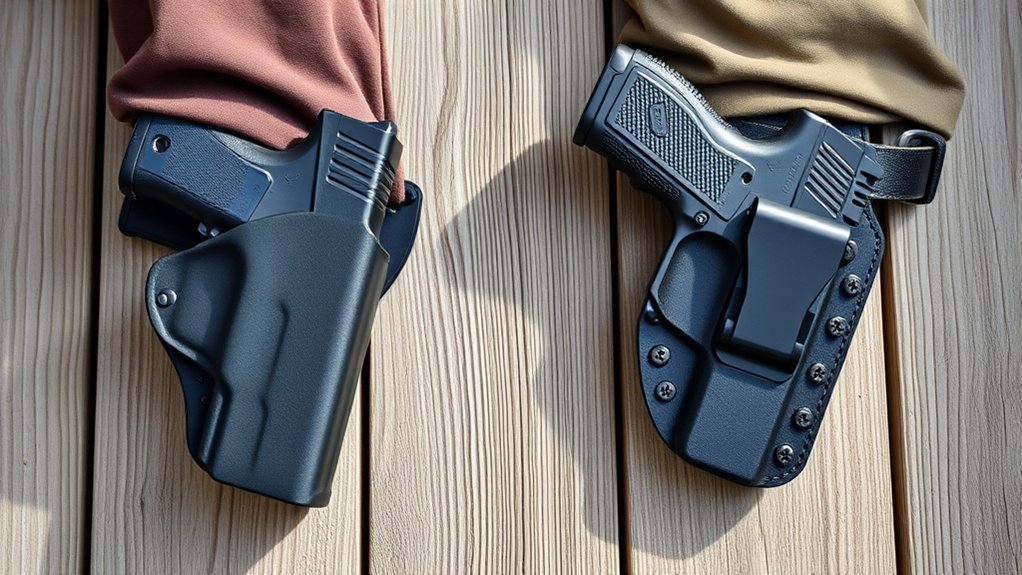
While choosing a holster, you’ll often face the decision between inside-the-waistband (IWB) and outside-the-waistband (OWB) styles. IWB holsters tuck inside your pants, offering better concealment and close contact with your body. This makes them ideal if you want to carry discreetly, but they can feel less comfortable during extended wear.
OWB holsters sit outside your pants, usually attached to your belt. They provide easier access and are generally more comfortable, but they’re harder to conceal. Your choice depends on your priorities—whether you value concealment or quick access more.
Both types work well, so consider your daily activities, clothing style, and comfort preferences before deciding which holster suits you best.
How Holster Retention Systems Keep Your Gun Secure
Choosing between inside-the-waistband and outside-the-waistband holsters affects how your firearm sits against your body, but keeping your gun secure goes beyond placement. Retention systems play an essential role in preventing accidental drops or unauthorized access.
You’ll find various retention levels, from passive friction retention to active locking mechanisms. Passive retention relies on the tight fit between the holster and firearm, holding your gun firmly in place.
Active retention usually involves a thumb break, button, or lever that you need to disengage before drawing. Some holsters combine both for added security.
When selecting a holster, consider how quickly you need to access your gun and how much retention you require. The right retention system ensures your firearm stays secure without compromising speed or comfort.
How Holster Trigger Guard Design Enhances Safety
Because the trigger is one of the most critical points of your firearm, holsters are designed with trigger guard protection to prevent accidental discharges. This feature plays a key role in keeping you and others safe.
Here’s how trigger guard designs enhance safety:
- Physical Barrier: It shields the trigger from unintentional contact, reducing the risk of firing when holstered.
- Proper Fit: A snug design ensures the trigger guard fully covers the trigger, preventing objects from slipping inside.
- Retention Support: It works with retention systems to keep the firearm secure without compromising safety.
- Safe Drawing: It guides your hand to avoid the trigger until you’re ready, promoting safe handling.
This design helps you carry your firearm confidently and responsibly.
How Holsters Allow Quick Access to Your Gun
Even in high-pressure situations, your holster lets you access your gun quickly and efficiently. It holds your firearm securely yet allows a smooth, immediate draw when you need it most. The design positions the gun at an ideal angle and location, so your hand naturally finds it without fumbling.
Many holsters use retention features that prevent accidental drops but release swiftly under intentional pressure. This balance between secure hold and quick release is key.
Also, the open or partially open top of many holsters ensures your grip isn’t obstructed, speeding up your draw. With practice, your muscle memory aligns perfectly with your holster’s setup, letting you deploy your gun instinctively and confidently whenever necessary.
Why Holster Fit Influences Draw Speed and Accuracy
When your holster fits your firearm perfectly, you’ll notice a significant improvement in both draw speed and shooting accuracy. A snug fit keeps your gun secure but allows a smooth, consistent draw every time. Here’s why fit matters:
- Retention Control – A well-fitted holster holds your gun firmly, preventing unnecessary movement that could slow your draw.
- Consistent Draw Path – The firearm aligns precisely in the holster, letting you draw it on the same path, improving muscle memory.
- Reduced Weapon Shift – Less shifting means quicker access and better control, which directly affects accuracy.
- Immediate Access – Perfect fit means you won’t fumble or struggle, helping you react faster under pressure.
Choosing the right fit streamlines your performance and confidence.
Why Comfort Matters When Choosing a Holster
A holster that fits well improves your draw speed and accuracy, but it won’t do much good if it feels uncomfortable during wear. When you choose a holster, comfort directly impacts how often and how long you’ll carry it.
If it digs into your skin, chafes, or restricts movement, you’ll be tempted to leave it behind, defeating its purpose. Comfort also affects your focus; if you’re distracted by discomfort, your reaction time and situational awareness can suffer.
A comfortable holster ensures that carrying your firearm becomes second nature, allowing you to move naturally and confidently. Prioritize materials, design, and adjustability that suit your body shape and daily activities.
That way, you’ll stay ready without sacrificing all-day comfort.
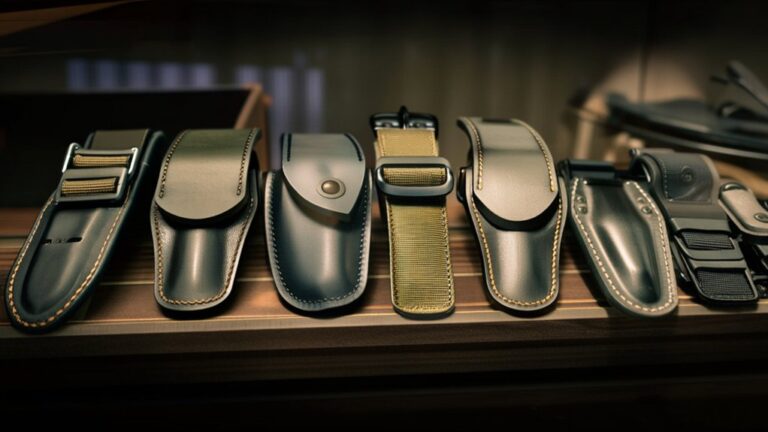
Common Holster Styles and Their Unique Features
Although choosing the right holster can seem overwhelming, understanding common styles helps you make an informed decision. Each style offers unique features tailored to different needs and preferences.
- Inside-the-Waistband (IWB): Worn inside your pants, this style offers excellent concealment and comfort for everyday carry.
- Outside-the-Waistband (OWB): Positioned outside your pants, OWB holsters provide quick access and are great for open carry.
- Shoulder Holster: Suspended from your shoulders, it distributes weight evenly and is ideal for those wearing jackets.
- Ankle Holster: Perfect for backup guns, ankle holsters keep your weapon accessible yet discreet.
How to Maintain and Care for Your Holster
Choosing the right holster style is just the beginning of assuring your firearm stays secure and ready.
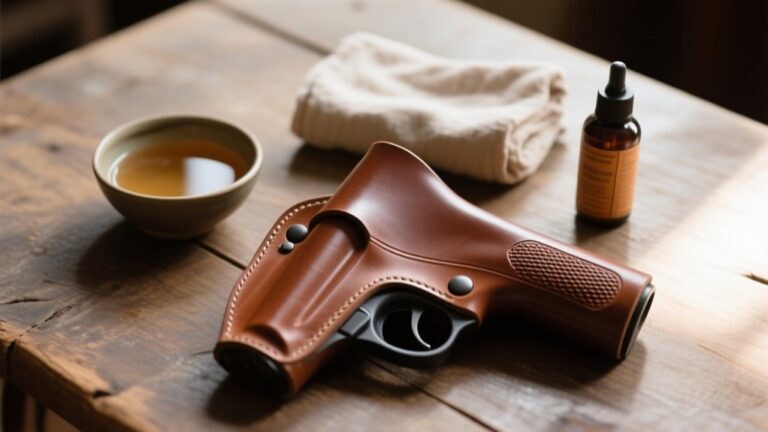
To keep your holster in top shape, regularly clean it according to its material. For leather holsters, use a damp cloth to wipe off dirt and apply a leather conditioner to prevent drying and cracking.
If you have a Kydex or polymer holster, simply wipe it down with mild soap and water. Avoid soaking any holster or exposing it to excessive heat, which can warp or damage it.
Check your holster’s retention screws and clips often, tightening them as needed.
Proper storage is also key—keep your holster in a cool, dry place away from direct sunlight.
Choosing the Right Holster: Key Considerations
When selecting a holster, you need to take into account how you plan to carry your firearm, your comfort, and the level of retention required. Choosing the right holster guarantees safety, accessibility, and ease of use.
Consider these key factors:
- Carry Position: Decide between inside-the-waistband (IWB), outside-the-waistband (OWB), or shoulder carry based on your daily activities and clothing style.
- Material: Leather offers durability and comfort, while Kydex provides rigidity and quick draw.
- Retention Level: Higher retention holsters secure your firearm better but may slow your draw; balance it to your needs.
- Fit and Adjustability: ensure the holster fits your specific gun model and allows adjustments for cant and ride height.
These considerations help you pick a holster that works best for you.
Frequently Asked Questions
Can Holsters Be Customized for Left or Right-Handed Users?
Yes, you can customize holsters for left or right-handed use. You’ll find models designed specifically for each hand, or adjustable ones that let you switch sides easily, ensuring comfort and quick access tailored just for you.
Are Holsters Legal to Carry in All States?
No, holsters aren’t legal to carry in all states. You’ll need to check your local laws since regulations vary widely. Some states allow open carry holsters, while others have strict restrictions or require permits.
How Do Temperature Changes Affect Holster Materials?
You’ll find that temperature changes can shrink leather holsters by up to 5%, making them tighter. Synthetic materials might become brittle below freezing or soften in heat, so you’ll want to store and use them in moderate conditions.
Can Holsters Accommodate Different Firearm Sizes?
Yes, holsters can accommodate different firearm sizes, but you’ll want one designed specifically for your gun’s model or size. Adjustable or universal holsters offer some flexibility, but a custom fit guarantees better retention and comfort.
What Accessories Can Be Attached to Holsters?
You can deck out your holster with accessories like magazine pouches, flashlight holders, and belt clips. These additions give you more firepower and convenience, making sure you’re ready to hit the ground running.
Conclusion
Now that you know how a holster works, aren’t you ready to choose one that fits your lifestyle and keeps you safe? A good holster not only secures your firearm but also offers comfort and quick access when you need it most. By understanding materials, retention systems, and styles, you can confidently pick the right holster for you. Remember, the right holster makes all the difference in safety and convenience.