What Is Eye Relief on a Rifle Scope and How to Adjust It
Eye relief on a rifle scope is the distance between your eye and the scope’s ocular lens, essential for a clear sight picture and preventing scope injuries during recoil. To adjust it, mount the scope properly, then slide it forward or backward until you see a full, bright image without strain. Using adjustable mounts or eyepiece focus helps fine-tune this fit. Keep your shooting position consistent to maintain eye relief and enhance accuracy. There’s much more to mastering this key setup for safer, sharper shooting.
What Is Eye Relief on a Rifle Scope
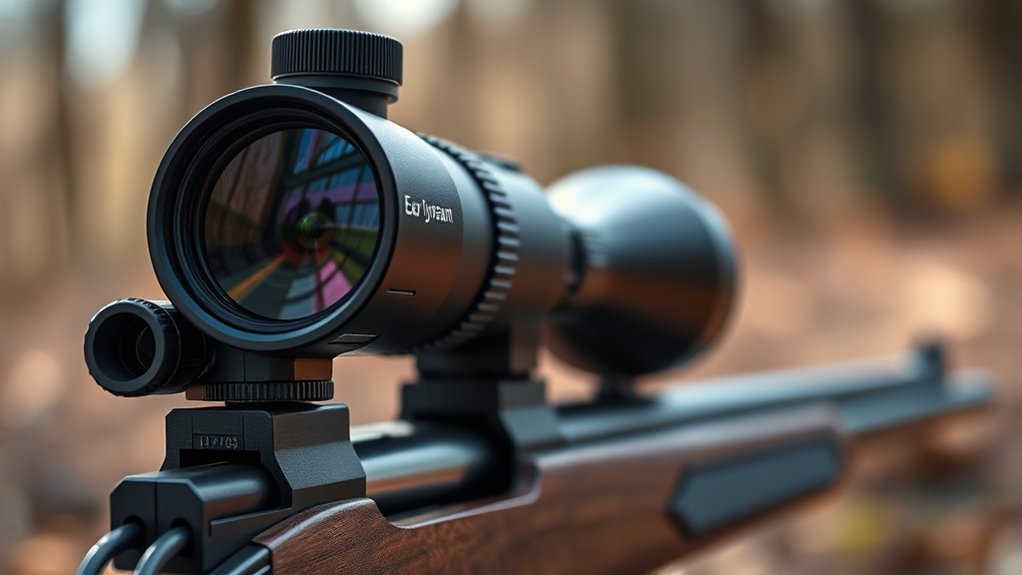
What exactly is eye relief on a rifle scope, and why should you care? Eye relief is the distance between your eye and the scope’s eyepiece where you can see a full, clear image without any dark edges or distortion.
If you position your eye too close or too far from this point, your view will be compromised. Understanding eye relief helps you quickly find the ideal spot to look through the scope, ensuring a comfortable and effective shooting experience.
Different scopes offer varying eye relief lengths, so knowing yours helps you mount and use the scope correctly. In short, eye relief is essential for getting a complete sight picture and making the most of your rifle scope every time you aim.
The Importance of Eye Relief for Accuracy and Safety
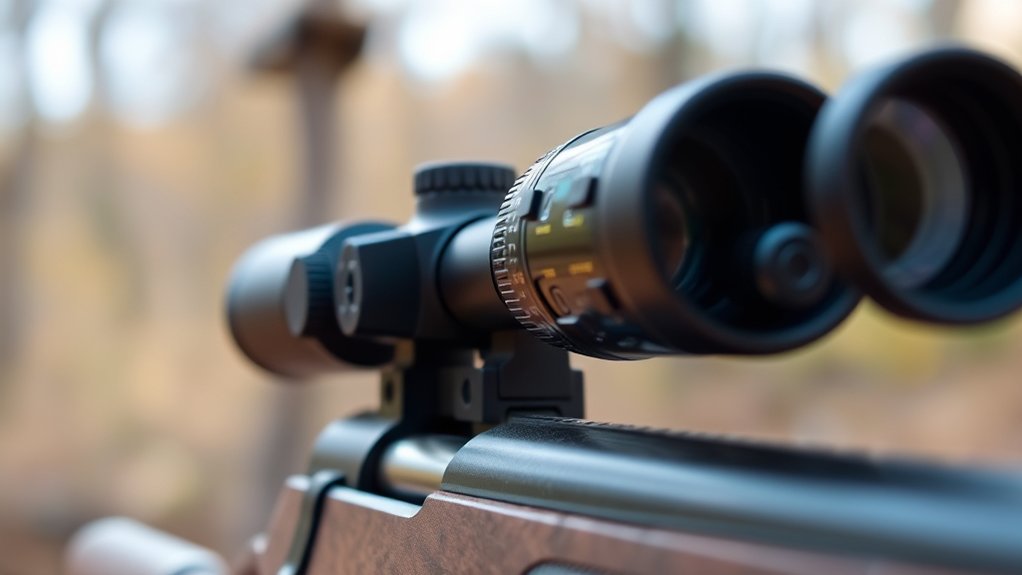
Knowing your scope’s eye relief isn’t just about comfort—it directly impacts your shooting accuracy and safety.
If your eye is too close or too far from the scope, you risk getting a blurred or incomplete sight picture, which can throw off your aim. Proper eye relief guarantees you see the full field of view clearly, allowing you to line up your shot precisely.
It also protects you from recoil injuries; too short an eye relief can cause the scope to hit your brow or face when the rifle kicks back. By maintaining the correct distance, you reduce flinching and keep your shooting consistent.
How to Measure Your Rifle Scope’s Eye Relief
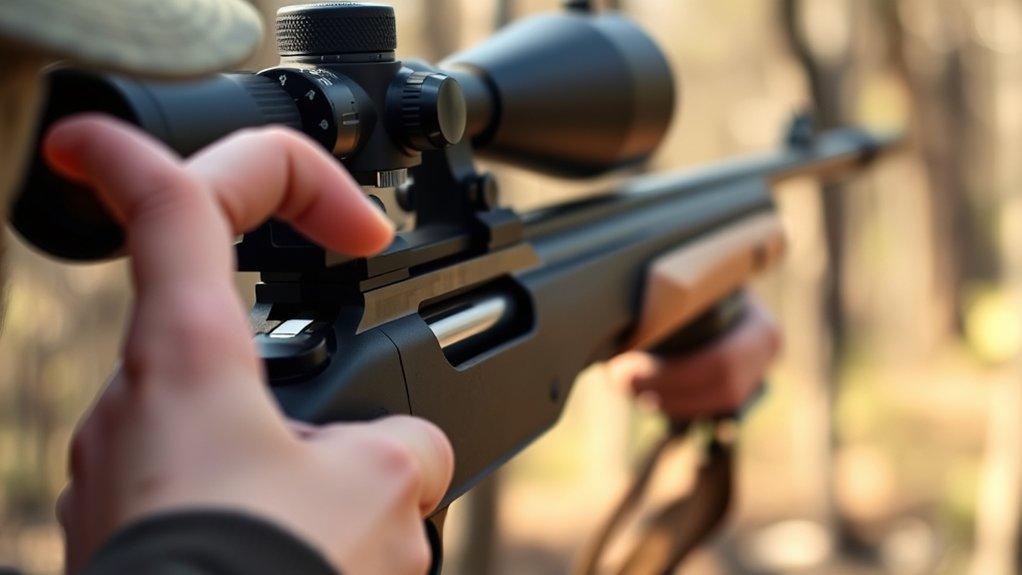
To measure your rifle scope’s eye relief, start by positioning your eye where you normally aim.
Use a ruler or measuring tape to find the exact distance between your eye and the scope’s lens.
Make sure to record this distance consistently for accurate results every time.
Positioning Your Eye Correctly
Although it might seem simple, positioning your eye correctly is essential for getting the most out of your rifle scope’s eye relief.
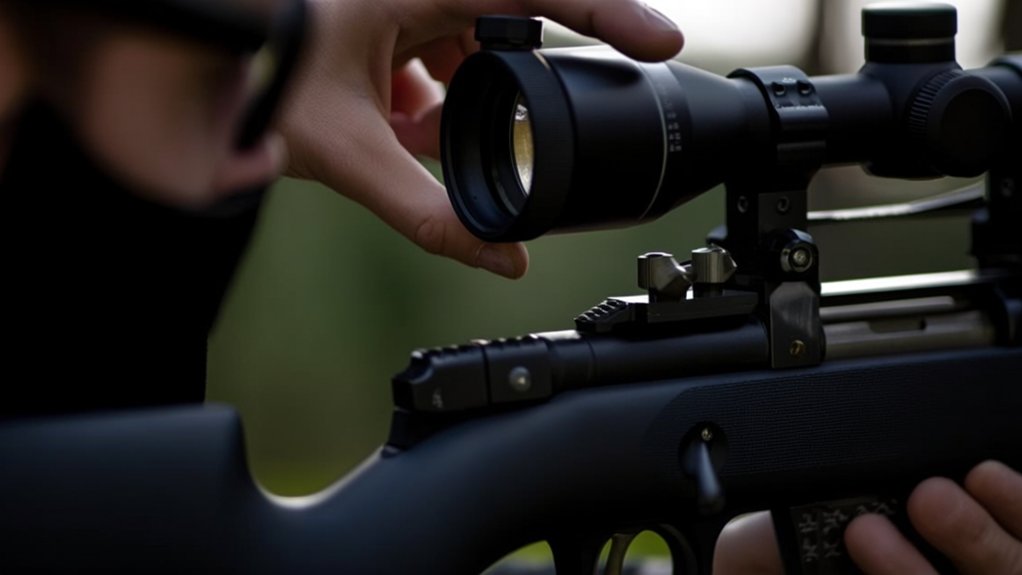
Start by bringing the rifle up to your shoulder in your natural shooting stance. Slowly move your head forward and backward until you see a full, clear image through the scope without any dark rings at the edges.
This spot is where your eye aligns perfectly with the scope’s optical axis. Keep your eye steady in this position while aiming to avoid scope shadow or a reduced field of view.
Practicing this consistently helps you maintain ideal eye relief, improving comfort and accuracy.
Using a Measuring Tool
When you want to guarantee consistent eye relief, using a measuring tool can make the process straightforward and accurate. Start by placing a ruler or a caliper between your eye and the scope’s eyepiece. Adjust your head or the scope until the full sight picture is clear without any black rings. Then, note the distance on your measuring tool. This distance is your eye relief.
Here’s a simple way to track your measurements:
| Step | Action |
|---|---|
| 1 | Position eye for full sight |
| 2 | Measure distance to eyepiece |
| 3 | Record measurement for future |
Using this method assures you find the perfect eye relief every time you mount your scope.
Recording Consistent Distances
Measuring your eye relief with a tool gives you a clear number to work with, but recording that distance accurately guarantees you can replicate the same setup every time. Once you measure the distance from your eye to the scope’s rear lens, jot it down immediately. Use a notebook or a dedicated shooting log to track this measurement along with your rifle and scope model.
Mark any adjustments you make during sight-in sessions too. Consistent records help you quickly set up your rifle without guesswork, ensuring you maintain a full field of view and avoid scope shadowing.
Over time, these notes become a valuable reference, saving you time and improving your shooting accuracy by keeping your eye relief consistent every time you mount your scope.
Typical Eye Relief Distances for Different Scopes
Since eye relief varies depending on the type of rifle scope, knowing the typical distances can help you choose the right one for your needs.
For standard hunting scopes, eye relief usually ranges between 3 to 4 inches. This distance offers a good balance between comfort and safety, especially with moderate recoil.
Tactical and long-range scopes typically feature shorter eye relief, around 2.5 to 3 inches, allowing for a more compact setup and precise aiming.
On the other hand, shotgun and muzzleloader scopes often provide longer eye relief, sometimes up to 5 inches or more, to safeguard your eye from recoil impact.
Understanding these typical distances guarantees you select a scope that fits your shooting style and keeps you safe while maintaining a clear sight picture.
How to Spot When Your Eye Relief Is Off
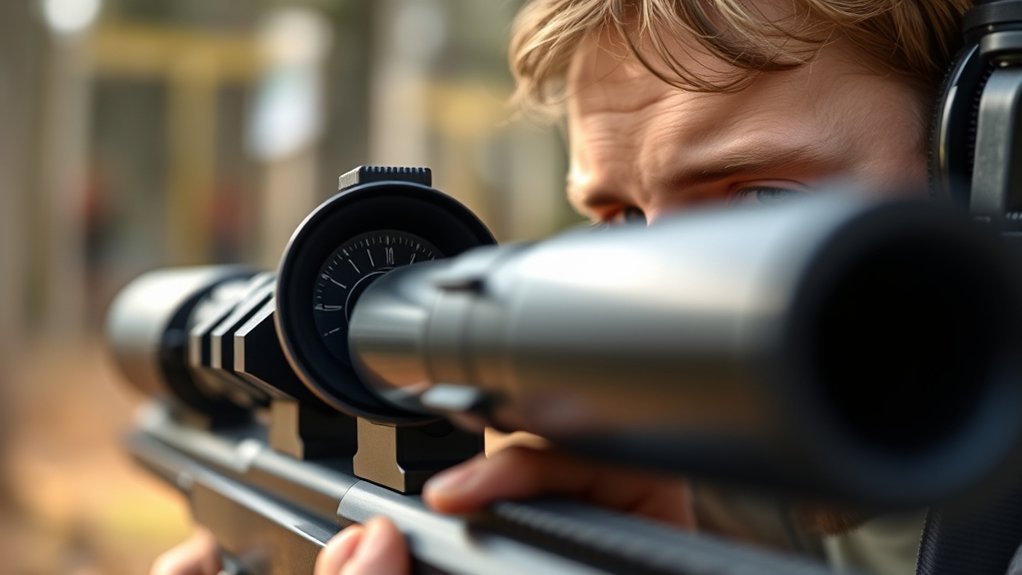
Knowing the typical eye relief distances for your scope type sets the foundation, but recognizing when your eye relief isn’t quite right can save you from discomfort and missed shots.
If you notice a shadow or dark ring around your sight picture, your eye might be too close or too far from the scope. Also, if you feel eye strain or headaches after shooting, your eye relief could be off.
Another clear sign is difficulty in quickly acquiring your target—if you have to adjust your head position repeatedly, the eye relief isn’t properly set.
Ultimately, if you see a blurry or partially cut-off image, that’s a definite indication to adjust your distance.
Pay attention to these signs to improve comfort and accuracy.
How Eye Relief Affects Your Field of View
When your eye relief isn’t set right, your field of view can shrink and your image clarity suffers. You’ve got to position the scope just right to keep everything sharp and fully visible.
Finding the balance between comfort and a clear, wide view is essential for accurate shooting.
Impact On Image Clarity
Although eye relief might seem like a minor specification on your rifle scope, it plays a crucial role in how clearly you see your target. If your eye is too close or too far from the scope, the image can blur or darken around the edges, reducing clarity. Proper eye relief guarantees a full, sharp view without distortion.
Here’s a quick look at how eye relief impacts image quality:
| Eye Relief Distance | Image Clarity |
|---|---|
| Too Short | Blurred edges |
| Optimal | Clear, full view |
| Too Long | Dark, vignetted |
Adjust your eye relief carefully to maintain sharp, clear visuals and improve your shooting accuracy.
Scope Positioning Importance
How does eye relief impact your field of view through a rifle scope? Proper scope positioning ensures you see a full, clear image without dark rings or tunnel vision.
When your eye is positioned within the correct eye relief distance, you get the entire sight picture, allowing you to aim confidently and accurately. If you’re too close or too far from the scope, your field of view narrows, cutting off important visual information.
Adjusting the scope’s position on your rifle helps you maintain consistent eye relief, which is essential for fast target acquisition and effective shooting. Remember, even slight changes in your stance or rifle setup can affect your eye relief, so double-check your positioning each time you prepare to shoot.
Balancing Comfort And View
Striking the right balance between comfort and your field of view hinges on maintaining proper eye relief. If your eye is too close or too far from the scope, you’ll either get a limited view or experience discomfort. Proper eye relief guarantees you see a full, clear image without straining.
Here’s a quick look at how eye relief impacts your shooting experience:
| Eye Relief Distance | Comfort Level |
|---|---|
| Too Short (<2.5") | Uncomfortable; limited view |
| Optimal (3-4″) | Comfortable; full field of view |
| Too Long (>4″) | Strained eye; dim or partial image |
Adjusting your scope for the ideal eye relief helps you stay comfortable and maintain the best possible field of view.
Adjusting Eye Relief on Fixed and Adjustable Scopes
When you modify eye relief on fixed and adjustable rifle scopes, understanding their differences is key to a comfortable and safe shooting experience.
Fixed scopes have a set eye relief, so you’ll need to position your head consistently to get a clear sight picture. This means learning the exact distance and stance that works best.
Adjustable scopes let you fine-tune the eye relief by moving the eyepiece in or out. To modify, loosen the eyepiece lock ring, twist the eyepiece until the image is sharp and full, then tighten the ring to secure it.
Always make small adjustments and test your shooting position to avoid scope bite or losing sight alignment. Proper adjustment ensures comfort and accuracy every time you shoot.
Choosing the Right Eye Relief for Your Shooting Style
You’ll want to match your eye relief to how you shoot, whether standing, kneeling, or prone.
Finding the right balance between comfort and safety helps prevent scope bruising and guarantees a clear sight picture.
Don’t forget to adjust for recoil, especially if you’re using a high-powered rifle.
Understanding Shooting Positions
Because your shooting position directly affects how you align your eye with the scope, choosing the right eye relief is essential for comfort and accuracy.
If you shoot prone or from a bench rest, you’ll want longer eye relief to maintain a consistent, relaxed cheek weld without straining your neck.
Standing or tactical positions often require shorter eye relief since you’ll bring the rifle closer to your face for quick target acquisition.
Understanding your typical shooting positions helps you pick an eye relief that matches your style, reducing the chance of scope shadow or injury from recoil.
Take time to practice in your preferred positions, adjusting the scope until your eye naturally aligns without shifting.
This guarantees clear sight pictures and better shot placement every time.
Balancing Comfort and Safety
Although comfort might seem like the top priority, balancing it with safety guarantees you select the right eye relief for your shooting style. You want your eye positioned far enough to avoid injury from recoil but close enough to maintain a full, clear sight picture.
If your eye relief is too short, you risk bruising or even serious injury. Conversely, too much distance can reduce your field of view and accuracy.
Consider how you shoot—whether standing, prone, or moving—and adjust accordingly. Your scope should feel natural and safe during use, promoting quick target acquisition without strain.
Adjusting for Recoil Impact
When adjusting your rifle scope, consider how recoil affects your eye position to choose the right eye relief. Recoil pushes your head backward, so you’ll want enough eye relief to prevent the scope from hitting your brow or causing discomfort.
If your eye relief is too short, the scope can strike your face, leading to injury or inconsistent sight alignment. On the other hand, too much eye relief might reduce your field of view.
To find the sweet spot, mount your rifle securely and simulate shooting posture. Adjust the scope forward or backward until you maintain a full sight picture without risk of scope bite.
Tailor your eye relief to your rifle’s recoil strength and your shooting style to stay safe and accurate.
How Recoil Affects Your Eye Relief
Since recoil can jolt your rifle backward with significant force, it directly impacts how you position your eye relative to the scope. If your eye relief is too short, the scope can hit you in the forehead or eyebrow during recoil, causing discomfort or injury.
To avoid this, you need to maintain enough distance between your eye and the scope so your eye stays safe even when the rifle kicks back. Recoil fundamentally forces you to adopt a longer eye relief than you might without it.
Understanding your rifle’s recoil pattern helps you anticipate how much space you need. This ensures you get a clear sight picture without risking “scope bite” or losing your sight alignment after the shot.
Proper eye relief protects both your eye and your shooting accuracy.
Eye Relief Tips for Rifle Shooting Positions
Recoil affects more than just your eye relief distance—it also influences how you hold your rifle in different shooting positions.
When shooting prone, position your cheek firmly against the stock to maintain consistent eye relief and reduce scope movement during recoil.
In standing or kneeling stances, you might need to adjust your head placement slightly to keep the proper distance from the scope, preventing scope shadow or a blurred sight picture.
Always keep your eye aligned with the scope’s optical axis to avoid strain or injury.
Practice switching between positions while focusing on maintaining consistent eye relief. This habit ensures a clear, full sight picture and helps you react faster during follow-up shots without compromising safety or comfort.
Setting Up Your Scope Mount for Optimal Eye Relief
Although mounting your scope might seem straightforward, setting it up correctly is essential to achieving ideal eye relief and a comfortable shooting experience.
Start by securing your scope rings loosely on the rifle’s mounting base. Then, position the scope forward or backward while looking through the scope in your natural shooting stance. Adjust until you see a full, clear sight picture without straining or moving your head.
Tighten the rings just enough to hold the scope in place but still allow minor adjustments. Double-check your eye relief by shouldering the rifle repeatedly, making small shifts as needed.
Once you find the perfect position, fully tighten the mounts to guarantee stability. Proper mounting prevents eye strain and helps you maintain accuracy shot after shot.
Avoid These Common Eye Relief Adjustment Mistakes
When you adjust your scope’s eye relief, small mistakes can throw off your shooting accuracy and comfort more than you might expect.
First, avoid setting the scope too far from your eye; this forces you to strain or compromise your field of view. Don’t push the scope too close either, as it can cause a restricted sight picture or even scope bite.
Also, don’t ignore your natural shooting position—adjust eye relief while holding your rifle as you’d in a real shooting stance.
Avoid rushing adjustments; take your time to find the sweet spot that balances comfort and clarity.
Ultimately, don’t overlook rechecking your eye relief after changing mounts or scopes, since slight shifts can affect your setup considerably.
How Proper Eye Relief Boosts Your Shooting Confidence
Mastering your scope’s eye relief isn’t just about comfort—it directly impacts your confidence behind the rifle. When your eye is positioned at the correct distance, you get a full, clear sight picture without straining or moving awkwardly. This steadiness lets you focus on your target, improving accuracy and reaction time. Proper eye relief also prevents recoil injuries, so you won’t hesitate to take your shot.
| Benefit | Effect on Shooting | Why It Matters |
|---|---|---|
| Clear sight | Better target visibility | Boosts accuracy |
| Comfortable hold | Reduced strain | Longer shooting sessions |
| Recoil safety | Prevents eye injuries | Builds confidence to shoot |
| Quick target acquisition | Faster aiming | Enhances reaction speed |
With proper eye relief, you’ll shoot confidently and consistently.
Frequently Asked Questions
Can Eye Relief Vary Between Different Manufacturers?
Yes, eye relief can vary between manufacturers. You’ll notice differences in design and measurement, so you should always check each scope’s specs to guarantee it fits your shooting style and eye comfort before buying or adjusting.
Does Eye Relief Affect Scope Durability?
You might think eye relief impacts durability, but it doesn’t—your scope’s build quality and materials do. However, if you misalign your eye consistently, it could cause wear on the lens coatings or housing over time.
How Does Eye Relief Impact Low-Light Shooting?
You’ll find that proper eye relief helps you maintain a clear sight picture in low light, reducing eye strain and ensuring you see the target well. Too much or too little can blur or darken your view.
Is Eye Relief Important for Red Dot Sights?
Eye relief for red dot sights is like the perfect distance between your eyes and glasses—it matters. You want a clear sight picture without strain, so adjusting it guarantees comfort and quick target acquisition during shooting.
Can Eye Relief Be Customized for Left-Handed Shooters?
Yes, you can customize eye relief for left-handed shooters by adjusting the scope’s position or using ambidextrous mounts. This guarantees comfortable, clear sight alignment tailored to your dominant eye and shooting style.
Conclusion
Understanding eye relief can improve your shooting experience considerably. Did you know that scopes with less than 3 inches of eye relief increase the risk of scope eye injuries by over 50%? By measuring and adjusting your rifle scope’s eye relief properly, you’ll enhance both your accuracy and safety. Remember, a little attention to this detail boosts your confidence and keeps you shooting comfortably, no matter the position or distance. Keep it right, and your shots will thank you!