What Does Eye Relief Mean on a Rifle Scope?
Eye relief on a rifle scope is the exact distance between your eye and the eyepiece where you’ll see a full, clear sight picture without strain. It’s vital for comfort, safety, and accuracy, especially to avoid scope hits during recoil. Typical eye relief ranges from 3 to 5 inches depending on your rifle and shooting style. Getting it right guarantees you maintain a natural, consistent stance. Keep exploring to discover how eye relief impacts your shooting performance and safety.
What Is Eye Relief on a Rifle Scope?
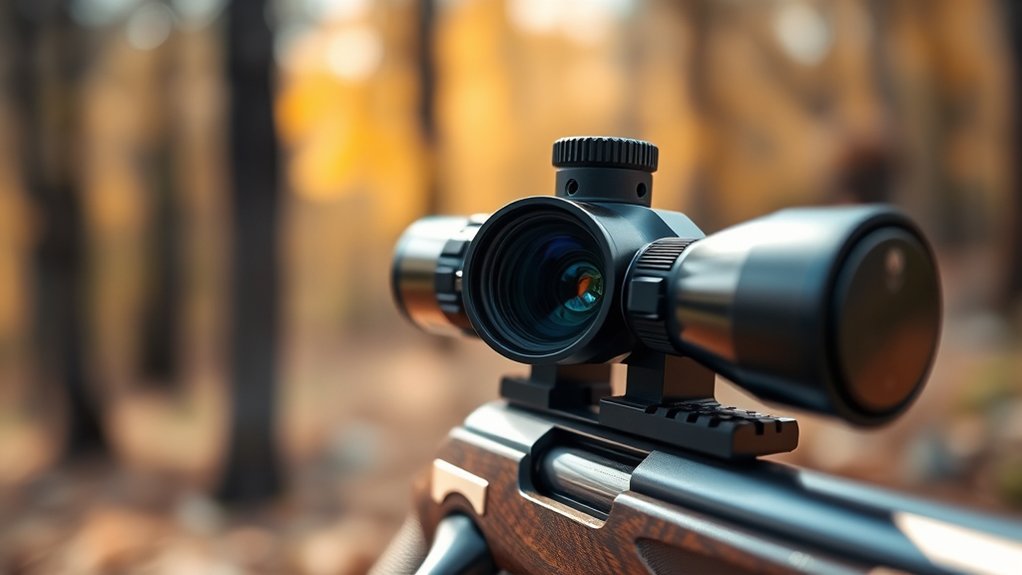
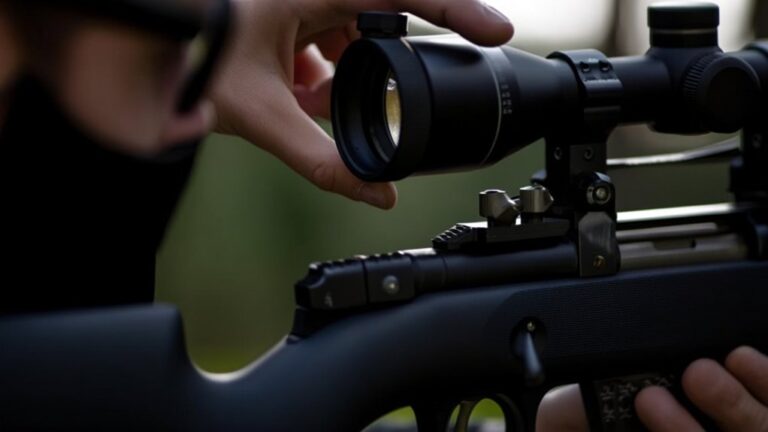
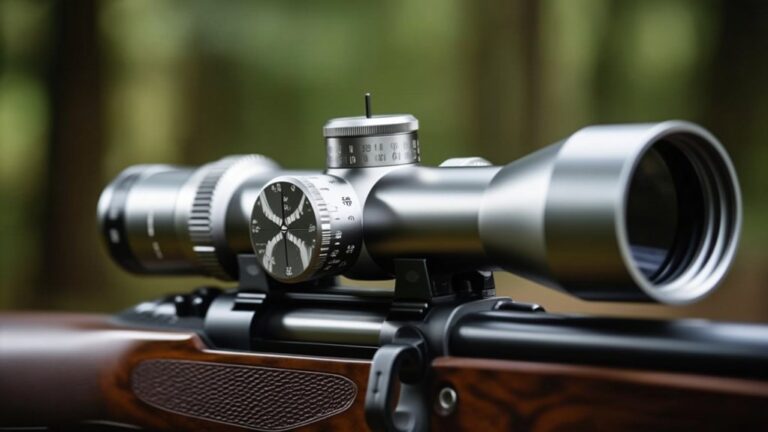
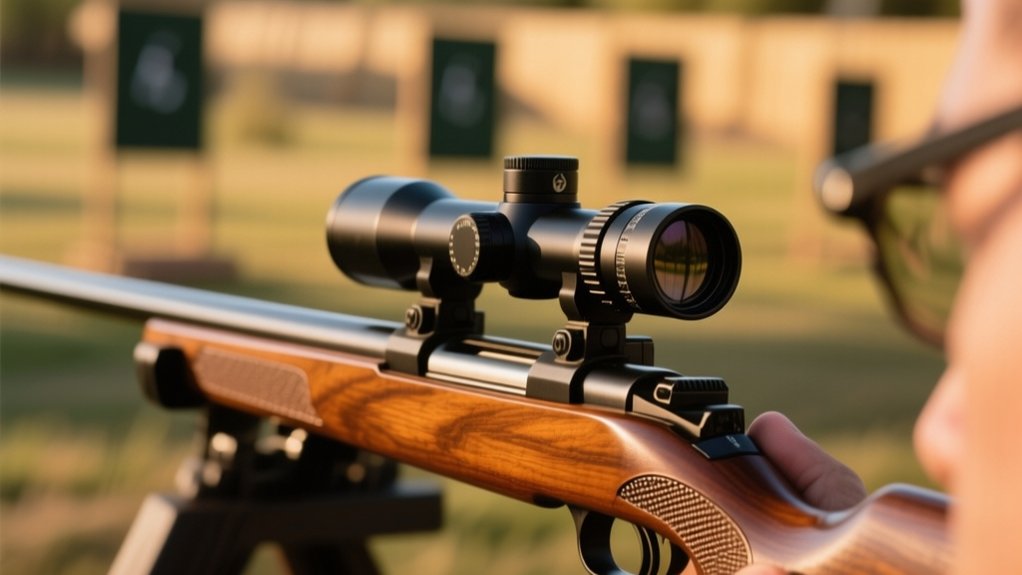
Although it might seem like a small detail, eye relief on a rifle scope plays a crucial role in your shooting experience. Eye relief is the distance between your eye and the scope’s eyepiece where you can see the full field of view clearly.
If you position your eye too close or too far from this point, the image will appear blurry or partially blocked. Most scopes have an eye relief range, usually between 3 to 4 inches, but it can vary depending on the model.
Knowing your scope’s eye relief helps you align your eye correctly for a clear, full sight picture every time you look through it. It’s a fundamental aspect that directly affects how well you can aim.
Why Eye Relief Matters for Comfort and Safety
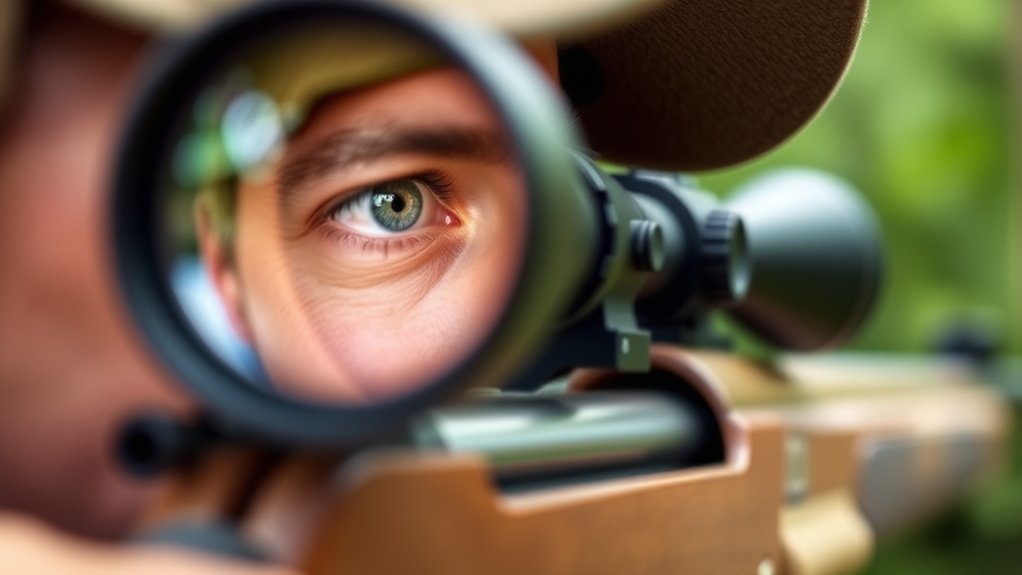
When you use a rifle scope with improper eye relief, you risk discomfort and even injury. If the scope sits too close to your eye, the recoil can cause the scope to strike your face, leading to painful bruises or cuts.
On the other hand, too much distance means you mightn’t see the full field of view, making it harder to aim accurately. Proper eye relief guarantees you can comfortably align your eye with the scope without straining or risking harm.
It also helps you maintain a consistent shooting position, improving accuracy and reducing fatigue. By paying attention to eye relief, you protect yourself physically and enhance your shooting experience, making every shot safer and more comfortable.
Typical Eye Relief Distances for Rifle Scopes
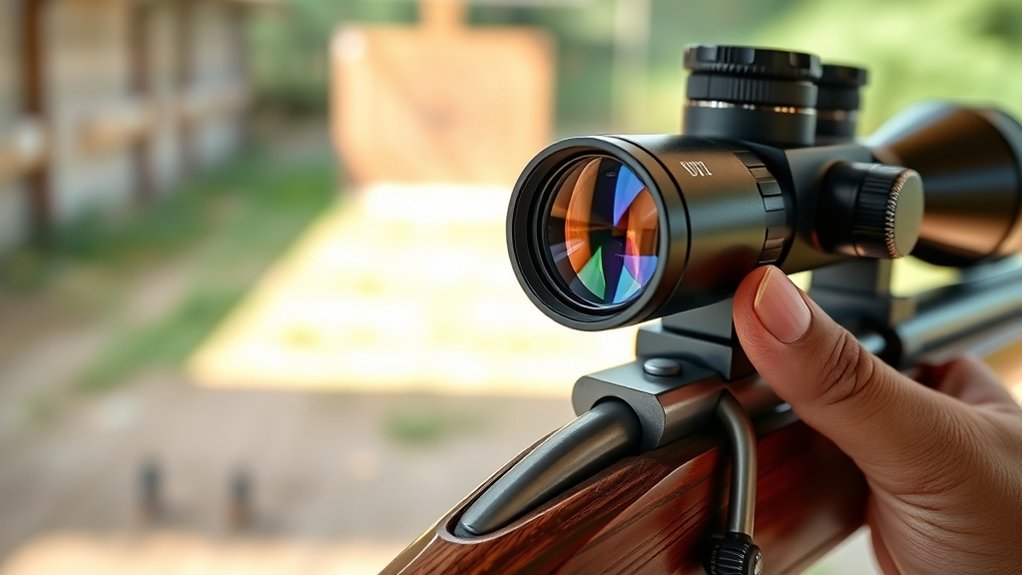
You’ll find that most rifle scopes offer eye relief between 3 to 4 inches, but this can vary depending on the scope’s design. Factors like magnification level and scope type also play a big role in determining the ideal distance.
Understanding these typical measurements helps you choose a scope that fits your shooting style comfortably and safely.
Standard Eye Relief Measurements
Since eye relief directly impacts your comfort and safety while shooting, understanding standard measurements is essential. Most rifle scopes fall within a typical eye relief range, helping you know what to expect and select the right scope for your needs.
Here are common measurements:
- 3 to 4 inches – Common for hunting scopes; offers a balance between safety and a wide field of view.
- 4 to 5 inches – Found on tactical and precision scopes; allows more flexibility in positioning.
- 5 to 6 inches or more – Typical for long-range or high-recoil rifles; maximizes safety by keeping your eye farther from the scope.
Knowing these standards helps you avoid scope bite and ensures a clear sight picture every time you shoot.
Factors Affecting Eye Relief
Although eye relief distances vary widely, several key factors influence the ideal measurement for your rifle scope. The type of firearm you use plays a big role—bolt-action rifles often require shorter eye relief, while high-recoil rifles like magnums need longer distances to protect your eye from impact.
Your shooting style also matters; if you prefer quick target acquisition, a longer eye relief gives you more flexibility.
Scope design affects this too, with variable scopes typically offering different eye relief ranges than fixed ones.
Additionally, your personal comfort and head position will determine what feels natural.
How to Measure Eye Relief on a Rifle Scope
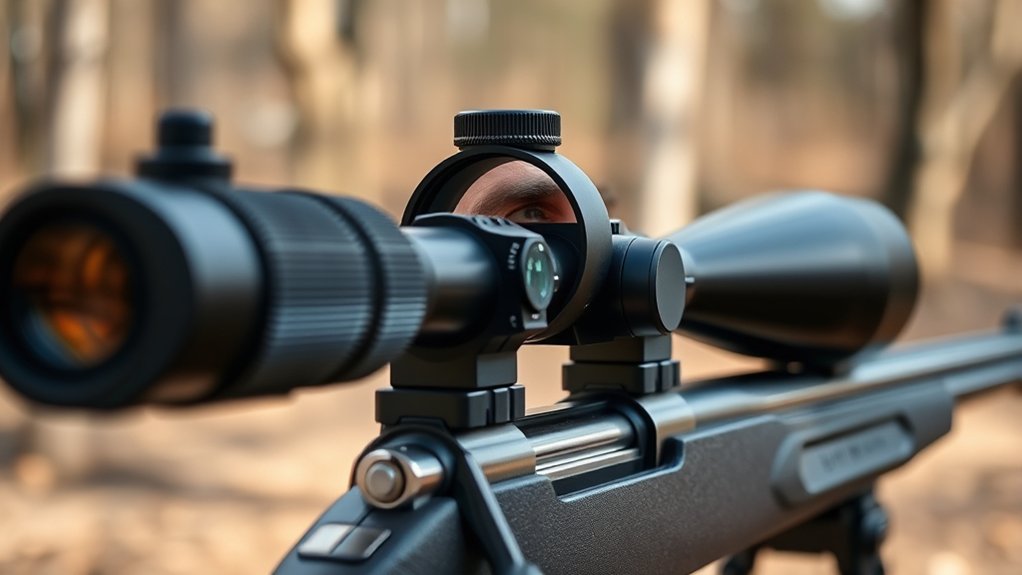
To measure eye relief on your rifle scope, start by positioning the scope correctly on your rifle as you normally would.
Then, look through the scope and measure the distance from the eyepiece to your eye where the full field of view is visible.
Make sure to use a ruler or tape measure for an accurate reading.
Positioning The Scope
When you position your rifle scope, measuring eye relief correctly guarantees a clear sight picture and protects your eye from recoil.
To position the scope properly, follow these steps:
- Mount the scope loosely on the rifle, allowing adjustments forward and backward.
- Assume your natural shooting stance and bring the rifle to your shoulder.
- Slowly move the scope until you see a full, clear sight picture without moving your head.
- Tighten the mounting rings while maintaining that position, ensuring the scope doesn’t shift.
Measuring Distance Accurately
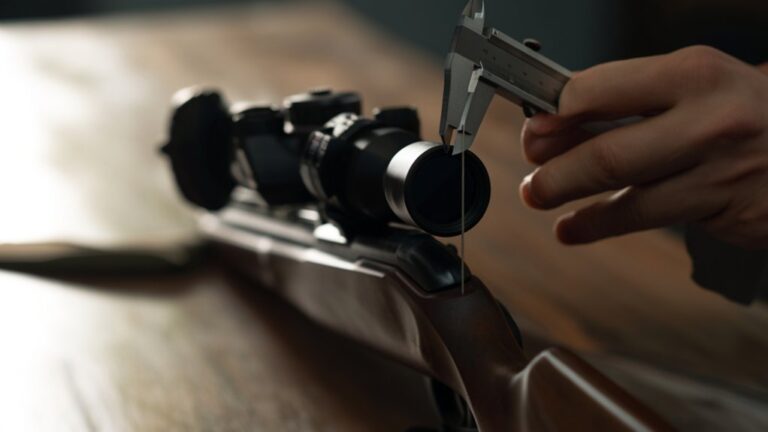
How do you measure eye relief on a rifle scope accurately? First, position your eye naturally behind the scope and slowly move back until the full sight picture appears without any dark rings. This distance is your eye relief. Use a ruler or tape measure to record the gap between your eye and the scope’s ocular lens. Repeat a few times for consistency.
| Feeling | Distance Effect |
|---|---|
| Comfort | Proper eye relief prevents strain |
| Confidence | Clear sight picture boosts accuracy |
| Safety | Avoids scope impact on your eye |
| Performance | Consistent distance improves shots |
Measuring eye relief precisely guarantees a safe, comfortable, and accurate shooting experience every time you hit the range or field.
Short vs. Long Eye Relief: Pros and Cons
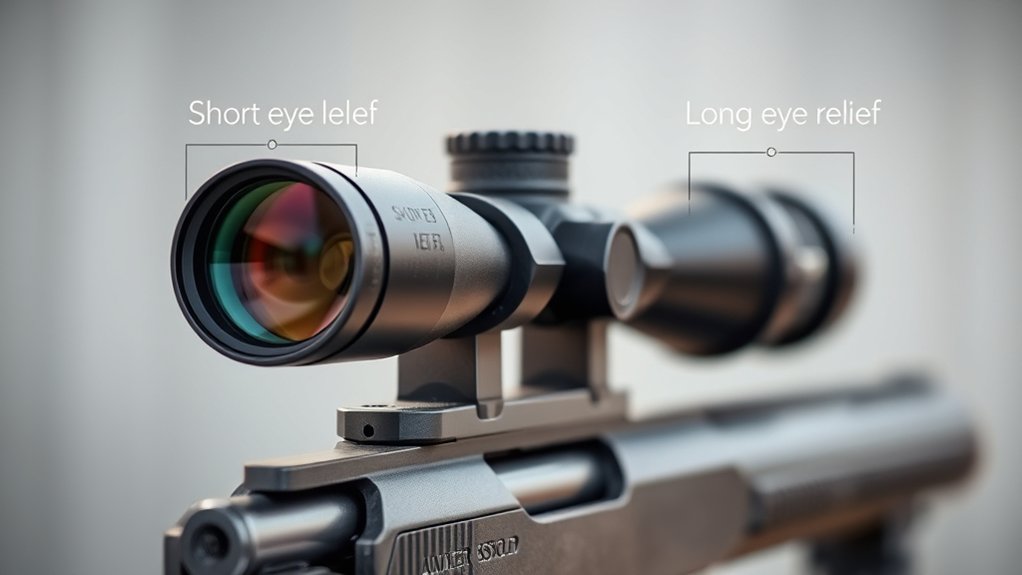
Although choosing between short and long eye relief depends on your shooting style and firearm type, understanding their distinct advantages and drawbacks can help you make a smarter decision.
Short eye relief scopes keep your eye close to the scope, offering a wider field of view and better image clarity, but they require precise positioning to avoid scope bite.
Long eye relief scopes let you hold your eye farther back, which is safer on high-recoil rifles and easier to use with bulky gear.
Here are the pros and cons:
- Short Eye Relief
- Pros: Wider field of view, sharper image
- Cons: Increased risk of scope bite, needs exact eye placement
- Long Eye Relief
- Pros: Safer with recoil, flexible eye position
- Cons: Narrower field of view, sometimes less clarity
Consider these factors carefully for your setup.
How to Choose the Right Eye Relief Length
To choose the right eye relief length, start by measuring the distance between your eye and the scope while in shooting position.
You’ll want a scope that matches your natural stance and comfort level to guarantee strain or injury.
Getting this balance right ensures you can aim quickly and safely every time.
Measuring Eye Relief Distance
Wondering how to find the right eye relief distance for your rifle scope? Measuring it correctly guarantees comfort and safety. Here’s how you can do it:
- Mount the scope securely on your rifle, replicating your typical shooting setup.
- Position your eye at a comfortable distance behind the eyepiece, then slowly move back and forth until the full sight picture appears without any dark rings or shadows.
- Measure this distance from the eyepiece lens to your eye using a ruler or tape measure. This is your effective eye relief distance.
Keep in mind that slight variations in your head position can affect this measurement, so aim for a range that offers flexibility. Measuring accurately helps you avoid scope bite and ensures consistent sight alignment.
Matching Scope To Shooter
Now that you know how to measure your eye relief distance, the next step is choosing a scope with an eye relief length that suits your shooting style and physical characteristics.
If you prefer rapid target acquisition or shoot with heavy recoil rifles, opt for longer eye relief—usually 3.5 inches or more—to prevent scope bite and guarantee comfort.
For precision shooting or benchrest targeting, a shorter eye relief around 3 inches can work since you’ll maintain a steady cheek weld.
Also, consider your facial structure; a longer eye relief helps if you have a larger face or wear glasses.
Ultimately, test different scopes to find the one that feels natural and provides a full, clear sight picture without strain or awkward positioning.
Eye Relief and Recoil: What You Need to Know
Although eye relief might seem like a minor detail, it plays an essential role in managing recoil when using a rifle scope.
If your eye relief is too short, the scope can hit your face during recoil, causing injury or discomfort. Here’s what you need to know:
- Longer eye relief reduces the risk of scope eye injury by keeping the scope farther from your eye.
- Proper eye relief distance ensures you maintain a full sight picture without flinching or adjusting your position.
- Recoil intensity varies by caliber, so selecting a scope with adequate eye relief is indispensable for heavier recoiling rifles.
Adjusting Your Shooting Position for Proper Eye Relief
Managing your shooting position directly impacts how well you maintain proper eye relief. To get a clear sight picture, position your head so your eye stays within the scope’s recommended distance—usually a few inches behind the lens.
Avoid leaning in too close or pulling back too far, as either can cause a blurry or obstructed view. Adjust your cheek weld on the stock to keep your eye aligned with the scope’s eye relief zone consistently.
Also, maintain a stable, comfortable stance that supports repeatable positioning. When you move or adjust your body, re-check your eye relief to guarantee you’re still in the ideal range.
Proper shooting posture not only improves accuracy but also protects your eye from scope impact during recoil.
How Eye Relief Affects Your Field of View
When you maintain the correct eye relief, you’ll enjoy a wider and clearer field of view through your rifle scope. Proper eye relief ensures your eye is positioned at the ideal distance from the scope lens, which affects how much of the scene you see. If you’re too close or too far, your field of view narrows or becomes distorted.
Here’s how eye relief impacts what you see:
- Maximized Clarity: Proper distance reduces blurriness and edge distortion, giving you a crisp image.
- Full Field of View: You can see the entire scope’s viewing area without vignetting or dark rings.
- Comfortable Viewing: Maintaining eye relief prevents eye strain, letting you track your target longer.
How Eye Relief Impacts Target Acquisition Speed
Getting your eye in the right spot with proper eye relief helps you acquire targets faster.
When your eye is positioned ideally, you won’t waste time adjusting the scope between shots.
This means you can react quickly and keep your focus on the target.
Optimal Eye Positioning
Although eye relief might seem like a minor detail, it plays a vital role in how quickly you can acquire your target. Positioning your eye properly ensures a clear, full sight picture without straining or moving excessively.
When your eye is correctly placed, you avoid delays caused by adjusting your head or scope.
To achieve optimal eye positioning:
- Maintain the recommended distance from the scope’s eyepiece to prevent blurry or partial images.
- Align your eye centrally with the scope to get a full field of view and avoid black rings or shadows.
- Keep your head steady to quickly shift between targets without losing sight alignment.
Following these steps helps you react faster and shoot more accurately.
Reducing Scope Adjustment Time
How quickly can you acquire your target under pressure? Eye relief plays a essential role in minimizing the time you spend adjusting your scope. With proper eye relief, you position your eye at the ideal distance from the scope lens, allowing for an immediate, clear sight picture without fumbling. This instant clarity speeds up target acquisition and increases your chances of a successful shot.
| Eye Relief Distance | Adjustment Time | Target Acquisition Speed |
|---|---|---|
| Too Short | High | Slow |
| Optimal | Low | Fast |
| Too Long | Moderate | Moderate |
Choosing Eye Relief for Different Rifle Types
Because each rifle type presents unique handling and shooting dynamics, choosing the right eye relief is essential for both comfort and safety. You’ll want to match the eye relief to your rifle’s recoil and shooting style.
Here’s how to pick the right eye relief for different rifles:
- Bolt-action rifles: Opt for moderate eye relief (3-4 inches) to balance comfort and clear sight picture. These rifles have strong recoil but slower follow-up shots.
- Semi-automatic rifles: Choose shorter eye relief (2.5-3.5 inches) for quicker target acquisition and rapid follow-up shots.
- Lever-action rifles: Go for longer eye relief (4+ inches) because these rifles often have significant recoil and require more distance for safe scope placement.
Matching eye relief to your rifle improves shooting accuracy and prevents scope bite.
How Your Shooting Environment Influences Eye Relief Choice
When you consider where you’ll be shooting, your choice of eye relief should adapt to those conditions. If you’re hunting in dense woods or brush, longer eye relief helps keep your scope at a safer distance from branches and recoil impact.
For open fields or long-range shooting, you might prefer shorter eye relief to gain a wider field of view and better cheek weld. In fast-paced environments like tactical shooting or competitions, consistent eye relief guarantees quick target acquisition without sacrificing comfort.
Weather also plays a role—rain or fog can affect visibility, so choose an eye relief that works well with protective gear like goggles. Ultimately, matching your eye relief to your shooting environment improves both safety and accuracy.
Eye Relief Differences Among Popular Scope Styles
Although different scope styles serve various shooting needs, their eye relief characteristics vary considerably, affecting your comfort and performance. Understanding these differences helps you pick the right scope for your rifle and shooting style.
- Traditional Scopes: Usually offer 3-4 inches of eye relief, ideal for bolt-action rifles where recoil is moderate. You’ll need to position your eye carefully for a full sight picture.
- Variable Power Scopes: These often provide 3-5 inches of eye relief, balancing flexibility and comfort. You can adjust magnification without losing your ideal eye position.
- Long Eye Relief (LER) Scopes: Designed for high-recoil firearms or tactical use, these offer 6 inches or more of eye relief, giving you extra space to avoid scope bite and maintain accuracy.
Choose a style that aligns with your shooting needs and recoil tolerance.
Tips for Testing Eye Relief Before Buying a Scope
Understanding the eye relief offered by various scope styles helps you narrow down your options, but testing it yourself guarantees the best fit. Before buying, hold the scope at a comfortable distance from your eye and look through it. Move it slightly back and forth to find the clear viewing range. Check for a full sight picture without black rings or shadows.
Here’s a quick guide to test eye relief effectively:
| Step | What to Do | Purpose |
|---|---|---|
| 1 | Mount or hold scope properly | Simulate real use |
| 2 | Position your eye | Find initial eye relief spot |
| 3 | Move scope closer/farther | Identify clear image distance |
| 4 | Check sight clarity | Ensure full field of view |
| 5 | Confirm comfort and safety | Avoid recoil injury |
Testing guarantees you pick a scope that fits your shooting style perfectly.
Common Mistakes to Avoid When Selecting Eye Relief
Choosing the wrong eye relief can lead to discomfort, poor accuracy, and even injury. To avoid these issues, steer clear of common mistakes when selecting eye relief for your rifle scope.
- Ignoring Your Shooting Style: Don’t pick a fixed eye relief without considering whether you shoot from a standing, prone, or bench position. Each style demands different eye relief lengths for comfort and clarity.
- Overlooking Recoil Impact: If you use a rifle with heavy recoil, avoid scopes with short eye relief. You risk painful scope “smacks” to your eye or eyebrow.
- Skipping Real-World Testing: Don’t rely solely on manufacturer specs. Always test the scope on your rifle to ensure the eye relief matches your natural eye position.
Avoid these mistakes to secure a comfortable, accurate shooting experience.
Frequently Asked Questions
Can Eye Relief Affect the Lifespan of a Rifle Scope?
No, eye relief doesn’t affect your rifle scope’s lifespan directly. However, using proper eye relief helps avoid damage from recoil or eye strain, indirectly preserving your scope’s condition and ensuring you keep shooting comfortably and safely for years.
Does Eye Relief Influence the Weight of the Scope?
No, eye relief doesn’t directly influence your scope’s weight. It mainly affects how far your eye sits from the lens. The scope’s design and materials determine weight, so you won’t notice much difference due to eye relief alone.
How Does Eye Relief Interact With Scope Magnification Levels?
You’ll notice that higher magnification often shortens eye relief, making it harder to keep a safe distance from the scope. Lower magnifications generally offer longer eye relief, giving you more comfort and flexibility while aiming.
Is Eye Relief Important for Night Vision Rifle Scopes?
Yes, eye relief is essential for night vision scopes. You’ll need enough distance to avoid eye strain and guarantee comfort while maintaining a clear view, especially since night vision devices are often bulkier than regular scopes.
Can Eye Relief Settings Be Modified After Purchase?
Oh sure, you can just tweak eye relief settings anytime—if your scope’s designed for it. Most fixed scopes don’t allow changes, so you’ll either adjust your shooting position or upgrade to one with adjustable eye relief instead.
Conclusion
Understanding eye relief on a rifle scope is like finding the perfect dance partner—it guarantees comfort, safety, and accuracy in every shot. By choosing the right eye relief, you prevent scope bite and maintain a clear sight picture. Remember to test before you buy, considering your shooting style and environment. With the right eye relief, your shooting experience will flow smoothly, making every target within reach feel like second nature.