How to Read a Rifle Scope in 7 Essential Steps
To read a rifle scope in 7 essential steps, first learn its parts like the objective lens and reticle. Next, understand magnification for your shooting needs. Adjust the reticle using windage and elevation turrets for accuracy, and read range markings to compensate for distance or wind. Use the parallax knob to align your target and reticle perfectly. Finally, practice these adjustments in real scenarios to build confidence. Follow along to uncover finer details that enhance your precision.
Understand the Basic Parts of a Rifle Scope
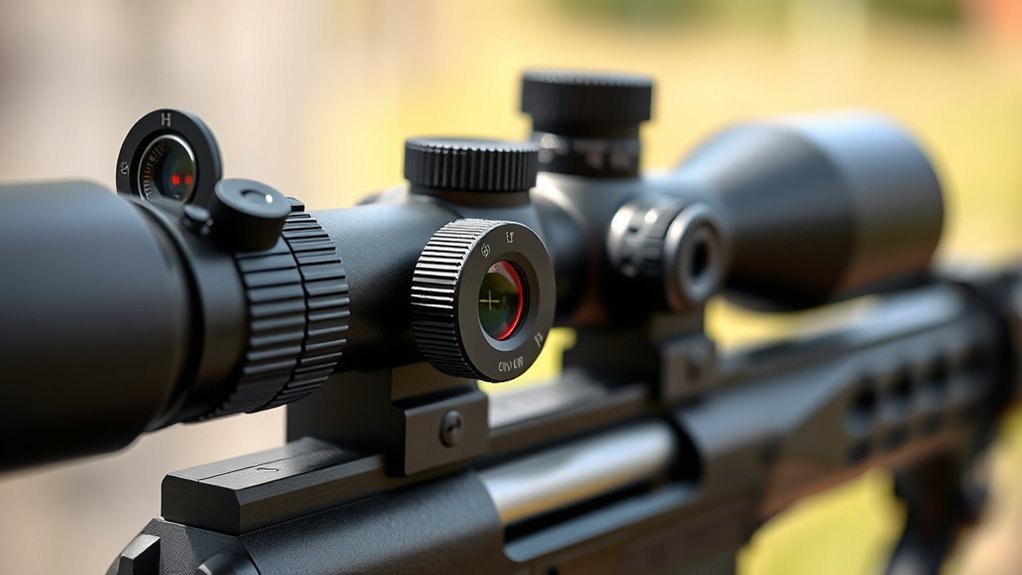
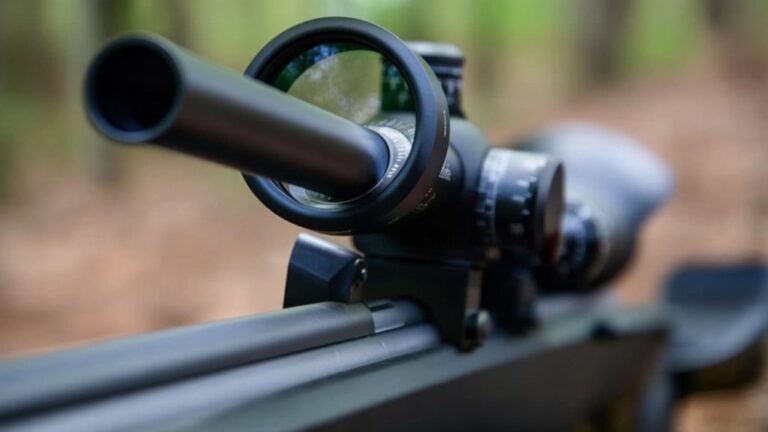
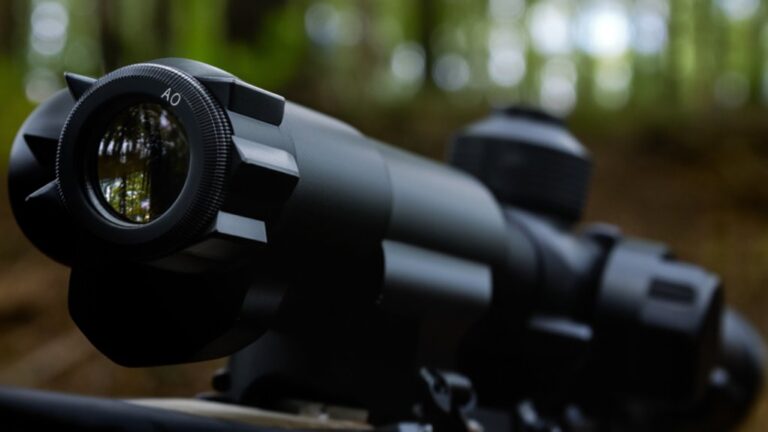
Before you can effectively use a rifle scope, you need to understand its basic parts. First, the objective lens is the front glass that gathers light, helping you see your target clearly.
Next, the eyepiece is where you look through, and it often houses the focus adjustment.
The tube connects these lenses and holds everything together.
On top of the tube, you’ll find the turrets—these knobs let you adjust windage (left/right) and elevation (up/down) to zero in on your target.
The reticle, or crosshairs, sits inside the scope and helps you aim precisely.
Finally, some scopes include a parallax adjustment knob to keep your target sharp at different distances.
Knowing these parts is your first step toward confident shooting.
Understand Rifle Scope Magnification and Zoom
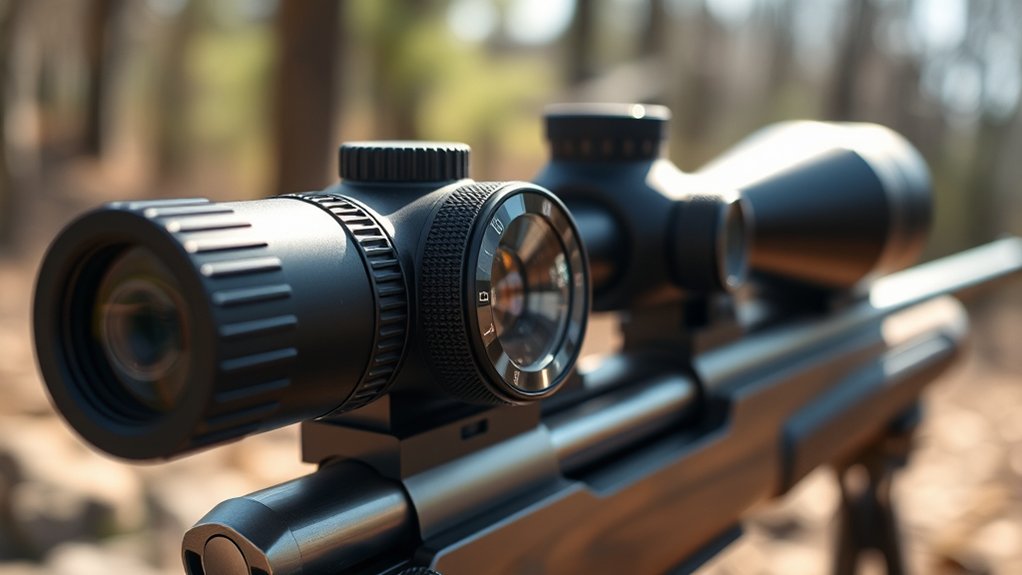
How much magnification do you really need in a rifle scope? It depends on your shooting distance and purpose.
Lower magnification, like 3x or 4x, works well for close to mid-range shots, offering a wider field of view and easier target acquisition.
Higher magnification, such as 9x or 12x, helps when you’re aiming at distant targets but narrows your view, making it harder to track moving objects.
Variable zoom scopes let you adjust magnification on the fly, giving you flexibility for different situations.
Remember, more zoom isn’t always better; it can magnify shakiness or reduce image brightness.
Choose a magnification level that suits your typical shooting scenario, balancing clarity, field of view, and stability for the best results.
Adjust Your Rifle Scope Reticle for Accuracy
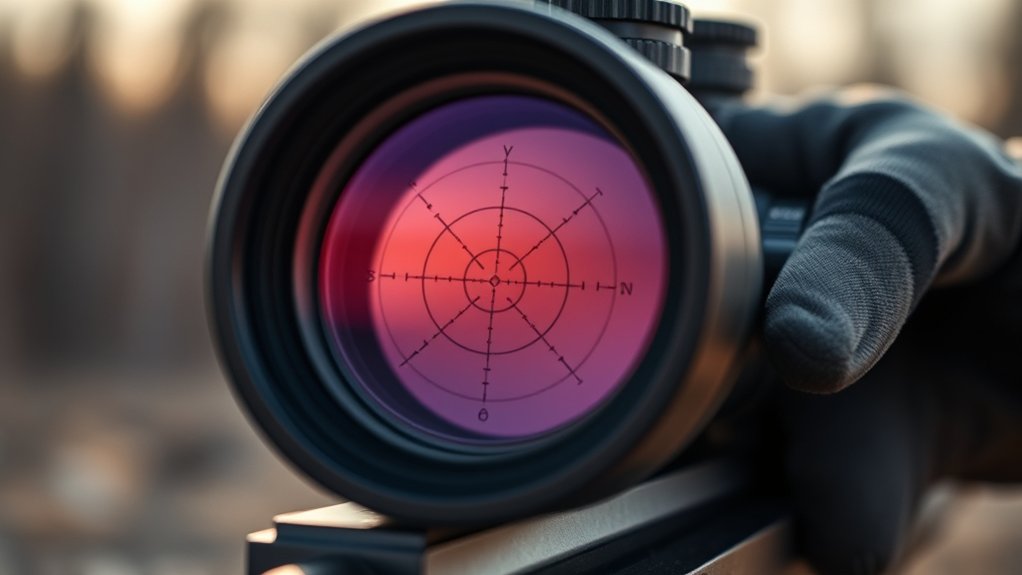
Since even the smallest misalignment can throw off your shot, adjusting your rifle scope reticle is essential for accuracy. Start by ensuring your scope is securely mounted and your rifle is stable.
Use the windage and elevation turrets to fine-tune the reticle’s position. Windage adjusts horizontal alignment, while elevation controls vertical placement.
Look through the scope at a target and make small, deliberate adjustments after each shot. Keep track of the direction and amount you move the turrets, so you can replicate or reverse changes if needed.
Once the reticle aligns perfectly with where your bullet impacts, your scope is zeroed in. This process helps you shoot confidently, knowing your reticle matches your point of aim precisely.
Read Range Markings and Holdover Points on Your Scope
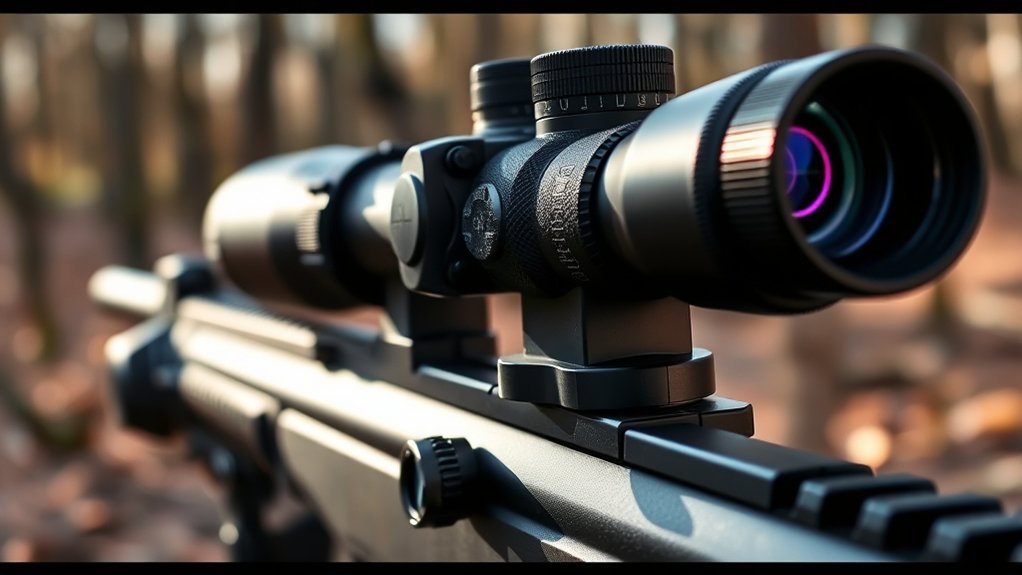
Where do you look on your rifle scope to account for distance and bullet drop? You focus on the range markings and holdover points etched into the reticle. These markings help you quickly adjust your aim without fiddling with turrets for every shot. Understanding them lets you compensate for bullet drop at various distances.
To effectively read these markings, keep in mind:
- Mil-Dots or MOA Hash Marks: Use these to estimate range or holdover based on known distances.
- Holdover Points: Align these below the central crosshair to adjust for bullet drop at longer ranges.
- Windage Marks: Located horizontally, they help you correct for wind drift alongside elevation adjustments.
Mastering these lets you make fast, accurate shots under changing conditions.
Use Parallax Adjustment on Your Rifle Scope
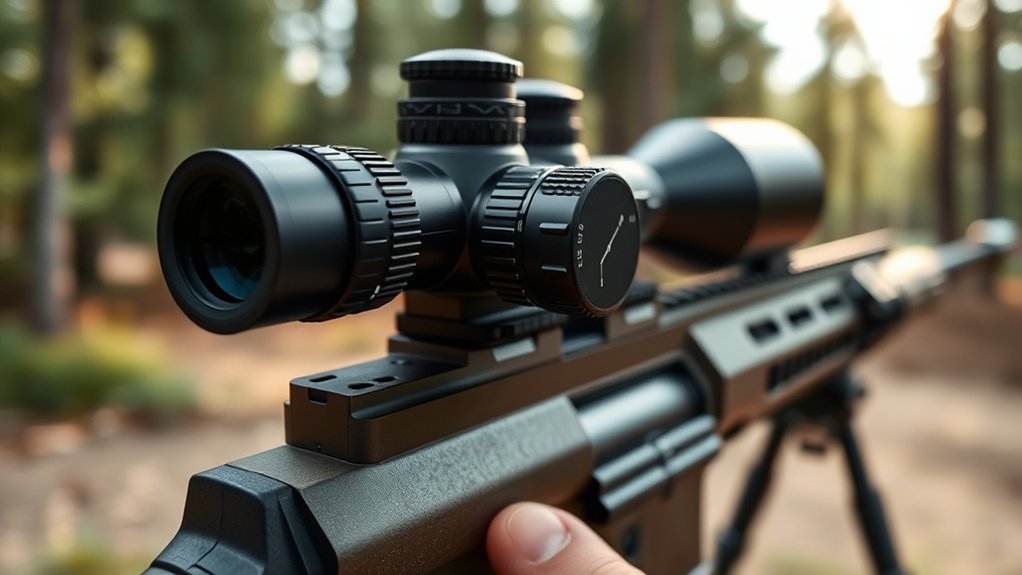
After you’ve familiarized yourself with range markings and holdover points, fine-tuning your scope’s parallax adjustment will help sharpen your focus on the target.
Parallax occurs when the reticle and target image aren’t on the same focal plane, causing the reticle to shift when you move your eye. To fix this, use the parallax adjustment knob, usually located on the side or front of your scope.
Turn it until the target image and reticle appear perfectly aligned, and the reticle won’t move as you shift your head. This adjustment is essential for accuracy at varying distances, especially beyond 100 yards.
Regularly check and adjust parallax to maintain a clear, stable sight picture, ensuring your shots hit exactly where you aim.
Adjust Windage and Elevation on Your Rifle Scope
To guarantee your shots land exactly where you want, you’ll need to adjust the windage and elevation settings on your rifle scope. Windage controls the horizontal alignment, while elevation adjusts the vertical placement of your point of aim.
Start by zeroing your rifle at a known distance, then make incremental adjustments based on your shot placement.
Keep these tips in mind:
- Turn the windage dial right to move the point of impact right, left to move it left.
- Adjust the elevation dial up to raise the impact point, down to lower it.
- Make small, precise changes and recheck your target after each adjustment to avoid overcorrection.
Mastering these adjustments ensures your scope is calibrated perfectly for accurate shooting.
Practice Reading Your Rifle Scope in Real Scenarios
When you practice reading your rifle scope in real scenarios, you’ll develop the skills needed to quickly interpret your adjustments and environmental factors.
Start by setting up targets at various distances, then adjust your windage and elevation accordingly. Pay attention to how changes in light, wind, and terrain affect your shot placement.
Use different shooting positions to simulate real hunting or tactical situations. Take notes on how each variable influences your scope’s reticle and holdover points.
The more you engage with authentic conditions, the more intuitive reading your scope becomes. This hands-on experience helps you make faster, smarter decisions in the field, improving accuracy and confidence.
Consistent practice guarantees you’re prepared for whatever the environment throws your way.
Frequently Asked Questions
How Do I Clean and Maintain My Rifle Scope?
You clean your rifle scope by gently wiping lenses with a microfiber cloth and lens cleaner. Avoid harsh chemicals. Keep the body dry, check for loose screws, and store it in a protective case to maintain ideal performance.
What Are the Best Brands for Beginner Rifle Scopes?
You’ll find many friendly options like Vortex, Nikon, and Bushnell that won’t overwhelm you. These brands offer reliable, easy-to-use scopes that help you focus clearly and build confidence on your shooting journey without breaking the bank.
Can I Use a Rifle Scope for Long-Range Shooting Competitions?
Yes, you can use a rifle scope for long-range shooting competitions. Just make sure it has the right magnification, clear optics, and reliable reticle adjustments to help you hit distant targets accurately under competition conditions.
How Does Scope Coating Affect Visibility in Different Light?
Like seeing through a clear morning mist, scope coatings reduce glare and boost light transmission, so you’ll spot targets sharply in bright sun or twilight. You’ll trust your sight no matter the fading light.
What Accessories Are Compatible With My Rifle Scope?
You can use lens covers, scope rings, sunshades, and anti-reflective tape with your rifle scope. Additionally, consider mounts, bubble levels, and scope caps to enhance stability, protection, and shooting accuracy in various conditions.
Conclusion
So, you’ve learned how to read your rifle scope like a pro—because nothing says “fun” like squinting through tiny lenses, adjusting knobs, and doing math in the field. But hey, once you master these steps, you’ll impress everyone with your pinpoint accuracy—just don’t forget to actually hit the target! After all, all those adjustments are useless if you can’t keep your cool when it counts. Happy shooting!