How to Measure Rifle Scope Height in 5 Easy Steps
To measure your rifle scope height in five easy steps, first gather tools like a digital caliper, ruler, and level. Next, securely position your rifle on a flat surface and make sure it’s perfectly horizontal. Measure from the barrel’s center to the scope tube’s center, using precise tools. Then, calculate scope height by subtracting half the barrel diameter from this distance. Finally, adjust your setup for comfort and alignment. Keep going to uncover tips for perfect mounting and eye relief.
Gather Tools for Measuring Scope Height
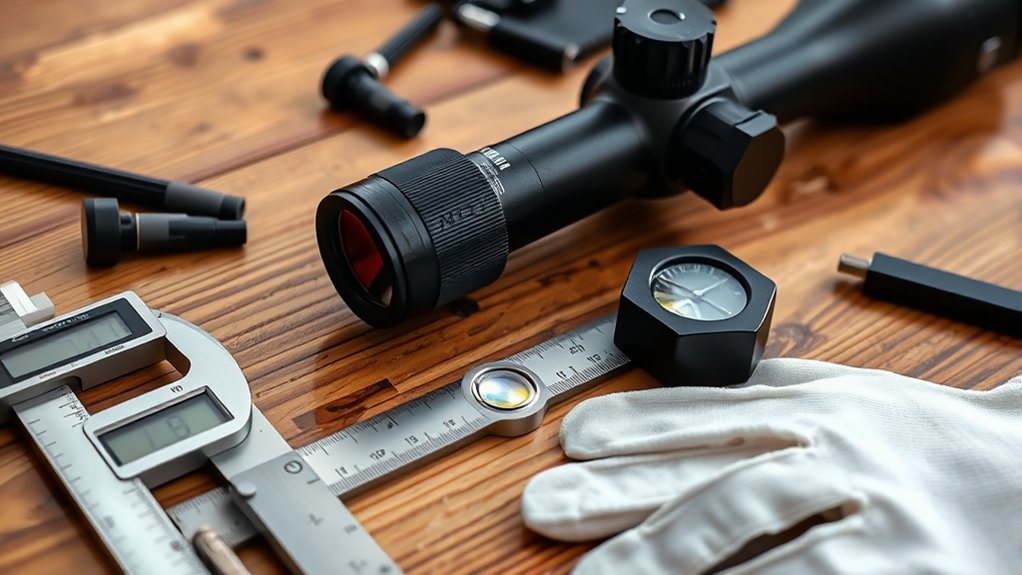
Before you measure your rifle scope height, you’ll need to gather a few essential tools. Start with a reliable caliper, preferably digital, to get precise measurements.
You’ll also want a flat, stable surface to rest your rifle on, ensuring accuracy. A ruler or tape measure comes in handy for quick checks or double-checking your caliper readings.
Don’t forget a small level to make sure your rifle is perfectly horizontal during measurement.
If you have a scope height chart or reference guide, keep it nearby for comparison.
Having a clean cloth to wipe down your rifle and scope will prevent dirt from affecting your measurements.
With these tools ready, you’re set to measure your scope height efficiently and accurately.
Position Your Rifle and Scope Correctly
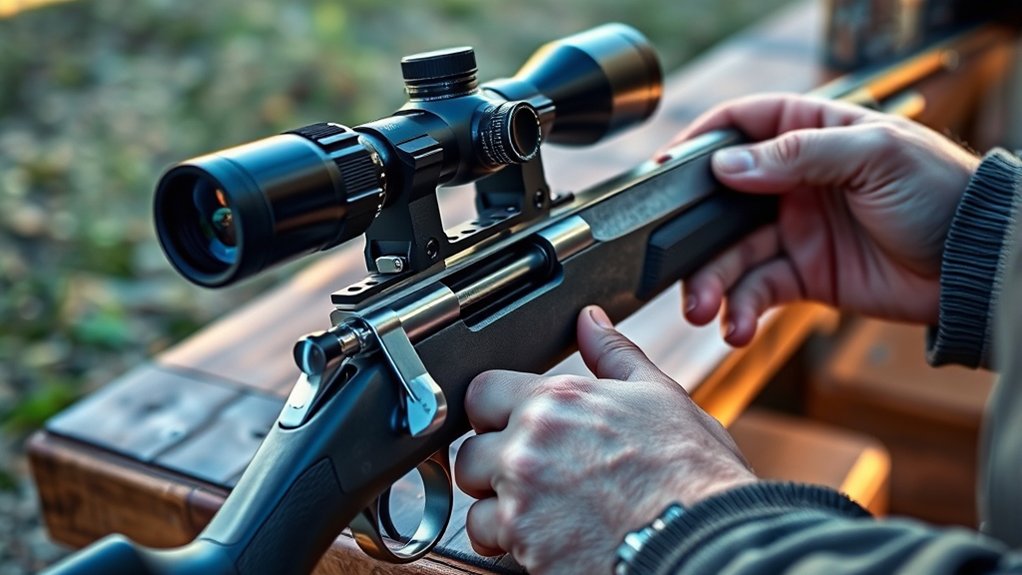
When you position your rifle and scope correctly, you guarantee accurate and consistent height measurements.
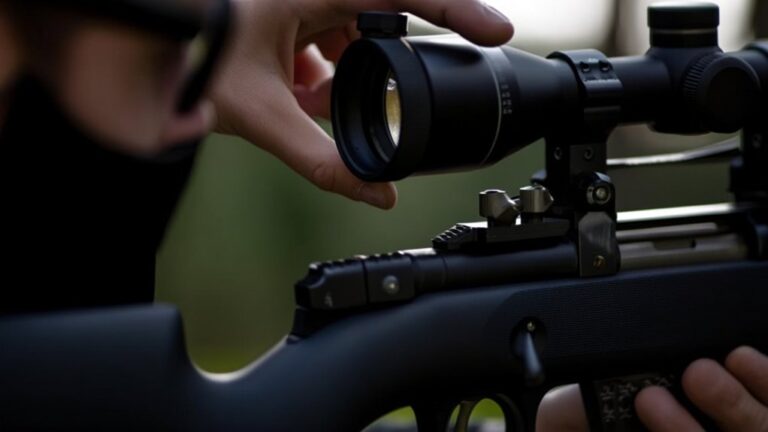
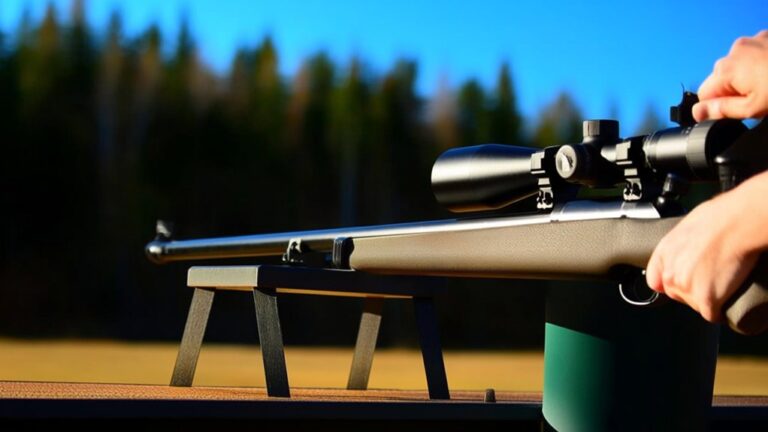
Begin by securely resting your rifle on a stable surface or shooting rest to prevent any movement. Make sure the rifle is level, using a bubble level if needed, so the barrel and scope align horizontally.
Attach the scope firmly in its mounts, ensuring it’s properly seated without tilting. Keep the rifle in a natural shooting position—don’t force an unnatural angle that could skew your measurements.
Align your eye directly with the scope’s centerline to avoid parallax errors.
Measure the Distance From Barrel to Scope Center
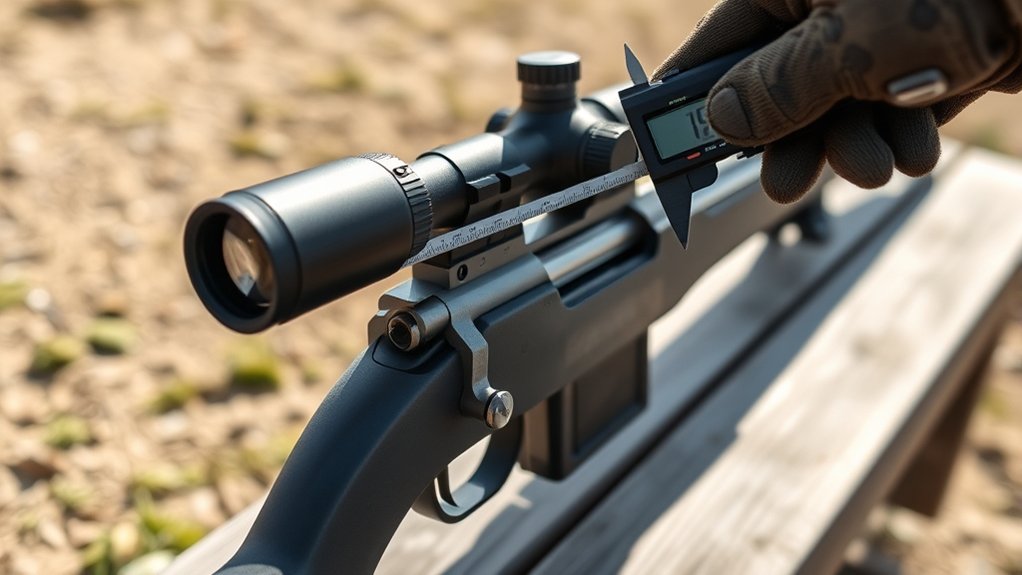
After setting your rifle and scope correctly, you can measure the distance from the barrel to the scope center with accuracy.
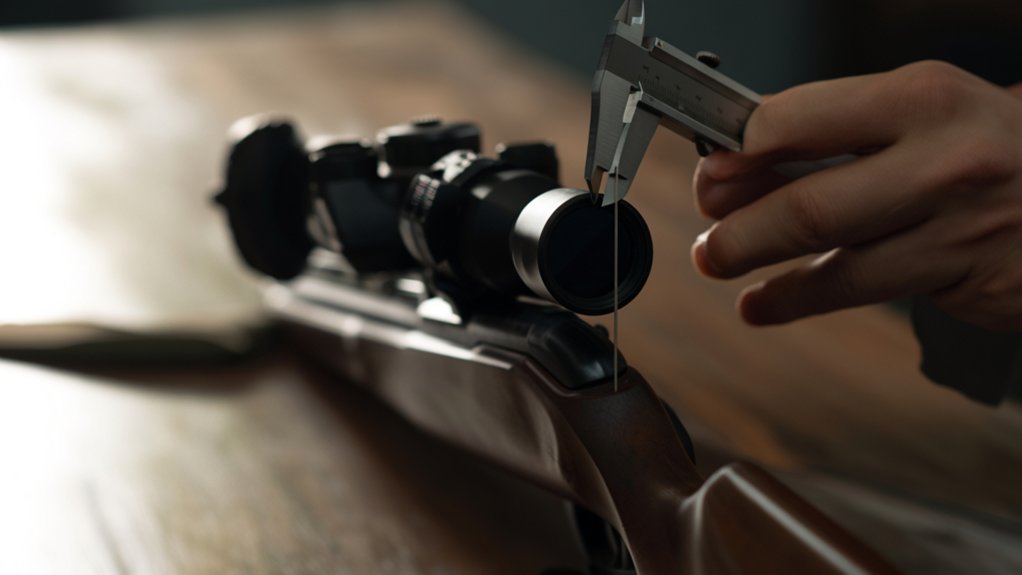
First, place your rifle on a stable surface to keep it steady. Use a caliper or a ruler with millimeter markings for the most precise measurement.
Measure from the top of the rifle’s barrel—usually the centerline of the bore—straight up to the center of the scope tube.
Make sure your measuring tool is perpendicular to the barrel to avoid errors.
If you don’t have a caliper, a combination square works well to find the center height of the scope relative to the barrel’s top.
Record this measurement carefully, as it’s vital for mounting your scope correctly and ensuring proper sight alignment.
Calculate Scope Height With a Simple Formula
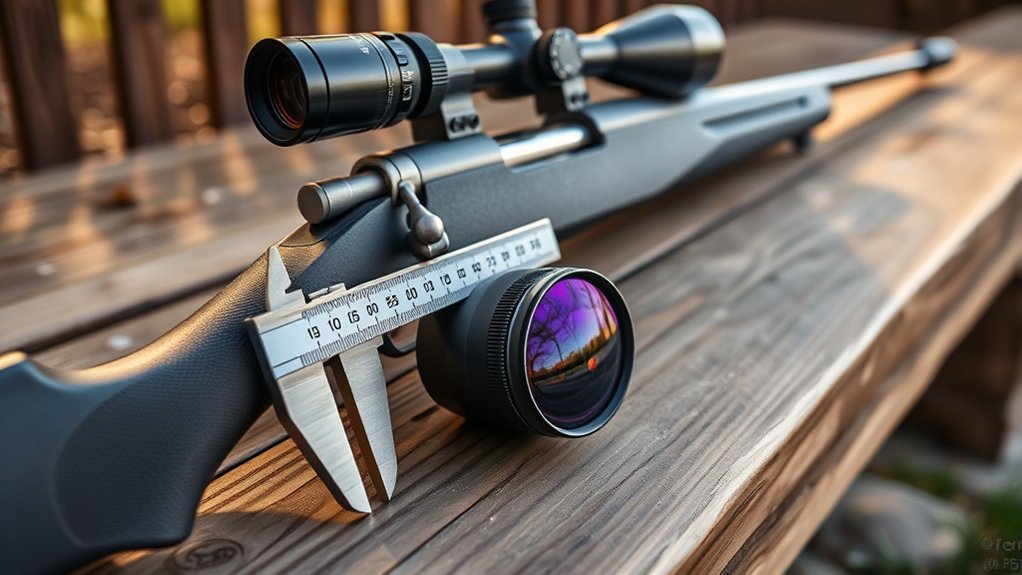
Although measuring the distance from your barrel to the scope center is essential, you can simplify your setup by calculating the scope height using a straightforward formula.
Start by measuring the radius of your barrel—half its diameter—and then measure the distance from the base of the barrel to the center of the scope’s tube.
Subtract the barrel radius from this measurement to get your scope height.
For example, if your barrel diameter is 1 inch, its radius is 0.5 inches.
If the distance from the bottom of the barrel to the scope center is 1.8 inches, subtract 0.5 from 1.8, giving you a scope height of 1.3 inches.
This quick calculation helps you understand how high your scope sits relative to the barrel, essential for proper mounting and accuracy.
Adjust Your Setup After Measuring Scope Height
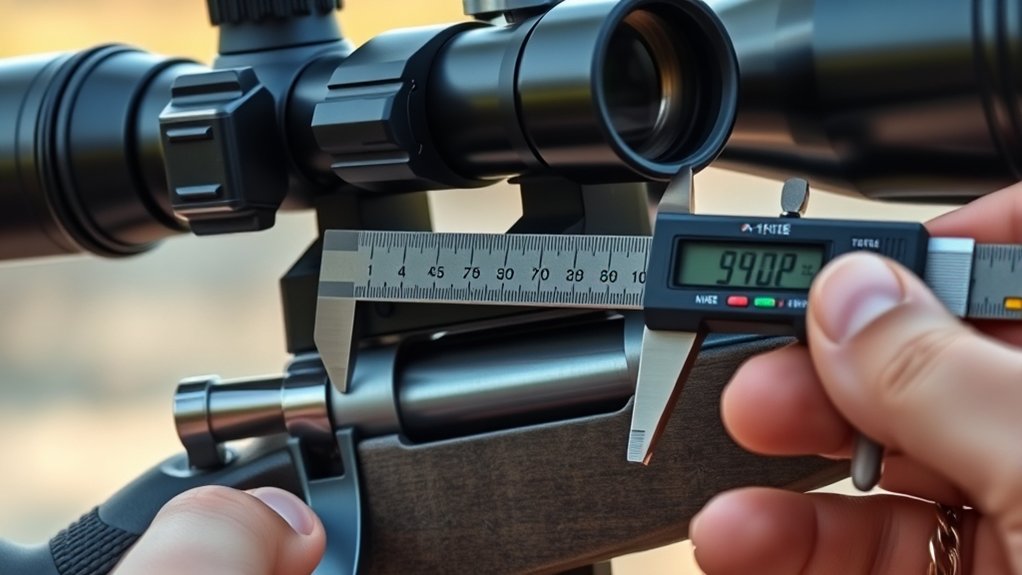
Once you know your scope height, you can fine-tune your setup to guarantee ideal alignment and comfort. Adjusting your setup ensures your eye naturally aligns with the scope, reducing strain and improving accuracy.
Start by checking your rifle’s stock and grip position relative to your body. If the scope height feels off, consider adjusting the scope mounts or switching to risers or lower rings. Don’t forget to recheck your cheek weld and eye relief after each change.
Follow these steps to adjust effectively:
- Loosen scope rings and reposition the scope for a comfortable eye alignment.
- Tighten rings evenly while holding the scope steady.
- Test your cheek weld to confirm a natural sight picture.
- Make small adjustments and repeat until alignment feels perfect.
This process enhances your shooting comfort and precision.
Frequently Asked Questions
What Types of Scopes Are Best for Long-Range Shooting?
You’ll want scopes with high magnification, clear glass, and precise reticles for long-range shooting. Look for features like adjustable parallax, zero-stop turrets, and durable construction to guarantee accuracy and reliability in various conditions.
How Does Scope Height Affect Bullet Trajectory?
Scope height affects bullet trajectory by changing the angle between your barrel and scope. The higher your scope sits, the more you’ll need to adjust for bullet drop, especially at longer distances, to guarantee accurate shots.
Can Scope Height Influence Eye Relief and Comfort?
Yes, scope height can influence your eye relief and comfort. If the scope’s too high or low, you might struggle to find a proper cheek weld, making it uncomfortable and affecting your shooting accuracy.
Are There Standard Scope Height Measurements for Different Rifle Models?
Oh, sure, every rifle model comes with a magical, universal scope height—said no one ever. You’ll find “standard” heights, but you’ll still need to measure your setup for comfort and accuracy, not just trust the manual.
How Often Should I Recheck My Scope Height After Use?
You should recheck your scope height regularly, especially after heavy use or transport. Aim for at least once every few months, or anytime you notice a shift in accuracy or recoil impacts your setup.
Conclusion
Measuring your rifle scope height might seem tricky at first, but with the right tools and a clear method, it becomes simple. You start with careful positioning, then precise measuring, and finish with smart adjustments. What once felt complicated now feels manageable. By following these easy steps, you’ll move from uncertainty to confidence, from guesswork to accuracy. In no time, your scope setup will be just right—ready for action, sharp and steady.