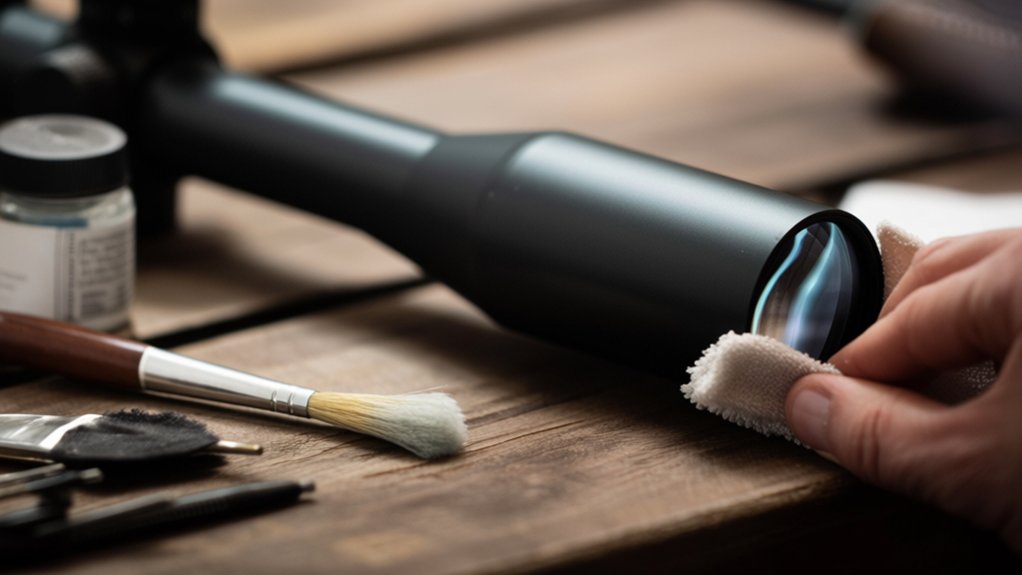
How to Clean a Rifle Scope Lens in 5 Easy Steps
To clean your rifle scope lens in 5 easy steps, start by gathering soft microfiber cloths, a lens brush or air blower, and an optics-safe cleaning solution. Gently remove dust using the blower or brush without pressing hard. Next, apply a small amount of cleaning solution to the cloth—not directly on the lens—and wipe in circular motions to lift smudges. Finally, polish with a dry microfiber cloth and consider applying a lens protectant to maintain clarity. Follow these simple steps, and you’ll keep your scope performing at its best while protecting delicate coatings. For a deeper understanding, there’s more to explore.
Why Cleaning Your Rifle Scope Lens Matters
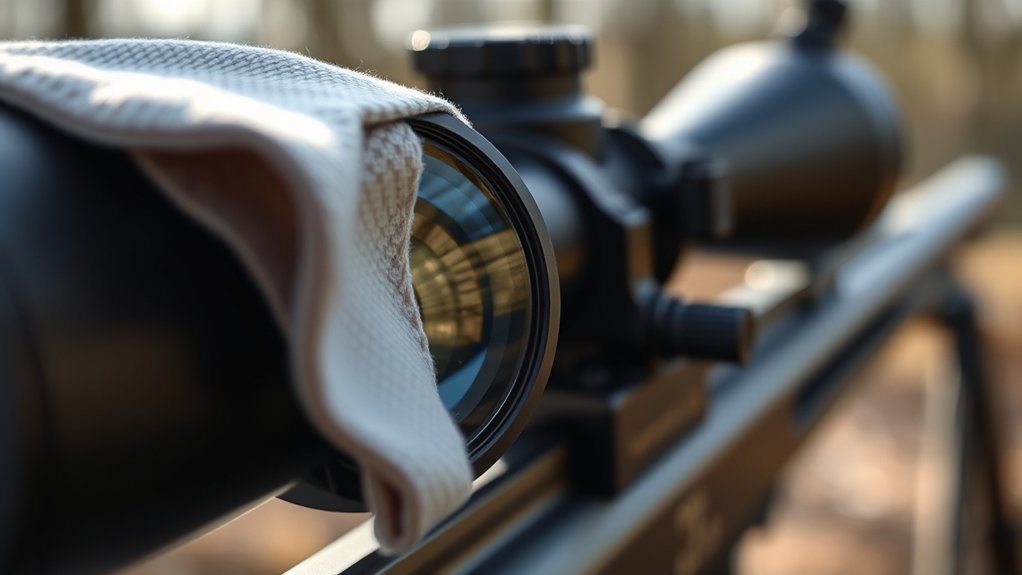
Although it might seem like a minor task, cleaning your rifle scope lens is vital for maintaining clear vision and accuracy. When dirt, dust, or smudges accumulate, they distort your sight picture, making it harder to spot your target or judge distances.
A dirty lens can also reduce light transmission, leading to a darker image, especially in low-light conditions. If you overlook lens cleanliness, you risk missing essential details or shots.
Regular cleaning helps preserve the lens coating, preventing scratches and extending the scope’s lifespan. By keeping your lens spotless, you guarantee consistent performance and reliability every time you head out.
Taking a few moments to clean your scope lens protects your investment and sharpens your shooting experience.
Gather Essential Tools for Cleaning Your Rifle Scope Lens
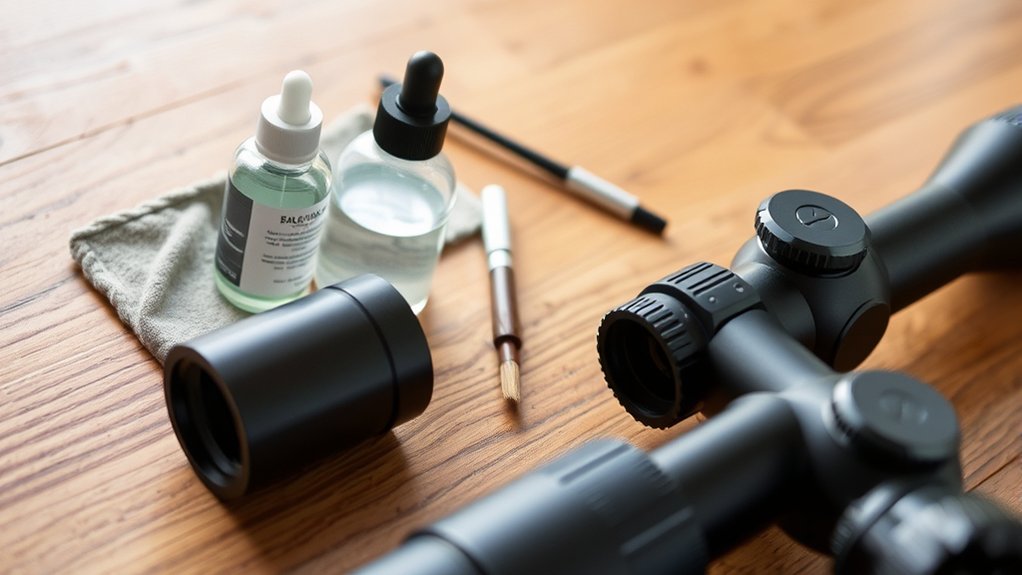
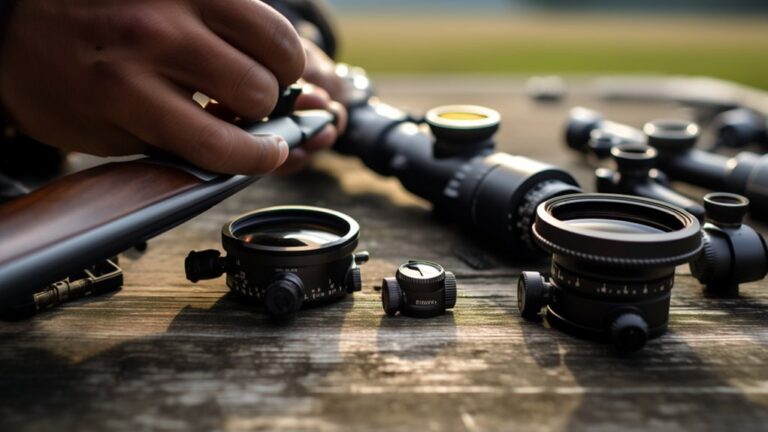
Before you start cleaning your rifle scope lens, you’ll need to gather the right tools to avoid damaging the delicate surface. Using improper items can scratch or leave residue, so having the correct supplies is essential.
Make sure you have:
- A soft microfiber cloth to gently wipe the lens without scratching.
- A lens cleaning solution designed specifically for optics to safely dissolve dirt and oils.
- A lens brush or air blower to remove loose dust and debris without rubbing.
These tools help maintain your scope’s clarity and performance.
Avoid using household cleaners or rough fabrics, as they can cause irreversible damage.
Having everything ready before you begin guarantees a smooth, effective cleaning process.
Safely Remove Dirt and Dust From Your Rifle Scope Lens
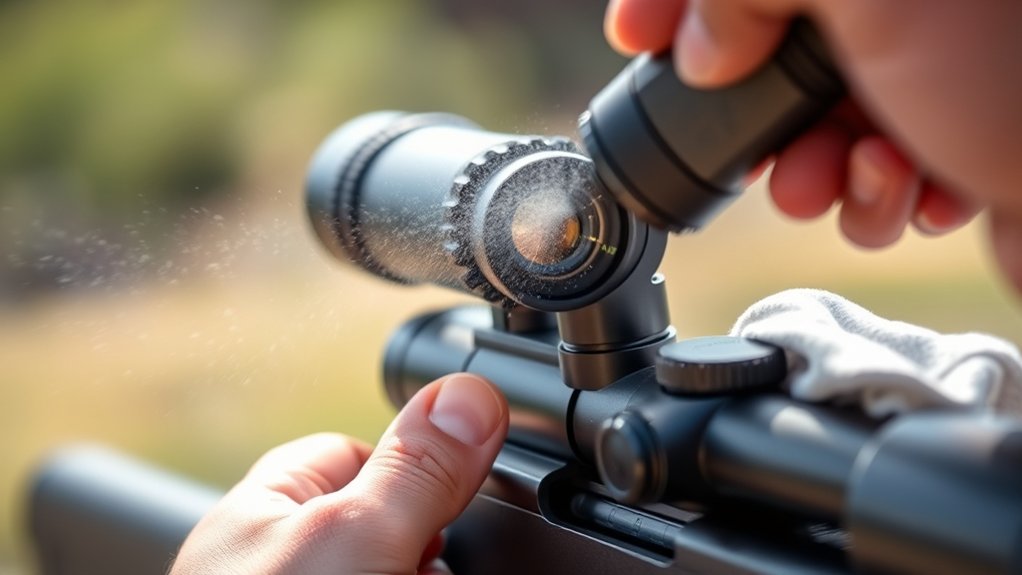
With your microfiber cloth, lens cleaning solution, and air blower ready, you can start removing dirt and dust from your rifle scope lens safely.
First, use the air blower to gently blow away loose particles; avoid using canned air, which can be too harsh.
Next, take your microfiber cloth and softly brush the lens surface to lift any remaining dust. Don’t press hard, as this can scratch the lens.
If stubborn dirt remains, keep it dry for now—applying liquids is for the next step.
Avoid using your breath or fingers, which can introduce moisture or oils.
Apply Cleaning Solution and Wipe Away Smudges Gently
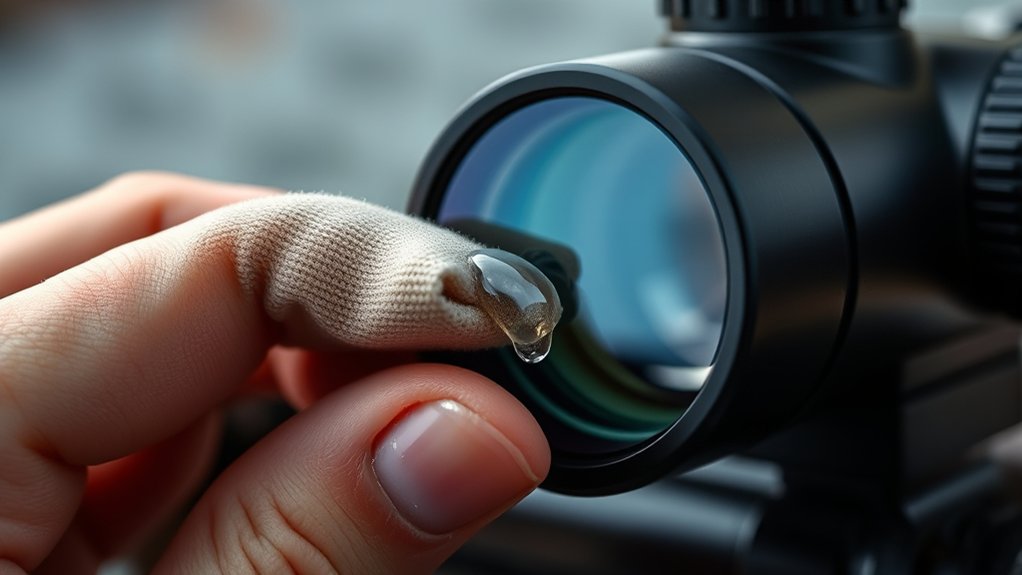
Once you’ve removed loose dirt and dust, it’s time to tackle smudges and fingerprints by applying a cleaning solution. Use a lens cleaner specifically designed for optics to avoid damage.
Apply the solution sparingly—never directly on the lens. Instead, put a few drops on a microfiber cloth. Gently wipe the lens in a circular motion to lift smudges without scratching.
Keep these tips in mind:
- Use only microfiber or lens-specific cloths to prevent abrasion.
- Avoid household cleaners or solvents that can strip coatings.
- Don’t press too hard; let the cleaning solution do the work.
This careful approach preserves the lens coatings and guarantees clear vision through your rifle scope.
Polish and Protect Your Rifle Scope Lens for Long-Lasting Clarity
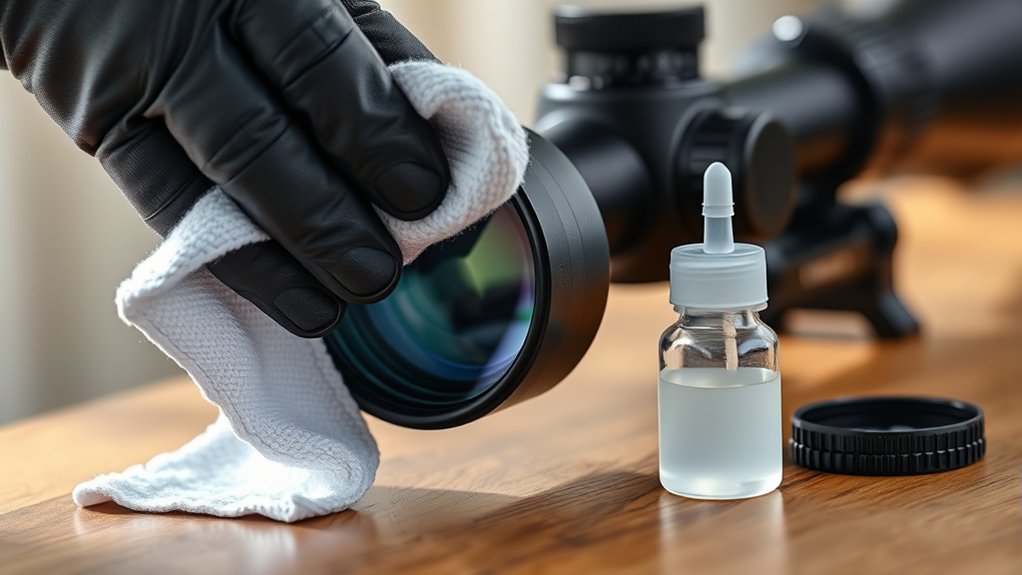
To keep your rifle scope lens clear over time, you’ll want to polish it gently after cleaning and apply a protective layer that guards against dust, moisture, and scratches.
Use a microfiber cloth to buff the lens in small, circular motions, removing any remaining streaks without causing damage. Avoid excessive pressure, which can harm the delicate coatings.
Next, consider applying a lens protectant or anti-fog solution designed for optics. These products create a thin, invisible barrier that repels water and dust while enhancing clarity.
Always follow the manufacturer’s instructions to guarantee compatibility with your scope’s coatings. Regularly polishing and protecting your lens will extend its life and maintain sharp, clear vision for every shot you take out in the field.
Frequently Asked Questions
How Often Should I Clean My Rifle Scope Lens?
You should clean your rifle scope lens only when it’s visibly dirty or after heavy exposure to dust, moisture, or fingerprints. Over-cleaning can damage coatings, so keep it clean but avoid unnecessary wiping.
Can I Use Household Glass Cleaner on My Rifle Scope Lens?
Imagine a foggy window on a rainy day—using household glass cleaner on your rifle scope lens can make it worse. You shouldn’t because its chemicals might damage the coating; instead, use specialized lens cleaner and a microfiber cloth.
What Should I Do if My Scope Lens Gets Scratched?
If your scope lens gets scratched, you should avoid harsh chemicals and try a lens polish designed for optics. For deep scratches, consider professional repair or replacement to maintain clear vision and accuracy.
Is It Safe to Clean My Rifle Scope Lens in Cold Weather?
You can safely clean your rifle scope lens in cold weather, but avoid harsh scrubbing on frosty glass. Picture gentle strokes wiping away icy dew—use a soft cloth and warm breath to prevent damage and fogging.
How Do I Store My Rifle Scope to Prevent Lens Damage?
You should store your rifle scope in a padded, protective case to prevent scratches and impacts. Keep it in a cool, dry place, away from direct sunlight and moisture, and avoid stacking heavy items on top.
Conclusion
Now that you’ve learned these simple steps, keeping your rifle scope lens crystal clear is as easy as pie. By regularly cleaning and protecting your lens, you’ll guarantee every shot is sharp and on target, like a window to your success. Remember, a clean lens isn’t just about looks—it’s your secret weapon for precision and confidence in the field. So, treat it well, and it’ll never let you down.