

How to Confirm Gustav Holst’s British Status
You can confirm Gustav Holst’s British status by checking his birthplace—Cheltenham, England—and his British-born parents. Official documents like birth certificates and census records clearly list him as British. His education at London’s Royal College of Music and his music’s strong ties to British folk traditions also reflect his cultural roots. His career focused on promoting British music and heritage. If you explore further, you’ll uncover how deeply his life and work are woven into Britain’s identity.
Where Was Gustav Holst Born?

Although many know Gustav Holst for his famous compositions, you might wonder where he was actually born. You’ll find that Holst was born in Cheltenham, Gloucestershire, England, on September 21, 1874. This detail firmly places his origins within the United Kingdom.
Cheltenham, a spa town known for its Regency architecture, was his family’s home at the time. When you consider Holst’s birthplace, it directly ties him to British soil, reinforcing his identity as a British composer.
How Does Holst’s Family Background Show His British Roots?

Knowing that Gustav Holst was born in England gives you a clear starting point for understanding his British identity. To deepen this, look at his family background.
Holst’s father was a professional musician of Swedish descent who settled in England, marrying an Englishwoman. This blend meant Holst grew up immersed in British culture and society.
His mother’s English roots and his upbringing in a British household reinforced his connection to the country. You can see how his family life rooted him firmly in Britain, shaping his identity from childhood.
Instead of focusing on his foreign ancestry alone, recognize how his immediate family environment and British upbringing played a vital role in establishing his British status.
What Do Historical Records Reveal About Holst’s Nationality?
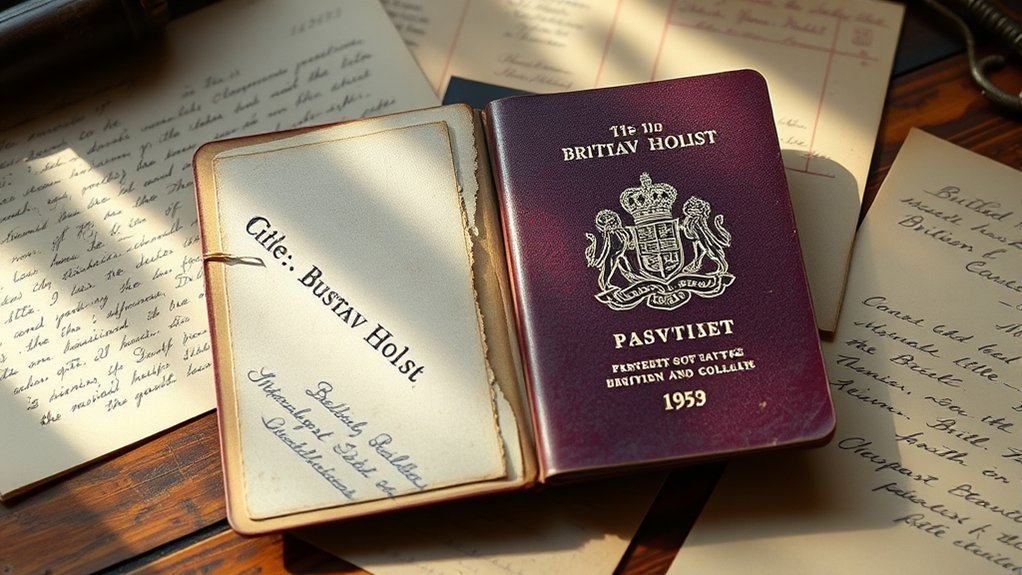
When you examine historical records, you’ll find clear evidence that Gustav Holst was recognized as British throughout his life. Birth certificates, census data, and official documents consistently list him as British, reflecting his established nationality.
Newspaper articles and concert programs from his era also identify him as a British composer, showing how society viewed his identity. Even Holst’s own writings and correspondence refer to his British heritage and cultural ties.
These records don’t just mark him as British by birth; they confirm how he was perceived and accepted in Britain’s social and cultural communities. So, when you look at historical documentation, it becomes clear Holst’s nationality was firmly British, supported by multiple independent sources across his lifetime.
How Does Holst’s Citizenship Confirm His British Identity?
Because citizenship legally defines a person’s national identity, examining Gustav Holst’s citizenship documents provides concrete proof of his British status.
When you look closely, you’ll find that Holst was born in England to British parents, automatically granting him British citizenship at birth. His official records, including birth certificates and census data, consistently list his nationality as British.
These documents eliminate doubts about any conflicting claims regarding his identity. You can trust that Holst’s citizenship aligns with the legal framework of nationality during his lifetime.
This legal confirmation supports the historical understanding of Holst as a British composer. By focusing on citizenship, you gain clear, undeniable evidence of his British identity without relying on less tangible factors.
How Did Holst’s Education Shape His British Identity?
Holst’s British citizenship laid the foundation, but his education further anchored his identity within British culture. When you study Holst’s musical training, you see how deeply British institutions influenced him.
He attended the Royal College of Music in London, immersing himself in a curriculum designed to uphold British musical traditions. There, he learned from prominent British musicians like Charles Villiers Stanford, who emphasized the importance of national heritage in music.
You’ll notice that this education didn’t just teach Holst technique; it ingrained a sense of cultural pride and responsibility. His exposure to British folk music and choral traditions at the college reinforced his connection to Britain.
This educational background made Holst’s identity distinctly British, shaping his compositions and outlook on music throughout his life.
Why Did Holst Focus His Career on British Music Institutions?
Although many composers seek international fame, Holst chose to dedicate his career primarily to British music institutions. You’ll see this commitment reflected in his teaching roles and collaborations with local choirs and orchestras.
Holst believed in nurturing British musical talent and cultivating a distinct national sound, which motivated him to stay rooted in the UK’s vibrant cultural scene. By focusing on British institutions, he guaranteed his music contributed to the country’s artistic identity rather than getting lost in international trends.
Remember, this choice wasn’t just practical but deeply personal:
- You feel his pride in advancing British music heritage.
- You witness his dedication to community and education.
- You appreciate his aim to inspire future British musicians.
Holst’s career path clearly reinforces his British allegiance.
How Do Holst’s Compositions Reflect British Cultural Themes?
When you listen to his music, you’ll notice how it captures the essence of British culture through folk melodies, mythological themes, and landscapes. Holst often incorporated traditional English folk tunes, grounding his work in the country’s musical heritage.
He drew inspiration from British mythology, as seen in “The Planets,” where ancient symbolism blends with modern orchestration. His tone poems evoke the British countryside’s moods, reflecting both its beauty and mystery.
By weaving these elements together, Holst created compositions that resonate with a distinctly British identity. You can hear how his music celebrates national pride and cultural roots without overt nationalism, making his work both personal and universally appealing.
This deep connection confirms his place within Britain’s musical tradition.
What Did Contemporary Sources Say About Holst’s Nationality?
Despite some ambiguity in his background, contemporary sources consistently identified Gustav Holst as British. Newspapers, music critics, and official records from his lifetime referred to him as a quintessentially British composer. They emphasized his contributions to England’s musical heritage.
You’ll find that these sources didn’t question his nationality but rather celebrated it.
Consider how these contemporary accounts made you feel about Holst’s identity:
- They inspire pride in British cultural achievements through Holst’s work.
- They connect you emotionally to the era’s nationalistic spirit.
- They reassure you that his Britishness was recognized and valued at the time.
How Did Holst’s Personal Life Connect Him to Britain?
Because Gustav Holst spent most of his life living, working, and raising his family in England, his personal life deeply anchored him to Britain. You’ll see that Holst married an Englishwoman, Isobel Harrison, and together they raised their children in an English environment, embracing local customs and values.
He lived primarily in London and later in Thaxted, Essex, immersing himself in British culture. You can also trace his career as a teacher and composer within English institutions, including St. Paul’s Girls’ School, which shaped his identity.
These personal and professional ties didn’t just happen by chance—they show Holst’s strong connection to Britain. When you consider his family, residence, and career, it’s clear that his personal life firmly linked him to British society and culture.
What Do Critics Say About Holst’s British Identity?
Although Holst’s music draws on diverse influences, critics widely recognize his strong British identity. When you explore their views, you’ll see they emphasize how his work embodies British spirit and cultural history.
Critics often point out his dedication to themes rooted in England’s landscape, folklore, and national pride. They also appreciate how Holst’s compositions evoke a sense of belonging and nostalgia for Britain.
Here’s what critics highlight about Holst’s British identity:
- His ability to capture the essence of the British countryside and traditions
- The emotional depth tied to British cultural narratives
- A musical voice that resonates with British patriotism without overt nationalism
How Does Holst’s Musical Style Relate to British Traditions?
Critics have shown how Holst’s British identity shines through his music, but to understand this fully, you need to look at how his style connects with British traditions.
You’ll notice Holst draws on English folk melodies and modal harmonies, reflecting the pastoral and modal qualities that define much of British music. His use of simple, singable tunes links directly to the folk revival movement, grounding his work in national culture.
You’ll also find his orchestration often evokes the spaciousness of the British landscape, a hallmark of composers like Vaughan Williams.
Holst’s blending of traditional British elements with innovative structures shows his deep respect for his musical heritage while pushing it forward, making his style distinctly British yet uniquely his own.
What Are Holst’s Key Contributions to British Music History?
Holst made several key contributions that shaped British music history and continue to influence composers today. When you explore his work, you’ll see how he blended traditional British folk elements with innovative orchestration, creating a unique sound that still resonates.
He also expanded the scope of British choral and orchestral music, inspiring generations to embrace both national identity and creativity.
You can appreciate Holst’s impact through:
- The emotional depth of “The Planets,” which captures the imagination and spirit of Britain.
- His dedication to music education, nurturing young talent and community choirs.
- The revival and preservation of English folk tunes, connecting you directly to Britain’s musical roots.
Holst’s contributions aren’t just historical—they’re a living part of British culture you can still feel today.
Why Is Holst’s Legacy Celebrated as a British Composer?
The lasting influence of Holst’s music extends far beyond his compositions, shaping how you and others recognize British cultural identity through sound. His works, especially “The Planets,” evoke distinctly British themes and moods, blending folk traditions with innovative orchestration.
You’ll notice how Holst’s embrace of English folk melodies and mythological subjects reflects a deep connection to Britain’s cultural heritage. His dedication to music education and community engagement further cements his role as a British musical figure.
Celebrated for capturing the spirit of his nation, Holst’s legacy resonates with British pride and artistic innovation. When you experience his music, you connect with a uniquely British voice that continues to inspire composers and audiences alike.
How Can You Confirm Holst’s British Status Through Archives?
Although you might already know about his musical contributions, confirming Gustav Holst’s British status through archives offers concrete evidence of his identity and heritage. By diving into official records, you can directly verify his British birth and citizenship, grounding his legacy in fact.
You’ll find documents like birth certificates, census data, and school records, each telling a part of his story. These archives don’t just confirm nationality; they connect you emotionally to Holst’s roots and the world that shaped his music.
When you explore archives, look for:
- Holst’s 1874 birth certificate in Cheltenham, England
- Early education records from St. Paul’s Girls’ School
- Census entries listing his family’s British residence
These sources make his British identity undeniable and personal.
Frequently Asked Questions
What Were Gustav Holst’s Political Views During His Lifetime?
You’ll find that Gustav Holst wasn’t overtly political, but he leaned toward pacifism and socialism. He valued social equality and was critical of war, reflecting these beliefs subtly in his music and personal life.
Did Holst Travel Extensively Outside Britain?
Imagine a ship anchored mostly at home harbor—Holst didn’t travel extensively outside Britain. He preferred exploring musical landscapes locally, focusing on English folk tunes rather than setting out on far-flung international journeys like some composers.
How Did Holst’s Health Affect His Musical Career?
Holst’s poor health often slowed you down, causing frequent breaks from composing and conducting. You’d find his creativity sometimes hampered, but he pushed through, producing iconic works despite his ongoing struggles with illness.
What Were Holst’s Favorite Non-British Composers?
You’ll find Holst admired non-British composers like Stravinsky and Wagner, whose works influenced him deeply. Curiously, he once arranged over 20 pieces by foreign composers, showing his global musical appreciation beyond British roots.
Did Holst Receive Any International Awards or Honors?
Holst didn’t receive many international awards, but you’ll find he earned significant British honors, like being appointed Commander of the Order of the British Empire (CBE). His influence, however, definitely crossed global borders.
Conclusion
So, when you piece together Holst’s birthplace, family roots, education, and musical style, it’s clear he’s undeniably British. Like a finely tuned symphony, every fact harmonizes to confirm his identity. You don’t need to guess—historical records and archives play the final chord. Embracing Holst as a British composer isn’t just about facts; it’s about celebrating a legacy that still echoes in Britain’s cultural heartbeat today.