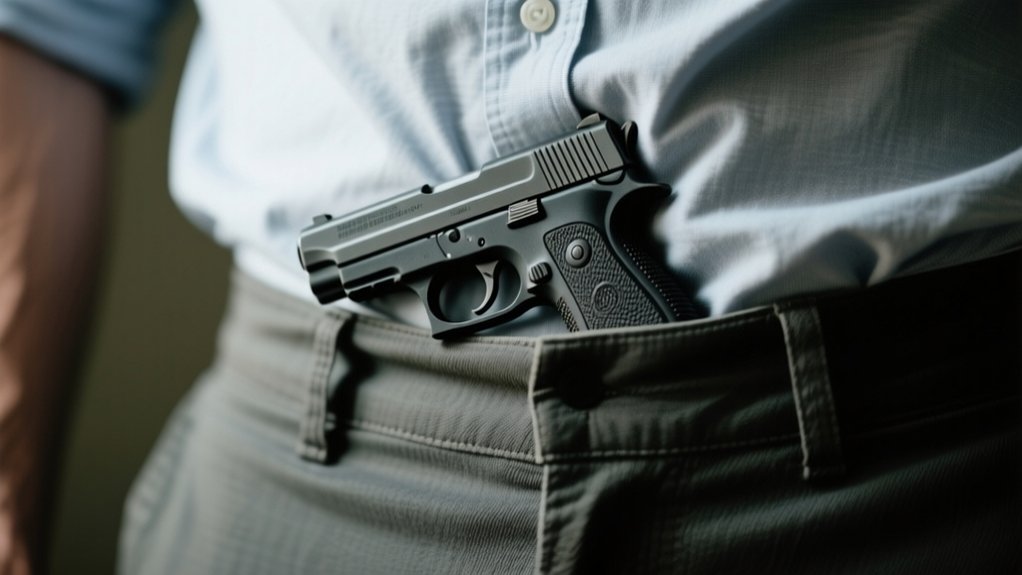
How to Conceal Carry Without a Holster Safely
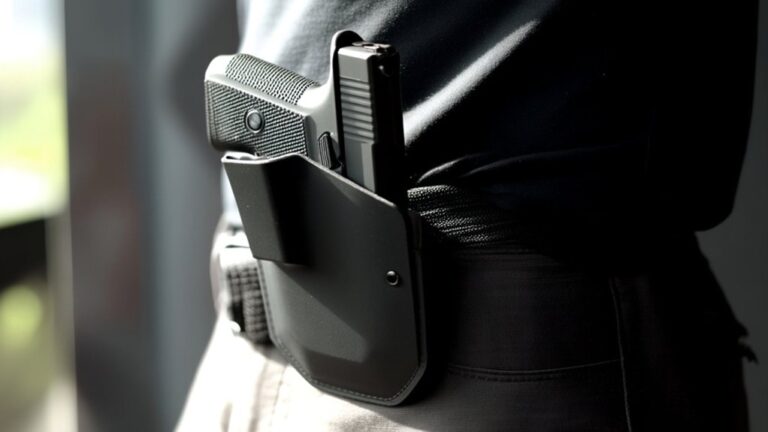
To safely conceal carry without a holster, pick a slim, lightweight firearm with built-in safeties and a smooth grip to prevent snagging. Secure it grip-up in a deep pocket or use a belly band to keep it stable against your body. Always keep your finger off the trigger until ready and practice slow, deliberate draws to build muscle memory. Dress in loose or fitted clothing that won’t obstruct your access. For more on mastering these techniques, keep exploring key concealment and handling tips.
Reasons to Carry Without a Holster
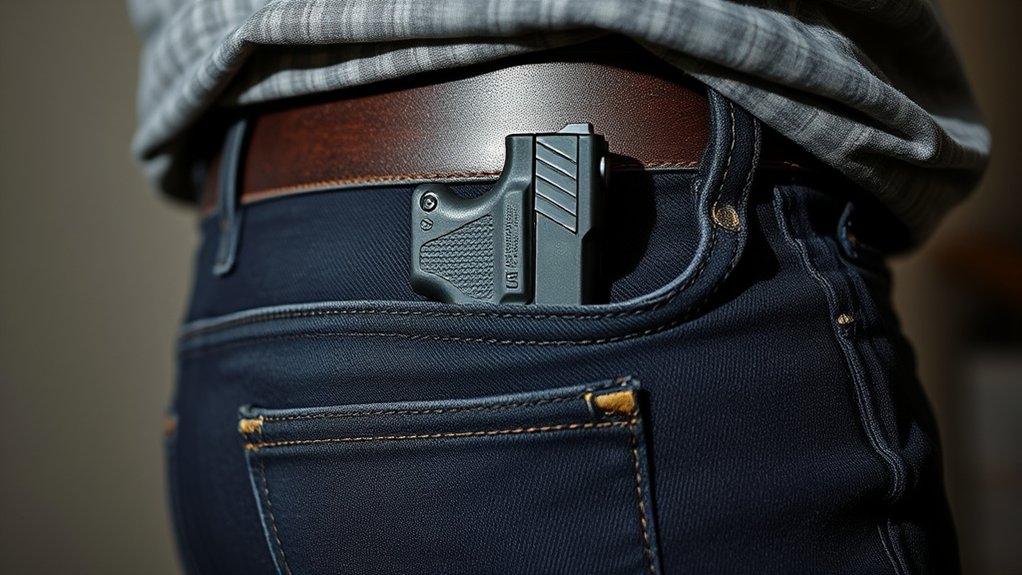
Although most people rely on holsters for concealed carry, some choose to carry without one for reasons like comfort, quicker access, or simply convenience.
You might find that a holster feels bulky or restricts your movement, especially in hot weather or during physical activity. Carrying without a holster can provide a more natural feel and better concealment under lighter clothing.
You also get faster weapon access since you’re not fumbling with straps or clips. Plus, if you want to avoid spending extra money on gear, skipping the holster cuts costs.
However, you’ll need to be extra cautious about safety and retention, as your firearm won’t have the added security a holster provides.
Understanding these reasons helps you decide if holster-free carry fits your lifestyle.
Choosing the Right Firearm for Holster-Free Carry
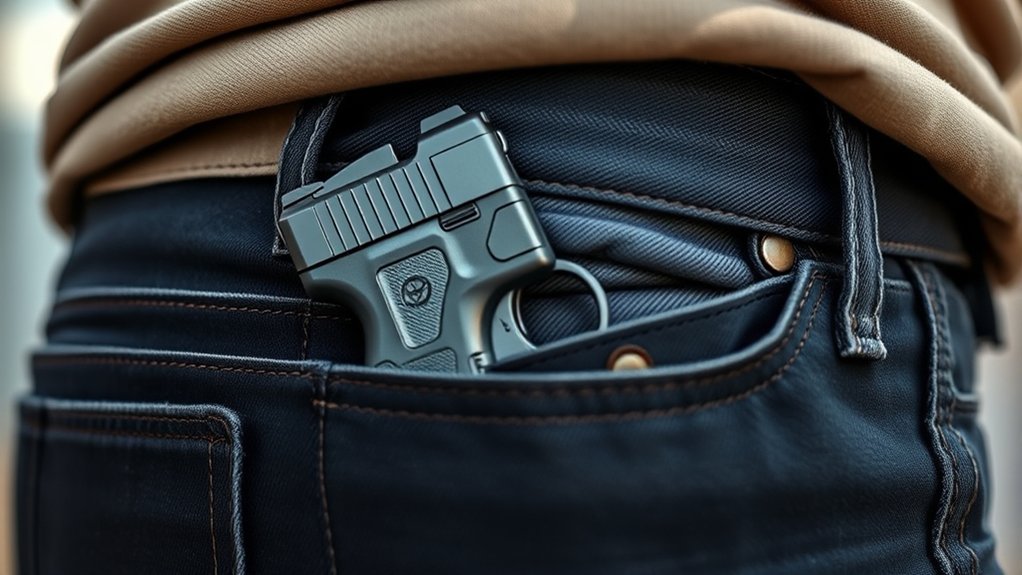
Carrying without a holster means you need to be selective about the firearm you choose. You want a gun that’s compact, reliable, and comfortable to carry directly against your body.
Here are three key factors to reflect on:
- Size and Weight: Opt for a lightweight, slim model that won’t print or dig into your skin during daily activities.
- Trigger Safety: Prioritize firearms with built-in trigger safeties or other safety mechanisms to prevent accidental discharge without a holster.
- Grip Texture: Choose a firearm with a smooth grip to avoid snagging on clothing or causing discomfort.
Concealment Methods: Clothing, Pocket Carry, and Belly Bands
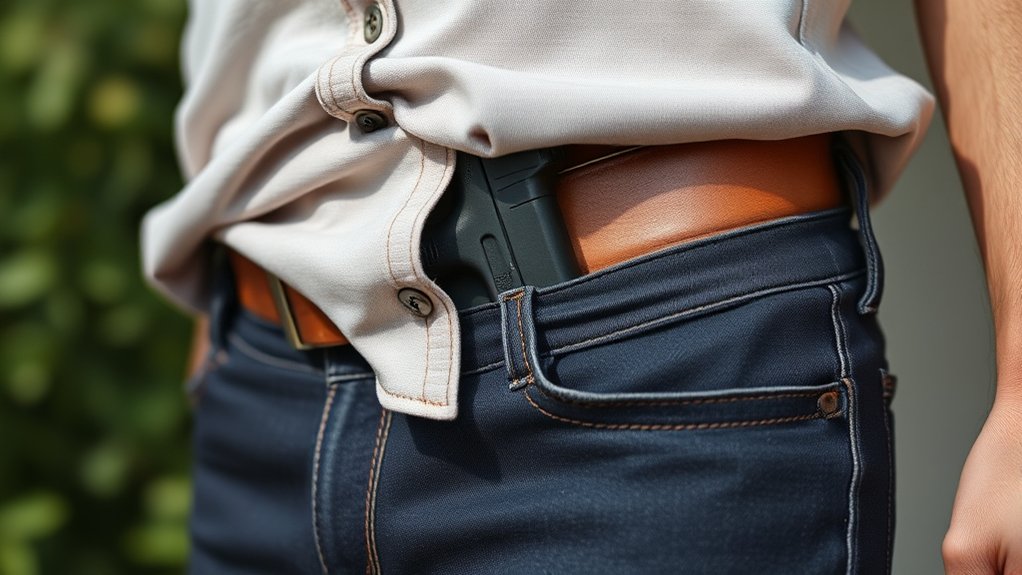
When you skip the holster, how you conceal your firearm becomes even more important. Your clothing plays a vital role—choose loose-fitting shirts or jackets that won’t print your weapon’s outline.
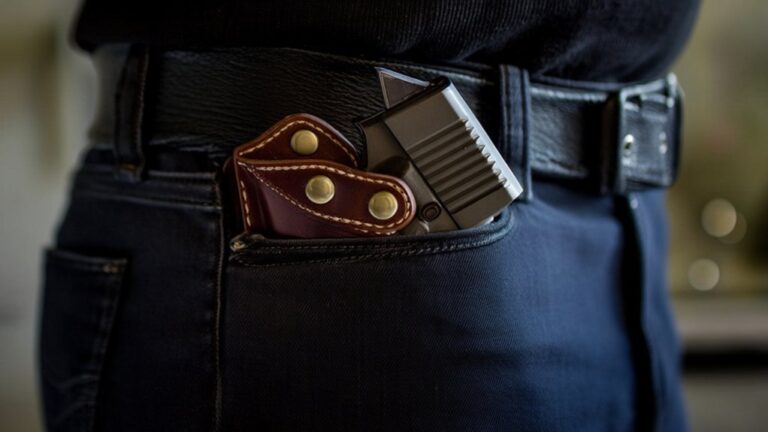
Pocket carry works well with smaller firearms, but you’ll want deep, sturdy pockets to prevent shifting or accidental drops.
Belly bands offer a versatile option, wrapping securely around your waist and allowing you to place your gun in various positions. They’re great for active movement and can be worn under different clothing styles.
Regardless of the method, make certain your concealment keeps the firearm accessible yet discreet. Balancing comfort and security is key, so experiment with these options to find what works best for your daily routine and body type.
Safe Grip and Carry Techniques Without a Holster
Choosing the right concealment method sets the stage, but how you grip and carry your firearm without a holster directly impacts your safety and readiness. You need to maintain control while ensuring quick access.
Here are three key techniques:
- Firm, Consistent Grip: Always keep a solid grip on your firearm, even when stowing or drawing. This prevents accidental drops or fumbling.
- Proper Finger Placement: Keep your finger indexed along the frame until you’re ready to fire. This reduces the chance of unintentional trigger engagement.
- Secure Carry Position: Position your firearm where you can comfortably hold it without strain, like inside a pocket or against your body with a strong, steady grip.
Mastering these techniques helps you stay safe and ready, even without a holster.
Preventing Accidental Discharge Without a Holster
Although carrying without a holster demands extra caution, you can prevent accidental discharge by maintaining strict trigger discipline and staying mindful of your firearm’s position at all times. Always keep your finger off the trigger until you’re ready to shoot. Avoid resting it on or near the trigger guard.
Secure your firearm firmly against your body or in a designated pocket to minimize movement. Choose clothing that holds your gun snugly to prevent shifting. Regularly check that nothing can snag or press the trigger unintentionally.
Practice handling your weapon slowly to build muscle memory and awareness. By staying vigilant and respecting these safety habits, you reduce the risk of accidental firing and carry responsibly without a holster.
Tips for Quickly Drawing Your Gun Without a Holster
Mastering a quick draw without a holster requires deliberate practice and attention to your grip, positioning, and movement.
To draw efficiently, follow these tips:
- Secure Your Grip Early – Keep your hand near the gun, ensuring a firm grip before you draw.
- Position for Accessibility – Carry the gun in a spot that’s easy to reach and unobstructed by clothing.
- Practice Smooth, Controlled Movements – Avoid fumbling by rehearsing a fluid draw motion, focusing on speed and safety.
What You Need to Know About Carrying Without a Holster Legally
Knowing how to draw your gun quickly without a holster is valuable, but you also need to understand the legal landscape around carrying without one. Laws vary widely by state and locality, so check your area’s specific regulations before going holster-free.
Some places allow open or concealed carry without a holster, while others require a secure method to carry your firearm. You must also consider how the gun is carried; simply slipping it into a pocket or waistband may be illegal if it’s not properly secured.
Additionally, carrying without a holster could raise questions about negligent handling or unsafe storage if an incident occurs. Always stay informed about local laws and carry permits to avoid legal trouble while carrying without a holster.
Common Safety Mistakes to Avoid When Carrying Without a Holster
When you carry without a holster, you increase the risk of accidental discharge or losing control of your firearm if you’re not careful. To stay safe, avoid these common mistakes:
- Ignoring trigger safety – Never carry with a round in the chamber unless you’re certain the trigger is protected. Avoid placing the firearm where your finger or objects can accidentally engage the trigger.
- Poor firearm retention – Don’t just tuck your gun loosely in your waistband or pocket. Ensure it’s secure to prevent shifting or falling out during movement.
- Neglecting regular checks – Frequently inspect your carry method and firearm position to prevent unsafe adjustments or accidental exposure.
Practicing Safe Draws and Reholstering Without a Holster
Although carrying without a holster requires extra caution, practicing safe draws and reholstering can help you maintain control and reduce the risk of accidental discharge.
Start by training your grip to guarantee your finger stays off the trigger until you’re ready to shoot. Always point the muzzle in a safe direction during draws and reholstering. Move slowly and deliberately—rushing increases the chance of mistakes.
When reholstering, keep your eyes on the firearm and your hands steady to avoid slips. Practice drawing and reholstering with an unloaded weapon or training gun to build muscle memory safely.
Regular practice helps you develop smooth, confident movements, which are essential when carrying without a holster. Prioritize safety by treating every draw and reholster as if your firearm is loaded and ready.
Holster Alternatives: Belly Bands and Other Solutions
If you want to carry without a traditional holster, belly bands and other alternatives offer versatile and discreet options. Belly bands wrap around your waist, allowing you to securely carry your firearm under clothing without printing.
Other options include neoprene sleeves and ankle rigs, which provide comfort and concealment in different carry positions.
When choosing an alternative, consider these factors:
- Retention – Make certain the device holds your firearm firmly during movement.
- Comfort – Opt for materials that won’t irritate your skin or restrict mobility.
- Accessibility – Pick a solution that lets you draw quickly and safely when needed.
Exploring these alternatives helps you find a carry method that fits your lifestyle while maintaining safety and concealment.
Pocket Carry Techniques for Holster-Free Carry
Since pocket carry eliminates the need for a holster, you’ll need to master techniques that keep your firearm secure and accessible while preventing accidental draws.
First, choose a pocket-friendly firearm with rounded edges and a reliable trigger safety. Use a deep, snug pocket to minimize movement, and position the gun grip-up for quick access.
Consider using a pocket-specific holster or a grip sleeve to enhance retention and protect the trigger.
Keep your hand near the firearm when moving to prevent shifting. Practice drawing smoothly from your pocket to build muscle memory and ensure safety.
Always be mindful of your clothing’s fit; loose or bulky garments can hinder access or cause the firearm to shift.
With these techniques, you can pocket carry confidently and responsibly without a traditional holster.
Frequently Asked Questions
How Does Weather Affect Carrying Without a Holster?
Weather affects your grip and comfort when carrying without a holster. Rain or sweat makes your firearm slippery, increasing risk. Cold can stiffen your movements, while heat may cause more sweating, so adjust your method accordingly.
Can Women Carry Without a Holster Differently Than Men?
Imagine fitting a key in a delicate necklace box—that’s how women often carry without holsters, using snug clothes or specialized garments. You’ll find more options tailored to your body shape than men typically do.
What Are the Best Cleaning Practices for Firearms Carried Without Holsters?
You should clean your firearm regularly, focusing on removing dirt, sweat, and oils. Use a quality solvent, brush, and lubricant. Always inspect for wear, and dry it thoroughly to prevent rust and maintain reliable function.
How to Handle Firearm Maintenance While Carrying Without a Holster?
You should clean and inspect your firearm regularly, ensuring it’s unloaded before maintenance. Use proper tools and lubricants, and store it safely when not carrying. Always handle it carefully to prevent damage or accidents during upkeep.
Are There Insurance Implications When Carrying Without a Holster?
Yes, carrying without a holster can affect your insurance. You might face higher premiums or denied claims if an accident occurs. Always check your policy and inform your insurer about your carry method to avoid surprises.
Conclusion
Carrying without a holster might seem risky, but with the right firearm, grip, and concealment methods, it can be surprisingly safe and discreet. While holsters offer structure and security, your careful technique and awareness become your best protection. By avoiding common mistakes and practicing safe draws, you turn what feels unconventional into a reliable, confident carry approach. Embrace the challenge—you’ll find freedom in safety without the bulk of a traditional holster.