7 Easy Steps to Break in a Leather Holster
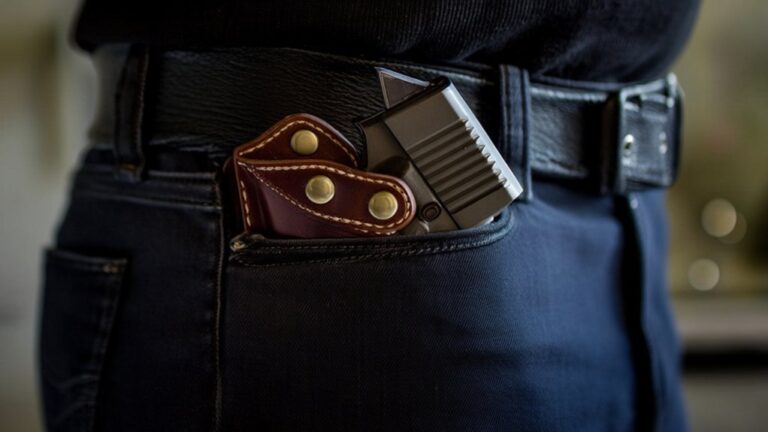
To break in your leather holster, first inspect it carefully for flaws and proper fit. Warm the leather gently to soften the fibers, then slowly bend and mold it around your firearm, focusing on a snug fit. Regularly apply conditioner to keep it supple. Wear the holster briefly each day to build comfort, and practice drawing and reholstering smoothly. Following these steps will help you create a well-fitted, comfortable holster ready for use—there’s plenty more to discover about perfecting the process.
Inspect Your Leather Holster for Flaws and Fit
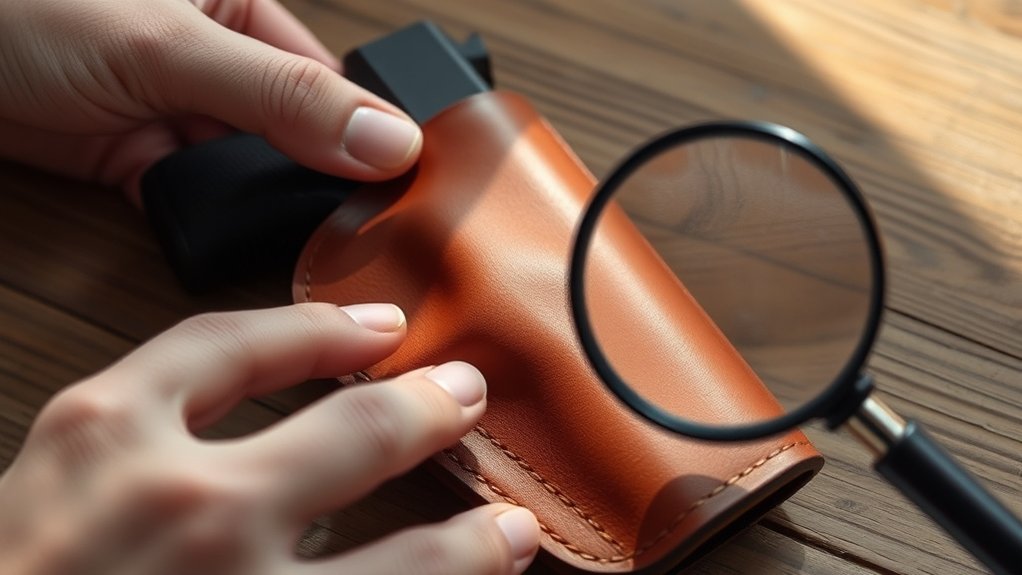
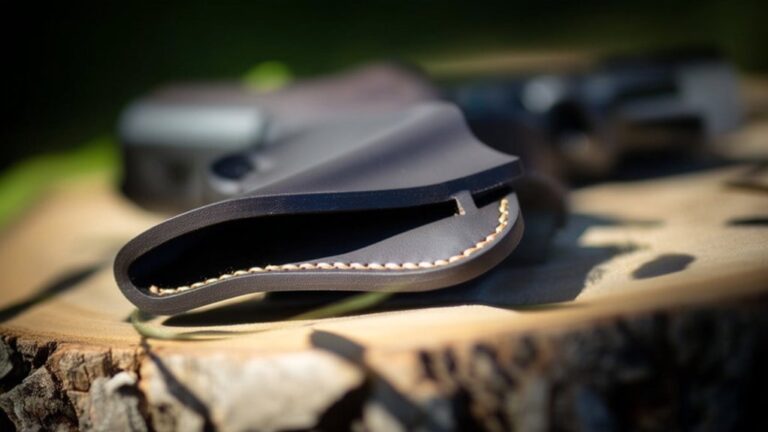
Before you begin breaking in your leather holster, carefully inspect it for any flaws or imperfections. Check the stitching to verify it’s tight and even—loose threads could lead to early wear. Look for cracks, scratches, or weak spots in the leather that might worsen with use.
Next, test the fit by inserting your firearm. It should slide in snugly without forcing it or feeling too loose. A holster that’s too tight might damage your gun or be hard to draw from, while one that’s too loose won’t hold securely.
Also, examine the belt loops or clips to confirm they’re sturdy and positioned for comfortable carry. Identifying these issues early helps you avoid problems during the break-in process.
Soften Leather With Warmth and Gentle Bending
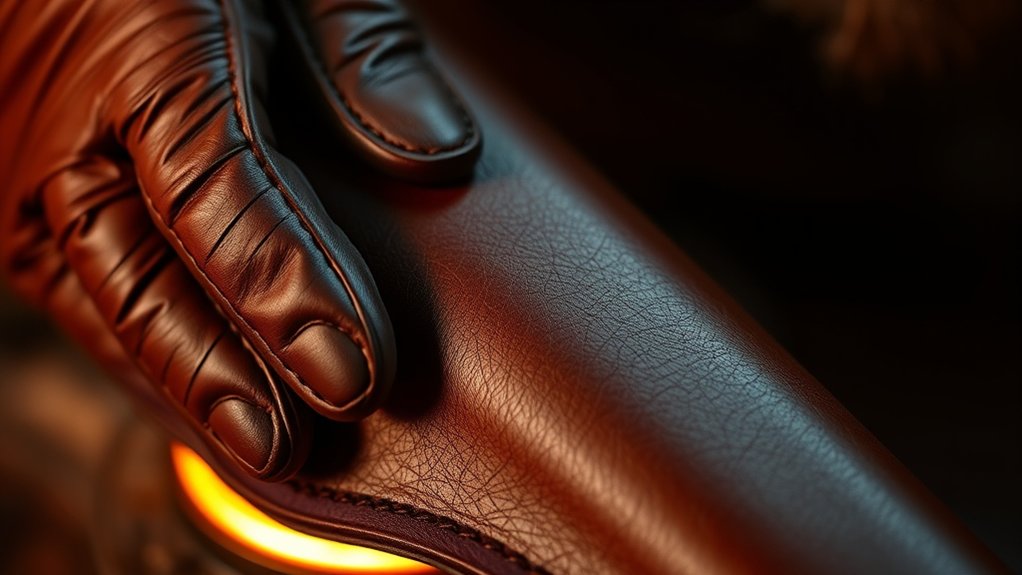
Although leather is durable, it starts stiff and needs softening to mold comfortably around your firearm. To begin, gently warm the holster using your hands or a hairdryer on low heat—avoid overheating, which can damage the leather. The warmth makes the fibers more pliable, preparing the material for shaping.
Next, carefully bend the holster in the areas that will wrap around your firearm, but don’t force it. Slow, repeated bending helps loosen the leather without cracking or weakening it. You’ll notice the holster becoming more flexible and responsive.
This process sets the stage for a comfortable fit later on, making your holster easier to use daily. Always handle the leather gently during this step to preserve its strength and appearance.
Mold the Holster Around Your Firearm
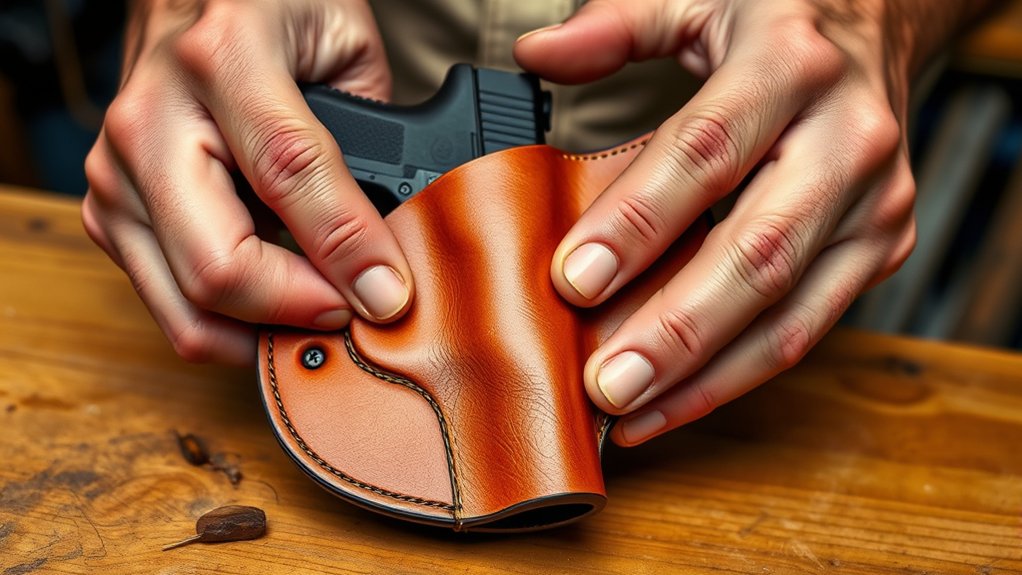
Once the leather feels more pliable, you can start molding the holster directly around your firearm to guarantee a snug fit.
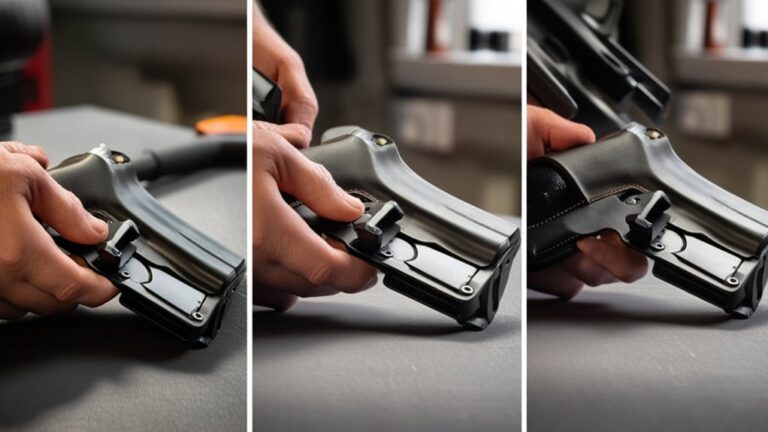
Begin by inserting your gun into the holster and pressing firmly, allowing the leather to shape itself to your firearm’s contours. Apply gentle pressure along the edges and areas where the gun contacts the leather most.
Don’t rush—work slowly, removing and reinserting the firearm several times to help the leather adapt evenly.
Pay close attention to the trigger guard and barrel areas to ensure the holster holds your gun securely without causing damage.
This process helps prevent unnecessary movement and improves draw speed.
Keep molding until the holster feels custom-fitted, making your carry experience comfortable and safe.
Use Leather Conditioner to Keep It Supple
How do you keep your leather holster flexible and durable over time? The answer lies in regular conditioning.
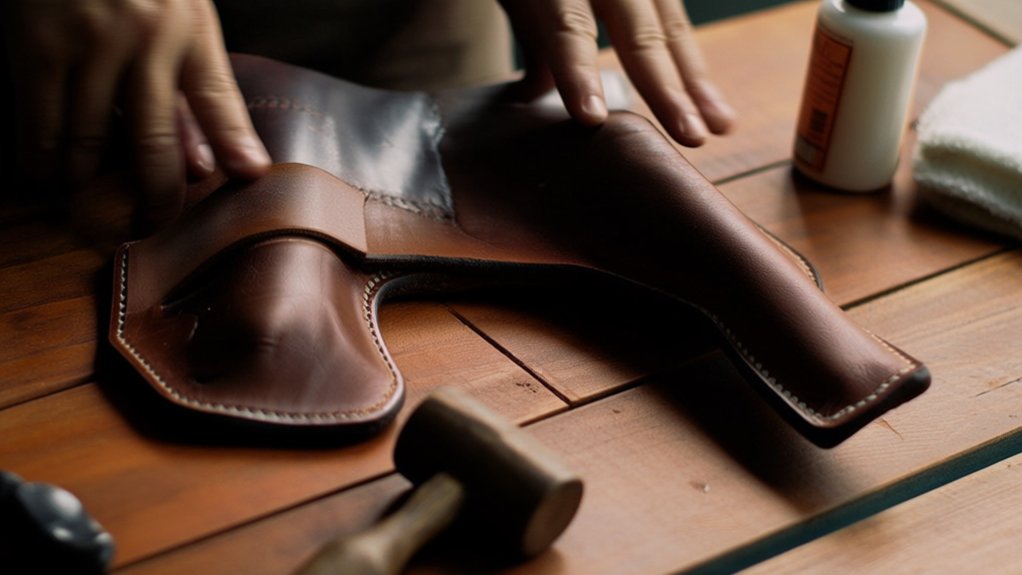
Leather naturally dries out and stiffens, so applying a quality leather conditioner helps maintain its suppleness. Use a small amount and rub it evenly into the surface with a soft cloth. Avoid over-saturating the leather to prevent weakening the fibers.
Conditioning also protects against cracking and extends the holster’s lifespan. Make this a routine every few months or whenever the leather starts to feel dry.
Wear Your Holster Briefly for Comfort
Before fully breaking in your leather holster, you should wear it for short periods to build comfort gradually. Start by putting it on for 15 to 30 minutes a day, allowing the leather to mold to your body’s shape without causing discomfort.
This brief wear helps soften the material naturally and identifies any spots that might rub or irritate your skin. As you get used to the holster’s fit and feel, increase the wear time slowly. Don’t rush this process; patience guarantees the leather adapts without cracking or warping.
Wearing your holster casually throughout your daily routine also helps it conform to your movements, making it more comfortable and secure. This step is essential before moving on to more active use.
Practice Drawing and Reholstering Your Leather Holster
While breaking in your leather holster, you should practice drawing and reholstering to guarantee smooth, comfortable movements. Start by slowly drawing your firearm out and then smoothly reholstering it, paying close attention to how the leather responds.
Repeating this motion helps the holster mold perfectly to your gun’s shape and your hand’s natural motion. Make certain your draw is fluid and that the gun seats securely without resistance when reholstering. Avoid forcing the gun in; instead, let the leather gradually loosen and conform.
Practicing regularly builds muscle memory and ensures you can draw quickly and safely. This step is essential to prevent snags or discomfort during everyday use, helping your holster function reliably every time you need it.
Keep Your Holster Flexible and Comfortable
To keep your leather holster comfortable and flexible, you need to regularly condition the leather with a quality leather conditioner or oil. This prevents the leather from drying out and cracking, which can make it stiff and uncomfortable.
Apply a small amount evenly, then let it absorb fully before using your holster again. Additionally, avoid exposing your holster to excessive moisture or heat, as these elements can damage the leather’s structure.
When you’re not wearing it, store your holster in a cool, dry place to maintain its shape and flexibility.
Over time, these simple care steps will guarantee your holster molds perfectly to your firearm while staying soft and easy to handle every day.
Frequently Asked Questions
How Do I Clean My Leather Holster Safely?
You clean your leather holster safely by wiping it with a damp cloth, avoiding excessive water. Then, apply a leather conditioner to keep it supple. Don’t use harsh chemicals—they can damage the leather’s finish and durability.
Can Leather Holsters Be Used in Wet Weather?
You can’t let rain soak your leather holster like a sponge; it’s not built for wet weather. If you do, you’ll risk stiffening and cracking. Always dry it gently and treat it with waterproof conditioner afterward.
What Types of Leather Are Best for Holsters?
You’ll want full-grain or top-grain leather for holsters because they’re durable and mold well to your firearm. These types resist wear, provide good retention, and improve with use, giving you a reliable, long-lasting holster.
How Long Does a Leather Holster Typically Last?
A leather holster typically lasts 5 to 10 years, but if you care for it like a trusted companion, it might stick with you even longer, aging beautifully as you both face adventures together.
Are Leather Holsters Compatible With All Firearm Models?
Leather holsters aren’t compatible with all firearm models. You’ll need to choose one designed specifically for your gun’s shape and size to guarantee a secure fit, proper retention, and easy access when you carry it.
Conclusion
Remember, “practice makes perfect.” By inspecting your holster, softening the leather, and molding it to your firearm, you’re setting yourself up for comfort and durability. Conditioning the leather and wearing it briefly helps keep it flexible, while regular practice with drawing and reholstering ensures smooth use. Stick with these easy steps, and soon your leather holster will feel like a natural extension of your gear—ready whenever you are.