Who Is Gustav Holst and How Can You Explore His Musical Legacy?
Gustav Holst was a pioneering composer known for blending folk music, mysticism, and innovative orchestration, most famously in *The Planets*. You can explore his legacy by listening to key works like *St. Paul’s Suite* or *Hymn of Jesus* through streaming platforms, attending live concerts, or watching performances online. For deeper insight, check out biographies and documentaries that reveal his unique style and lasting influence. Keep going to uncover how his early life and inspirations shaped his timeless music.
Who Was Gustav Holst and Why He Matters?
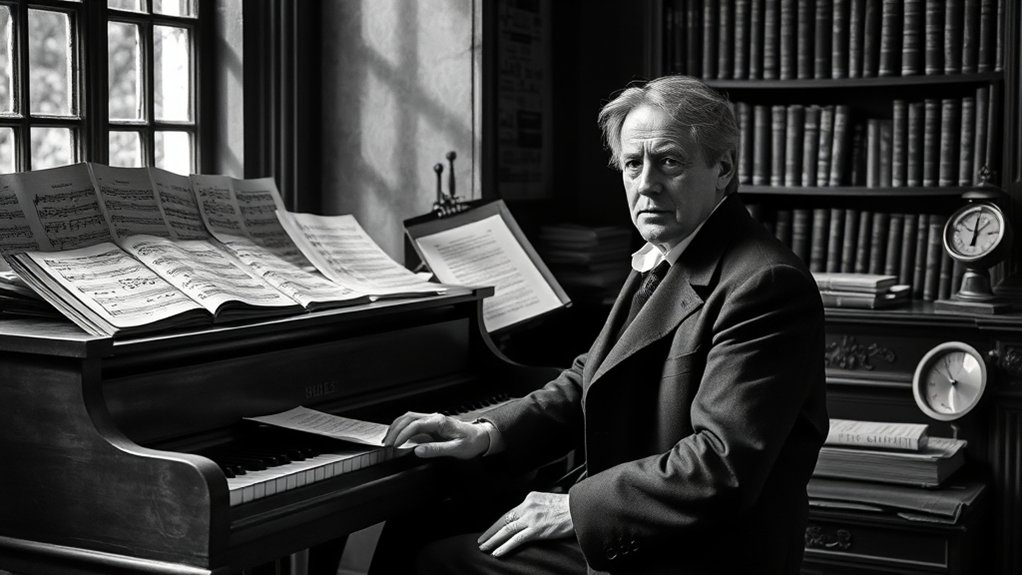
Although you mightn’t immediately recognize his name, Gustav Holst played a crucial role in shaping early 20th-century classical music. You’ll find his work stands out for its originality and influence, especially through pieces like *The Planets*.
Holst didn’t just compose; he brought fresh sounds and ideas that broke away from traditional norms. When you listen to his music, you experience a unique blend of folk elements and innovative orchestration that inspired many composers after him.
You’ll also appreciate how he balanced complexity with accessibility, making his music appealing to both experts and casual listeners. Holst’s contributions helped define modern classical music’s direction, proving his significance even if his name isn’t as widely known as some of his contemporaries.
How Did Holst’s Early Life Shape His Music?
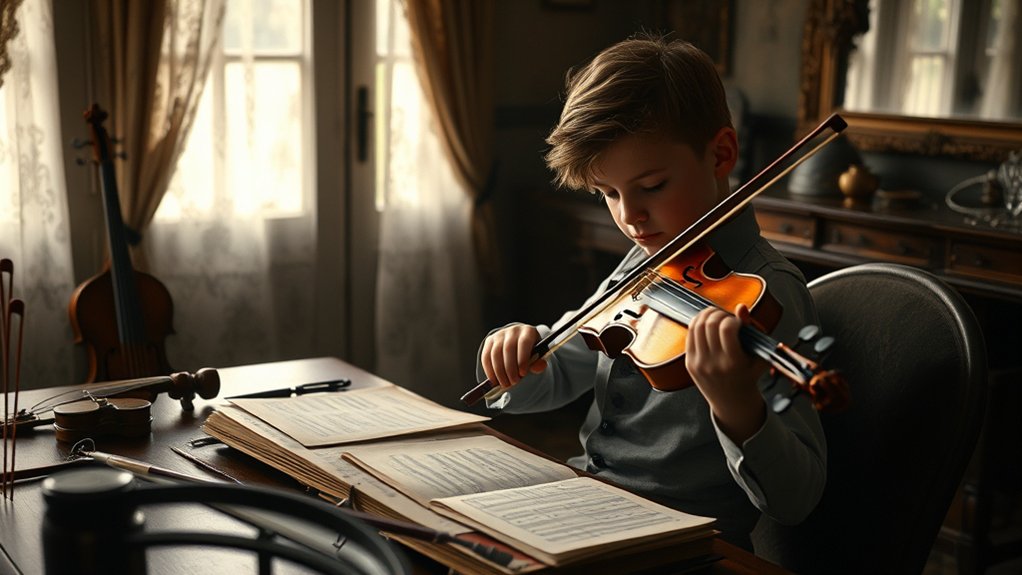
Because Gustav Holst grew up in a musically rich environment, his early experiences deeply influenced his compositions. You’ll find that his father, a professional trombonist, surrounded him with music from a young age, encouraging you to appreciate orchestral sounds.
When Holst developed neuritis in his right arm, you see how he adapted by focusing on composition and music theory, shaping your understanding of his creative resilience.
Studying at the Royal College of Music exposed him to diverse musical ideas, helping you trace the roots of his later works.
His early exposure to folk tunes and church music also informed your sense of melody and rhythm in his pieces. These foundational experiences equipped you to recognize the depth behind his compositions.
What Inspired Gustav Holst’s Unique Compositional Style?
What sparked Gustav Holst’s distinct sound? You’ll find it in his curiosity and openness to diverse musical traditions. Holst immersed himself in classical forms while passionately exploring non-Western scales and rhythms.
He drew inspiration from Sanskrit texts and Hindu philosophy, which added depth and mystery to his music. You’ll notice how he blended these elements with innovative orchestration and modal harmonies, creating textures that felt fresh and evocative.
Holst’s interest in astrology and mythology also shaped his compositions, giving them a narrative and symbolic layer. When you listen closely, you can hear how he balanced tradition with experimentation, making his works stand out.
This blend of intellectual exploration and artistic risk defined Holst’s unique compositional voice.
How Did Folk Music Influence Holst’s Compositions?
When you listen to Holst’s music, you can hear how deeply folk traditions shaped his sound. He drew inspiration from English folk tunes, weaving their simple melodies and rhythms into his compositions.
You’ll notice this clearly in works like “Somerset Rhapsody,” where traditional dance rhythms and modal scales create a rustic yet sophisticated atmosphere. Holst didn’t just copy folk music; he transformed it, blending its natural charm with his own harmonic language.
What Role Did Mysticism Play in Gustav Holst’s Music?
How profoundly did mysticism influence Gustav Holst’s music? You’ll find that Holst was fascinated by astrology, Hindu philosophy, and the occult, and these interests shaped much of his work.
When you listen to The Planets, for example, you’re not just hearing orchestral music—you’re experiencing his interpretation of astrological characters and cosmic forces.
Holst used mystical themes to explore spirituality and human existence beyond the physical world. His involvement with Theosophy and Sanskrit texts inspired him to create music that evokes a sense of the otherworldly.
What Made Holst’s Rhythm and Harmony Unique?
Although many composers of his time adhered to traditional structures, Holst pushed boundaries with his inventive approach to rhythm and harmony. You’ll notice he often used irregular meters and shifting time signatures, which create a dynamic, unpredictable pulse that keeps listeners engaged.
Instead of sticking to common harmonic progressions, Holst explored modal scales and unconventional chord combinations, giving his music a fresh, sometimes mystical sound. When you listen closely, you’ll find layered rhythms that interlock in complex ways, adding depth and texture.
This rhythmic and harmonic innovation lets you experience music that’s both grounded and adventurous, reflecting Holst’s unique voice. By studying these elements, you can better appreciate how he redefined musical expression in the early 20th century.
Why Is Gustav Holst’s ‘The Planets’ Suite Revolutionary?
What makes Gustav Holst’s ‘The Planets’ suite stand out as revolutionary? You’ll find its groundbreaking approach in how Holst captured the essence of each planet’s astrological character through music.
Instead of following traditional programmatic methods, he used innovative orchestration and unique rhythms to evoke moods—from the ominous “Mars” to the serene “Venus.” You experience a rich palette of tonal colors and shifting meters that were uncommon at the time, pushing musical boundaries.
Holst also created a suite that doesn’t tell a linear story but explores diverse emotional landscapes, inviting your interpretation. This fresh, imaginative style influenced many composers and reshaped orchestral music, making ‘The Planets’ a landmark work you can appreciate for both its creativity and enduring impact.
What Other Important Works Did Gustav Holst Compose?
Beyond ‘The Planets,’ Gustav Holst composed several important works that showcase his versatility and depth as a composer. You might explore his choral masterpiece *The Hymn of Jesus*, which blends ancient melodies with modern harmonies, creating a mystical atmosphere.
Another significant piece is *St. Paul’s Suite*, written for string orchestra, where you’ll find lively folk-inspired rhythms and melodies. If you’re interested in opera, Holst’s *At the Boar’s Head* offers a unique take on Shakespearean themes with rich orchestration.
Additionally, his *Egdon Heath* tone poem captures the moody English landscape through evocative music. By diving into these works, you’ll gain a fuller appreciation of Holst’s innovative spirit beyond his famous suite.
Why Was Holst Underappreciated During His Lifetime?
Exploring Holst’s lesser-known compositions reveals a composer willing to experiment and challenge musical norms, which didn’t always sit well with his contemporaries. You might wonder why Holst didn’t get the recognition he deserved back then. Here’s why:
- His innovative style often clashed with traditional tastes, making audiences and critics hesitant.
- Holst prioritized teaching and conducting over aggressive self-promotion, so his work remained under the radar.
- The overshadowing success of “The Planets” led many to overlook his diverse and complex other pieces.
- He composed quietly during turbulent times, including World War I, which distracted public attention from new music.
Understanding these factors helps you appreciate the depth behind Holst’s legacy beyond the fame of his most popular works.
How Did Gustav Holst Influence Later Composers and Music Styles?
Although Gustav Holst’s name is often linked to “The Planets,” his influence stretches far beyond that iconic suite. You’ll find that many later composers drew inspiration from his innovative use of rhythm, modal harmonies, and folk melodies.
Holst’s ability to blend traditional English folk tunes with modern orchestration techniques opened doors for exploring new musical textures. When you listen closely, you’ll notice his impact on 20th-century composers who sought to break away from Romantic norms.
His approach to thematic development and orchestral color helped shape film scores and contemporary classical music styles. By pushing boundaries without abandoning accessibility, Holst inspired you and countless others to experiment boldly, making his legacy a crucial link between past traditions and future innovations in music.
Where Can You Start Listening to Gustav Holst’s Music?
- Listen to *St. Paul’s Suite* for charming, folk-inspired melodies.
- Try *Hymn of Jesus* to hear his choral brilliance.
- Explore *Egdon Heath* for a moody, atmospheric orchestral piece.
- Check out *The Perfect Fool,* a ballet with humor and wit.
Starting with these works will help you grasp Holst’s unique voice and see why his music continues to inspire.
Where Can You Find Recordings of Gustav Holst’s Music?
If you want to immerse yourself in Gustav Holst’s music, you’ll find recordings easily available across several platforms. Streaming services like Spotify, Apple Music, and Amazon Music offer a wide range of his works, including his famous suite, The Planets.
You can also explore classical music-specific sites like Naxos Music Library, which provide high-quality recordings and detailed liner notes.
For physical copies, check out music stores or online retailers like Amazon and eBay, where CDs and vinyl editions are often sold. Don’t forget public libraries and university collections, which sometimes have rare or historic recordings.
Additionally, YouTube hosts numerous performances, both professional and amateur, giving you plenty of options to experience Holst’s diverse compositions at your convenience.
How Can You Experience Gustav Holst’s Music Live and Online?
Listening to recordings is a great way to appreciate Holst’s music, but experiencing it live or through online performances adds a new dimension. You can immerse yourself in the energy and emotion that only a live setting or high-quality streaming can provide. Here’s how you can do it:
- Attend concerts by orchestras or wind ensembles that feature Holst’s works, especially The Planets suite.
- Check symphony orchestra websites and local event listings for upcoming Holst performances near you.
- Explore online platforms like YouTube, Medici.tv, or classical music streaming services that host live-streamed or recorded concerts.
- Join virtual music festivals or webinars dedicated to Holst for interactive listening experiences and expert commentary.
These options let you connect more deeply with Holst’s enduring musical legacy.
What Books and Documentaries Offer Deeper Insights Into Gustav Holst?
Although Holst’s music speaks volumes on its own, diving into books and documentaries can reveal the stories behind his compositions and the man himself.
You might start with “Gustav Holst: A Biography” by Imogen Holst, his daughter, which offers a personal and detailed look at his life.
For a broader perspective, “Holst: The Planets” by Lewis Foreman explores his most famous work within its historical context.
On film, the documentary “The Planets: The Story of Gustav Holst” provides engaging insights into his creative process and musical innovations.
These resources let you understand Holst beyond the notes, uncovering his inspirations, struggles, and lasting impact.
Exploring them enriches your appreciation of his music and artistic journey.
Why Gustav Holst’s Music Still Resonates Today
Because Gustav Holst’s compositions blend innovative techniques with emotional depth, they continue to captivate audiences today. When you listen to his music, you experience a unique fusion of tradition and experimentation that feels both timeless and fresh.
Here’s why his work still resonates with you:
- Holst’s use of diverse cultural influences broadens your musical horizons.
- His melodies evoke strong emotions, connecting you deeply to each piece.
- The rhythmic complexity challenges and engages your musical intellect.
- His ability to tell stories through music invites you into vivid soundscapes.
Frequently Asked Questions
What Instruments Did Gustav Holst Prefer for Composing?
You’ll find Gustav Holst preferred composing with orchestral instruments, especially brass, woodwinds, and percussion. He loved exploring diverse timbres, often using unusual combinations to create unique sounds, as heard in *The Planets* suite.
Did Holst Collaborate With Other Famous Musicians?
You might think Holst worked solo, but he actually collaborated with notable musicians like Ralph Vaughan Williams. You’ll find their partnerships enriched his compositions, blending talents and expanding his musical horizons in unique ways you’ll appreciate.
How Did Holst’s Teaching Career Influence His Music?
You’ll find Holst’s teaching pushed him to write accessible, innovative pieces for students. His experience with young musicians inspired practical compositions, blending education with creativity, which deeply shaped his approach to music and orchestration.
Are There Any Museums Dedicated to Gustav Holst?
You’ll find no museums solely dedicated to Gustav Holst, but you can explore his legacy in places like the Holst Birthplace Museum. It attracts thousands yearly, letting you immerse yourself in his life and works intimately.
What Personal Challenges Did Holst Face Outside Music?
You’d find that Holst struggled with poor health, including migraines and neuritis, which often interrupted his work. He also faced family responsibilities and financial pressures, challenging his ability to focus solely on composing music.
Conclusion
You can dive deep into Gustav Holst’s harmonious heritage by exploring enchanting recordings, attending live performances, and absorbing insightful books and documentaries. His mystical melodies and folk-infused compositions continue to captivate curious listeners like you. So, seek out his sounds, savor the stories behind his scores, and let Holst’s timeless tunes transport you through a tapestry of tradition and transcendence. Your journey into his musical legacy starts now—bold, bright, and beautifully boundless.