How Long Do Night Sights Last?
You can expect your night sights to last anywhere from 5 to 12 years, depending on their type and quality. Tritium sights glow consistently for about a decade but will slowly dim due to radioactive decay. Fiber optic sights don’t self-illuminate and rely on ambient light but maintain brightness longer without decay. Environmental factors like sunlight, moisture, and physical wear also affect lifespan. If you want to pick the right sights and maintain their brightness well, there’s more to explore.
Key Takeaways
- Tritium night sights typically glow steadily for 10-12 years before brightness significantly diminishes.
- Fiber optic night sights maintain brightness over time but rely on ambient light, not self-illumination.
- Environmental factors like sunlight, moisture, and temperature extremes accelerate night sight degradation.
- Physical wear, scratches, and recoil impact can reduce night sight effectiveness and lifespan.
- Regular inspection and proper storage extend night sight longevity and optimal glow performance.
What Are Night Sights and How Do They Work?
Although you mightn’t notice them in daylight, night sights play an essential role in low-light shooting conditions. These sights help you align your firearm quickly and accurately when visibility drops.
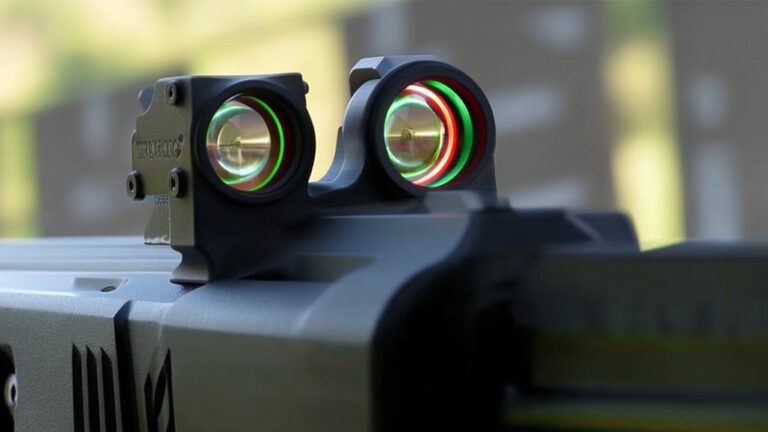
They work by incorporating small, glowing elements into the front and rear sights, allowing you to see your target and the sight picture clearly in the dark. Unlike regular sights, night sights don’t rely on ambient light alone; they provide their own illumination source, making them indispensable during nighttime or shadowy environments.
When you use night sights, you maintain better situational awareness and faster target acquisition, which can be critical in self-defense or tactical situations. Understanding how they function helps you appreciate their importance in your shooting setup.
How Tritium Night Sights Produce a Long-Lasting Glow
Night sights rely on special materials to keep glowing when the lights go out, and tritium is one of the most popular choices. Tritium is a radioactive isotope of hydrogen that emits low-energy beta particles, which interact with a phosphor coating inside the sight.
This interaction produces a steady, self-powered glow without needing any external light source or batteries. When you look through tritium night sights, you see a consistent, bright dot that helps you aim accurately in low-light conditions.
Since the glow comes from a natural radioactive process, you don’t have to worry about charging them with light beforehand. This feature makes tritium sights reliable and convenient for nighttime use, giving you confidence in your aiming no matter how dark it gets.
Typical Lifespan of Tritium Night Sights
You can expect tritium night sights to glow brightly for about 10 to 12 years before their brightness starts to fade.
Several factors, like exposure to sunlight and temperature, can affect how long that glow lasts.
Understanding these influences helps you know when it’s time to replace your sights.
Tritium Glow Duration
Since tritium emits a steady glow without needing external light sources, its brightness gradually fades over time as the radioactive material decays. You can expect tritium night sights to remain visibly glowing for about 10 to 12 years.
After this period, the glow dims enough that you might find it challenging to see in low-light conditions. The decline in brightness isn’t sudden; it’s a slow reduction, so you’ll notice a gradual loss of visibility.
When your sights become too dim, it’s a good idea to replace them to maintain peak performance. Keep in mind, the glow duration is generally consistent with the half-life of tritium, which is roughly 12.3 years, meaning your night sights will steadily lose half their brightness during that span.
Factors Affecting Brightness
The gradual fading of tritium night sights over a decade or so depends on several factors that influence their brightness and overall lifespan. You’ll notice that exposure to sunlight, temperature extremes, and physical wear can accelerate the dimming process. Proper care and storage can help maintain their glow longer. Here’s a quick breakdown of key factors you should consider:
| Factor | Impact on Brightness |
|---|---|
| Sunlight Exposure | Speeds up tritium decay |
| Temperature | Extreme heat/cold degrades |
| Physical Wear | Scratches reduce brightness |
| Quality of Tritium | Higher quality lasts longer |
| Storage Conditions | Proper storage prolongs glow |
How Fiber Optic Night Sights Differ in Durability
You’ll notice fiber optic night sights are built with durable materials that handle daily wear well. They gather ambient light efficiently without relying on radioactive elements, making them safer in some conditions.
Plus, they resist environmental damage like moisture and temperature changes better than other types.
Fiber Optic Material Strength
Although fiber optic night sights rely on delicate materials to capture and transmit light, they’re surprisingly durable compared to traditional tritium sights. You’ll find that the fiber optic rods are made from tough, flexible plastic or glass that resists cracking and breaking under normal handling. Their strength lets you count on them lasting through daily use without losing functionality.
However, they can be vulnerable to sharp impacts or extreme pressure.
Here’s what makes fiber optic material strong and reliable:
- Resistant to corrosion and environmental wear
- Flexible enough to absorb minor shocks
- Lightweight, reducing stress on mounting points
- Less prone to leaking compared to liquid-filled sights
- Retains brightness without chemical degradation
This combination keeps your fiber optic sights tough and dependable over time.
Light Gathering Efficiency
Fiber optic night sights stand out not just because of their durable materials, but also due to how efficiently they gather and transmit light. Unlike traditional tritium sights that rely on radioactive luminescence, fiber optic sights use ambient light to brighten your target acquisition. This means they perform best in well-lit conditions but may dim in total darkness. The fiber optic rods collect light from surrounding sources and channel it directly to your eye, enhancing visibility without power sources.
| Light Source | Fiber Optic Efficiency | Expected Brightness Level |
|---|---|---|
| Daylight | High | Very Bright |
| Artificial Light | Moderate | Bright |
| Complete Darkness | Low | Dim |
This efficient light gathering helps maintain visibility and reliability during most shooting scenarios.
Resistance to Environmental Damage
When you handle night sights regularly, their ability to withstand harsh conditions becomes essential. Fiber optic night sights excel in durability because their materials resist environmental damage better than traditional tritium or painted sights.
You’ll notice they don’t fade or crack easily, even after exposure to sunlight, moisture, or extreme temperatures. This durability means you won’t need to replace them as often.
Here’s why fiber optic night sights stand out in resistance:
- Made from durable, shatter-resistant glass or plastic
- Resistant to UV rays, preventing color fading
- Impervious to water and humidity damage
- Can tolerate temperature fluctuations without warping
- Less prone to scratches and physical impact damage
Choosing fiber optic sights means you get long-lasting reliability in tough environments.
Fiber Optic vs. Tritium: Which Night Sights Last Longer?
Since you want night sights that last, understanding the differences between fiber optic and tritium options is essential.
Fiber optic sights rely on ambient light to glow, so they don’t have a lifespan limit like tritium. However, their brightness depends entirely on external light sources, meaning they won’t glow in complete darkness.
Tritium sights, on the other hand, contain radioactive gas that emits a constant glow without any light needed. Typically, tritium lasts about 10 to 12 years before it starts to dim.
If you want consistent visibility in all lighting conditions, tritium is a better choice. But if you prefer a sight that won’t lose brightness over time and you often shoot in well-lit environments, fiber optic might serve you longer.
How Shooting Frequency Affects Night Sight Lifespan
How often you shoot can change how long your night sights last.
If you use your firearm daily, the sights may wear out faster due to constant exposure and handling.
On the other hand, occasional shooting usually means your night sights will stay effective for a longer period.
Impact Of Daily Use
Although night sights are designed for durability, your shooting frequency directly influences their lifespan. When you shoot daily, the sights endure more wear from recoil, exposure to elements, and cleaning. This consistent use can gradually diminish the brightness and clarity of the glow. To maintain ideal performance, consider how your routine affects the sights’ longevity.
Here are key factors to keep in mind with daily use:
- Frequent recoil stress can loosen or damage the tritium vials.
- Regular cleaning might wear down protective coatings.
- Exposure to sweat and oils from your hands can degrade materials.
- Constant light activation reduces the glow’s effective time.
- Increased handling raises the chance of physical scratches or impacts.
Being mindful of these will help you balance use and sight life.
Effects Of Occasional Shooting
Even if you only shoot occasionally, your night sights still face wear that can affect their lifespan. While less frequent shooting means reduced exposure to recoil and friction, your sights still endure environmental factors like moisture, dirt, and handling.
These elements can gradually degrade the phosphorescent or tritium materials used in night sights. However, because you’re not constantly firing, the physical stress on the sights is considerably lower, often extending their functional life compared to daily shooters.
Still, it’s important to inspect your sights regularly and clean them properly, even if you don’t shoot often. Occasional shooting means wear accumulates slowly, but it doesn’t halt entirely.
Staying attentive helps you know when it’s time to replace your night sights for ideal performance.
How Sunlight and Weather Affect Night Sight Durability
Because night sights rely on photoluminescent or tritium materials, exposure to sunlight and weather conditions directly impacts their brightness and lifespan. Sunlight can gradually degrade photoluminescent compounds, reducing their glow over time.
Weather elements like rain, humidity, and temperature shifts can also affect the materials, potentially causing wear or fading. To keep your night sights durable, consider these factors:
- Prolonged direct sunlight can weaken photoluminescent brightness.
- High humidity may accelerate material breakdown.
- Extreme temperatures can cause expansion or contraction, impacting longevity.
- Rain and moisture exposure might lead to corrosion or damage.
Storing your firearm in a dry, shaded place helps preserve sight brightness.
How Physical Damage Lowers Night Sight Effectiveness
You’ll notice that scratches on your night sights can seriously reduce their glow, making it harder to see in low light.
Over time, normal wear can dull the surface and weaken their effectiveness.
Taking care to avoid physical damage helps keep your sights bright and reliable.
Impact Of Scratches
When scratches mar your night sights, they reduce the amount of light that reaches the phosphorescent material, dimming its glow and shortening its effective lifespan. Even small abrasions scatter or block light, making it harder for you to acquire targets quickly in low-light conditions.
The deeper or more numerous the scratches, the more impaired the sight’s brightness becomes. You mightn’t notice this immediately, but over time, scratches considerably degrade performance.
Consider these effects of scratches on your night sights:
- Light diffusion reduces brightness and clarity
- Phosphorescent layer receives less energy to recharge
- Visual contrast between sights and background diminishes
- Increased difficulty in quick target acquisition
- Potential for scratches to worsen with use, amplifying damage
Protecting your sights from scratches helps maintain their effectiveness longer.
Effects Of Wear
Scratches aren’t the only factor that can degrade your night sights. Over time, general wear—like rubbing against holsters, frequent cleaning, or exposure to harsh elements—can dull the luminescent coating or chip the sight’s surface.
This physical damage reduces the brightness and clarity you rely on in low-light situations. Even small nicks or abrasions can scatter light unevenly, making the sight harder to see.
If you don’t inspect your sights regularly, you might miss signs of wear until it affects your shooting performance. To maintain effectiveness, handle your firearm carefully, clean it with appropriate materials, and replace night sights when you notice significant wear.
Taking these steps guarantees your sights remain reliable when you need them most.
Signs Your Night Sights Are Losing Their Glow
Although night sights are designed to glow in low light, they don’t last forever and will gradually dim over time. You’ll notice their brightness fading, making it harder to see your sights in the dark.
Here are some signs your night sights are losing their glow:
- The glow becomes noticeably weaker after a short exposure to light.
- You struggle to pick up the sights quickly in dim environments.
- The color of the glow shifts or looks uneven.
- You need to use external light sources more often to aim.
- The sights appear dull or cloudy compared to when they were new.
If you spot these signs, it’s a clear indication your night sights are nearing the end of their effective lifespan.
How to Maintain Night Sights for Longer Performance
Noticing your night sights losing their glow means it’s time to take steps that can extend their lifespan. First, avoid exposing your night sights to harsh chemicals or abrasive cleaning tools, which can damage the phosphorescent or tritium elements. Clean them gently with a soft cloth and mild soap if needed.
Store your firearm in a cool, dry place away from direct sunlight to prevent premature fading. If your sights are tritium-based, remember that their glow will naturally diminish over time, but minimizing unnecessary exposure to bright light can help preserve their brightness longer.
Regularly inspect your sights for dirt and residue, as buildup can reduce visibility. By following these simple maintenance tips, you’ll keep your night sights performing reliably when you need them most.
When and Why You Should Replace Night Sights
Because night sights rely on phosphorescent or tritium materials that degrade over time, you’ll need to replace them once their glow fades considerably or if they become damaged.
You should watch for signs that your sights no longer provide clear visibility in low light. Replacing them guarantees quick target acquisition and safe handling.
Here are key reasons when to replace your night sights:
- The glow is faint or non-existent after dark
- Sights show physical damage like cracks or chips
- You notice inconsistent or uneven illumination
- Your shooting accuracy drops in low-light conditions
- You upgrade to a newer sight model with better brightness or features
Keeping your night sights effective is vital for both safety and performance. Don’t wait until they fail completely to replace them.
Brand Differences in Night Sight Durability
When choosing night sights, you’ll find that durability varies substantially between brands, affecting how long their glow lasts and how well they withstand wear. Some brands use advanced tritium vials or durable coatings, making their sights last longer under regular use. Others might compromise on materials, causing quicker fading or damage. Here’s a quick comparison to help you visualize:
| Brand | Estimated Durability | Wear Resistance |
|---|---|---|
| Brand A | 10+ years | High (ceramic coating) |
| Brand B | 7-9 years | Moderate (standard coating) |
| Brand C | 5-7 years | Low (basic finish) |
How Night Sight Brightness Changes Over Time
Although night sights start with a bright, clear glow, their brightness gradually dims over time due to the natural decay of the tritium inside. You’ll notice this fading is steady and predictable, typically halving in brightness every 12 years. This means your sights remain useful for many years but won’t shine as vividly as new ones.
Here’s what you can expect regarding brightness changes:
- Initial glow is bright and easy to see in total darkness
- After about 6 years, brightness drops to roughly 70% of original
- At 12 years, it reaches around 50% brightness
- After 20+ years, the glow becomes faint but still visible in low light
- Eventually, the tritium decays enough that replacement is necessary for ideal visibility
Understanding this helps you know when it’s time to upgrade your night sights.
How Environmental Factors Speed Up Night Sight Aging
The steady dimming of night sights isn’t the only factor you should consider for their lifespan. Environmental elements can considerably speed up their aging. Exposure to moisture, for example, can cause corrosion or fogging, reducing your sights’ effectiveness.
Extreme temperatures also play a role; intense heat can degrade the phosphorescent material, while freezing conditions may cause micro-cracks. Dirt, dust, and grit can scratch or obscure the luminous paint, making it harder to see in low light.
Additionally, prolonged exposure to direct sunlight can bleach the night sights, diminishing their brightness over time. By understanding these factors, you can better protect your night sights and maintain their performance longer, ensuring they stay reliable when you need them most.
Choosing Night Sights Based on Expected Lifespan
Since night sights vary widely in durability and brightness retention, choosing the right one means considering how long you expect them to last under your typical conditions. You’ll want to match the lifespan with your usage patterns—whether you’re a casual shooter or someone who relies on sights in critical situations.
Look for sights made from high-quality materials and those with proven longevity. Also, consider how often you’re willing to replace them, as some types require frequent updates while others can last for years.
When choosing night sights, keep these factors in mind:
- Material durability (steel vs. polymer)
- Type of illumination (tritium vs. fiber optic)
- Expected brightness lifespan
- Environmental exposure (humidity, temperature)
- Maintenance and replacement frequency
This approach guarantees your sights stay reliable when you need them most.
Frequently Asked Questions
Can Night Sights Be Installed on Any Firearm Model?
You can install night sights on most firearms, but compatibility depends on the model and sight type. Always check your specific firearm’s specifications or consult a gunsmith to guarantee proper fit and function before purchasing.
Are Night Sights Compatible With Firearm Holsters?
Like a knight’s sword fitting its scabbard, night sights usually work fine with most holsters. You just need to double-check your holster’s design so it doesn’t rub or damage the sights during drawing or reholstering.
Do Night Sights Affect Shooting Accuracy in Daylight?
No, night sights don’t affect your shooting accuracy in daylight. You’ll still see clear, bright sight pictures, so you can aim precisely. They’re designed to enhance visibility without compromising your daytime performance or focus.
How Do Night Sights Perform in Extreme Cold Temperatures?
Night sights usually perform well in extreme cold since their tritium or fiber optic elements aren’t affected by temperature. You might notice slight dimming, but overall, they’ll still help you aim accurately in freezing conditions.
Can Night Sights Interfere With Firearm Cleaning Processes?
Don’t throw the baby out with the bathwater—you won’t find night sights interfering with cleaning. You can clean your firearm thoroughly without worrying about damaging the sights, as they’re designed to withstand standard maintenance routines.
Conclusion
You might think night sights last forever, but ironically, even these “always-on” glow helpers have their limits. Tritium sights fade after about 10-12 years, while fiber optics rely on light, not magic. So, if you want your sights to outlast your patience, choose wisely and expect some dimming over time. After all, in the dark, even the brightest promises eventually need a little recharge.