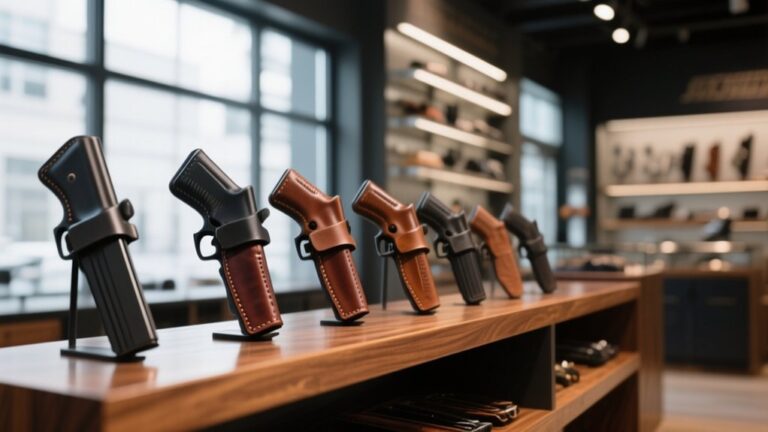
How Does a Retention Holster Work?
A retention holster works by securely holding your firearm through a combination of tight fit and locking mechanisms, preventing accidental drops or unauthorized access. You’ll need to release retention features like thumb breaks or hoods before drawing, which adds security but may slow your draw slightly. These holsters balance safety and quick access, especially in high-risk situations. If you want to master choosing and using one effectively, there’s plenty more to discover about their levels, types, and care.
What Is a Retention Holster and Why Use One?
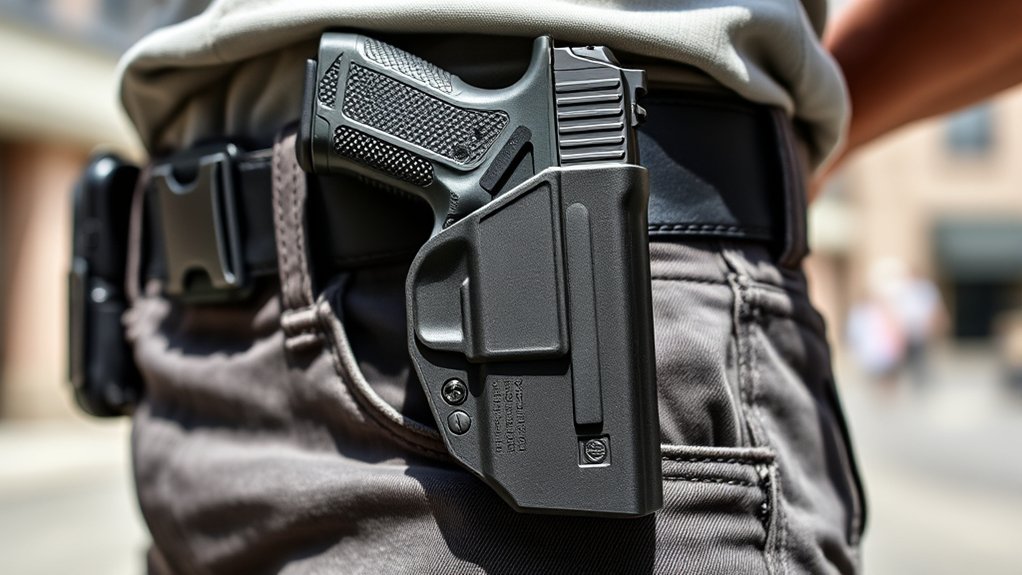
A retention holster is designed to securely hold your firearm and prevent unauthorized access. When you use one, you’re ensuring your weapon stays firmly in place, even during physical activity or sudden movements.
These holsters employ locking mechanisms that require specific actions to release the firearm, so it won’t be easily grabbed by someone else. You’ll appreciate how this added security reduces the risk of accidental drops or theft.
Retention holsters are especially useful if you carry your firearm in crowded or dynamic environments where control is essential. By choosing one, you’re prioritizing both safety and readiness, knowing your gun won’t slip free unless you intentionally draw it.
This makes retention holsters a smart choice for responsible carry.
Retention Holster vs. Standard Holster: Key Differences
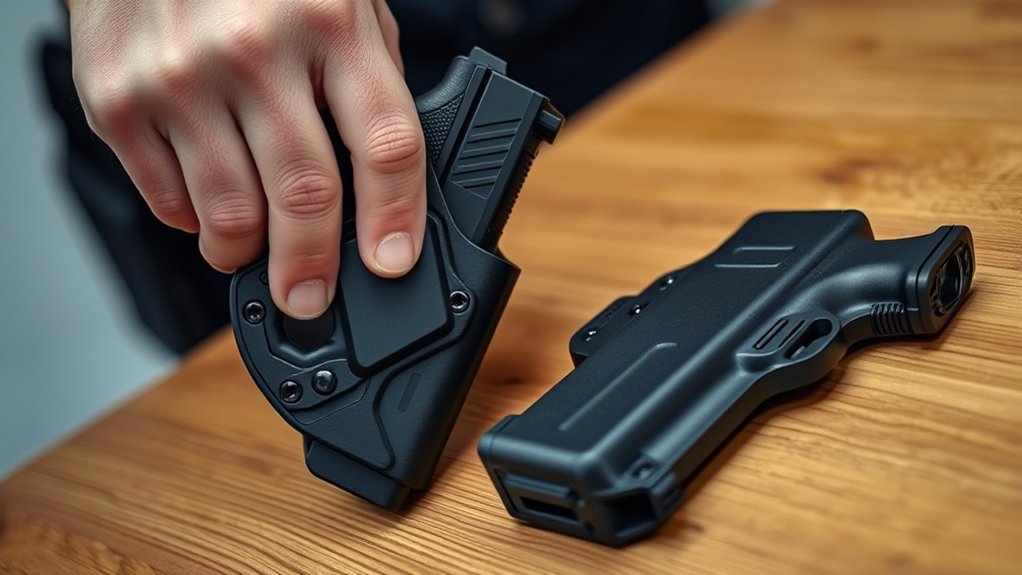
Though both holster types serve to carry firearms, retention holsters offer added security features that standard holsters lack. When you choose between the two, you’ll notice key differences that affect how secure and accessible your firearm is.
Retention holsters include mechanisms that prevent unauthorized access, while standard holsters primarily focus on comfort and ease of draw. Here’s what sets them apart:
- Security: Retention holsters have locking systems to keep your gun secure; standard holsters rely on friction or simple straps.
- Draw speed: Standard holsters allow quicker draws; retention holsters may require extra steps to release the firearm.
- Use case: Retention holsters suit law enforcement or tactical use, while standard holsters fit everyday carry or casual use better.
Choosing depends on your priorities—security or speed.
Understanding Retention Holster Levels
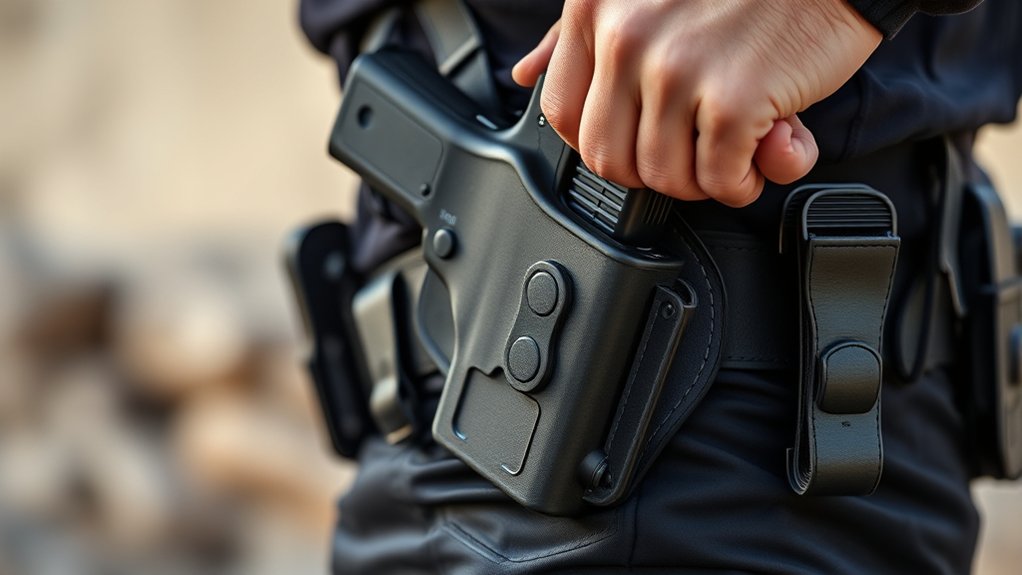
When you prioritize security over speed, retention holsters offer different levels of protection to match your needs. These levels range from Level 1 to Level 3, each adding more retention features to secure your firearm.
Level 1 typically includes a simple friction or passive retention system, keeping the gun snug but easily accessible.
Level 2 adds an active retention device, such as a thumb break or strap, requiring a deliberate action to release the weapon.
Level 3 combines multiple retention methods—like a thumb break plus a hood or locking mechanism—offering the highest security.
Understanding these levels helps you choose a holster that balances quick access and protection, depending on how and where you carry your firearm.
Passive vs. Active Retention: What’s the Difference?
Since retention holsters come in different designs, you’ll want to understand the key difference between passive and active retention.
Passive retention relies on the holster’s shape and material tension to hold your firearm securely without any extra action.
Active retention, however, requires you to perform a deliberate movement, like pressing a button or flipping a lever, to free your weapon.
Here’s a quick breakdown:
- Passive retention: Holds gun by friction and molding, no extra steps needed
- Active retention: Requires you to disengage a locking mechanism before drawing
- Usage: Passive is faster but less secure; active offers greater security but slower draw
Knowing this helps you choose a holster that fits your needs for speed and safety.
Types of Retention Mechanisms in Holsters
Understanding the types of retention mechanisms in holsters can help you pick one that balances security and accessibility.
You’ll find passive retention, which relies on friction and the holster’s shape to hold your firearm securely. This type doesn’t require any extra action from you to keep the gun in place.
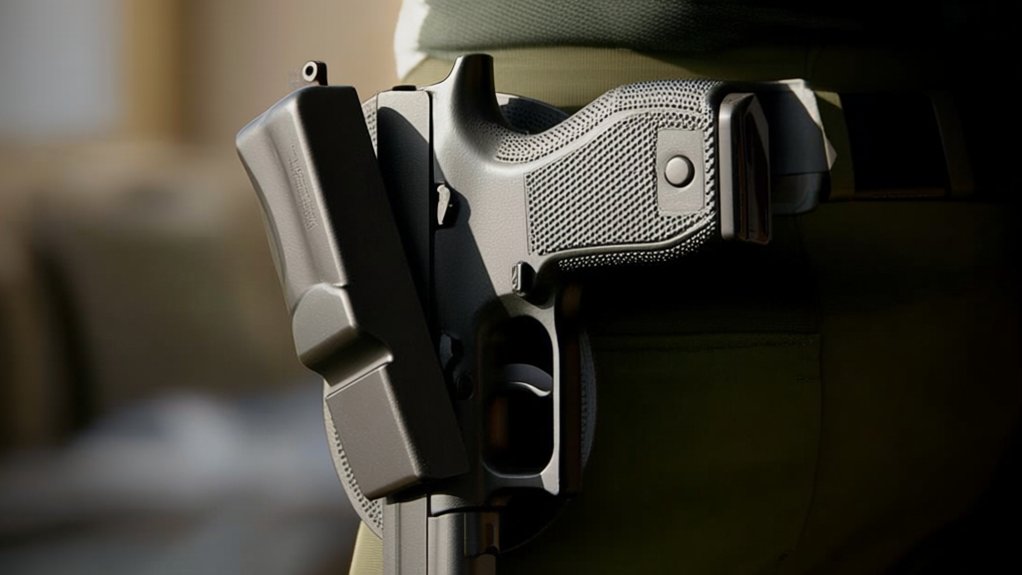
Then, there’s active retention, which involves additional features like thumb breaks, straps, or hoods that you must disengage to draw your weapon.
Some holsters combine both passive and active methods for added security. For example, a holster might use tight molding for friction while including a snap strap you release with your thumb.
Knowing these types allows you to choose a holster that fits your needs, whether you prioritize quick access or enhanced security during movement.
How Mechanical Locks Keep Your Gun Secure
How exactly do mechanical locks keep your gun secure in a holster? They use physical barriers that engage with specific parts of your firearm, preventing it from falling out or being easily removed by others. When you holster your gun, these locks snap or click into place, holding the weapon firmly until you intentionally release it.
Here’s how they work:
- Trigger Guard Locks: These latch onto the trigger guard area, blocking the gun’s movement until you press a release.
- Rotating Hoods: A hood flips over the back of the slide or hammer, locking the gun down securely.
- Internal Locking Pins: Pins inside the holster engage cutouts on the gun, requiring a specific action to unlock.
Mechanical locks give you confidence that your firearm stays put, ready only when you want it out.
How Straps and Thumb Breaks Prevent Accidental Draws
A secure strap or thumb break on your holster keeps your gun firmly in place, preventing accidental draws when you move or engage in activity. These components act as physical barriers, holding the firearm tightly against the holster body.
When you reach for your weapon, you’ll need to consciously release the strap or thumb break, adding an extra layer of safety. This mechanism stops the gun from slipping out unintentionally during quick movements or while running, bending, or climbing.
Key Features That Secure Firearms in Retention Holsters
Though retention holsters vary in design, several key features work together to keep your firearm secure and accessible. These features guarantee your weapon stays firmly in place while allowing a smooth, intentional draw when needed.
You’ll often find these essential elements in retention holsters:
- Active locking mechanisms: These require deliberate actions like pressing a button or lever to release the firearm, preventing accidental or unauthorized draws.
- Adjustable tension screws: They let you customize how tightly the holster grips your firearm, balancing security and quick access.
- Contoured design: Holsters are molded precisely to your gun’s shape, reducing movement and enhancing retention without added bulk.
What People Get Wrong About Retention Holsters
While retention holsters are designed to keep your firearm secure, many people underestimate how much practice and proper technique they require for smooth, reliable use. You might think just grabbing your gun is enough, but retention holsters often have multiple retention levels you need to disengage quickly and confidently.
Without regular training, your draw can become slow or awkward, defeating the holster’s purpose. Another common misconception is assuming all retention holsters are bulky or uncomfortable. In reality, many models balance security with comfort if you choose the right one for your needs.
Ultimately, don’t assume retention holsters eliminate all risk of weapon loss; they’re a tool that works best when paired with awareness and consistent practice to maintain proficiency.
How Retention Holsters Improve Law Enforcement Safety
Because law enforcement officers face high-risk situations daily, retention holsters play a crucial role in keeping their firearms secure and accessible. When you wear a retention holster, you reduce the risk of your weapon being grabbed by a suspect, which directly enhances your safety.
These holsters provide multiple locking mechanisms that require deliberate actions to release, so your gun stays put until you decide to draw it.
By using a retention holster, you benefit from:
- Preventing unauthorized access to your firearm during physical confrontations
- Maintaining secure placement while moving or struggling with suspects
- Reducing accidental drops or loss of your weapon in chaotic environments
These features help you stay prepared and protected, making retention holsters essential gear for law enforcement safety.
Drawing Quickly From Your Retention Holster
Mastering a quick draw from your retention holster requires practice and familiarity with its locking mechanisms. You need to train regularly to build muscle memory, ensuring your hand moves confidently through each step without hesitation.
Focus on disengaging the retention devices smoothly—whether it’s a thumb break, hood, or lever—so you don’t lose precious time fumbling. Keep your grip firm and consistent, positioning your hand to clear the firearm fluidly.
Repetition under realistic conditions helps you react instinctively, even under stress. Remember, speed won’t come at the expense of safety; maintain control to avoid accidental discharges.
With deliberate practice, you’ll draw swiftly while keeping your weapon secure, maximizing both readiness and retention.
Choosing the Right Retention Holster for You
When selecting a retention holster, you need to take into account how it fits your daily routine, comfort, and the level of security you require.
Consider where you’ll carry it—inside the waistband, outside, or on your belt—as this impacts accessibility and concealment.
Also, think about how often you’ll draw your weapon; some holsters offer quicker release mechanisms than others.
Finally, evaluate the retention features to match your environment and threat level.
Here are three key factors to guide your choice:
- Retention Level: Choose between single or multiple retention systems based on your security needs.
- Comfort: Opt for materials and designs that won’t irritate your skin during long wear.
- Accessibility: Ascertain the holster allows smooth, quick draws without compromising safety.
Picking the right holster ensures you’re ready and secure.
Maintaining Your Retention Holster
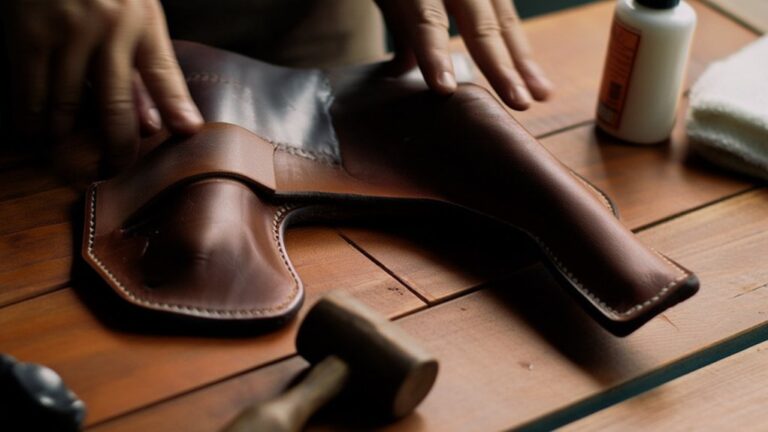
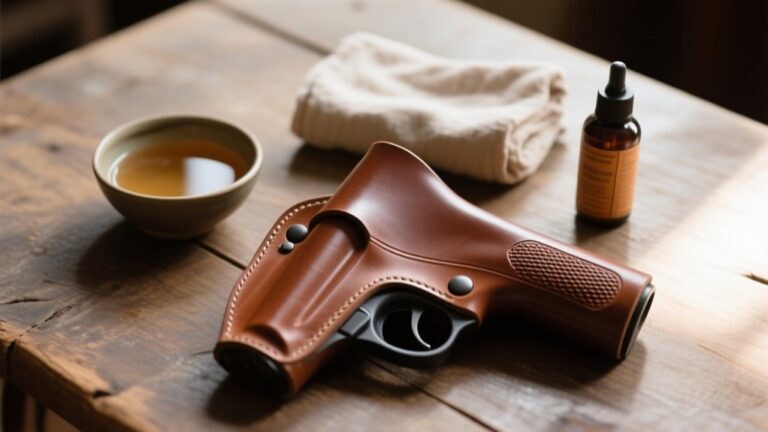
After choosing a retention holster that suits your needs, keeping it in good condition guarantees it performs reliably over time. Regularly inspect your holster for wear, cracks, or loose screws, and tighten or replace parts as needed.
Clean it with a damp cloth, avoiding harsh chemicals that can degrade materials like leather or polymer. If your holster has leather components, apply a suitable conditioner occasionally to maintain flexibility and prevent drying.
Store your holster in a cool, dry place to avoid damage from moisture or extreme temperatures.
Practicing proper draw and reholstering techniques also prevents unnecessary stress on retention mechanisms.
Frequently Asked Questions
Can Retention Holsters Be Used for Concealed Carry?
Yes, you can use retention holsters for concealed carry. They secure your firearm firmly, preventing accidental drops or unauthorized access, while still allowing quick, easy access when you need it. They’re great for safety and concealment together.
Are Retention Holsters Compatible With All Firearm Models?
Retention holsters aren’t universally compatible with all firearm models. You’ll need to choose one designed specifically for your gun’s size and shape to guarantee secure fit and proper retention, so check compatibility before buying.
How Do Retention Holsters Affect Firearm Accessibility in Emergencies?
In emergencies, a retention holster’s like a gatekeeper—you’ll need to move smoothly to access your firearm quickly. It adds a bit of resistance, but with practice, you won’t let it slow you down when seconds count.
Do Retention Holsters Require Special Training to Use Effectively?
Yes, you’ll need special training to use retention holsters effectively. They have extra retention features to prevent unauthorized access, so practicing quick, safe draws is essential. Without training, you might struggle in high-pressure situations.
What Materials Are Retention Holsters Commonly Made From?
Retention holsters are commonly made from durable materials like Kydex, leather, nylon, and polymer. You’ll find these materials provide strength, flexibility, and comfort while securely holding your firearm during movement or activity.
Conclusion
Choosing a retention holster is like adding a trusty shield to your sidearm—it keeps your weapon secure while letting you draw with lightning speed when it counts. By understanding the different retention levels and mechanisms, you’re not just carrying a holster; you’re wielding peace of mind. Keep it maintained, and your holster will be your steadfast partner, ready to protect you like a loyal guardian in every high-stakes moment.