How Does a Holster Wedge Work?
A holster wedge works by inserting between your holster and belt, tilting the holster to improve firearm positioning. It adjusts your carry angle to press the gun closer to your body, reducing printing and enhancing concealment. The wedge also stabilizes your holster, preventing uncomfortable shifting and pressure points, especially when sitting or moving. You’ll experience a smoother, more natural draw and better comfort overall. Explore how to choose, install, and maintain a wedge for the best fit.
What Is a Holster Wedge and Why You Need One
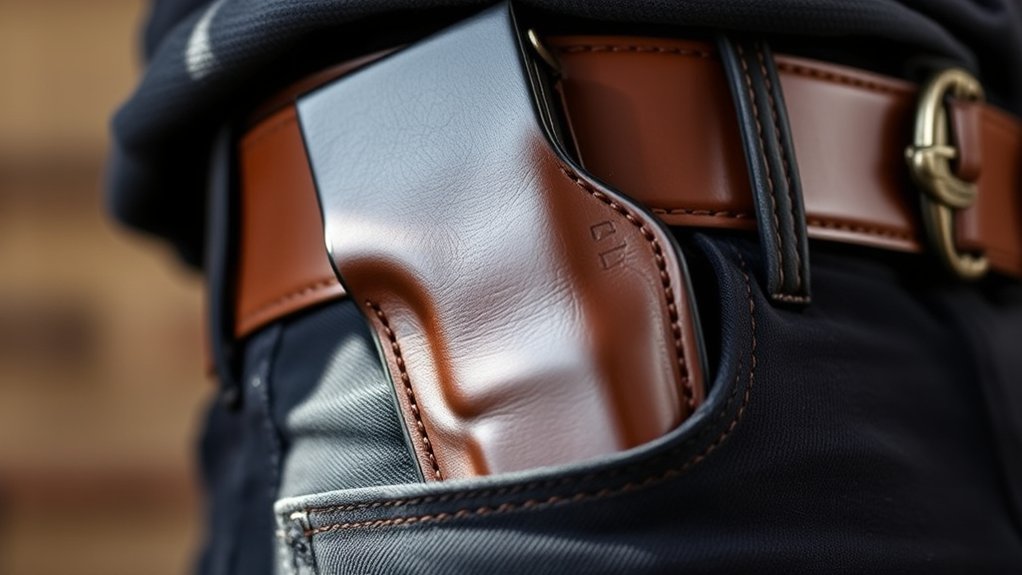
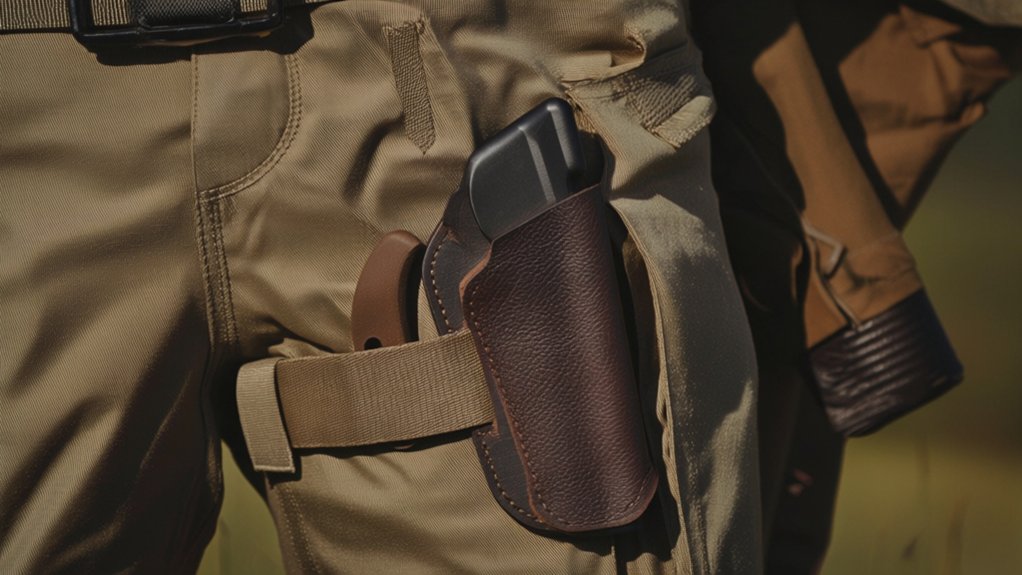
What exactly is a holster wedge, and why should you consider using one? A holster wedge is a small, angled insert that fits between your holster and your belt. It changes the angle of your holster, helping to improve your draw and concealment.
When you wear a holster without a wedge, it often sits too flat against your body, causing discomfort and printing. By adding a wedge, you can tilt the holster forward or backward, which adjusts how the gun sits on your hip. This simple modification enhances your comfort and keeps your firearm more secure and easier to access.
If you want a better fit and a smoother draw, a holster wedge is a smart, inexpensive upgrade you shouldn’t overlook.
Common Comfort and Fit Problems Without a Wedge
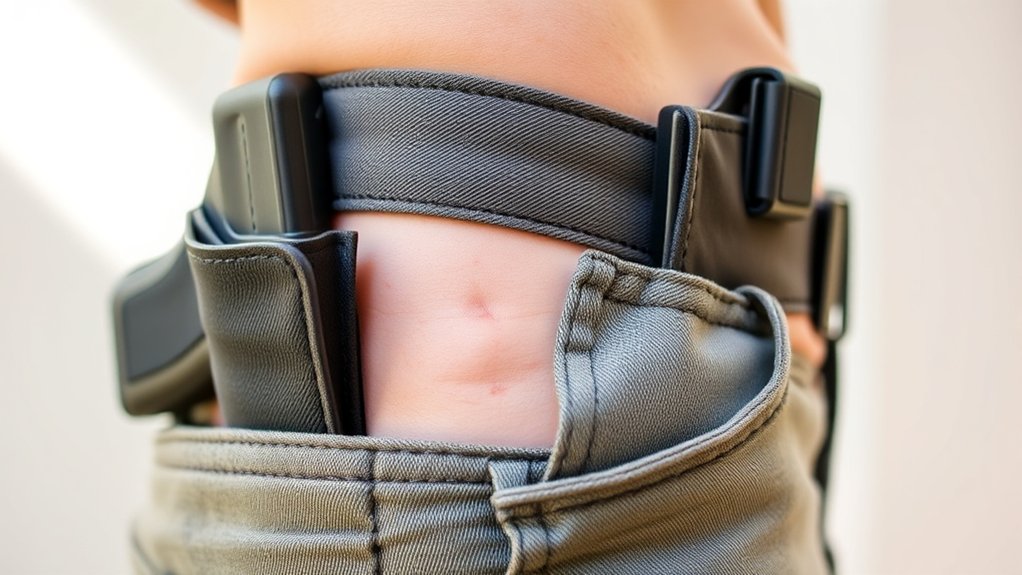
Without a holster wedge, you might notice your firearm pressing uncomfortably against your body or shifting as you move. This often leads to uneven pressure points, causing discomfort during extended wear.
Without proper support, your holster can dig into your waist or ribs, making it hard to stay focused throughout the day. You may also find your gun printing more visibly, reducing concealment effectiveness.
The lack of a wedge means your holster sits flush against your body, increasing the chance of the firearm shifting or tilting, which affects quick access and stability.
These fit issues can make carrying frustrating, discouraging consistent use. Addressing these problems typically requires adjusting your belt or holster position, but these solutions often fall short without a wedge to improve overall comfort and fit.
How a Holster Wedge Changes Your Carry Angle
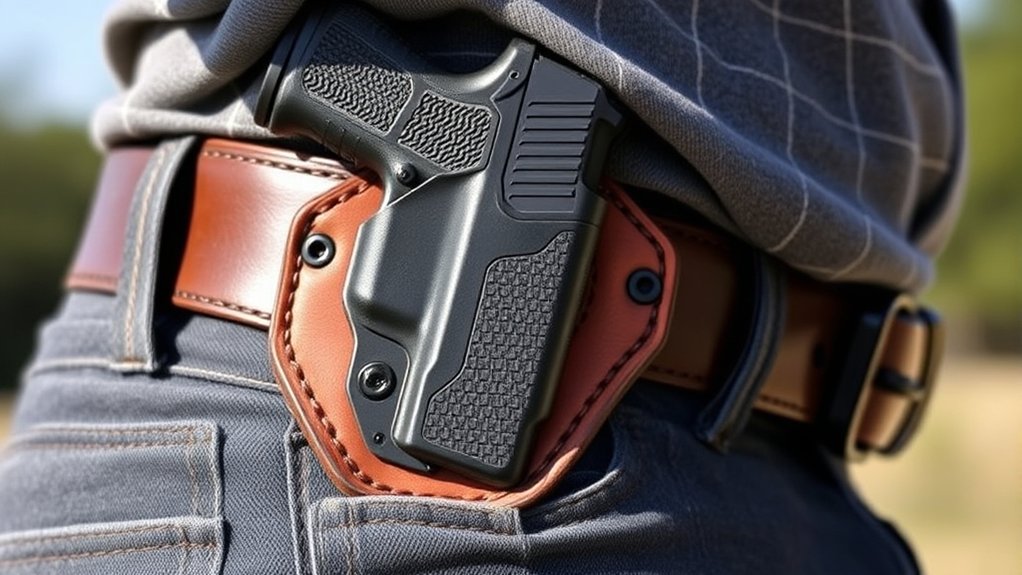
Although your holster’s position might seem fixed, adding a wedge can substantially alter your carry angle for better comfort and concealment.
When you insert a holster wedge between your holster and belt, it pivots the holster slightly forward or backward. This change adjusts how your firearm sits against your body.
This shift can reduce pressure points and adjust the grip angle, making drawing your gun smoother and more natural.
You’ll notice your firearm tilts closer to or away from your torso, depending on wedge placement. This helps tailor your carry to body shape and preferences.
How It Helps Hide Your Gun (Reduce Printing)
Because printing can give away your concealed carry, using a holster wedge helps minimize it by adjusting how your firearm sits against your body.
By tilting the grip inward and slightly downward, the wedge reduces the firearm’s profile, making it less likely to create visible bulges or outlines under your clothing.
This repositioning guarantees the gun presses closer to your torso, blending more naturally with your body’s contours.
You’ll notice fewer sharp edges or awkward shapes that typically cause printing, especially when you move or bend.
The subtle angle change lets your shirt drape smoothly over the holster area, keeping your carry discreet.
Ultimately, a holster wedge enhances concealment by managing how the gun interacts with your clothes and body shape.
How a Holster Wedge Improves Comfort When Sitting
When you sit down wearing a holster, the pressure from your firearm can cause discomfort or even pain, especially around your hip and lower back.
A holster wedge helps by redistributing that pressure more evenly against your body, reducing direct contact points that dig into your skin. It lifts the grip of your gun slightly away from your body, preventing it from pressing uncomfortably into your side as you move or sit.
This adjustment minimizes the pinch and soreness that often comes from prolonged sitting with a holstered firearm. By smoothing out the edges and providing a buffer, the wedge lets you sit more naturally and comfortably without constantly adjusting your position to avoid pain or irritation.
Materials and Designs of Holster Wedges
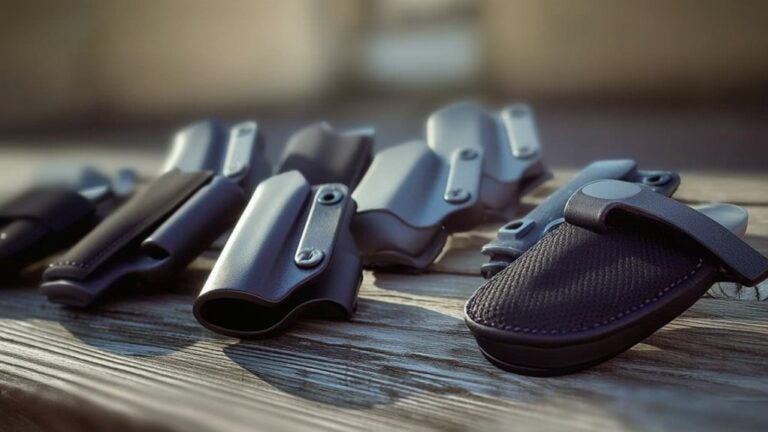
Since holster wedges need to balance comfort with durability, manufacturers use a variety of materials and designs to meet different preferences and needs. You’ll find wedges made from dense foam, rubber, and even leather, each offering unique benefits.
Foam wedges provide cushioning and flexibility, molding to your body shape.
Rubber wedges add firmness and grip, keeping your holster stable during movement.
Leather options offer a blend of comfort, durability, and style, though they might break in more slowly.
Design-wise, wedges come in different thicknesses and contours to fit various holsters and body types.
Some feature textured surfaces to reduce slipping, while others include adjustable straps or Velcro for a customizable fit.
When Not to Use a Holster Wedge
Although holster wedges can improve comfort and stability, you shouldn’t use one in every situation. If your holster already fits securely and doesn’t cause discomfort, adding a wedge might create unnecessary pressure or misalignment.
Avoid wedges if you carry in tight or restrictive clothing, as the extra bulk could print or feel uncomfortable. Also, if you frequently switch between different holsters or carry positions, a wedge designed for one setup may not work well with another.
In addition, certain body types or carry styles, like appendix carry, may not benefit from a wedge and could even experience reduced comfort or accessibility. Always assess your specific carry needs and holster fit before deciding to add a wedge.
How to Choose the Right Wedge for Your Setup
Deciding whether or not to use a holster wedge is only the first step; selecting the right one for your setup can make all the difference in comfort and functionality.
First, consider your belt width and thickness, as wedges come in various sizes to fit securely without slipping.
Next, think about your carry position—different wedges adjust cant and ride height differently, so pick one that complements where you carry.
Material matters too; softer wedges offer more comfort, while rigid ones provide better retention.
Also, check compatibility with your holster model to ensure a snug fit.
Finally, weigh your daily activities—if you move a lot, opt for a wedge that enhances stability.
Choosing thoughtfully guarantees your holster wedge improves your experience rather than complicates it.
How to Install a Holster Wedge Correctly
When you install a holster wedge correctly, you guarantee maximum comfort and stability throughout the day.
Start by removing your holster from your belt or waistband.
Place the wedge between your holster and your belt, ensuring the angled side faces your body to create a snug fit.
Align the wedge so it fills the gap between your holster and your body, preventing shifting.
Secure the wedge by threading your belt through both the holster and wedge slots, making sure everything sits flat and tight.
Adjust the wedge’s position slightly if you feel discomfort or uneven pressure.
Once tightened, test your draw and reholstering to confirm smooth, unobstructed motion.
Proper installation keeps your gear stable and comfortable during all movements.
Fit Problems a Holster Wedge Fixes
If your holster feels uncomfortable or shifts during movement, a holster wedge can solve these common fit problems. It fills the gap between your body and the holster, preventing that annoying wobble or unwanted tilt. This added stability keeps your firearm snug, reducing discomfort caused by uneven pressure or pinching.
If your holster rides too high or digs into your hip bone, the wedge redistributes the weight, easing those pressure points. It also helps if your holster doesn’t sit flush against your body, which can cause printing or snagging on clothing.
Maintaining and Adjusting Your Holster Wedge for Comfort
Although a holster wedge improves comfort and fit, it requires regular maintenance and occasional adjustments to stay effective. Check your wedge frequently for wear or damage, especially if you use it daily.
Dirt and sweat can accumulate, so clean it with mild soap and water, then dry it thoroughly.
If you notice discomfort or shifting, loosen your belt and reposition the wedge to better align with your body contours. Tighten your belt gradually to find the right tension without sacrificing comfort.
Over time, the wedge may compress or lose shape, so consider replacing it if adjustments no longer help.
Frequently Asked Questions
Can a Holster Wedge Be Used With All Types of Holsters?
You can’t use a holster wedge with all holsters since it works best with belt-mounted designs. It might not fit inside appendix or pocket holsters, so always check compatibility before buying one for your setup.
Does a Holster Wedge Affect Firearm Accessibility Speed?
Yes, a holster wedge can affect your firearm accessibility speed by improving comfort and grip angle. This can make drawing smoother and quicker, but it depends on your setup and how well you’ve adjusted the wedge to your needs.
Will a Holster Wedge Damage My Clothing Over Time?
No, a holster wedge won’t damage your clothing over time if you choose quality materials and adjust it properly. You’ll just feel more comfortable and secure without causing excessive wear or fabric stretching.
Are Holster Wedges Suitable for Both Left and Right-Handed Users?
Yes, holster wedges are usually designed to be ambidextrous, so you can use them whether you’re left or right-handed. Just make sure to check the product details, as some models might be side-specific.
Can a Holster Wedge Be Used for Concealed Carry in Hot Weather?
Yes, you can use a holster wedge for concealed carry in hot weather. It helps improve comfort and concealment by reducing printing and stabilizing your firearm, even when you’re sweating or wearing lighter clothing.
Conclusion
So, you thought your holster was perfect without a wedge? Funny how a tiny, simple piece can fix comfort issues, reduce printing, and improve your carry angle all at once. It’s ironic that something so small makes such a big difference, but that’s exactly why you need one. Skip the wedge, and you might keep struggling with fit and comfort—because who doesn’t love unnecessary hassle when carrying every day?